Advantages of Graphene Batteries: 2026 Professional Guide

TL;DR:
Graphene batteries are lithium-ion cells with additives that improve capacity, charging speed, and safety. They are essential for advancing electric vehicle and grid storage performance through durable, high-cycle designs. Challenges remain in standardization and manufacturing consistency before widespread adoption.
Graphene batteries are lithium-ion cells enhanced with graphene additives that deliver measurably higher energy density, faster charging, longer cycle life, and better thermal safety than conventional cells. The term “graphene battery” is an informal label. The recognized industry term is graphene-enhanced lithium-ion battery, where graphene functions as a composite additive rather than a standalone chemistry. The advantages of graphene batteries are now backed by research from the PHOENIX project, Fraunhofer ISI, and multiple 2026 peer-reviewed studies, making this technology a serious candidate for electric vehicles and grid-scale energy storage. If you work in energy storage, EV engineering, or power system design, the performance data below is worth your full attention.
1. What are the core advantages of graphene batteries over conventional cells?
Graphene-enhanced lithium-ion batteries outperform conventional cells across four measurable dimensions: energy density, charging speed, cycle life, and thermal safety. Each improvement traces directly to graphene’s physical properties, not to marketing claims.
Silicon-graphene composite anodes raise energy density by up to 30% over standard lithium-ion cells. That gain translates directly into longer driving range per charge or more stored energy per kilogram in a stationary system.
Charging speed improves significantly. Graphene-enhanced cells reach 80% charge in 10–15 minutes at 4C–6C rates. That is a practical threshold for fast-charging infrastructure, not a laboratory edge case.
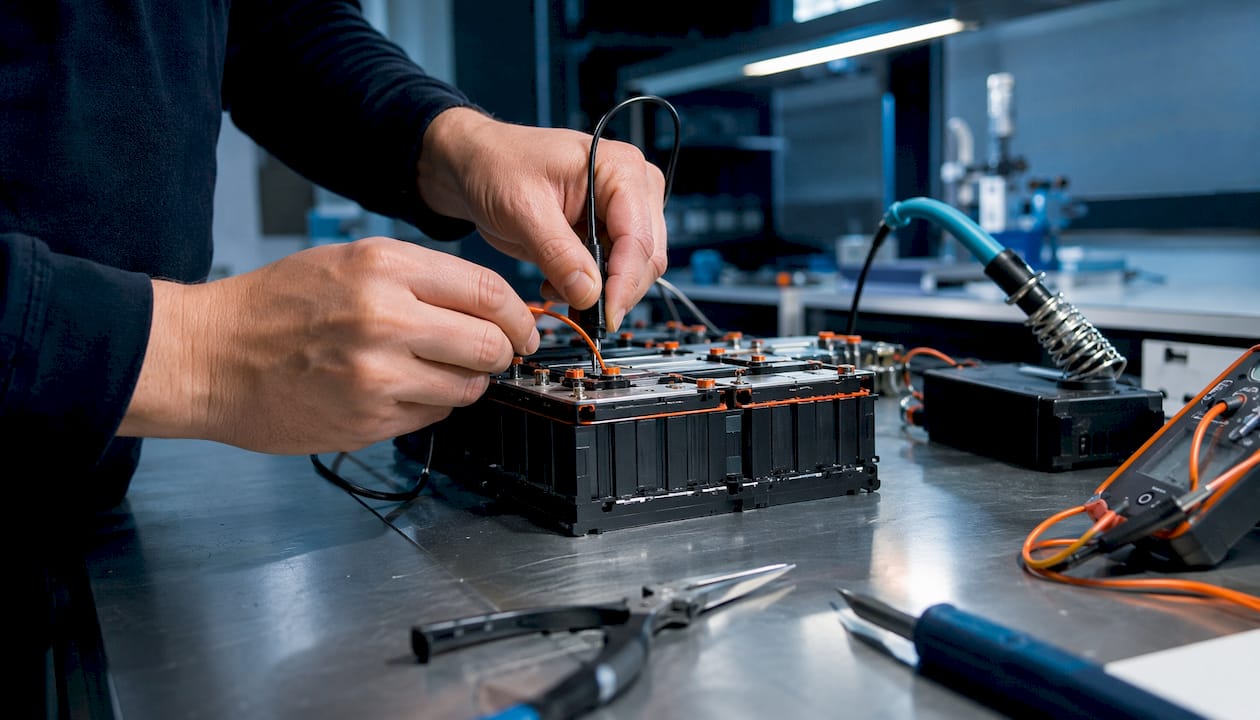
Cycle life extends well beyond conventional cells. Standard graphene-enhanced EV cells deliver 1,500–2,500 cycles. Advanced graphene architectures reach above 6,000 cycles, and grid-scale hybrid systems can exceed 50,000 cycles. Longer cycle life reduces replacement frequency and lowers total cost of ownership.
Pro Tip: When evaluating vendor cycle-life claims, ask whether the data comes from full depth-of-discharge testing under operational temperatures. Laboratory numbers often use shallow cycles at room temperature, which inflates the figure significantly.
2. How graphene’s electrical conductivity improves battery performance
Graphene conducts electrons faster than any material currently used in commercial battery electrodes. That speed reduces internal resistance, which means less energy is lost as heat during charge and discharge.
Lower internal resistance also enables the high charge rates described above. A conventional graphite anode cannot sustain 4C–6C charging without accelerating degradation. Graphene’s conductivity distributes current more evenly across the electrode surface, preventing the localized stress that causes capacity fade.
The practical result is a battery that charges fast and holds its capacity longer. For EV applications, that combination directly addresses the two complaints drivers cite most: charging time and range degradation over years of use.
3. How graphene’s thermal properties reduce safety risk
Graphene conducts heat roughly ten times better than copper by weight. In a battery electrode, that property prevents hotspot formation, which is the primary trigger for thermal runaway.
Thermal runaway is the failure mode behind most high-profile EV battery fires. Graphene’s multifunctional role reduces battery failure rates in high-demand sectors by simultaneously improving thermal dissipation, mechanical strength, and electrical conductivity. No single conventional additive achieves all three.
For grid-scale storage, thermal safety is an operational and insurance consideration, not just an engineering one. A system that manages heat passively through material properties requires less active cooling hardware, which reduces both capital cost and maintenance burden.
4. How graphene mitigates silicon anode swelling
Silicon anodes store roughly ten times more lithium than graphite anodes, which is why they are central to next-generation energy density targets. The problem is that silicon expands by up to 300% during charging and contracts during discharge. That volume change cracks the anode and destroys capacity within hundreds of cycles.
Graphene reduces silicon anode swelling by acting as a flexible mechanical buffer around silicon particles. It accommodates expansion without fracturing, preserving electrode integrity across thousands of cycles. This is the single most important engineering function graphene performs in high-density cells.
Without this buffering effect, silicon anodes are commercially impractical. With it, the 30% energy density gain becomes durable rather than transient. That distinction separates graphene-enhanced cells from earlier silicon anode attempts that degraded rapidly in real-world use.
5. Practical benefits of graphene batteries in electric vehicles
The performance improvements above translate into four concrete EV benefits.
Extended driving range. A 30% increase in energy density means a vehicle with a 60 kWh pack effectively gains the range equivalent of an 18 kWh upgrade, without adding weight or volume.
Faster charging stops. An 80% charge in 10–15 minutes at 4C–6C rates matches the time most drivers spend at a highway rest stop. That removes the primary behavioral barrier to EV adoption.
Reduced pack weight. Higher energy density per kilogram means engineers can achieve the same range with a lighter pack, improving vehicle efficiency and handling.
Lower total cost of ownership. A battery lasting 6,000+ cycles instead of 1,500 cycles requires replacement far less often. Over a ten-year vehicle life, that difference is significant in both cost and environmental impact.
OEM procurement teams are already responding. EU “Fit for 55” compliance requirements are shifting procurement priorities toward batteries with superior durability and thermal management, which graphene-enhanced cells deliver. The regulatory driver is accelerating commercial interest faster than pure performance metrics alone would.
Pro Tip: When comparing graphene battery specs across EV platforms, check whether the energy density figure refers to the cell level or the pack level. Pack-level density is always lower due to thermal management hardware, and that is the number that determines actual vehicle range.
6. Graphene energy storage benefits for grid-scale systems
Grid applications demand different performance characteristics than EV applications. Cycle life and round-trip efficiency matter more than charging speed. Graphene-enhanced cells and graphene-supercapacitor hybrids address both.
Grid-scale graphene hybrid systems reach 50,000 cycles, which at one full cycle per day represents over 130 years of theoretical operation. Real-world degradation reduces that figure, but the durability advantage over conventional lithium-iron phosphate systems remains substantial.
Belinus integrates graphene supercapacitor technology directly into its Energy Wall G1, a 16 kWh residential storage unit launching in Q1 2026. The system pairs graphene supercap chemistry with LFP and pre-lithiated LFP options through a centralized Energy Management System that runs 15-minute dynamic tariff optimization. For professionals evaluating graphene energy storage at the system level, that architecture shows how graphene’s cycle-life advantage translates into real arbitrage economics.
7. Why lab charging claims differ from industrial reality
The gap between laboratory charging claims and real-world performance is the most misunderstood aspect of graphene battery technology. Laboratory claims of extremely fast charging are moderated significantly at industrial scale. The realistic and commercially meaningful benchmark is 4C–6C charging, which delivers 80% charge in 10–15 minutes.
Claims of 1C charging in under two minutes appear in research papers but require conditions that do not exist in commercial charging infrastructure: precise temperature control, low cell-to-cell variation, and charge management algorithms tuned for individual cell batches. At scale, those conditions are not reproducible.
The 4C–6C benchmark is still a major advance over conventional lithium-ion cells, which typically support 1C–2C charging without accelerated degradation. Professionals evaluating graphene battery technology should anchor expectations to the industrial benchmark, not the laboratory headline.
8. Current commercialization challenges for graphene battery technology
Graphene battery technology faces four concrete barriers to mass adoption.
Manufacturing consistency. Producing graphene at uniform quality and scale remains difficult. Variations in graphene layer count, defect density, and surface chemistry directly affect electrode performance. Batch-to-batch inconsistency is a qualification risk for OEMs.
Material cost. High-quality graphene costs significantly more than conventional graphite. Until production volumes increase and synthesis processes mature, the cost premium limits adoption to high-value applications.
Absent testing standards. OEM qualification timelines run 18–24 months because no international graphene-specific testing protocols exist for operational duty cycles. Each OEM runs its own qualification program, which duplicates effort and delays market entry.
Low stakeholder awareness. Only about 15% of relevant stakeholders have accurate knowledge of graphene battery benefits. That awareness gap slows procurement decisions and investment, even when the performance data is available.
Regulatory pressure is the most likely catalyst for resolving these barriers. The EU Battery Regulation and “Fit for 55” targets are creating procurement mandates that favor durable, thermally safe chemistries. That pressure will drive standardization and investment faster than voluntary industry coordination has managed to date.
Key Takeaways
Graphene-enhanced lithium-ion batteries deliver measurable, durable performance gains that conventional cells cannot match, making them the most credible near-term upgrade path for EV and grid storage applications.
Point | Details |
Energy density gain | Silicon-graphene anodes raise energy density by up to 30% over standard lithium-ion cells. |
Fast charging benchmark | Realistic industrial fast charging reaches 80% in 10–15 minutes at 4C–6C rates. |
Cycle life advantage | Advanced graphene cells exceed 6,000 cycles; grid-scale hybrids can reach 50,000 cycles. |
Safety improvement | Graphene’s thermal conductivity prevents hotspot formation and reduces thermal runaway risk. |
Commercialization barrier | OEM qualification takes 18–24 months due to absent international testing standards. |
Graphene batteries: what the hype gets wrong
The conversation around graphene batteries tends to split into two camps. One side treats graphene as a near-magical material that will make conventional lithium-ion obsolete within two years. The other dismisses it as a research curiosity that never makes it out of the lab. Both positions miss the actual story.
Graphene’s real value is as a precision additive. It does not replace lithium-ion chemistry. It fixes the specific failure modes that have blocked silicon anodes from commercial use for over a decade. That is a narrower claim than the headlines suggest, but it is also a more durable one. A 30% energy density gain that holds up over 6,000 cycles is worth more to an EV engineer than a 100% gain that degrades in 300 cycles.
What I find most underappreciated is the thermal management angle. The industry spends enormous resources on active cooling systems for battery packs. Graphene’s passive thermal conductivity reduces that burden at the material level. That is not just a safety story. It is a system cost story, and it will matter more as pack sizes grow for long-range vehicles and utility storage.
The 18–24 month OEM qualification delay is real and frustrating, but it is also solvable. The barrier is coordination, not physics. Once a credible international testing standard exists, qualification timelines will compress. Professionals who track the EU Battery Regulation process will see that standard emerge before most market analysts expect it.
My advice: stop evaluating graphene batteries against the best laboratory result you have read. Evaluate them against the graphene vs. lithium battery performance gap at the 4C–6C industrial benchmark. That is where the commercial decision actually lives.
— Marc
Belinus and advanced graphene energy storage
Belinus builds energy storage systems around the chemistries that deliver real-world performance, including graphene supercapacitor technology. The Energy Wall G1 brings 16 kWh of graphene supercap storage to residential applications at €7,000 per unit, launching Q1 2026. For commercial and utility projects, Belinus designs systems from small CNI installations up to MW-scale capacity, all managed through a centralized EMS with 15-minute tariff optimization and real-time battery arbitrage.

If you are evaluating graphene battery technology for an energy storage or EV charging project, Belinus offers both the hardware and the system-level expertise to move from specification to deployment. Explore Belinus energy storage solutions to see how graphene supercap technology integrates with LFP and pre-lithiated LFP in a managed, grid-connected architecture.
FAQ
What is a graphene battery, exactly?
A graphene battery is a lithium-ion cell that uses graphene as a composite additive in its electrodes, typically in silicon-graphene anodes. Graphene is not a standalone battery chemistry but an enhancement that improves conductivity, thermal management, and mechanical stability.
How much faster do graphene batteries charge than standard lithium-ion?
Graphene-enhanced cells reach 80% charge in 10–15 minutes at 4C–6C rates. Standard lithium-ion cells typically support 1C–2C charging without accelerated degradation, making graphene cells roughly three to four times faster under comparable conditions.
Are graphene batteries safer than conventional lithium-ion?
Yes. Graphene’s thermal conductivity reduces hotspot formation, which is the primary trigger for thermal runaway. The PHOENIX project confirms that graphene’s multifunctional role lowers failure rates in high-demand applications including electric vehicles.
What is the biggest barrier to graphene battery adoption?
The absence of standardized international testing protocols is the primary bottleneck. OEM qualification currently takes 18–24 months because each manufacturer runs independent testing programs. Low stakeholder awareness, at roughly 15% of relevant decision-makers, compounds the delay.
How do graphene batteries perform in grid-scale energy storage?
Grid-scale graphene hybrid systems can reach 50,000 cycles, far exceeding conventional lithium-iron phosphate benchmarks. That durability makes them well-suited for daily charge-discharge arbitrage applications where cycle life directly determines return on investment.
Recommended
Comments