Affordable Energy Solutions 2025 for European Homes
- 8 hours ago
- 10 min read
TL;DR:
Energy upgrades in Europe in 2025 should start with building fabric improvements, like insulation, before installing heat pumps to maximize efficiency and grants. Combining solar PV with battery storage offers reliable, low-cost power, while smart meters and time-of-use tariffs help households reduce consumption without significant investments. Proper sequencing, comprehensive assessments, and available grants are key to achieving substantial savings, sustainability, and property value increases.
Energy bills across Europe stayed stubbornly high through 2025, and millions of homeowners and businesses are still searching for affordable energy solutions 2025 that actually move the needle. The good news: the technology has never been better, grants have never been more accessible, and the policy environment is pushing hard in your favor. This guide cuts through the noise and gives you a practical, prioritized look at the options that deliver real savings, real sustainability, and real return on investment.
Table of Contents
Key takeaways
Point | Details |
Sequence your upgrades | Insulate before you install a heat pump to avoid costly rework and unlock better grant packages. |
Stack grants strategically | Bundling measures like insulation, heat pumps, and solar PV in one application often unlocks larger subsidies. |
Solar plus storage pays off | Combined solar and battery storage now delivers reliable, low-cost power even on cloudy days. |
Financing gaps are solvable | Blended public and private financing options make upfront costs manageable for most budgets. |
Property value follows efficiency | Higher energy performance ratings can add 6 to 25% to property values depending on your region. |
1. How to evaluate affordable energy solutions in 2025
Before spending a single euro, you need a framework. Not every solution works for every property, and picking the wrong starting point can cost you more than doing nothing.
Here are the criteria that actually matter:
Upfront vs. lifetime cost: A cheap installation that delivers poor savings is not a bargain. Calculate payback periods, not just sticker prices.
Energy savings potential: Prioritize measures with the highest annual bill reduction first. Insulation often beats flashy tech on this metric.
Grant and subsidy availability: Available funding varies enormously by country and sometimes by municipality. Always check before committing.
Infrastructure compatibility: A heat pump in a poorly insulated house underperforms. A large solar array on a north-facing roof is money wasted.
Maintenance burden: Some systems need professional servicing annually. Factor that cost in.
Future-proofing: Choose solutions that work alongside technologies you might add later, like EV chargers or battery storage.
Pro Tip: Before contacting any installer, pull your property’s energy performance certificate. It tells you which measures will have the biggest impact and which grants you qualify for.
2. Heat pumps: efficiency gains that justify the investment
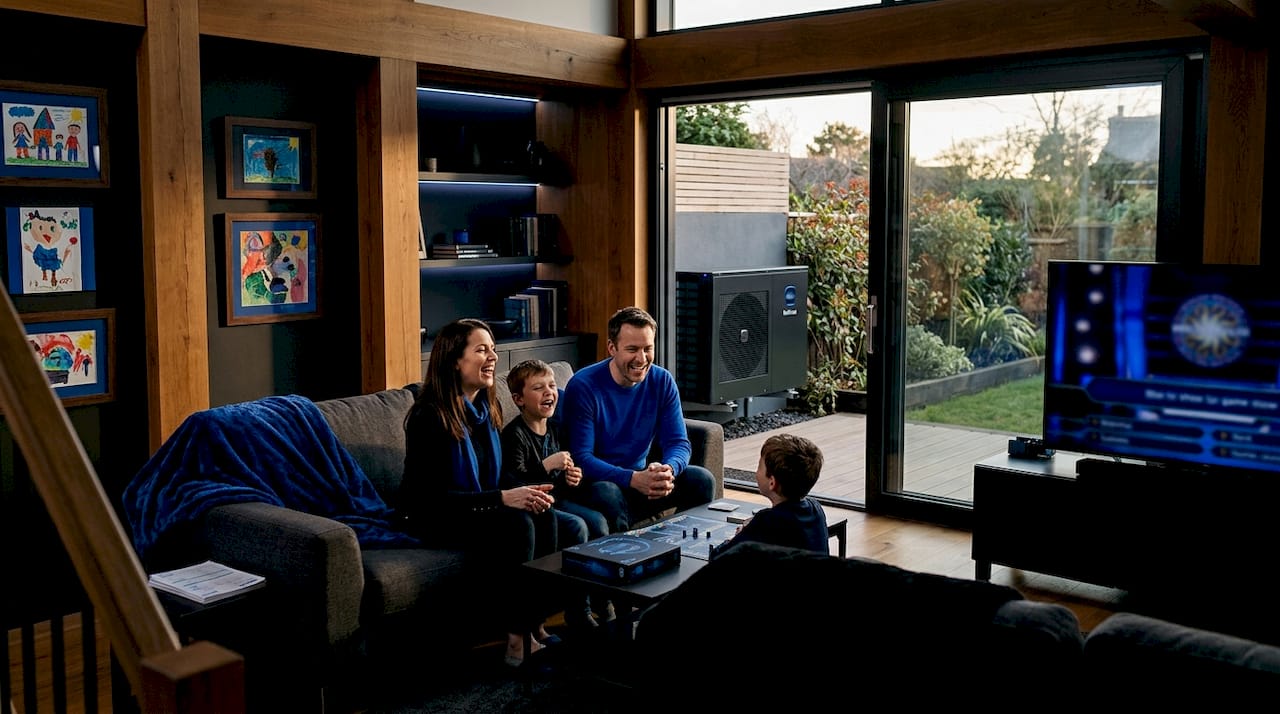
Heat pumps have graduated from niche technology to mainstream in 2025, and the financial case has followed. A modern air-source heat pump delivers three to four units of heat for every unit of electricity consumed. That ratio makes it genuinely hard to beat on running costs in most European climates.
The grant picture is strong. Ireland’s SEAI offers up to €12,500 for residential heat pump installations, covering the unit, heating upgrades, and a Renewable Heat Bonus, backed by a €558 million funding envelope targeting 70,000 homes. The UK’s Warm Homes Plan commits £15 billion to upgrade 5 million homes, with heat pumps a central technology.
Key points for planning your heat pump upgrade:
Ground-source heat pumps cost more upfront but deliver higher efficiency in colder climates.
Air-source units work well in most Western and Central European climates and cost less to install.
You will almost certainly need to upgrade your radiators or switch to underfloor heating for optimal performance.
Payback periods typically run 7 to 12 years without grants, and 4 to 7 years with them.
Pro Tip: Bundling your heat pump application with insulation and heating controls in a single grant submission often unlocks higher payouts than applying for each measure separately.
3. Solar PV plus battery storage: reliable power at falling prices
Rooftop solar has become one of the most cost-effective energy options available to European homeowners and businesses. Prices have fallen dramatically. Firm solar-plus-storage systems now cost $54 to $82 per MWh in leading solar regions, with further declines expected through 2030.
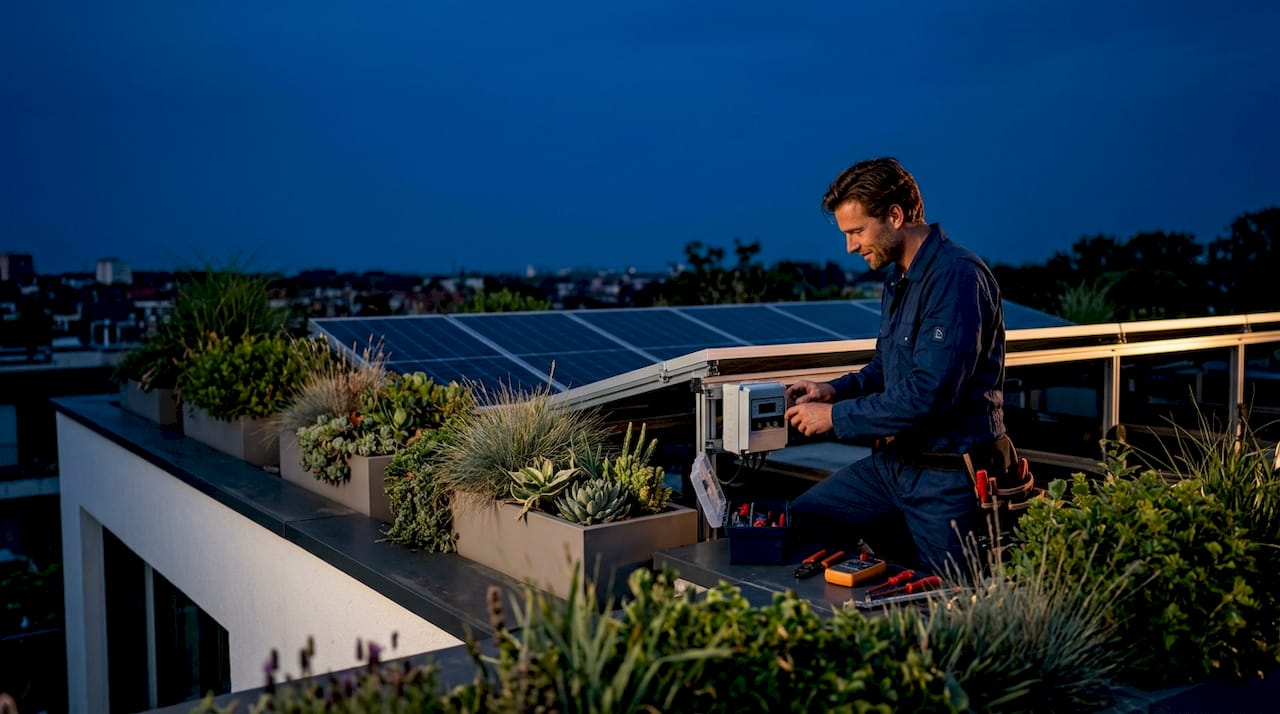
The real shift in 2025 is the pairing of panels with battery storage. A system that generates excess solar during the day and stores it for evening use can cut grid electricity consumption by 60 to 80 percent in well-designed installations. For businesses with daytime energy loads, the economics are even better.
Solution | Typical upfront cost | Annual savings estimate | Key grant availability |
Solar PV only (5 kW) | €6,000 to €9,000 | €700 to €1,200 | Yes, most EU countries |
Solar PV plus battery (10 kWh) | €12,000 to €18,000 | €1,200 to €2,000 | Yes, growing availability |
Heat pump only | €8,000 to €14,000 | €800 to €1,500 | Yes, strong EU and national programs |
Insulation package | €3,000 to €10,000 | €400 to €900 | Yes, widely available |
Beyond individual rooftop systems, community energy projects are proving remarkably effective for budget-friendly access. In Madrid, neighborhood energy community members invested €2,200 per kW and received subsidies exceeding €100,000 per project, with surplus electricity exported to the grid and bill credits distributed among participants. This model brings affordable green energy to households that cannot install their own panels, including renters and apartment dwellers.
Explore the best home energy storage options to understand which battery technologies fit different property sizes and budget ranges.
4. Building fabric upgrades: the foundation everything else depends on
If your building leaks heat in winter or traps it in summer, no technology will save you as much money as fixing that first. Insulation, energy-efficient windows, and proper ventilation are the foundation of any serious energy cost reduction strategy.
EPBD 2026 guidance mandates that Member States reduce residential building energy use by at least 16% by 2030, targeting the worst-performing 43% of the building stock first. If your property falls into that category, you are likely eligible for priority funding.
Practical priorities for building fabric upgrades:
Attic and roof insulation: Often the cheapest and highest-return upgrade. Heat rises. An uninsulated attic can account for 25% of heat loss.
Wall insulation: Cavity wall insulation is relatively affordable. External or internal solid wall insulation costs more but delivers significant results.
Floor insulation: Often overlooked, but relevant especially in older properties with suspended timber floors.
Double or triple glazing: Replaces single-pane windows with major comfort and energy performance improvements.
Draft-proofing: One of the most cost-effective measures available. Costs under €200 and delivers immediate results.
Pro Tip: Upgrade your building fabric before installing a heat pump. Fitting a heat pump into a poorly insulated property locks in an undersized system that costs more to run. Do it the other way and your heat pump can be smaller, cheaper, and more efficient.
5. Smart meters and time-of-use tariffs: low-cost energy management
Not every affordable energy option requires a large upfront investment. Smart meters and flexible electricity tariffs represent some of the most accessible cheaper electricity solutions available right now, and most European households can access them at little or no cost.
Smart meters give you granular visibility into when you use electricity and how much each appliance costs. That information is genuinely useful. Most households that actively engage with their smart meter data reduce consumption by 5 to 15 percent without changing any hardware.
The bigger opportunity comes from pairing smart meters with time-of-use tariffs. These tariffs charge different rates depending on when you draw from the grid, typically lower overnight and higher during peak evening hours. If you can shift dishwasher cycles, EV charging, or heat pump operation to off-peak windows, the savings compound quickly. For businesses with flexible processes, load shifting can generate meaningful annual savings with zero capital expenditure.
6. Community energy projects and shared solar schemes
Community energy is one of the most underrated sustainable energy solutions in 2025, particularly for urban residents and smaller businesses that cannot install generation assets themselves.
A community energy project pools resources among a group of households or businesses to jointly invest in generation, often solar PV on a local building or shared land. The generated electricity is allocated among members according to their share, typically reducing individual bills well below market rates. In some EU countries, surplus generation can be sold back to the grid with settlement credits distributed across the group.
The Madrid example already cited shows this is not theoretical. Community participants achieved electricity costs that energy-poor households could not access individually. The shared solar generation model delivers renewable energy savings that individual rooftop installations cannot always match, especially in dense urban settings.
For businesses, joining or forming an energy community can also unlock collective purchasing power for better tariffs, shared battery storage, and group grant applications. Check with your local council or regional energy agency for schemes operating in your area.
7. Financing: how to make upfront costs manageable
The single biggest barrier to energy upgrades is not the technology or the grants. It is the financing. Energy-efficiency projects stall because of financial barriers, not lack of solutions, and that is exactly what new European policy is targeting.
The European Commission announced a 2026 energy-efficiency financing support package combining blended financing and technical support for building renovation to unlock private capital at scale. In practice, this means more low-interest loans, green mortgages, and government-backed financing products are entering the market across EU member states.
Here is how to approach financing practically:
Start with grants. Apply for every grant you qualify for before looking at loans. Free money reduces the amount you need to borrow.
Check your national development bank. Most EU countries have a development bank offering subsidized green renovation loans at rates below commercial lenders.
Ask your energy provider. Several European energy utilities now offer on-bill financing, where repayments are added to your monthly energy statement and partially offset by your savings.
Look at green mortgages. If you are buying or remortgaging, some lenders offer better rates for energy-efficient properties or for renovation works tied to the mortgage.
Consider one-stop-shop services. These programs, actively promoted under EU policy, bundle surveying, installation, financing, and grant management into a single process.
The UK Warm Homes Plan explicitly combines fabric upgrades, heat pumps, solar, and batteries with consumer loans, showing how blended public and private financing creates a self-sustaining market for affordable upgrades.
8. Comparing your options: what works for which situation
Choosing among affordable energy solutions comes down to your property type, your budget, and your priorities. Here is a direct comparison to help you decide.
Solution | Best suited for | Payback range | Sustainability impact | Financing availability |
Insulation package | All property types | 3 to 7 years | High (reduces heat demand) | Strong across EU |
Heat pump | Detached and semi-detached homes | 4 to 10 years | Very high (replaces fossil fuel heat) | Strong, major grant programs |
Solar PV | Properties with south-facing roof space | 6 to 10 years | High (zero-emission generation) | Good, growing grant availability |
Solar PV plus battery | Homes and businesses with daytime load | 8 to 12 years | Very high | Moderate, improving rapidly |
Smart meter and tariff | All households | Under 1 year | Moderate (reduces grid peak demand) | Free or minimal cost |
Community energy | Urban households, renters, SMEs | 5 to 9 years | High (collective renewable generation) | Available via local programs |
The practical recommendation for most European homeowners: start with insulation and draft-proofing, then add a heat pump, then layer in solar PV and storage as budgets allow. Each step improves the economics of the next. For businesses with higher energy loads, the order may differ, but the principle holds. You can explore energy efficiency solutions for Benelux properties for region-specific guidance on sequencing and grants.
My honest take on getting this right
I’ve worked with enough homeowners and businesses across Europe to know that the biggest mistakes are never about choosing the wrong technology. They are about choosing in the wrong order, or treating upgrades as isolated decisions rather than a system.
The single most common mistake I see: buying a heat pump before insulating. It happens constantly, often because heat pump installers are more visible and easier to contact than insulation contractors. The result is a system that runs harder than it needs to, costs more to operate, and fails to hit its projected savings. The sequence matters more than most people realize.
The second pitfall is treating each grant application as a separate project. The moment you think in packages rather than single measures, the economics improve dramatically. Governments across Europe have structured their subsidy programs to reward combined upgrades. Applying for insulation, heating controls, and a heat pump in a single submission consistently unlocks higher grant values than three separate applications.
What I’ve found actually works is sitting down with a whole-house energy assessment first, even a basic one, before committing to anything. That one step changes the entire decision process. You stop guessing and start prioritizing. The savings projections become credible rather than optimistic. And when you go back to the installer with that assessment in hand, you negotiate from a position of knowledge rather than hope.
The long-term benefits go well beyond the monthly bill reduction. Properties with better energy ratings command real price premiums when it comes time to sell or rent. That value is not theoretical. It is documented across multiple European markets.
— Marc
How Belinus can help you cut energy costs in 2025
Ready to move from planning to action? Belinus brings together solar PV, battery storage, EV charging, and intelligent energy management under one roof, so you do not have to coordinate multiple contractors and hope the pieces fit together.
The Belinus Energy Management System optimizes across your solar generation, battery storage, and grid tariffs in 15-minute intervals, which means your system works harder without you having to think about it. Whether you are a homeowner looking to reduce your electricity bill or a business exploring custom energy solutions for a larger site, the Belinus team can model your 25-year financial returns before you commit to anything. Explore the full range of solutions at belinus.com and talk to an expert about what makes sense for your property and budget.
FAQ
What are the most affordable energy solutions for European homeowners in 2025?
Insulation upgrades, smart meters with time-of-use tariffs, and solar PV systems represent the strongest cost-effective energy options for most European homes in 2025, offering payback periods ranging from under one year to around a decade depending on the measure.
How much can I save with solar PV and battery storage?
A well-designed solar PV plus battery system can reduce grid electricity consumption by 60 to 80 percent, translating to annual savings of €1,200 to €2,000 for an average European household, with system costs continuing to fall.
Should I install a heat pump before or after insulating my home?
Always insulate first. Upgrading building fabric before a heat pump prevents oversizing, reduces running costs, and maximizes the performance of the system you install.
Are there grants available for energy upgrades in Europe in 2025?
Yes. Programs like Ireland’s SEAI, the UK’s Warm Homes Plan, and EU-wide financing packages provide grants, low-interest loans, and blended financing for insulation, heat pumps, and solar installations across most European countries.
What is a community energy project and is it worth joining?
A community energy project is a collective investment in shared generation, typically solar, where participants receive electricity credits that reduce their individual bills. For renters and urban households without roof space, it is one of the most accessible routes to renewable energy savings available today.
Recommended
Comments