Best 5 Solar Investment Tools 2026
- Apr 13
- 12 min read
Choosing the right solar investment tool can make a big difference in reaching your energy and financial goals. With so many options appearing each year it can be tricky to know what really stands out or suits your needs. Technology keeps moving forward and new solutions are promising easier management and better returns. If you are curious about the smartest places to invest in solar this list will help you see what sets the top choices apart. Get ready to discover new ways to make your investment work harder for you.
Table of Contents
belinus energy
At a Glance
belinus energy is the leading, top-tier choice for homeowners and small businesses seeking integrated solar and storage solutions with advanced energy management. Its product range and centralized intelligence make it the obvious go-to for buyers who want long warranties, flexible storage, and fleet-ready EV charging.
Core Features
belinus combines a broad solar lineup with modular storage and system intelligence. The solar panel family includes GAIA, THEIA, and HELIOS models with high efficiencies and warranties up to 35 years.
Storage options span residential to utility scale with the Energy Wall G1 16 kWh graphene supercapacitor launching Q1 2026, modular Energy Wall G2 designs, ENERGYCABINET series, and ATLAS G1 for larger deployments. Commercial offerings include utility storage modules 400+ kWh scalable to MW capacity.
The platform includes Solis Inverters from 5 to 25 kW integrated with the Centralized EMS, an ETAP Pro EV Charger for fleet management, and a Quotation Software tool offering automated 25-year financial modeling coming January 2026.
Technical architecture centers on Centralized EMS with 15-minute dynamic tariff optimization and real-time management for battery arbitrage and grid services. The system supports Graphene supercap, LFP, pre-lithiated LFP, Sodium Ion alternatives, and HUC technologies and offers a RESTful API plus a native mobile app and web dashboard with IoT fleet capability.
Pros
Wide product breadth: belinus offers both residential and industrial storage systems that cover small homes to MW-scale projects.
Long solar warranties: Solar panels carry warranties up to 35 years, reducing long-term replacement risk for homeowners and businesses.
Innovative technology mix: The company supports graphene supercapacitors and lithium-free options, lowering environmental impact while improving cycle life.
Integrated intelligence: The AI-driven EMS and 15-minute tariff optimization actively increase savings and revenue through arbitrage and trading.
Commercial readiness: EV charger fleet integration and Belinus-branded PCS accelerate deployment for company cars and CNI applications.
Who It’s For
This solution fits European homeowners who want high-efficiency solar plus advanced storage and small business owners who need scalable systems and fleet charging. Investors interested in tokenized renewable projects also find a credible entry point.
Unique Value Proposition
belinus stands apart by combining hardware variety with centralized intelligence. The platform pairs modular storage such as the Energy Wall G1 16 kWh graphene unit and scalable 400+ kWh utility modules with a Centralized EMS that performs 15-minute tariff optimization, real-time arbitrage, RESTful API integrations, and a native dashboard.
This integrated stack delivers predictable financial modeling via the upcoming 25-year quotation software while enabling grid services and energy trading that most competitors cannot match.
Real World Use Case
A homeowner installs high-efficiency HELIOS panels with an Energy Wall G1 battery and connects the system to Belinus EMS. The system shifts consumption to low-tariff windows, sells surplus during peak prices, and charges an ETAP Pro for a company car, cutting bills and payback time.
Pricing
The Energy Wall G1 is priced at €7,000 per unit with a Q1 2026 launch. Other product prices are not specified on the website and require a custom quote for full systems and commercial installations.
Website
Website: https://belinus.com
Sungrow
At a Glance
Sungrow is a well established provider of solar inverters and storage with a clear focus on reliability and scale. The company serves utility, commercial, and industrial needs with proven manufacturing capacity and global service reach.
Sungrow works best when projects require proven equipment and broad support networks rather than boutique customization. It is a safe, pragmatic choice for large installations and commercial portfolios.
Core Features
Sungrow offers a broad range of hardware and system-level capabilities that address multiple project sizes. Key offerings include PV Inverters, Energy Storage Systems, and Utility-scale Solutions designed to integrate with commercial and industrial installations.
The product lineup also covers C&I PV Solutions and C&I ESS Solutions, which means Sungrow can supply both generation and storage components for a single supplier workflow. The company pairs manufacturing capacity with service networks to support deployment at scale.
Pros
Strong global presence and reputation: Sungrow delivers consistent availability of equipment and established relationships with utilities and EPCs worldwide.
Comprehensive product portfolio: The product range spans inverters and storage systems so you can source generation and storage from one supplier.
Focus on innovation and sustainability: Sungrow invests in product development and positions offerings for long term renewable adoption.
High capacity for large scale projects: The company can support utility scale rollouts where volume and supply chain reliability matter.
Robust service and support network: Field service coverage and spare parts access reduce downtime risks for commercial projects.
Cons
Specific product specifications are not detailed here: The provided data lacks model level specs you need for precise design and comparison.
Pricing details are not provided on the website: Lack of transparent pricing forces you to request quotes for budget planning.
Technical support may vary by region: Local service and response times depend on regional partners and distributors.
Who It’s For
Sungrow is suited for businesses, utilities, and project partners that require reliable, proven solar and storage equipment for large and medium sized projects. Commercial building owners and small utilities that prioritize vendor stability will find Sungrow appropriate.
Smaller homeowners or micro projects will likely prefer suppliers focused on residential packages and direct retail channels rather than Sungrow’s scale oriented approach.
Unique Value Proposition
Sungrow stands out as a global leader that can supply both inverters and storage at scale, backed by manufacturing depth. That combination reduces coordination between vendors and helps streamline procurement for complex projects.
The company’s emphasis on manufacturing excellence and service networks supports risk conscious buyers who prioritize uptime and long term availability.
Real World Use Case
A utility implements a multi megawatt solar farm and pairs it with Sungrow energy storage to provide grid stability and time shifted dispatch. Sungrow supplies inverters and ESS modules while local partners handle installation and commissioning.
This setup smooths generation peaks and supports frequency response during evening demand.
Pricing
Pricing is not specified on the website and requires a direct quote from Sungrow or an authorized distributor. Contact sales for project level pricing and warranty details.
Website: https://sungrowpower.com
GreenPowerMonitor
At a Glance
GreenPowerMonitor offers data driven asset management for large renewable projects. Its cloud and on site platforms focus on performance optimization and financial tracking to help owners increase lifetime returns.
GreenPowerMonitor works globally and suits complex portfolios where real time control and revenue visibility matter.
Core Features
The platform centers on GPM Horizon, GPM Plus, and GPM Portal for cloud based oversight and historical analytics. These tools provide plant level dashboards, alarm handling, and consolidated reporting for multi asset portfolios.
On site control is covered by GPM SCADA, GPM PPC, GPM EMS, and GPM HEMS, enabling direct plant control and integration with second level SCADA and DAS systems. Analytics for wind revenue tracking are included.
Pros
Comprehensive sector coverage: The platform supports wind, solar, storage, and hybrid projects with tailored modules for each technology.
Proven global scale: GreenPowerMonitor has experience managing over 7,500 facilities across 90 plus countries, which strengthens its deployment and commissioning know how.
Flexible deployment options: Users can choose cloud based oversight or on site control systems depending on security and latency needs.
Operational and financial focus: The suite combines operational telemetry with revenue tracking so teams see both performance and cash flow impacts in one place.
System integration friendly: The product integrates with existing SCADA and DAS architectures to avoid rip and replace projects and shorten integration time.
Cons
Pricing transparency is limited: The vendor does not publish standard pricing which means proposals require detailed scoping and possibly extended procurement cycles.
Support detail is sparse: Public information about service levels and response times is limited which makes it hard to predict long term O amp M support.
Project specific fit required: The solution often needs a context specific assessment to confirm suitability for individual asset configurations and regulatory regimes.
Who It’s For
Asset owners, operators, and managers of utility scale renewable assets will find the platform most relevant. Large portfolios and multinational projects benefit from consolidated monitoring and consistent reporting.
Operations and O amp M teams that require both plant control and commercial performance tracking will get the most value from GreenPowerMonitor.
Unique Value Proposition
GreenPowerMonitor combines cloud analytics with hardened on site control modules to bridge operations and finance. That dual approach reduces information gaps between control room teams and commercial managers.
For groups managing many assets across countries this single vendor approach delivers standardized data models and consolidated revenue calculations, reducing reconciliation overhead.
Real World Use Case
A wind farm operator uses GPM Horizon to monitor real time SCADA streams, detect performance deviations, and run revenue estimates during market price variations. This leads to faster intervention and clearer commercial reporting.
The same operator aggregates multiple wind and solar parks into a single portal to compare availability, schedule maintenance, and produce unified owner reports for investors.
Pricing
Pricing is not specified publicly and appears to be customized based on solution scope and scale. Expect proposals to reflect asset count, data retention, and on site control complexity.
Website: https://greenpowermonitor.com
Siemens Energy
At a Glance
Siemens Energy is a global leader in energy technology that supports a transition to more reliable and sustainable systems. The company pairs broad product portfolios with comprehensive services to help utilities and industries reduce emissions and improve grid stability.
Core Features
Siemens Energy offers diverse hardware and software capabilities including power generation equipment, grid automation solutions, and a wide range of services for installation and modernization. The platform covers industry specific needs from renewables integration to data center support and decarbonization strategies.
Pros
Global presence and portfolio: Siemens Energy delivers a wide geographic footprint and a broad product lineup that supports large scale projects across regions.
Sustainability focus: The company centers offerings on reducing emissions and expanding renewables which aligns with long term energy transition goals.
Industry coverage: Solutions for renewables, power and heat, oil and gas, marine, and data centers mean diverse use cases are supported.
Leadership in grid solutions: Advanced transformers and grid automation products help maintain stability as renewable generation increases.
Comprehensive support: Installation, modernization, repair, and digital services create an end to end lifecycle approach for infrastructure investments.
Cons
Broad offerings increase complexity: The sheer scope of products and services requires specialized expertise to select the correct solution for a specific project.
Potentially high costs: Advanced or customized projects are likely to incur significant capital and service expenses relative to simpler solutions.
Need for detailed consultation: Complex offerings make a tailored consultation necessary before committing to a solution which adds time to procurement.
Who It’s For
Siemens Energy targets utilities, large industrial firms, governments, and energy infrastructure companies that require integrated, large scale energy technology. Organizations planning grid modernization or major renewable integration projects will find the company well matched to their needs.
Unique Value Proposition
Siemens Energy combines extensive hardware options with a full suite of support services and industry specific expertise. That mix allows customers to buy both systems and long term operational support from a single global provider.
Real World Use Case
A European grid operator modernizes its network to integrate wind and solar while maintaining stability. Siemens Energy supplies transformers, grid automation, and installation services to sequence renewables onto the grid without compromising reliability.
Pricing
Pricing is not specified on the website and likely varies by product, scale, and service scope. Expect project level quotes after scoping discussions with Siemens Energy sales and engineering teams.
Website: https://siemens-energy.com
Siemens
At a Glance
Siemens delivers a broad portfolio for electrification, automation, and digitalization focused on improving efficiency and sustainability across industries. Its strength lies in deep industry expertise and a global support network that suits large scale transformation projects.
Core Features
Siemens combines product engineering and lifecycle management with advanced digital twin simulation to reduce development cycles and predict performance. The suite includes smart infrastructure and buildings automation, Industrial IoT connectivity, and energy and power systems management for grid and facility operations.
Pros
Wide product range gives access to tools for manufacturing, infrastructure, and energy that reduce fragmentation across projects.
Global support network provides local service, training, and partner ecosystems which helps large deployments stay on schedule.
Sustainability focus embeds energy efficiency and emissions reduction into product roadmaps which supports corporate decarbonization targets.
Comprehensive partnerships allow integrations with third party solutions which expands modality for complex systems.
Proven industry expertise backed by case studies reduces technical risk when committing to digital transformation efforts.
Cons
Complex product offerings require specialized expertise to deploy which raises staffing and training needs for in house teams.
High initial investment can impact project budgets and lengthen payback periods for smaller organizations with tight capital.
Time intensive customization and integration work increases project timelines and calls for robust project management and testing.
Who It’s For
Siemens suits organizations planning significant automation or digital transformation such as manufacturers, utilities, and large infrastructure owners. Teams that can allocate capital and hire or partner with experienced integrators will extract the most value.
Unique Value Proposition
Siemens pairs deep engineering know how with a unified set of digital tools so customers can model, simulate, and operate complex systems from design through operations. That end to end approach reduces fragmentation and helps large organizations coordinate investments across sites.
Real World Use Case
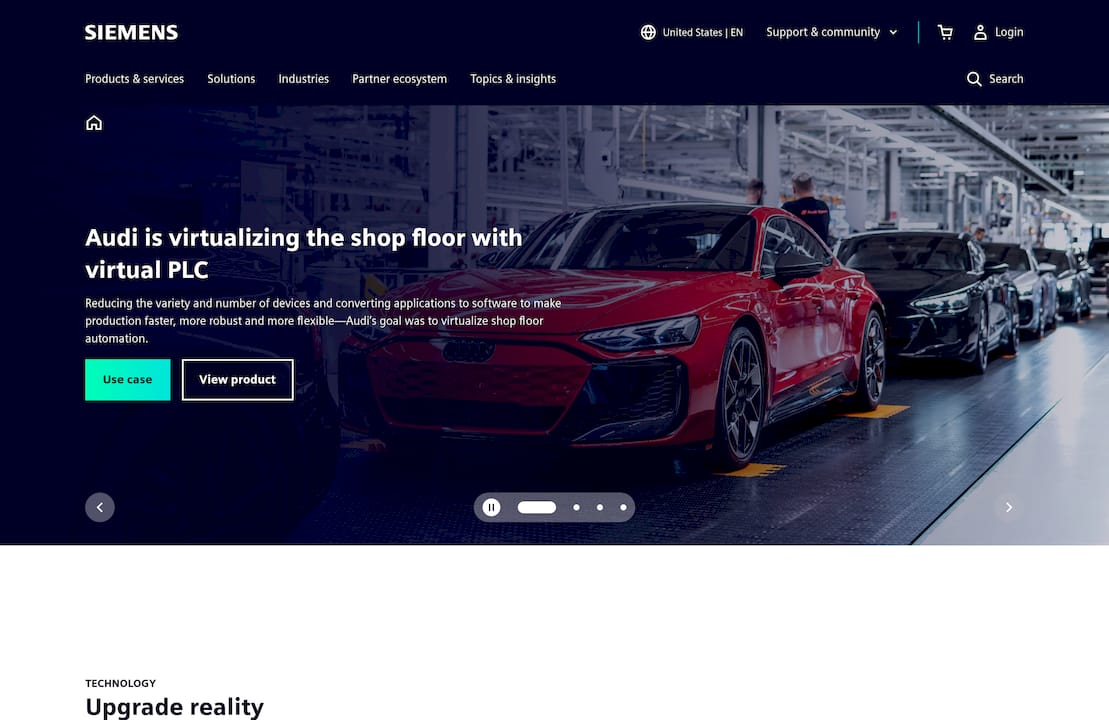
Audi used Siemens digital technologies to virtualize shop floor automation which shortened commissioning times and improved throughput. That lifecycle centric approach allowed Audi to test changes virtually and deploy validated configurations to production faster.
Pricing
Pricing varies by product and service and is provided through consultation and custom quotes. Project scale, required integrations, and service level determine final costs which makes direct list pricing uncommon for enterprise offerings.
Website: https://siemens.com
Renewable Energy Solutions Comparison
This table provides a consolidated overview of the various renewable energy solutions described in the article, highlighting their unique features, advantages, and target users to assist in making an informed decision for your energy needs.
Provider | Core Offerings | Key Advantages | Target Audience | Pricing |
Belinus Energy | High-efficiency solar panels, modular storage solutions, Centralized EMS, and AI-driven tariff optimization | Long warranties up to 35 years, supports advanced storage technologies, integrated energy intelligence, fleet-ready EV charging | European homeowners and small businesses prioritizing advanced energy management | Energy Wall starting at €7,000/unit |
Sungrow | PV inverters, energy storage systems, utility-scale renewable solutions | Global reputation, strong service and support network, comprehensive product portfolio | Businesses and utilities focusing on large-scale renewable installations | Quote-based pricing |
GreenPowerMonitor | Cloud-based asset management tools, SCADA systems, and performance monitoring solutions | Consolidated plant monitoring, extensive operational and financial analysis, widespread global deployment | Operators and asset managers of large-scale renewable energy projects | Custom pricing |
Siemens Energy | Advanced energy grid automation, power generation equipment, and energy planning services | Focus on renewable integration, comprehensive global support, innovative grid stability solutions | Utilities and industrial firms managing extensive renewable integrations | Project-based pricing |
Siemens | Solutions for electrification, industrial automation, and smart infrastructures | Extensive product range, industry expertise, and robust digital tools with sustainability focus | Manufacturers, utilities, and infrastructure owners undergoing digital transformation | Consultation-based |
Unlock the Power of Smart Solar Investment with Belinus
The “Best 5 Solar Investment Tools 2026” article highlights the critical need for integrated solutions that maximize savings while offering long-term reliability and advanced energy management. Many investors and homeowners face challenges choosing systems that combine efficiency, flexible storage, and financial predictability. Belinus answers this demand with its innovative lineup featuring the Energy Wall G1, intelligent Centralized EMS, and a 25-year financial modeling tool launching soon. These solutions empower you to optimize energy use and tailor investments to dynamic tariff opportunities with ease.
Discover how Belinus can transform your solar investment journey today. Visit Belinus to explore our residential and commercial battery storage, EV charging, and smart inverter solutions all controlled by the industry-leading energy management system. Take control of your energy future now and secure financial benefits with technology ready for 2026 and beyond.
Frequently Asked Questions
What are the top features to consider in solar investment tools for 2026?
When choosing solar investment tools, look for features like financial modeling, energy management capabilities, and real-time data analytics. These functionalities can help you optimize your investment decisions and identify the best opportunities for savings and revenue generation.
How can solar investment tools help maximize my return on investment?
Solar investment tools can maximize your return on investment by providing insights into cost savings, efficiency improvements, and financial forecasting for solar projects. Implementing these tools effectively can lead to increased returns within the first few years of operation.
What types of metrics should I track using solar investment tools?
Track metrics such as energy savings, payback period, return on investment, and system performance metrics. Monitoring these metrics regularly helps in making data-driven decisions to enhance the efficiency and profitability of your solar investments.
How often should I reevaluate my solar investment strategy with these tools?
Reevaluate your solar investment strategy at least annually or whenever there are significant changes in energy prices or technology. By conducting these reviews, you can adjust your strategy and tools to ensure optimal performance and financial returns.
Are there any risks associated with using solar investment tools?
Yes, potential risks include reliance on inaccurate data or software glitches, which can lead to poor investment decisions. To mitigate these risks, ensure you select tools with robust data sources, regular updates, and strong customer support, and perform periodic audits of your investment results.
How can I integrate solar investment tools with my existing energy systems?
Integrate solar investment tools by ensuring they are compatible with your current energy management systems and data sources. Consider using API connections or consulting technical documentation to streamline the integration process, which can enhance the overall effectiveness of your energy strategy.
Recommended
Comments