Commercial Battery Storage: Lowering Costs and Boosting Sustainability
- Dec 25, 2025
- 8 min read

Most facility managers are surprised to learn that commercial battery storage investments in Central European markets can exceed €2.5 million, making technology selection and cost management critical. Whether you operate in the heart of Benelux or compare European trends with American projects, the pressure to cut energy expenses and stay sustainable keeps rising. This practical guide breaks down how innovative battery storage systems can help you control your energy budget, meet environmental targets, and avoid common pitfalls in large enterprise settings.
Table of Contents
Key Takeaways
Point | Details |
Understanding Battery Storage Systems | Commercial battery storage systems improve energy management, reduce costs, and support sustainability. Their architecture integrates various components, optimizing energy use for businesses. |
Diverse Storage Technologies | Businesses have multiple battery technologies to choose from, including Lithium-Ion, Lead-Acid, and Sodium-Based, each with specific advantages and limitations. |
Energy Management Systems | Advanced Energy Management Systems enhance operational efficiency by optimizing energy utilization and integrating various energy sources in real-time. |
Financial and Regulatory Considerations | Understanding financial risks and navigating regulatory challenges are vital for successful battery storage investment and integration. |
Understanding Commercial Battery Storage Systems
Commercial battery storage systems represent sophisticated energy management solutions transforming how businesses control and optimize electrical infrastructure. These advanced systems capture, store, and strategically redistribute electrical energy, enabling companies to reduce operational costs while supporting sustainable energy practices.
The fundamental architecture of commercial battery storage involves multiple interconnected components designed for high-performance energy management. European market analysis from SolarPower Europe reveals that these systems typically include:
Lithium-ion battery modules
Power conversion systems
Intelligent energy management controllers
Grid connection interfaces
Thermal management systems
Modern commercial battery storage solutions address critical challenges faced by industrial and commercial enterprises. These systems provide crucial benefits like peak load shaving, emergency backup power, and grid stabilization. The Joint Research Centre’s comprehensive overview highlights their pivotal role in supporting renewable energy integration and reducing carbon emissions across European industrial sectors.
Beyond technical capabilities, these storage systems represent strategic investments that transform energy economics. By enabling businesses to store electricity during low-cost periods and discharge during peak demand, companies can significantly reduce electricity expenses and enhance operational resilience.
Pro Tip for Energy Managers: Conduct a comprehensive energy audit before implementing battery storage to precisely match system capacity with your specific organizational energy consumption patterns and operational requirements.
Types of Storage Technologies for Enterprises
Commercial battery storage encompasses a diverse range of technologies, each with unique characteristics tailored to specific enterprise energy requirements. The European Commission’s comprehensive research provides an extensive overview of the primary storage technologies available for industrial applications.
The most prevalent battery technologies in commercial settings include:
Lithium-Ion Batteries: Dominant in modern energy storage
High energy density
Rapid charging capabilities
Longer operational lifecycle
Lead-Acid Batteries: Traditional storage technology
Lower initial cost
Reliable backup power solutions
Suitable for stationary applications
Sodium-Based Batteries: Emerging technology
More sustainable materials
Potential for lower production costs
Improved thermal stability
EUROBAT’s detailed analysis of battery technologies reveals that beyond chemical battery systems, enterprises are also exploring alternative storage technologies. These mechanical and thermal storage solutions include:
Pumped Hydro Storage
Flywheel Energy Systems
Compressed Air Storage
Thermal Energy Storage
Each storage technology presents distinct advantages depending on specific operational contexts, energy consumption patterns, and sustainability goals. Factors such as initial investment, maintenance requirements, energy efficiency, and environmental impact play crucial roles in technology selection.

Here’s a summary comparing leading commercial battery storage technologies:
Technology | Typical Use Case | Strength | Main Limitation |
Lithium-Ion | High-frequency cycling sites | Long lifespan | Higher initial cost |
Lead-Acid | Backup power, stationary uses | Low upfront cost | Shorter lifespan |
Sodium-Based | Emerging, eco-conscious firms | Sustainable design | Limited deployment |
Pumped Hydro | Large-scale grid support | High capacity | Location dependent |
Flywheel | Short-term, high-power needs | Fast response | Limited energy output |
Beyond traditional battery chemistries, cutting-edge research is exploring next-generation storage solutions like graphene supercapacitors and solid-state batteries, which promise higher energy densities, faster charging times, and improved safety profiles.
Pro Tip for Technology Selection: Conduct a comprehensive total cost of ownership analysis that evaluates not just upfront expenses, but lifecycle performance, maintenance costs, and potential energy savings when choosing an enterprise storage technology.
How Energy Management Systems Maximize Value
Energy Management Systems (EMS) represent the intelligent backbone of modern commercial battery storage solutions, transforming raw electrical infrastructure into dynamic, responsive networks. Advanced integration techniques from recent research demonstrate how these sophisticated systems optimize energy utilization, cost efficiency, and operational reliability.
The core functionalities of an advanced Energy Management System include:
Real-time energy consumption monitoring
Predictive demand forecasting
Automatic load balancing
Dynamic pricing optimization
Renewable energy integration
Grid interaction and arbitrage strategies
These systems leverage sophisticated algorithms and machine learning techniques to make split-second decisions about energy storage, distribution, and consumption. By continuously analyzing multiple data streams—including historical usage patterns, real-time electricity prices, renewable energy generation, and grid conditions—EMS can significantly reduce operational expenses and enhance overall energy efficiency.
Commercial enterprises benefit from EMS through multiple strategic advantages. These intelligent systems enable businesses to:
Reduce peak demand charges
Minimize electricity procurement costs
Maximize renewable energy utilization
Provide grid stabilization services
Enhance energy resilience
Moreover, modern Energy Management Systems are not static technologies but adaptive platforms that continuously learn and improve. They can integrate multiple energy sources, predict maintenance requirements, and provide granular insights into organizational energy consumption patterns, transforming raw data into actionable business intelligence.
Pro Tip for Energy Optimization: Implement a phased EMS rollout that starts with comprehensive energy auditing, allowing gradual system integration and providing opportunities for continuous performance refinement.
Key Risks, Costs, and Financial Impacts
Commercial battery storage investments represent complex financial strategies with nuanced risk profiles that demand comprehensive understanding. Detailed financial analysis from KBRA Europe reveals the multifaceted economic landscape enterprises must navigate when implementing energy storage solutions.
The primary financial considerations for commercial battery storage investments include:
Initial Capital Expenditure
Hardware procurement costs
Infrastructure modification expenses
Installation and integration fees
Operational Expenses
Maintenance and replacement costs
Energy management system integration
Ongoing monitoring and optimization
Risk Management Factors
Technology obsolescence
Regulatory compliance
Performance degradation
Comprehensive market analysis indicates that total investment costs typically range between €250,000 to €2.5 million, depending on system scale and technological complexity. Enterprise decision makers must consider multiple financial metrics beyond initial investment, including:
Projected return on investment (ROI)
Payback period
Potential energy cost savings
Grid service revenue opportunities
Carbon credit potential
Risk mitigation strategies are crucial in managing the financial uncertainties associated with battery storage investments. Enterprises should develop comprehensive risk assessment frameworks that evaluate technological performance, market fluctuations, regulatory changes, and potential revenue streams. This approach transforms battery storage from a pure cost center into a strategic financial asset.
The following table outlines critical financial risks and how enterprises can address them:
Financial Risk | Description | Risk Mitigation Strategy |
Technology Obsolescence | Systems may become outdated quickly | Invest in modular, upgradeable designs |
Regulatory Shifts | Changing compliance requirements | Monitor policies, engage consultants |
Cost Overruns | Expenses may exceed initial estimates | Build contingency into budgets |
Revenue Uncertainty | Returns may vary with market changes | Diversify revenue streams, flexible contracts |
Moreover, emerging financial models—including energy-as-a-service contracts, shared investment structures, and performance-based funding—are creating more accessible pathways for commercial battery storage adoption, reducing upfront financial barriers and distributing economic risks.
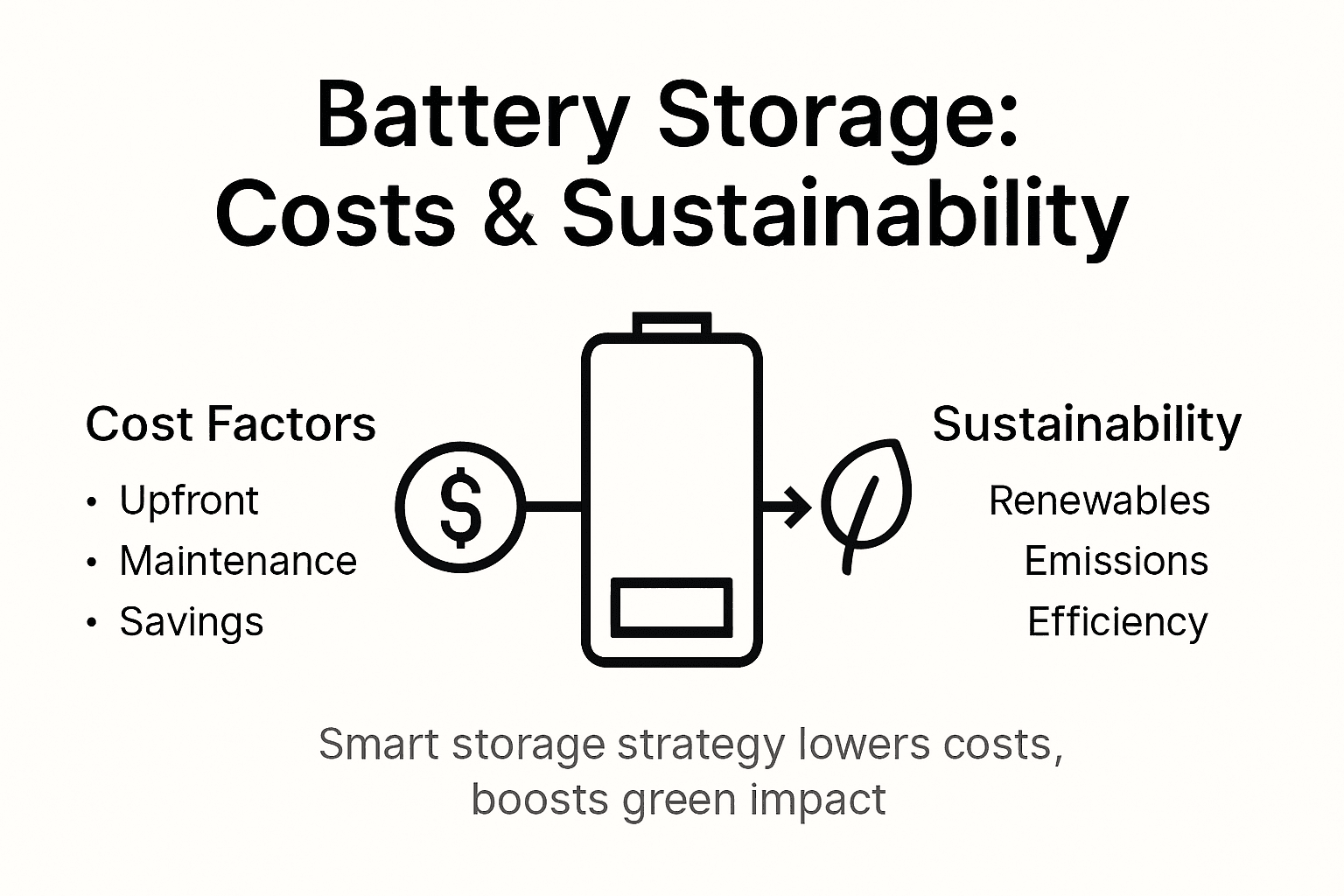
Pro Tip for Financial Planning: Develop a dynamic financial model that includes multiple scenario analyses, accounting for technology evolution, energy market volatility, and potential regulatory shifts to create a robust investment strategy.
Regulatory and Grid Integration Challenges
Grid integration represents one of the most complex technical and regulatory challenges for commercial battery storage systems in the European energy landscape. The Joint Research Centre’s comprehensive policy framework overview highlights the intricate regulatory environment that enterprises must navigate when deploying energy storage technologies.
The primary regulatory challenges for commercial battery storage include:
Regulatory Compliance
Electricity market directives
Network connection standards
Technical performance requirements
Safety and environmental regulations
Grid Access Barriers
Complex interconnection procedures
Technical verification processes
Capacity market restrictions
Network stability requirements
Market Integration Obstacles
Tariff structure complexities
Revenue stream limitations
Ancillary service qualification
Detailed comparative research on European electricity markets reveals significant variations in regulatory approaches across different regions. Central European countries demonstrate particularly nuanced frameworks that require sophisticated understanding of:
Local grid connection protocols
Electricity market participation rules
Technical performance standards
Revenue mechanism qualifications
Compliance verification processes
Enterprise stakeholders must develop comprehensive strategies that address both technical and regulatory challenges. This involves creating flexible systems capable of adapting to evolving regulatory landscapes, maintaining technical compliance, and maximizing potential revenue streams from grid services.
The emerging regulatory environment suggests a trend toward more integrated, flexible frameworks that encourage innovative energy storage deployment. Progressive jurisdictions are developing adaptive regulations that balance grid stability requirements with technological innovation, creating pathways for more dynamic commercial battery storage integration.
Pro Tip for Regulatory Navigation: Engage specialized legal and technical consultants who understand both energy regulation and battery storage technologies to develop a comprehensive compliance strategy tailored to your specific regional and operational context.
Unlock Commercial Battery Storage Benefits with Belinus Energy Solutions
The complexities of commercial battery storage—from managing high capital costs to navigating regulatory challenges—can feel overwhelming. You want a smart, scalable solution that lowers energy expenses while boosting sustainability and operational resilience. Belinus understands these challenges and transforms them into opportunities by offering integrated battery storage solutions combined with an intelligent Energy Management System that optimizes real-time energy use, demand forecasting, and grid services.
Experience the power of advanced technologies like graphene supercapacitors, scalable 400+ kWh utility storage modules, and dynamic tariff optimization that address the pain points highlighted around system costs, energy arbitrage, and grid integration. Unlock energy cost savings while maximizing renewable utilization with a partner who provides custom system designs tailored to your unique needs.

Ready to turn commercial battery storage challenges into financial and sustainability success? Discover how our comprehensive commercial solutions leverage cutting-edge storage technology and centralized EMS to reduce operational expenses and enhance energy resilience. Visit Belinus today to start crafting your energy future with integrated solar PV, battery storage, and EV charging systems.
Frequently Asked Questions
What is a commercial battery storage system?
A commercial battery storage system is an advanced energy management solution designed to capture, store, and redistribute electrical energy, allowing businesses to optimize their energy use and reduce operational costs.
How do commercial battery storage systems support sustainability?
These systems facilitate the integration of renewable energy sources, reduce carbon emissions, and allow businesses to utilize stored energy during peak demand periods, thus lowering overall energy costs and enhancing sustainability practices.
What types of battery technologies are commonly used in commercial settings?
Common battery technologies include lithium-ion batteries, lead-acid batteries, and sodium-based batteries, each offering distinct advantages in terms of energy density, lifespan, and cost.
How can businesses maximize the value of their battery storage systems?
By implementing an Energy Management System (EMS), businesses can enhance energy efficiency, reduce peak demand charges, and optimize energy utilization, ultimately resulting in substantial cost savings and improved operational resilience.
Recommended
Comments