Discover top energy-saving technologies for lower bills
- May 1
- 10 min read

TL;DR:
Proper building insulation and smart controls deliver high returns with short payback periods.
Heat pumps, paired with sustainable energy sources, significantly reduce carbon emissions and energy costs.
Combining multiple technologies like solar, batteries, and MVHR creates near-zero energy homes with maximum savings.
Energy prices across Europe have climbed sharply over the past three years, and the pressure on homeowners and small business owners to act is real. The problem is not a shortage of solutions. It is the opposite: heat pumps, MVHR systems, smart controls, insulation upgrades, solar panels, and battery storage all promise dramatic savings, yet each comes with different upfront costs, payback timelines, and performance conditions. Picking the wrong one for your building type or climate can mean years of disappointment. This guide cuts through the noise using actual performance data, real cost figures, and a clear comparison framework so you can make a confident, evidence-based decision.
Table of Contents
Key Takeaways
Point | Details |
Use proven criteria | Compare upfront cost, annual savings, and payback time when choosing energy technology. |
Heat pumps save most | Heat pumps deliver big savings, especially when paired with insulation and smart controls. |
MVHR boosts efficiency | Properly installed MVHR systems recover up to 90% of indoor heat and sharply cut losses. |
Smart controls multiply ROI | Modern controls, paired with insulation, can cut usage by up to 20% and boost all other tech. |
Integration is key | Combining technologies gives the best results and fastest payback—plan holistically. |
How to evaluate energy-saving technologies
Before you compare any two products, you need a consistent set of criteria. Marketing brochures are built to impress, not to inform. The numbers that actually matter are life cycle cost, annual energy savings in kWh, payback period, and how well a technology fits your specific building and climate.
Life cycle cost accounts for purchase price, installation, maintenance, and eventual replacement over 20 to 25 years. A cheaper upfront option can easily become the most expensive one over time if it requires frequent servicing or degrades quickly. Annual savings should be expressed in both kWh and euros so you can benchmark against your actual bills. A technology that saves 3,000 kWh per year is worth very different amounts depending on whether you pay €0.18 or €0.35 per kWh.
Payback period is where incentives change the math significantly. EU grants and 0% VAT can compress payback to just 3 to 8 years for qualifying upgrades, even for SMEs that typically face financing and skills barriers. Large firms tend to invest more readily, but the incentive landscape is improving for smaller properties and businesses too.
Key evaluation questions to ask before any purchase:
What is the seasonal performance rating, not just the peak rating?
Does this technology require changes to existing systems like radiators or ductwork?
How does performance change in your local climate, particularly in winter?
What maintenance does it require, and who services it locally?
Is it compatible with solar, battery storage, or future smart controls?
Pro Tip: Always ask for real seasonal performance data. For heat pumps, that means SCOP (seasonal coefficient of performance) across a full year of measured data, not peak lab figures. For ventilation systems, ask for real-world heat recovery rates in similar buildings. Brochure numbers are best-case scenarios.
Learning to optimize home energy use before investing in new hardware is also worth your time. Reducing baseline consumption first makes every technology investment go further. You can also review energy efficiency explained for a solid grounding in the fundamentals before comparing specific products.
Heat pumps: high-efficiency heating and cooling
Heat pumps are the most talked-about technology in European energy efficiency right now, and for good reason. They do not generate heat by burning fuel. Instead, they move heat from the outside air or ground into your building using a refrigeration cycle, which means they deliver more energy than they consume.
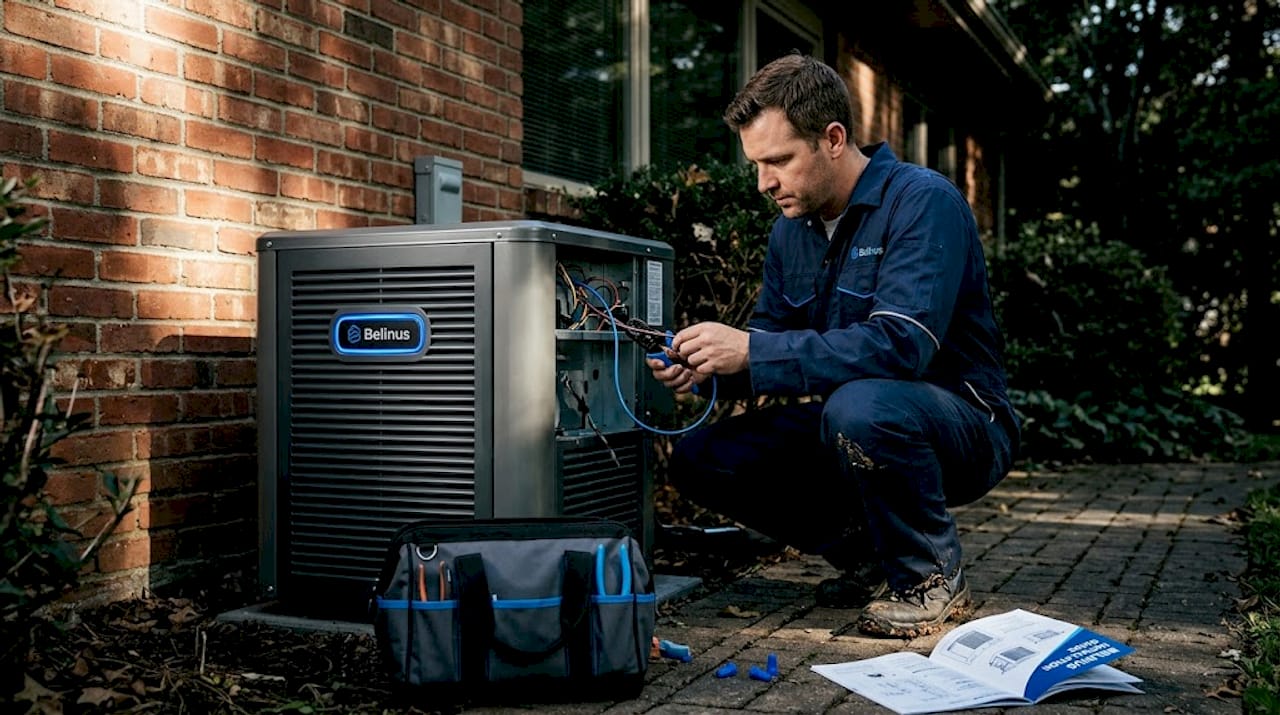
The critical metric here is SCOP, the seasonal coefficient of performance. A SCOP of 3.7 means you get 3.7 units of heat for every unit of electricity you put in. Compare that to a gas boiler, which at best converts one unit of fuel into less than one unit of heat. Real-world data across 1,023 units in Central Europe shows air-source heat pumps (ASHP) achieving a SCOP of 3.72 and ground-source heat pumps (GSHP) reaching 4.80, with annual savings of €400 to €800 per year compared to gas.
Technology | SCOP | Upfront cost (approx.) | Annual savings vs. gas |
Air-source heat pump | 3.72 | €8,000–€14,000 | €400–€700 |
Ground-source heat pump | 4.80 | €15,000–€25,000 | €600–€800 |
Gas boiler (reference) | <1.0 | €3,000–€6,000 | Baseline |
Pros of heat pumps:
Very high seasonal efficiency, especially GSHP
Provide both heating and cooling from one system
Fully compatible with solar PV and battery storage
Reduce carbon emissions significantly when paired with green electricity
Cons of heat pumps:
Higher upfront cost than gas alternatives
Performance drops in extreme cold if undersized
Work best with low-temperature emitters like underfloor heating
Pro Tip: If you are retrofitting a heat pump into an older home with radiators, ask your installer to check whether the existing radiators can operate at 45°C flow temperature. Many can, especially if your home is well insulated. Pairing with integrating solar with storage can further reduce your net electricity cost and maximize the economic case.
Mechanical ventilation with heat recovery (MVHR): maximizing indoor efficiency
Most people focus on heating and ignore ventilation. That is a costly oversight. In a well-insulated building, ventilation losses can account for up to 45% of total heat demand. MVHR, mechanical ventilation with heat recovery, addresses this directly.
An MVHR system uses a counterflow heat exchanger to extract stale warm air from inside and transfer its heat to the fresh incoming air, before the warm air is exhausted outside. The result is that up to 90% of exhaust heat is recovered rather than wasted, reducing ventilation-related heat loss from 45% down to just 13% of total heat demand. In practical terms, a well-installed MVHR system saves around 2,600 kWh per year in heating energy, with a return on investment exceeding 58% in high-energy-price scenarios.
2,600 kWh per year. That is roughly equivalent to running a 3 kW electric heater for nearly 900 hours. In markets where electricity costs €0.30/kWh, that is €780 in annual savings from ventilation alone.
Pros of MVHR:
Recovers 80 to 90% of heat that would otherwise be lost
Improves indoor air quality by continuously filtering incoming air
Reduces the load on heating systems, extending their lifespan
Works silently in the background once installed
Cons of MVHR:
Requires ductwork, which can be disruptive to install in existing buildings
Higher upfront cost and professional installation required
Less effective in older, leaky buildings unless air sealing is improved first
MVHR pairs naturally with smart energy management solutions that can schedule ventilation rates based on occupancy, time of day, and outdoor temperature, squeezing even more efficiency out of the system.
Pro Tip: Clean or replace MVHR filters every 6 to 12 months. A clogged filter can drop heat recovery efficiency from 90% to below 70%, wiping out a significant portion of your annual savings. Set a calendar reminder. It takes 15 minutes and costs almost nothing.
Smart controls, insulation, and fabric: the essential trio
No matter how advanced your heating or ventilation system is, it will underperform if the building itself leaks heat or if the controls are too basic to respond to real conditions. Smart controls and building fabric upgrades are not glamorous, but they consistently deliver some of the strongest returns in the entire energy efficiency toolkit.
Smart thermostats and zoned controls can cut energy consumption by up to 20% by heating only the spaces you use, at the times you actually need heat. New builds with EPC A or B ratings use dramatically less energy than older stock, largely because of better insulation and airtightness, not just better heating systems.
“The cheapest energy is the one you don’t use.” This is not a cliché. It is the core logic behind every building retrofit. Insulation reduces the size of heating system you need, which reduces capital cost, running cost, and carbon output simultaneously.
The right sequence matters:
Upgrade insulation and building fabric first. Wall insulation, roof insulation, floor insulation, and high-performance windows reduce heat demand before you spend anything on mechanical systems.
Add smart controls second. A smart thermostat or zoned heating controller maximizes the efficiency of whatever heating system you have, whether old or new.
Monitor and adjust continuously. Use data from your controls to identify where heat is still being wasted and refine your settings seasonally.
Feature | Smart controls | Basic thermostat | Modern insulation | Old fabric |
Energy saving potential | Up to 20% | 0 to 5% | 30 to 50% | Baseline |
Upfront cost | €200–€800 | €50–€150 | €5,000–€20,000 | Baseline |
Payback period | 1 to 3 years | 1 to 2 years | 5 to 15 years | N/A |
Compatibility | Works with any system | Limited | Permanent improvement | N/A |
Explore the smart home control guide for a practical walkthrough of the best control options available today, and check out energy-saving tips for smart homes for quick wins you can implement immediately.
Comparing top technologies: which fits your scenario?
Now that you understand each technology individually, the real question is: which combination makes sense for your property, budget, and goals?
Technology | Efficiency gain | Annual savings (€) | Best for | Payback (years) |
Air-source heat pump | SCOP 3.72 | €400–€700 | Insulated homes, retrofits | 7 to 12 |
Ground-source heat pump | SCOP 4.80 | €600–€800 | New builds, rural properties | 10 to 15 |
MVHR | 80 to 90% heat recovery | €500–€800 | Airtight new builds, offices | 5 to 10 |
Smart controls | Up to 20% reduction | €150–€400 | Any property type | 1 to 3 |
Insulation upgrade | 30 to 50% reduction | €300–€1,000+ | All property types | 5 to 15 |
Solar + battery + heat pump | Combined zero-bill | €1,000–€2,500+ | New builds, large retrofits | 6 to 10 |
The most exciting benchmark right now is the zero-bill home model: solar panels, a heat pump, and battery storage working together to eliminate net energy costs. Energiesprong-style deep retrofits in the Netherlands and Germany are achieving 70 to 80% energy savings in existing buildings using this integrated approach. AI-driven controls are beginning to optimize these systems in real time, adjusting for tariff changes, weather forecasts, and occupancy patterns.
When deciding which technology to prioritize, consider these scenarios:
Full retrofit on a limited budget: Start with insulation and smart controls. These deliver the fastest payback and make every future upgrade more effective.
New build or major renovation: Go straight to heat pump plus MVHR plus solar. The combination delivers near-zero running costs.
Small business with high daytime consumption: Solar PV with battery storage and smart energy management offers the strongest commercial case.
Older property in a cold climate: Prioritize air sealing and insulation before any mechanical system. A heat pump in a leaky building will underperform and cost more to run.
For a deeper look at how solar and storage work together, the integrating PV and storage guide is worth reading alongside integrated PV system examples to see how real installations are structured.
What most guides miss about energy-saving tech decisions
Here is the honest version of what we see repeatedly: homeowners and business owners get excited about the most advanced technology available, install it into a building that has not been properly prepared, and then wonder why the savings do not match the projections.
A heat pump in a poorly insulated building will run longer, work harder, and deliver a SCOP closer to 2.5 than 3.7. An MVHR system in a building with significant air leaks will recover less heat because the pressure differential it relies on is compromised. Smart controls cannot compensate for walls that lose heat faster than any system can replace it. The technology is not the problem. The sequence is.
The other trap we see regularly is grant-chasing. EU incentives are genuinely valuable and can take years off your payback period. But we have seen projects where the grant determined the technology choice rather than the building’s actual needs. That is backwards. Grants should accelerate a decision you have already made on technical merit, not drive it.
The most effective approach combines building fabric improvement with properly sized mechanical systems and intelligent controls, in that order. It is not about having the latest gadget. It is about solar plus storage integration that fits your actual consumption profile, a heat pump sized to your actual heat loss, and controls that respond to how you actually live and work.
“The most effective energy saving comes from combining smart choices, not from any one gadget.”
Get a professional system design before you buy anything. Not a quote for a single product, but a whole-building energy assessment that models your current losses, your target performance, and the sequence of investments that will get you there most efficiently.
Ready to apply the top energy-saving technologies?
You now have the framework, the data, and the comparison tools to make a genuinely informed decision about which technologies belong in your home or business. The next step is putting that knowledge into action with the right support behind you.

Belinus brings together solar PV, battery storage, EV charging, and intelligent energy management into one integrated platform, designed specifically for homeowners and small businesses across Europe. Whether you are planning a full retrofit, adding storage to an existing solar installation, or exploring how dynamic tariff optimization can cut your bills further, Belinus energy solutions offers the expertise and technology to build a system around your actual needs. Explore the resources, use the tools, and take the first step toward lower bills and a more sustainable operation today.
Frequently asked questions
What is the most cost-effective energy-saving technology for homes?
Insulation combined with smart controls offers the most consistent and rapid return on investment in most cases. Smart thermostats and zoned controls alone can cut energy use by up to 20%, with payback periods as short as one to three years.
How much can a heat pump save on heating bills?
A properly sized heat pump can save €400 to €800 per year compared to gas heating in Central Europe, based on real-world data from over 1,000 installed units.
Is MVHR suitable for older buildings?
MVHR works best in airtight properties and may deliver lower returns in older, drafty homes. MVHR performance data shows that air sealing and insulation upgrades should come first to maximize heat recovery efficiency.
What role do grants or incentives play in payback time?
EU grants and 0% VAT can compress payback periods for qualifying upgrades to just 3 to 8 years, making previously marginal investments clearly worthwhile.
Can these technologies be combined for greater impact?
Yes. Combining heat pumps, smart controls, MVHR, and solar with battery storage can achieve zero-bill home outcomes, with deep retrofits achieving 70 to 80% total energy savings in existing buildings.
Recommended
Comments