Dynamic Energy Pricing Explained for European Homes
- 2 hours ago
- 9 min read

TL;DR:
Dynamic energy pricing links electricity costs to real-time wholesale market conditions, varying every 30 minutes. Smart meters and automation are essential to optimize savings and fully benefit from fluctuating rates. Participating in dynamic tariffs supports renewable integration and reduces reliance on fossil fuels across Europe.
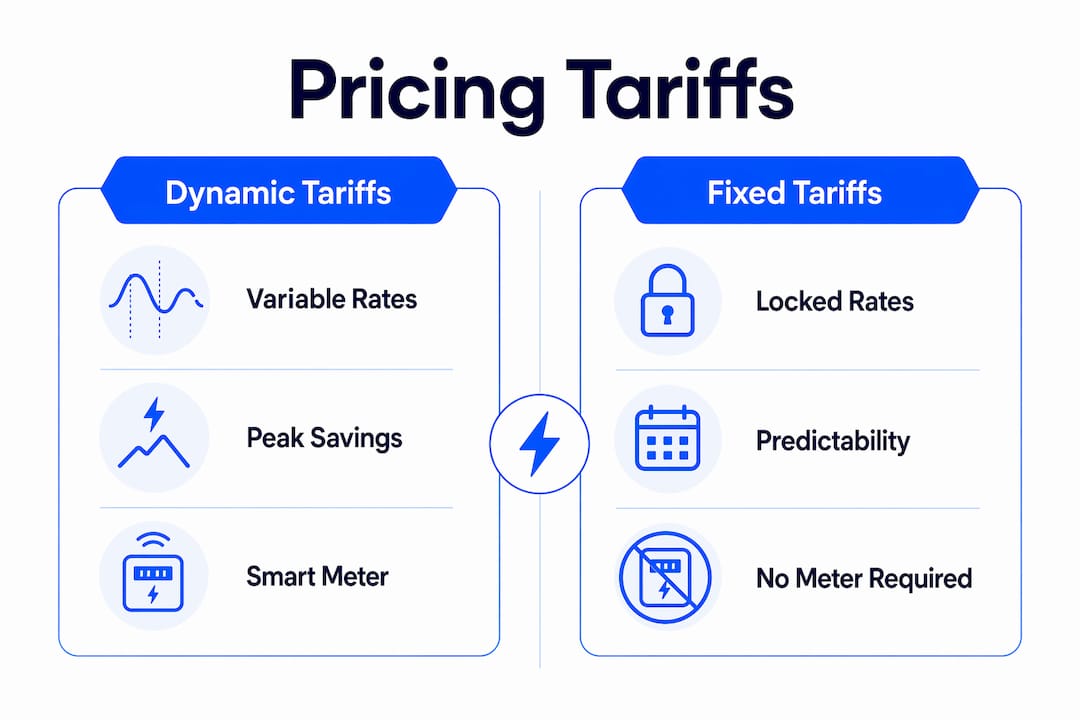
Dynamic energy pricing is a real-time electricity rate model where the price you pay per kilowatt-hour changes throughout the day based on wholesale market conditions. Unlike fixed tariffs, these rates can shift every 30 minutes, rewarding consumers who use power when supply is high and demand is low. In Europe, 2026 regulatory updates have expanded access to these tariffs, making them relevant to millions of households and businesses. Understanding how dynamic energy pricing works is now a practical financial skill, not just a technical curiosity.

How does dynamic energy pricing work?
Dynamic energy pricing, also called time-of-use or real-time pricing in industry terminology, links your electricity bill directly to the wholesale spot market. Prices update every half hour, reflecting live supply and demand across the grid. That means the electricity you use at 2 a.m. on a windy night can cost a fraction of what you pay at 6 p.m. on a cold, still evening.
The smart meter requirement
Smart meters are required to participate in dynamic tariffs because they record your consumption in 15- or 30-minute intervals. Standard meters only log total usage over a billing period, making it impossible to match your consumption to the correct half-hourly price. Without a smart meter, your supplier cannot accurately bill you under a dynamic plan. Most European countries have rolled out smart meters broadly, so check with your network operator if you are unsure whether yours qualifies.
Day-ahead pricing and planning
One of the most practical features of dynamic tariffs is day-ahead price publication. Suppliers post the next day’s half-hourly prices by early evening, giving you a full schedule to plan around. You can see that tomorrow’s prices will spike between 5 p.m. and 8 p.m. and drop sharply after midnight. That window lets you schedule your dishwasher, washing machine, or EV charger to run during the cheapest hours.
Pro Tip: Download your supplier’s price app and check tomorrow’s forecast each evening. Five minutes of planning can shift 30–40% of your flexible loads to off-peak windows.
Fixed costs within a dynamic bill
Not everything on your bill moves with the market. Standing charges and base unit rates remain fixed, covering network maintenance and supplier overhead regardless of wholesale prices. Consumers who ignore these fixed costs often overestimate how much they can save. The variable portion of your bill is where dynamic pricing creates opportunity; the fixed portion sets a floor you cannot reduce through load shifting alone.
Key pricing mechanics at a glance:
Half-hourly intervals: Prices update every 30 minutes based on live wholesale data.
Day-ahead forecasts: Tomorrow’s price schedule is published the evening before.
Peak windows: Typically weekday evenings from 4 p.m. to 9 p.m. carry the highest rates.
Off-peak windows: Overnight hours and midday solar peaks often carry the lowest rates.
Price caps: Most suppliers apply caps to protect consumers from extreme spikes.
What are the benefits and risks of dynamic tariffs?
Dynamic pricing advantages are real, but they are not automatic. Business leaders report 5–25% cost savings from dynamic tariffs when they combine load shifting with automation. That range is wide because results depend almost entirely on how much of your consumption you can move to cheaper hours.
Economic and environmental benefits
The financial case is straightforward: use less power during expensive peak hours and more during cheap off-peak windows. For a household running an EV, a heat pump, and a battery storage system, the savings compound quickly. On the environmental side, dynamic tariffs incentivize consumption when renewable generation from wind and solar is highest. That alignment reduces reliance on fossil fuel peaker plants and supports Europe’s decarbonization targets directly.
Dynamic pricing also shifts how businesses think about energy. Rather than treating electricity as a fixed overhead, energy becomes a strategic variable expense that finance and operations teams can actively manage. That mindset shift alone drives better decisions about when to run energy-intensive processes.
Risks and limitations
Price volatility is the primary risk. On-peak to off-peak price ratios typically run 2:1 to 3:1, which is manageable with planning. During extreme weather events or grid stress, however, prices can spike sharply within a single half-hour window. Suppliers use price caps to limit exposure, but those caps vary by provider and contract.
The second risk is cognitive fatigue. Manually tracking half-hourly prices every day is exhausting and unsustainable. Automation through Energy Management Systems is the gold standard for converting price signals into consistent savings. Without it, most consumers revert to fixed habits and lose the benefit entirely.
Dynamic vs. fixed vs. variable tariffs
Tariff Type | Price Behavior | Best For | Main Risk |
Fixed | Locked rate for contract term | Predictable budgeting | Misses market lows |
Variable | Follows seasonal wholesale trends | Medium flexibility | Moderate volatility |
Dynamic | Changes every 30 minutes | Active load shifters | High volatility without automation |
Pro Tip: If you are new to dynamic pricing, start with a hybrid plan that caps your exposure while still offering off-peak discounts. Build your automation setup before switching to a fully dynamic tariff.
How to optimize your energy use under dynamic pricing
Maximizing savings under dynamic rates requires a combination of behavioral changes and technology. The following steps apply to both households and small businesses.
Audit your flexible loads. Identify every appliance or process that does not need to run at a specific time. EV charging, water heating, dishwashers, washing machines, and battery storage are all flexible. HVAC pre-conditioning also qualifies if your building has thermal mass.
Check day-ahead prices every evening. Your supplier’s app or a third-party platform like Tibber or Octopus Energy’s Agile dashboard publishes tomorrow’s half-hourly schedule. Build a two-minute habit of reviewing it before bed.
Automate with a smart Energy Management System. AI-driven EMS platforms read the price forecast and schedule your devices automatically. The Belinus EMS, for example, runs on 15-minute optimization cycles and dispatches battery storage, EV charging, and solar output based on live tariff data. You can learn more about energy dispatch control for Benelux homes to see how this works in practice.
Integrate EV charging with tariff data. EV charging is one of the largest flexible loads in a household or fleet. Scheduling charges to run between midnight and 6 a.m. on a dynamic tariff can cut charging costs by 40–60% compared to evening peak rates.
Plan your budget around fixed charges. Calculate your standing charge and fixed unit rate first. Then model your variable savings on top. This prevents the common mistake of expecting dynamic pricing to eliminate your bill rather than reduce its variable component.
Use battery storage as a buffer. A home battery like the Belinus Energy Wall G1 charges during cheap overnight or midday solar windows and discharges during expensive evening peaks. That arbitrage captures the full spread between off-peak and on-peak prices without requiring you to change your daily routine.
Monitor and adjust monthly. Review your half-hourly consumption data each month. Most smart meter portals and EMS dashboards show exactly when you used power and what it cost. Use that data to refine your automation rules and identify loads you missed in your initial audit.
How does dynamic pricing support renewable energy?
Dynamic pricing is one of the most direct mechanisms for aligning electricity demand with renewable supply. When wind turbines across the North Sea generate a surplus or solar panels across southern Europe push midday output above demand, wholesale prices fall sharply. Price signals aligned with renewable supply pull flexible demand into those windows, reducing curtailment and making the grid more efficient.
Real-world impact on grid stability
Grid operators across Europe face a growing challenge: renewable generation is variable, but traditional demand is not. Dynamic tariffs create a financial incentive for consumers to shift demand voluntarily, reducing the need for expensive grid interventions. Countries like Denmark and Germany, where renewable penetration exceeds 50% of annual generation, have seen dynamic pricing pilots reduce peak demand by measurable margins.
Contribution to decarbonization
Every kilowatt-hour consumed during a renewable surplus window displaces a kilowatt-hour that would otherwise come from a gas or coal peaker plant. At scale, this effect is significant. European households and businesses that actively participate in dynamic tariffs contribute directly to national carbon reduction targets. Projects in the renewable energy sector show how demand flexibility and generation investment reinforce each other.
Scenario | Price Signal | Consumer Action | Grid Benefit |
High wind, low demand | Very low rates | Charge EV, run appliances | Absorbs surplus, prevents curtailment |
High solar midday | Low rates | Pre-cool building, charge battery | Reduces midday grid stress |
Peak evening demand | High rates | Discharge battery, defer loads | Lowers peak, reduces peaker plant use |
Grid stress event | Capped spike | Automated load reduction | Stabilizes frequency |
Key takeaways
Dynamic energy pricing delivers real savings only when smart metering, day-ahead planning, and automated load management work together as a system.
Point | Details |
Smart meters are required | You cannot enroll in a dynamic tariff without a meter that records usage in 15- or 30-minute intervals. |
Day-ahead prices enable planning | Suppliers publish tomorrow’s half-hourly rates by evening, giving you a full schedule to optimize around. |
Automation drives consistent savings | AI-driven Energy Management Systems convert price signals into savings without daily manual effort. |
Fixed charges set a savings floor | Standing charges and base rates remain constant, so savings come only from the variable portion of your bill. |
Renewable alignment is a real benefit | Consuming during high wind and solar windows reduces emissions and supports grid stability across Europe. |
Why most people get dynamic pricing wrong
Most consumers approach dynamic pricing as a passive discount. They sign up, assume the savings will appear automatically, and then feel disappointed when their bills barely change. That is the wrong mental model entirely.
Dynamic pricing is an active tool. The savings are real, but they require you to treat electricity like a commodity you can buy at different prices throughout the day. That is exactly how large industrial consumers have operated for decades. The difference now is that smart meters, day-ahead apps, and affordable home automation have brought that capability to households and small businesses.
The cognitive fatigue problem is real and underappreciated. I have seen households with genuine flexibility in their loads fail to capture savings simply because checking a price app every evening felt like homework. The solution is not more discipline. The solution is automation. Once your EV charger, battery, and smart appliances respond to price signals without your input, dynamic pricing becomes genuinely passive.
The other mistake I see constantly is ignoring fixed charges. A household that cuts its variable consumption costs by 20% but never accounts for standing charges will calculate a savings figure that looks great on paper and disappoints on the actual bill. Model the full bill, not just the variable rate.
My honest view is that dynamic pricing will become the default tariff structure in Europe within a decade. Regulators are pushing it, grid operators need it, and renewable penetration makes it increasingly necessary. The consumers and businesses that build their energy infrastructure around it now, with battery storage, smart EMS, and flexible loads, will have a structural cost advantage over those who wait.
— Marc
How Belinus helps you capture dynamic pricing savings

Belinus builds the infrastructure that makes dynamic pricing work automatically. The Belinus EMS runs on 15-minute optimization cycles, reading live tariff data and dispatching battery storage, solar output, and EV charging without manual input. The Energy Wall G1 stores 16 kWh using graphene supercapacitor technology, purpose-built for daily arbitrage between off-peak and peak windows. For businesses managing fleets, the ETAP Pro EV Charger integrates with fleet management platforms to schedule charging around the cheapest daily windows automatically. Explore the full range of smart energy solutions at Belinus to see how battery storage, solar, and intelligent dispatch work together to reduce your energy costs under dynamic tariffs.
FAQ
What is dynamic energy pricing?
Dynamic energy pricing is an electricity tariff where the rate per kilowatt-hour changes every 30 minutes based on real-time wholesale market prices. Consumers pay less when supply is high and demand is low, and more during peak demand periods.
Do i need a smart meter for a dynamic tariff?
Yes. Smart meters record consumption in 15- or 30-minute intervals, which is required for accurate billing under a dynamic plan. Standard meters cannot support dynamic tariff enrollment.
How much can i save with dynamic energy pricing?
Savings range from 5–25% depending on how much of your consumption you can shift to off-peak windows and how much automation you use. Manual management produces smaller, inconsistent results compared to automated Energy Management Systems.
When are prices highest under dynamic tariffs?
Prices are typically highest on weekday evenings between 4 p.m. and 9 p.m., when household demand peaks and solar generation drops. Cold winter evenings with low wind output can push prices to their daily maximum.
How does dynamic pricing support renewable energy?
Dynamic tariffs create a financial incentive to consume electricity when wind and solar generation is high, which reduces fossil fuel reliance and lowers grid emissions. This demand flexibility is a core mechanism for integrating higher shares of renewable generation across European grids.
Recommended
Comments