Energy Efficiency Upgrade Guide for European Homes
- Jun 9
- 9 min read
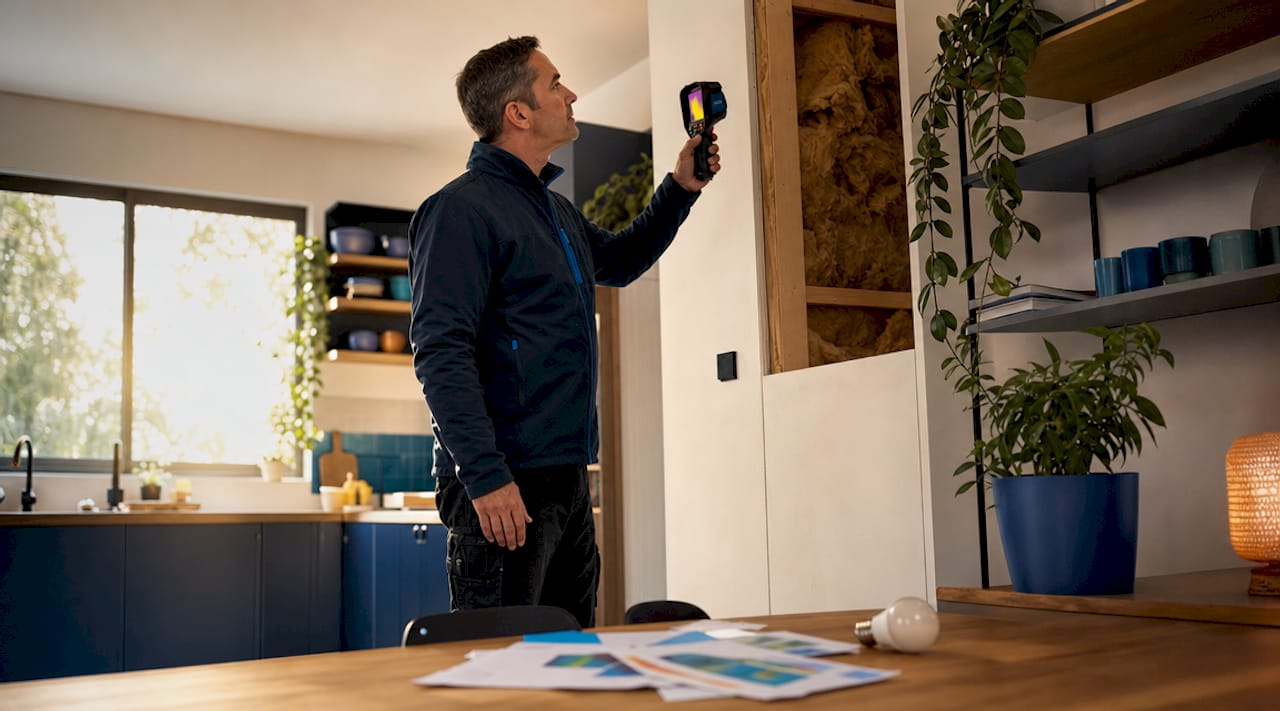
TL;DR:
The highest-impact home energy upgrades in Europe focus on improving the building envelope, such as cavity wall and loft insulation, before upgrading heating systems. Sealing drafts and behavioral changes like lowering thermostats offer quick, cost-effective savings, while staged upgrades maximize efficiency and comfort. Prioritizing insulation and air sealing first, then installing appropriately sized heat pumps and smart controls, yields the best long-term results.
An energy efficiency upgrade is a targeted home improvement that reduces energy consumption, lowers utility bills, and increases indoor comfort. For European homeowners and property managers, the stakes are high: energy costs across the EU have remained volatile, and poorly insulated homes can waste the majority of their heating output before it ever warms a room. This guide covers the highest-impact upgrades available, from cavity wall insulation and heat pump installation to smart heating controls and behavioral shifts, so you can prioritize spending and see real returns. The right sequence matters as much as the upgrades themselves.
What are the highest-impact energy efficiency upgrades for European homes?
The single most effective category of home efficiency improvements is the building envelope. Before you touch your heating system, address what your walls, roof, and floors are doing with the heat you already pay for.
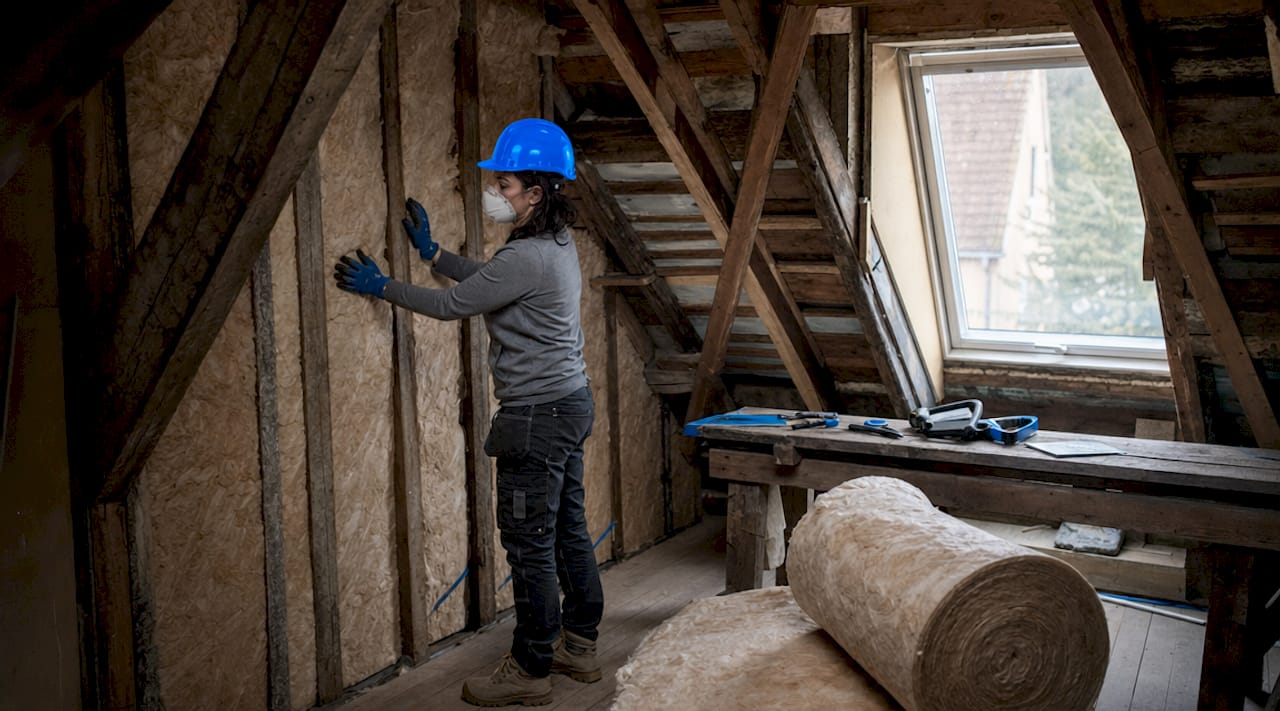
Cavity wall insulation reduces heat loss by up to 35%, and loft insulation addresses up to 25% of heat escape. Together, these two measures can cut your heating demand by more than half in older European homes. That is not a marginal gain. It is the foundation every other upgrade depends on.
Air sealing delivers comparable value at a fraction of the cost. Sealing drafts around skirting boards, letterboxes, and light fittings is one of the most cost-effective entry-level upgrades available. Cold air infiltration forces your boiler or heat pump to work harder than necessary, and most homeowners never identify it as the culprit.
Heating system upgrades come third, not first. Heat pumps deliver 2 to 4 units of heat per unit of electricity consumed, reducing annual heating bills by approximately 10% compared to gas boilers. That efficiency advantage grows significantly once your home’s insulation is already performing well.
Key upgrades ranked by impact:
Cavity wall insulation: Up to 35% heat loss reduction, suitable for most post-1920 European homes
Loft insulation: Addresses up to 25% of heat escape, low disruption to install
Air sealing: Gaps around pipes, skirting boards, and fittings cost little to seal and pay back quickly
Heat pump installation: Best installed after envelope improvements to avoid oversizing
LED lighting: Immediate reduction in electricity draw with no behavioral change required
Smart heating controls: Programmable thermostats and zone controls reduce waste without sacrificing comfort
Pro Tip: Never install a new boiler or heat pump before completing insulation and air sealing. An oversized system installed in a leaky home will cycle inefficiently and cost more to run than the old one it replaced.
How to assess your home’s current energy performance before upgrades
Before spending money on upgrades, you need a clear picture of where your home currently stands. Two formal tools exist for this: the Energy Performance Certificate (EPC) and a professional energy audit. Both serve different purposes and work best together.
An EPC rates your home on a scale from A (most efficient) to G (least efficient) and is legally required in most EU member states when selling or renting a property. It gives you a baseline rating and a list of recommended improvements with estimated costs and savings. An energy audit goes deeper. A qualified assessor uses thermal imaging, blower door tests, and consumption data to identify exactly where heat is escaping and where your systems are underperforming.
If a full audit is outside your budget, you can run a practical self-assessment. Walk your home on a cold day with a lit incense stick near windows, doors, skirting boards, and electrical outlets. Smoke movement reveals draft locations that standard visual checks miss. Check your loft insulation thickness with a ruler. Anything below 270mm is underperforming by current standards.
Assessment method | Cost | What it reveals | Best for |
Energy Performance Certificate | Low to moderate | Overall efficiency rating, recommended upgrades | Baseline comparison, legal compliance |
Professional energy audit | Moderate to high | Specific heat loss points, system inefficiencies | Pre-renovation planning, older homes |
DIY draft check | Free | Air infiltration locations | Immediate low-cost fixes |
Smart meter review | Free | Usage patterns by time of day | Behavioral and tariff optimization |
The most useful output from any assessment is a prioritized upgrade list. Without one, homeowners tend to invest in visible upgrades like new windows before addressing invisible ones like loft insulation, which almost always delivers a worse return on investment.
Low-cost and quick-win energy-saving practices to start immediately
Not every home efficiency improvement requires a contractor or a significant budget. Several behavioral and minor physical changes deliver measurable savings within weeks.
Lowering your thermostat by just 1°C saves up to £73 per year on heating costs. That single adjustment costs nothing and takes thirty seconds. Most European households heat to 21°C or higher when 19°C to 20°C is comfortable for most people in normal clothing.
Washing clothes in cold water reduces energy consumption by 80% compared to a hot wash cycle. Modern detergents are formulated to perform at lower temperatures, so fabric care is not compromised. Installing an efficient showerhead saves approximately $93 per person annually on hot water costs. For a household of four, that is a meaningful annual reduction with a payback period measured in weeks.
Quick wins that cost little or nothing:
Set your hot water cylinder to 60°C, not higher. Above that temperature, you are paying to heat water you will immediately dilute with cold.
Bleed radiators annually to remove trapped air. A cold spot at the top of a radiator means it is not heating at full capacity.
Place reflective panels behind radiators on external walls. These bounce heat back into rooms rather than letting it conduct through the wall.
Switch your energy tariff to monthly direct debit. Paying quarterly or on receipt of bill carries an approximate £140 annual premium with many UK and European suppliers.
Use smart heating controls to schedule heating around your actual occupancy patterns rather than running it continuously.
Pro Tip: Avoid the common mistake of turning your heating completely off when you leave the house in winter. In cold climates, allowing the temperature to drop below 15°C forces your system to work much harder to recover, often consuming more energy than a lower continuous setpoint would have.
Comparing insulation types and heating systems: selecting the right upgrades
The upgrade insulation guide principle is straightforward: more insulation is almost always better, but the type and placement determine the return. Current loft insulation standards recommend 39.8cm (approximately 15.7 inches) of mineral wool. Most homes built before 1990 have significantly less, and many have none at all in the correct locations.
Insulation type | Typical cost | Heat loss reduction | Disruption level |
Loft insulation (mineral wool) | Low | Up to 25% | Minimal |
Cavity wall insulation | Low to moderate | Up to 35% | Low (drilled externally) |
Solid wall insulation (external) | High | Up to 45% | Significant |
Floor insulation | Moderate | 10 to 15% | Moderate |
Pipe insulation | Very low | Reduces standby losses | Minimal |
Solid wall insulation applies to pre-1920 European homes built with single-skin masonry. These properties cannot accept cavity fill, so external or internal cladding is the only option. The upfront cost is higher, but the performance gain in older stone or brick homes is substantial. Higher quality insulation materials significantly outperform older or substandard installations, justifying the upfront investment in most cases.
On the heating side, the choice between a gas boiler and a heat pump is increasingly clear from an efficiency standpoint. Heat pumps extract heat from outdoor air or ground and deliver it indoors at a ratio of 2 to 4 units of heat per unit of electricity. A gas boiler, even a modern condensing model, converts fuel to heat at roughly 90% efficiency at best. The environmental advantage of a heat pump grows as the electricity grid decarbonizes, which is happening across Europe at an accelerating pace.
The catch is sizing. A heat pump sized for a poorly insulated home will be oversized once you add insulation, leading to short cycling and reduced efficiency. Always complete your energy-saving technologies assessment and envelope improvements before specifying a heat pump.
How to plan and implement a sequential energy efficiency upgrade for lasting impact
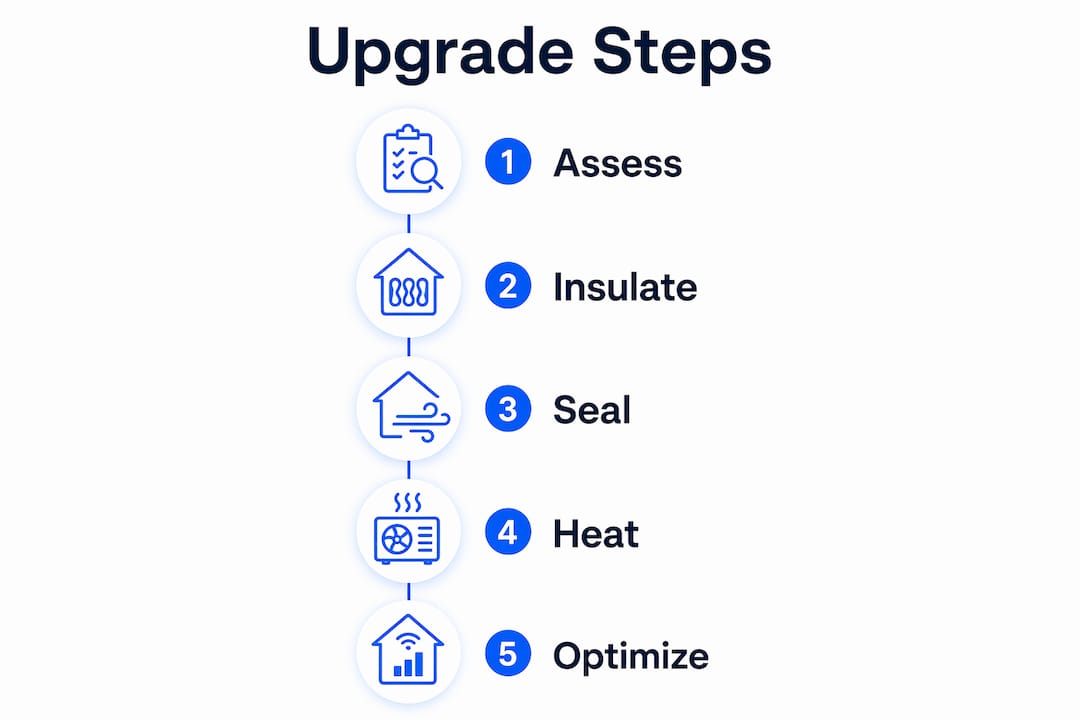
The most common and costly mistake in home energy upgrades is doing them in the wrong order. Prioritizing building fabric improvements before HVAC replacements is the single most important principle in any energy efficiency upgrade guide. A whole-home, staged approach combining insulation, air sealing, and smart heating controls delivers the best combination of comfort, cost reduction, and carbon savings.
Follow this sequence for maximum impact:
Get an EPC or energy audit. Establish your baseline before spending anything. This document guides every subsequent decision.
Seal all drafts. Address gaps around pipes, skirting boards, letterboxes, and loft hatches. This costs very little and reduces the heating load immediately.
Install or top up loft insulation. Target 39.8cm of mineral wool. This is the highest-return insulation investment in most European homes.
Address cavity or solid wall insulation. Cavity fill is low cost and low disruption. Solid wall insulation requires more planning but delivers significant gains in older properties.
Upgrade heating controls. Install a smart thermostat and zone controls before replacing the heating unit itself. Controls often deliver 10 to 15% savings on their own.
Right-size and replace the heating system. Once demand is reduced, install the smallest heat pump or boiler that meets the new, lower load. Oversizing wastes money at purchase and in operation.
Add renewable generation. Solar PV and battery storage make the most sense after demand is already minimized. A smaller system covers a larger percentage of a low-demand home’s needs.
Pro Tip: Budget for one stage at a time rather than attempting a full retrofit in a single project. Staged upgrades let you measure the impact of each intervention, adjust the plan based on real results, and spread costs across multiple years without taking on unnecessary debt.
The energy efficiency checklist approach works well for property managers overseeing multiple units. Standardizing the upgrade sequence across a portfolio reduces contractor costs and simplifies performance tracking.
Key takeaways
A sequential energy efficiency upgrade, starting with insulation and air sealing before replacing heating systems, delivers the highest return on investment and avoids the costly mistake of oversizing equipment in a leaky home.
Point | Details |
Insulation comes first | Cavity wall and loft insulation reduce heat loss by up to 35% and 25% respectively before any heating upgrade. |
Air sealing is underrated | Sealing gaps around skirting boards and fittings is low cost and delivers immediate bill reductions. |
Sequence determines outcome | Installing a heat pump before improving the building envelope leads to oversizing and inefficiency. |
Behavioral changes matter | Lowering the thermostat 1°C saves up to £73 per year with zero capital investment. |
Assessment before action | An EPC or energy audit identifies the highest-return upgrades specific to your property type and climate. |
Why most homeowners get the upgrade order backwards
After working through dozens of home energy assessments and retrofit projects, the pattern I see most often is homeowners investing in the visible upgrade before the invisible one. A new boiler gets installed. Windows get replaced. And the loft still has 100mm of compressed, degraded mineral wool from 1985.
The reason is psychological, not financial. A new boiler feels like progress. You can point to it. Loft insulation is invisible the moment the hatch closes. But the data is unambiguous: minimizing energy demand first, then installing the smallest heating system needed to meet that demand, is the correct order every time.
I also think the behavioral dimension gets dismissed too quickly. Switching a tariff, adjusting a thermostat, and bleeding radiators are not glamorous. But they are free, and they compound. A household that combines a 1°C thermostat reduction, cold washes, and a monthly direct debit tariff can save several hundred euros annually without touching a single structural element. That money then funds the insulation project.
The homes I have seen perform best are not the ones with the most expensive upgrades. They are the ones where the occupants understand what the building is doing and make decisions accordingly. Hardware without behavior change underperforms. Behavior change without hardware hits a ceiling. The combination, done in the right sequence, is what actually works.
— Marc
Take the next step with Belinus

Belinus brings together solar PV, battery storage, and intelligent energy management under one platform, designed specifically for homeowners and property managers who want to go beyond basic efficiency measures. Once your building envelope is performing well, adding a Belinus solar and storage solution means the energy you generate stays in your home rather than feeding back to the grid at a fraction of its value. The Belinus Energy Management System optimizes consumption in 15-minute intervals, working with your insulation and heating upgrades rather than around them. Explore what a tailored home energy solution looks like for your property at Belinus.com.
FAQ
What is the first step in an energy efficiency upgrade?
The first step is getting an Energy Performance Certificate or professional energy audit. This identifies your home’s specific heat loss points and gives you a prioritized list of upgrades before you spend anything.
How much can cavity wall insulation reduce my heating bills?
Cavity wall insulation cuts heat loss by up to 35%, which translates directly into lower heating demand and reduced bills. The exact saving depends on your home’s size, existing insulation, and heating system.
Are heat pumps worth it for European homes?
Heat pumps are worth it when installed after insulation and air sealing improvements are complete. They deliver 2 to 4 units of heat per unit of electricity, but an oversized unit in a poorly insulated home will underperform and cost more to run.
What are the cheapest energy-saving tips I can use today?
Lowering your thermostat by 1°C, sealing visible drafts, bleeding radiators, and switching to cold wash cycles are all free or near-free. These top energy-saving tips can collectively save several hundred euros per year with no capital outlay.
How thick should loft insulation be in a European home?
Current standards recommend approximately 39.8cm (15.7 inches) of mineral wool for loft insulation. Most homes built before 1990 fall well short of this, making loft top-up one of the highest-return upgrades available.
Recommended
Comments