Energy management essentials: smart home & property solutions
- 2 hours ago
- 8 min read
TL;DR:
Choosing the right energy management system depends on grid constraints and building profile.
Properly sized batteries and integrated EMS increase self-consumption and reduce costs.
Strategies like dynamic tariffs and flexibility markets maximize savings and grid participation.
Choosing the right energy management setup in Benelux has never been more complicated. Solar PV, battery storage, dynamic tariffs, grid congestion rules, and shifting regulations like EU Directive 2023/1791 all compete for your attention at once. A well-designed Smart Energy Management System integrates solar generation, battery storage, inverters, and IoT devices for real-time optimization, turning a confusing mix of hardware into a coordinated system. Whether you own a single home or manage a portfolio of properties, the decisions you make today will shape your comfort, savings, and compliance for the next 20 years. This guide breaks down every essential tool and strategy, in plain language.
Table of Contents
Key Takeaways
Point | Details |
Match system to your needs | Align PV, batteries, and EMS to your actual energy profile for higher savings and comfort. |
Leverage advanced EMS | Modern energy management systems double self-consumption and reduce grid dependence in Benelux. |
Consider policy and compliance | Navigating new tariffs and standards can shorten payback, boost ROI, and ensure regulatory peace-of-mind. |
Stay adaptable | Flexibility markets and dynamic tariffs reward homes and complexes that remain ready to optimize their strategies. |
The foundational criteria for advanced energy management
Before comparing products or prices, you need a clear set of selection criteria. The right energy management solution for a row house in Ghent looks very different from the right solution for a commercial building in Rotterdam. Start with these core factors:
System integration: Can your inverter, battery, and EMS communicate on a single platform?
Grid constraints: Is your connection subject to zero-export rules or capacity tariffs?
Building size and profile: A heat pump household uses energy very differently than a standard home.
Regulatory fit: Belgium’s capacity tariffs and the Netherlands’ net metering phase-out both reward peak shaving and self-consumption.
On the regulatory side, Benelux capacity tariffs and net metering phase-out make EMS-driven peak shaving and zero-export control non-negotiable features, not optional upgrades. EU Directive 2023/1791 adds benchmarking and reporting obligations that property managers especially need to plan for now.
Right-sizing your battery to your actual daily consumption is one of the most overlooked steps. Oversizing adds cost without proportional benefit. A solar consumption optimization guide can help you model realistic daily demand before you commit to hardware.
“Zero-export compatibility and dynamic tariff support are the two features that separate a future-proof EMS from one that will need replacing in five years.”
Pro Tip: Prioritize DC-coupled inverter and battery configurations when self-consumption is your primary goal. DC coupling avoids double conversion losses and typically delivers 3-5% higher efficiency than AC-coupled alternatives.
For property managers overseeing multiple sites, the stakes are even higher. Energy management for businesses at scale requires multi-site visibility, automated reporting, and the ability to respond to grid signals across an entire portfolio simultaneously.
Essential components: PV, battery storage, and EMS integration
Once your criteria are clear, you can evaluate the hardware and software that form a complete solution. Each component plays a distinct role, and the performance of the whole system depends on how well they work together.
Solar PV in Benelux typically ranges from 3 to 15 kW for residential installations. Yield varies by roof orientation and shading, but most systems produce 850 to 950 kWh per kWp per year. For a standard home with a 6 kWp system, that means roughly 5,100 to 5,700 kWh of annual generation.
Battery storage should be sized to your average daily consumption, not your peak or worst-case demand. Optimal batteries for 5-10 kW PV sit in the 10-20 kWh range, and adding EMS can double self-consumption compared to PV alone. Oversizing beyond this range rarely improves payback.
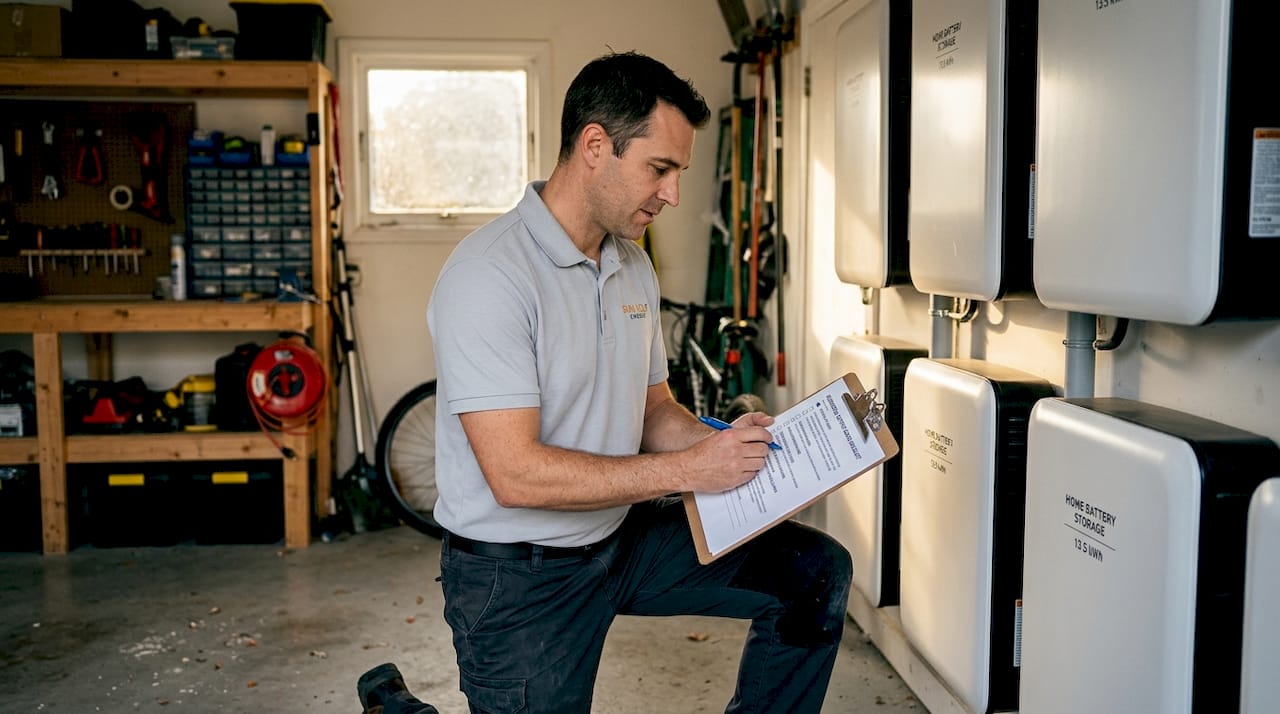
EMS platforms are the brain of the system. They schedule charging and discharging, respond to real-time tariff signals, manage EV charging loads, and generate the data you need for compliance reporting.
Setup | Typical self-consumption | Annual savings estimate |
PV only (6 kWp) | ~30% | €300-500 |
PV + 10 kWh battery | ~55% | €650-900 |
PV + battery + EMS | ~65-70% | €900-1,100 |
Empirical data from Belgian installations shows grid import reduction of 35-55% and annual savings of €650 to €1,100 with a 6 kWp PV system paired with a 10 kWh battery. Adding a capable EMS pushes those numbers toward the upper end.
Pro Tip: When evaluating battery options, check the manufacturer’s temperature derating specs. LFP batteries lose meaningful capacity below 5°C, which matters during Belgian and Dutch winters.
For a deeper look at how these components interact, the solar plus storage integration guide and battery storage setup resource both cover real-world configuration scenarios. You can also review energy storage best practices for a broader view of what works across different building types.
Smart strategies: Real-time optimization, tariffs, and flexibility markets
Hardware alone does not deliver maximum savings. The strategies you apply on top of your system determine whether you capture 50% of the available value or 90% of it.
The most impactful methods, ranked by typical impact in Benelux:
Dynamic tariff optimization: Your EMS charges the battery when prices are lowest and discharges when prices peak. Belinus EMS runs on 15-minute intervals, which aligns with the granularity of most Belgian and Dutch dynamic contracts.
Automated load shifting: High-consumption appliances like dishwashers, washing machines, and EV chargers are scheduled around solar generation and low-tariff windows automatically.
Real-time monitoring and alerts: Continuous data feeds allow the system to catch underperformance, shading issues, or inverter faults before they erode annual yield.
Flexibility market participation: In the Netherlands especially, aggregators can compensate you for making your battery available to grid operators during peak demand events.
Automated EV charging integration: Pairing an EV charger with your EMS and solar system can shift the majority of charging cost to near-zero periods.
Dynamic tariff optimization and AI-driven forecasting are the top methodologies for cutting payback periods and improving grid performance at Benelux sites.
EMS algorithm type | How it works | Best for |
Rule-based | Fixed schedules and thresholds | Simple homes, low tariff variability |
Forecasting-based | Uses weather and price predictions | Homes with EV or heat pump |
Model predictive control | Optimizes across multiple variables in real time | High-consumption or multi-site properties |
For more on how these strategies translate to everyday savings, smart home energy savings and residential energy independence are worth reading alongside this guide.
Special cases and practical recommendations for Benelux
Not every building fits the standard model. Here are the most common edge cases and how to handle them.
Grid-congested areas: In parts of the Netherlands where new grid connections face long wait times, balcony solar systems (400-800 W) paired with a small ESS offer a practical workaround. Balcony solar for grid-congested areas with zero-export control lets you generate and consume without triggering grid injection limits.
High-consumption homes: Properties with EVs, heat pumps, jacuzzis, or underfloor heating have daily demand profiles that standard sizing rules underestimate. Properly sized storage for these homes can double self-sufficiency compared to PV alone.
LFP batteries in winter: Below 5°C, LFP chemistry loses 15-25% of usable capacity. If your battery is installed in an unheated garage or outdoor enclosure, factor this into your sizing calculation or choose a chemistry with better cold-weather performance.
Property managers: Multi-site EMS tools allow you to benchmark energy performance across a portfolio, generate automated compliance reports, and respond to regulatory changes from a single dashboard. This is not a convenience feature; it is increasingly a legal requirement under EU Directive 2023/1791.
“The biggest mistake property managers make is treating each building as a standalone project. A unified EMS platform turns individual sites into a coordinated network that learns and improves over time.”
For homeowners exploring their options, smart solar options covers a wide range of configurations. The solar plus storage step-by-step guide walks through the full installation and commissioning process.
Lifecycle, standards, and compliance: The bigger picture
A system that meets today’s requirements but ignores tomorrow’s standards is a liability, not an asset. Here is how to think about long-term compliance.
ISO 50001 provides a Plan-Do-Check-Act (PDCA) framework for energy management. Integrating solar and storage under ISO 50001 delivers 5-20% energy savings by creating a structured process for monitoring, reviewing, and improving performance over time. For larger properties and commercial buildings, certification also unlocks financing options and demonstrates due diligence to insurers and investors.
The steps for lifecycle-aware energy management:
Site assessment: Evaluate grid capacity, shading, structural load, and local regulations before specifying any hardware.
System design: Match PV, battery, and EMS specifications to the building’s actual energy profile, not theoretical maximums.
Commissioning and monitoring: Establish baseline performance metrics from day one and set automated alerts for deviation.
Periodic review: Reassess system performance annually against updated tariff structures and regulatory requirements.
End-of-life planning: Lifecycle due diligence for hybrid PV and BESS includes decommissioning and recycling obligations that are increasingly enforced under EU rules.
“Compliance is not a cost center. Done right, it is the mechanism that keeps your system eligible for incentives, financing, and grid services for its entire operational life.”
For commercial property owners, commercial solar planning addresses how to align system design with both financial modeling and regulatory timelines.
Our perspective: What Benelux homeowners and property managers often miss
After working through real installations across Belgium and the Netherlands, one pattern stands out clearly: people consistently overestimate the value of more battery capacity and underestimate the value of a capable EMS.
A 20 kWh battery in a home that uses 12 kWh per day does not double your savings. It sits partially idle and adds years to your payback period. Right-sizing is smarter than max-sizing, every time. The better investment is EMS-ready hardware that can participate in flexibility markets, respond to dynamic tariffs, and integrate with an EV charger as your needs evolve.
Compliance also deserves more credit than it gets. Property managers who treat EU Directive 2023/1791 reporting as a burden are missing the point. Structured benchmarking reveals underperforming assets, justifies capital expenditure, and keeps installations eligible for grid service revenues. The projects that deliver the best long-term outcomes are the ones that adapt to local grid conditions and regulatory changes rather than chasing the latest hardware trend.
The low-regret move is always the same: invest in solar optimization strategies and demand flexibility now, before grid access becomes more restricted and tariff structures become more complex.
Turn expertise into action with Belinus energy solutions
Ready to move from planning to results? Belinus brings together solar PV, battery storage, EV charging, and intelligent EMS into one integrated platform built specifically for Benelux homes and properties.
From automated 25-year financial modeling to hands-on project support, Belinus energy solutions cover every step from initial goal-setting through system design, regulatory compliance, and ongoing optimization. Whether you are sizing your first residential system or managing a multi-site commercial portfolio, the solar plus storage guide is a practical starting point. Reach out for a customized consultation and see exactly what your building can achieve.
Frequently asked questions
What is the typical payback period for PV and battery systems in Benelux?
Payback periods run 6-10 years for PV and 7-12 years for PV plus battery and EMS, shortening to 5-8 years when dynamic tariffs and flexibility markets are factored in.
How much can self-consumption be increased with EMS and batteries?
Self-consumption rises from roughly 30% with PV only to 60-70% when you add a battery and EMS, nearly doubling the share of solar energy you actually use on-site.
Why is battery oversizing discouraged for home systems?
Oversized batteries cycle less frequently and do not increase savings proportionally; matching battery size to daily consumption delivers the best return on investment for most residential setups.
How do dynamic tariffs and flexibility markets lower energy costs?
They allow your EMS to shift consumption to cheaper periods and earn compensation for making battery capacity available to grid operators during peak demand events.
Recommended
Comments