Energy Storage for Industry: Cost Control and Sustainability

Rising energy prices and strict sustainability goals make power management a constant challenge for European industrial companies. Every decision about electricity use and storage can drive costs up or down while impacting your facility’s overall reliability and environmental footprint. By understanding the fundamentals of industrial energy storage solutions, you can identify technologies that help achieve both immediate operational savings and long-term emissions reduction. Learn how scalable storage options can support reliability and support your company’s push to be both efficient and sustainable.
Table of Contents
Key Takeaways
Point | Details |
Importance of Industrial Energy Storage | Industrial energy storage optimizes power consumption, enhances sustainability, and can significantly improve operational reliability and economic performance for businesses. |
Diverse Technology Options | Various technologies such as Electrochemical Batteries and Thermal Storage offer unique advantages, necessitating careful selection based on specific industrial needs. |
Strategic Integration | Effective integration of energy storage with industrial operations enables demand management, load balancing, and the seamless incorporation of renewable energy. |
Financial Considerations | Investment in energy storage requires thorough financial modeling to evaluate cost reductions, revenue generation potential, and long-term sustainability gains. |
Defining Industrial Energy Storage Solutions
Industrial energy storage solutions represent a critical technological strategy for enterprises seeking to optimize power consumption and enhance operational sustainability. These advanced systems enable businesses to capture, store, and strategically deploy electrical energy across complex industrial environments. National Renewable Energy Laboratory research demonstrates that integrated storage technologies can significantly improve reliability and economic performance for critical infrastructure.
At their core, industrial energy storage solutions encompass multiple technologies designed to manage electrical power dynamically. Key components typically include battery systems, supercapacitors, thermal storage mechanisms, and advanced power conversion equipment. These solutions allow manufacturers to achieve several strategic objectives:
Reduce peak electricity demand charges
Stabilize internal power networks
Provide backup power during grid interruptions
Enable seamless integration of renewable energy sources
Minimize carbon footprint and operational expenses
The U.S. Department of Energy’s Energy Storage Division emphasizes that modern industrial storage solutions must prioritize three fundamental characteristics: safety, economic viability, and technological adaptability. Successful implementations require careful assessment of specific industrial requirements, existing infrastructure, and projected energy consumption patterns.
Pro tip: Conduct a comprehensive energy audit before selecting an industrial storage solution to accurately map your facility’s unique power consumption profile and optimize storage system design.
Technology Types and System Architecture
Industrial energy storage technologies represent a complex ecosystem of interconnected systems designed to meet diverse operational requirements. Comprehensive energy storage research reveals multiple technological approaches that enable enterprises to manage electrical power with unprecedented sophistication. These technologies can be categorized into several primary architectural frameworks, each with unique performance characteristics and strategic advantages.
The primary technology types for industrial energy storage include:
Electrochemical Batteries: Lithium-ion, flow batteries, and advanced chemical storage systems
Mechanical Storage: Compressed air, flywheel, and gravitational potential energy systems
Thermal Storage: Phase change materials, molten salt, and heat retention technologies
Hybrid Systems: Integrated solutions combining multiple storage mechanisms
Electrochemical Systems remain the most prevalent technology, offering high energy density and rapid response times. These systems utilize chemical reactions to store and release electrical energy, with lithium-ion technologies dominating current industrial applications. Flow batteries represent an emerging alternative, providing scalable storage capacity and extended operational lifespans.

Academic research on energy storage emphasizes the critical importance of matching storage technology to specific industrial requirements. Factors such as power capacity, discharge duration, response time, and environmental conditions significantly influence technology selection. Successful implementation demands a nuanced understanding of each system’s unique performance envelope and integration potential.
Here’s a summary of major industrial energy storage technology types and their key advantages:
Technology Type | Primary Advantage | Typical Application |
Lithium-ion Batteries | High energy density, fast response | Manufacturing plants |
Flow Batteries | Scalable capacity, long lifespan | Utility-scale backup |
Flywheel Storage | Rapid charge/discharge cycles | Grid frequency support |
Molten Salt Storage | Efficient thermal retention | Renewable integration |
Hybrid Systems | Enhanced flexibility, reliability | Complex industrial sites |
Pro tip: Conduct a comprehensive technology assessment that evaluates your specific energy consumption patterns, infrastructure constraints, and long-term operational goals before selecting an industrial energy storage solution.
Integrating Storage with Industrial Operations
Integrating energy storage solutions with industrial operations requires a strategic approach that transforms traditional power management paradigms. Optimization models for industrial energy storage demonstrate the potential for significant economic and operational advantages when storage systems are thoughtfully implemented across production environments.
The integration process involves several critical considerations:
Demand Management: Leveraging storage to smooth peak energy consumption
Load Balancing: Redistributing electrical load across different operational periods
Backup Power: Ensuring continuous operations during grid interruptions
Renewable Energy Integration: Storing excess renewable generation for later use
Advanced industrial facilities are increasingly adopting sophisticated storage integration strategies that go beyond simple backup power. Power Conversion Systems (PCS) play a crucial role in this process, enabling seamless translation between stored energy and operational power requirements. These systems allow manufacturers to implement complex energy arbitrage strategies, reducing overall electricity costs and improving grid interaction.
Storage technology deployment research highlights the importance of tailoring storage integration to specific industrial contexts. Factors such as production cycle characteristics, existing electrical infrastructure, and local utility pricing structures dramatically influence the most effective integration approach. Successful implementations require a holistic assessment that considers technical capabilities, economic implications, and long-term operational flexibility.
Pro tip: Conduct a comprehensive energy audit and develop a detailed integration roadmap that maps storage solutions directly to your specific operational workflows and energy consumption patterns.
Economic Benefits and Financial Modeling
Industrial energy storage investments represent a complex financial strategy that extends far beyond traditional capital expenditure calculations. Electricity storage valuation frameworks provide sophisticated methodologies for assessing the multidimensional economic potential of storage solutions, enabling enterprises to make data-driven investment decisions.
The primary economic benefits of industrial energy storage can be categorized into several key dimensions:
Direct Cost Reduction: Minimizing peak demand charges
Revenue Generation: Participating in energy arbitrage markets
Grid Service Compensation: Providing ancillary services to utility providers
Operational Reliability: Reducing production interruption risks
Sustainability Incentives: Qualifying for carbon reduction credits
Financial Modeling for energy storage investments requires a comprehensive approach that considers both immediate and long-term economic impacts. Sophisticated analysis incorporates variables such as initial capital costs, operational expenses, projected energy price fluctuations, potential revenue streams from grid services, and anticipated technological efficiency improvements over the system’s lifecycle.
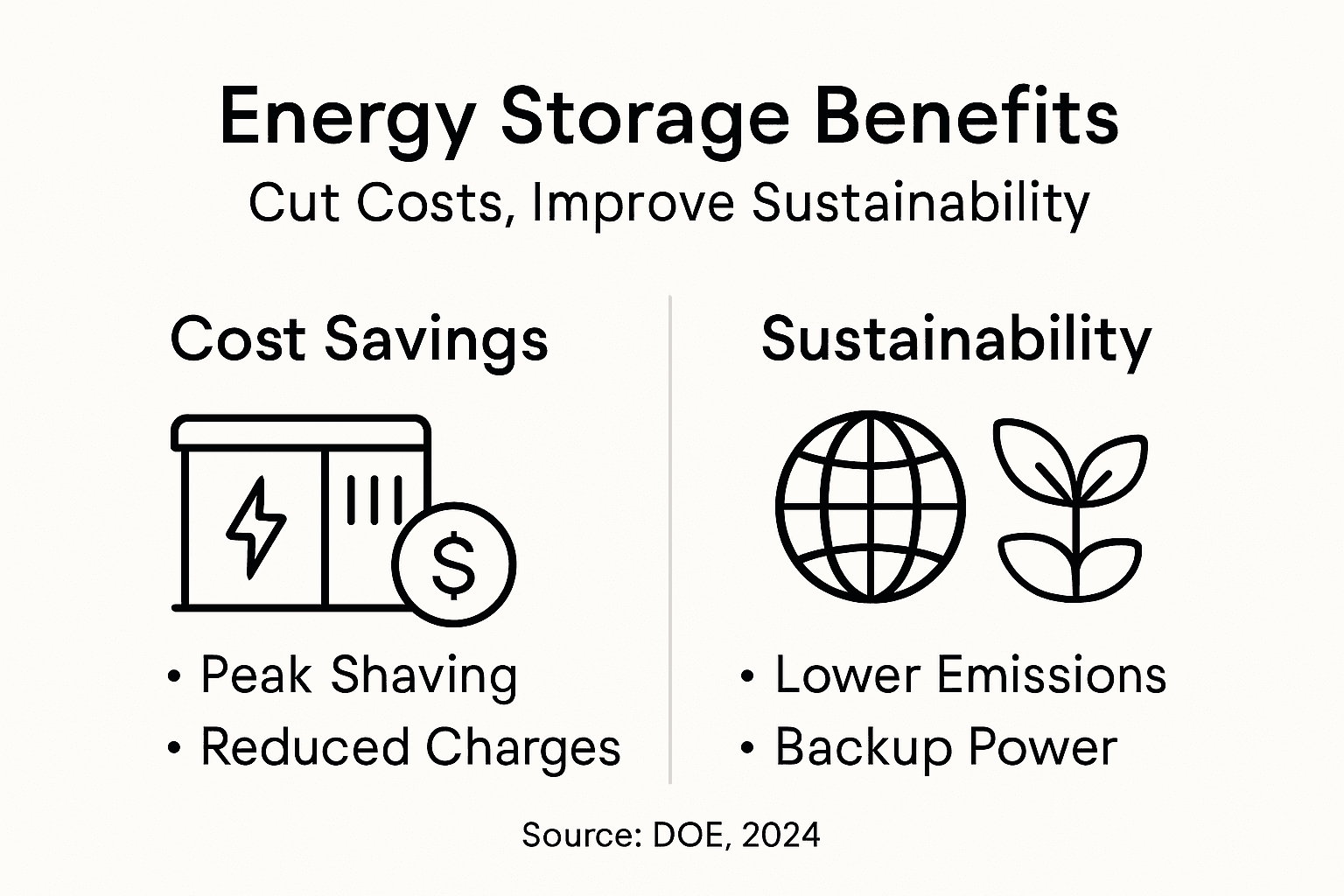
Economic operation optimization strategies demonstrate that advanced storage systems can generate substantial financial returns by intelligently managing auxiliary equipment consumption and integrating thermal management techniques. These approaches enable manufacturers to create nuanced financial models that account for complex operational constraints while maximizing overall economic performance.
This table compares economic considerations for industrial energy storage investments:
Financial Aspect | Short-Term Impact | Long-Term Benefit |
Capital Expenditure | High upfront costs | Improved asset value |
Operational Expenses | Gradual reduction | Lower total cost of ownership |
Revenue Opportunities | Limited initially | Expanding grid service income |
Regulatory Incentives | Variable based on location | Enhanced sustainability gains |
Pro tip: Develop a comprehensive financial model that includes multiple scenarios, accounting for potential technological advancements, energy market volatility, and evolving regulatory incentives.
Compliance, Safety, and Grid Standards
Industrial energy storage systems require rigorous adherence to complex regulatory frameworks that ensure operational safety and grid reliability. Industry codes and standards establish comprehensive guidelines that address the multifaceted challenges of modern battery technologies and industrial energy storage implementations.
The critical compliance dimensions for industrial energy storage include:
Electrical Safety: Preventing short circuits and electrical hazards
Thermal Management: Controlling battery temperature and preventing overheating
Structural Integrity: Ensuring mechanical stability of storage systems
Fire Protection: Implementing robust fire prevention and suppression protocols
Environmental Regulations: Meeting emissions and disposal standards
Risk Management represents a fundamental aspect of energy storage compliance. Advanced industrial facilities must develop comprehensive strategies that integrate technical standards, operational protocols, and ongoing monitoring systems. This approach requires continuous assessment of system performance, potential failure modes, and proactive maintenance techniques to mitigate potential safety risks.
Energy storage system safety guidelines emphasize the importance of systematic documentation, regular inspections, and adherence to evolving regulatory requirements. Successful compliance demands a holistic approach that combines technological innovation with meticulous regulatory understanding, ensuring that industrial energy storage solutions meet the highest standards of safety and operational reliability.
Pro tip: Develop a comprehensive compliance checklist that includes regular third-party safety audits and maintains detailed documentation of all system modifications and performance assessments.
Common Pitfalls and Risk Mitigation Strategies
Industrial energy storage deployment involves navigating complex technological and operational challenges that can significantly impact system performance and safety. Safety and risk assessment research reveals critical vulnerabilities that industrial facilities must proactively address to ensure reliable and secure energy storage implementations.
Key potential pitfalls in industrial energy storage systems include:
Thermal Runaway: Uncontrolled temperature escalation in battery systems
Electrical Instability: Voltage fluctuations and power quality issues
Capacity Degradation: Premature performance reduction of storage technologies
Cybersecurity Vulnerabilities: Potential network and control system breaches
Inadequate Maintenance: Overlooking critical system monitoring protocols
Risk Mitigation demands a comprehensive, multi-layered approach that integrates advanced technological solutions with robust operational practices. This strategy requires continuous monitoring, predictive maintenance technologies, and systematic performance assessment to identify and neutralize potential system vulnerabilities before they escalate into critical failures.
Industrial battery storage risk frameworks emphasize the importance of developing integrated risk management strategies that address technical, financial, and regulatory dimensions. Successful implementations require holistic approaches that combine advanced battery management systems, real-time monitoring technologies, and proactive maintenance protocols to enhance overall system resilience and operational reliability.
Pro tip: Implement a comprehensive risk assessment protocol that includes quarterly third-party technical audits, continuous performance monitoring, and adaptive maintenance strategies tailored to your specific industrial environment.
Unlock Industrial Savings and Sustainability with Advanced Energy Storage Solutions
Industrial energy storage presents a powerful answer to the article’s key challenges including cost control, peak demand management, and renewable energy integration. If you are seeking to reduce operational expenses while boosting energy reliability and sustainability, addressing complex electricity demand and optimizing load balancing are critical priorities. Solutions that align with dynamic tariff optimization and grid services can transform your energy strategy into a competitive advantage.
Belinus offers tailored commercial and utility storage systems designed to scale from small commercial and industrial sites to full utility capacity. Our centralized Energy Management System enables real-time battery arbitrage, 15-minute tariff optimization, and advanced grid interaction that perfectly complements the technology types discussed in the article such as lithium-ion and graphene supercapacitors. Explore our offerings at Belinus to experience seamless integration of power conversion, custom system design, and intelligent energy trading.

Ready to control energy costs while advancing your sustainability goals? Discover how our commercial energy storage and grid-integrated services can elevate your operations today. Visit Belinus commercial solutions to request a consultation and take the first step towards smarter energy management.
Frequently Asked Questions
What are industrial energy storage solutions?
Industrial energy storage solutions are advanced systems that allow businesses to capture, store, and strategically deploy electrical energy. They help optimize power consumption and promote operational sustainability across industrial environments.
What are the different types of industrial energy storage technologies?
The main types include electrochemical batteries (like lithium-ion and flow batteries), mechanical storage (such as compressed air and flywheels), thermal storage (using phase change materials and molten salt), and hybrid systems that combine multiple technologies.
How can energy storage systems help reduce operational costs?
Energy storage systems can minimize peak electricity demand charges, provide backup power during grid interruptions, and enable the use of renewable energy sources, thus reducing overall operational expenses.
What factors should be considered when integrating energy storage into industrial operations?
Key considerations include demand management, load balancing, backup power solutions, and the integration of renewable energy sources. Tailoring the storage system to specific operational workflows and energy consumption patterns is essential for successful integration.
Recommended
Comments