Future of Energy Storage 2025: Impact for Central Europe
- Feb 3
- 8 min read
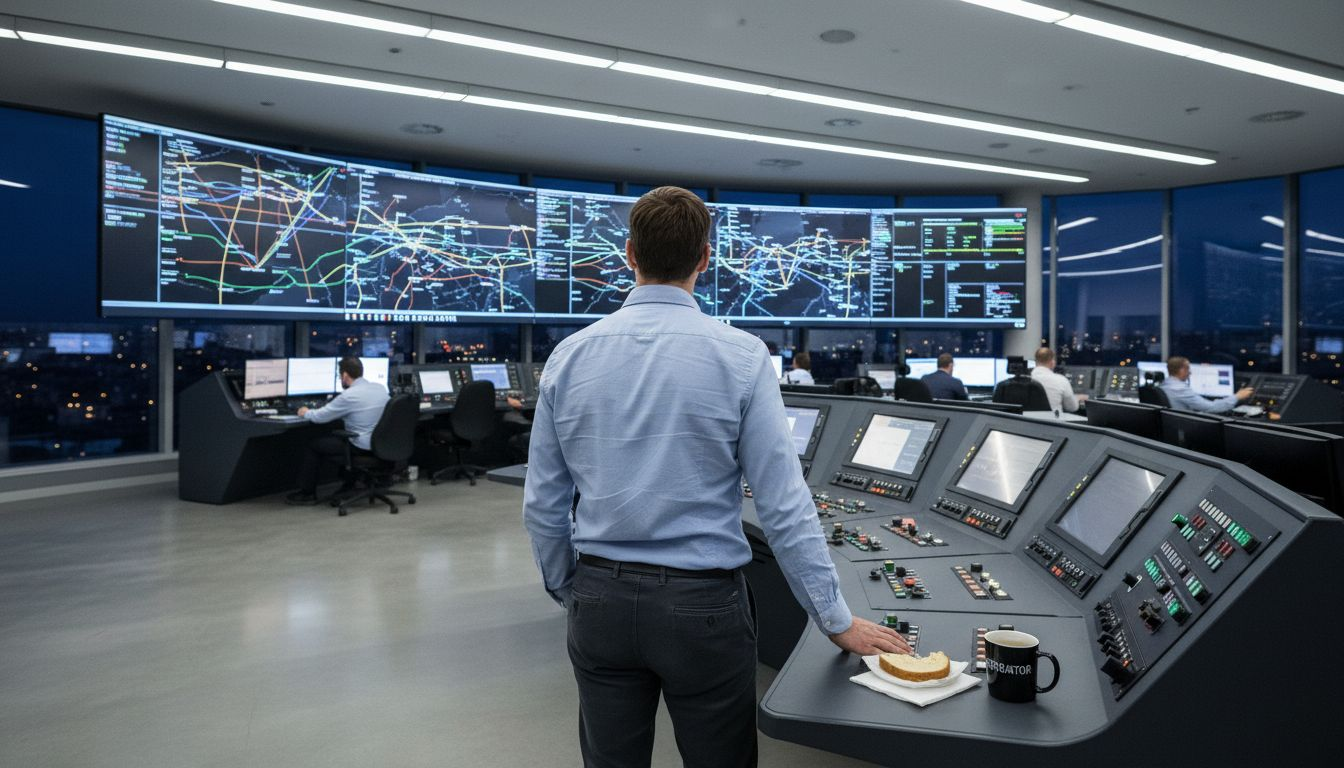
Cost overruns and unpredictable energy supply can disrupt even the best sustainability plans. Enterprises across Central Europe face mounting pressure to balance efficiency, reliability, and clean energy targets by 2025. Advanced energy storage technologies promise fresh pathways for reducing expenses and boosting operational resilience, from lithium-ion batteries to pumped-storage hydropower. This guide lays out key concepts and practical strategies for organizations to lead with smarter, future-ready energy storage.
Table of Contents
Key Takeaways
Point | Details |
Energy Storage Evolution | By 2025, energy storage technologies will shift towards integrated, efficient systems that enhance grid stability and sustainability. |
Financial Drivers | Declining battery costs and government incentives are creating new revenue streams and attractive investment opportunities. |
Regulatory Landscape | Evolving compliance requirements necessitate a proactive approach to navigate the dynamic energy storage policy environment. |
Risk Management | Companies must implement comprehensive risk mitigation strategies to address technology performance and financial uncertainties in their investments. |
Energy Storage in 2025: Key Concepts
Energy storage technologies will undergo transformative changes by 2025, reshaping how Central European enterprises manage electricity. The sector is moving beyond traditional battery solutions toward more sophisticated, integrated systems that balance grid stability, cost efficiency, and sustainability.
Key developments in energy storage will focus on several critical dimensions:
Grid Integration: Enabling seamless renewable energy absorption
Modular Design: Flexible storage solutions adaptable to different enterprise needs
Cost Optimization: Reducing per-kilowatt hour storage expenses
Smart Management: Real-time energy arbitrage and dynamic load balancing
The Joint Research Centre report on energy storage highlights Central Europe’s strategic approach to storage infrastructure. German and European utility models are pioneering advanced storage technologies that support decarbonization goals while maintaining grid reliability.

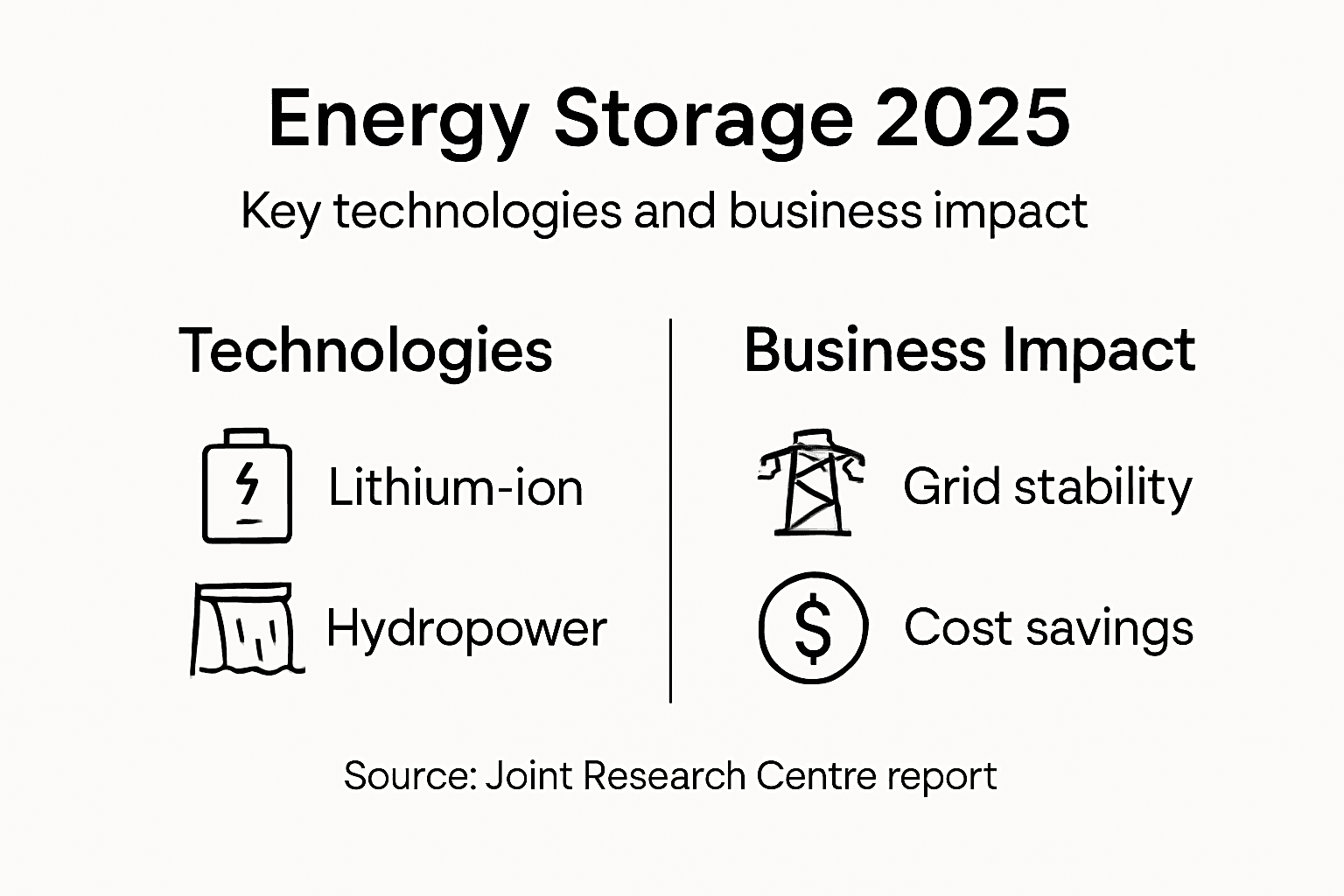
Technological advances will center on multiple storage mediums, including lithium-ion batteries, pumped-storage hydropower, and emerging supercapacitor technologies. Each offers unique advantages for different industrial applications, from short-duration grid services to long-term energy buffering.
Here’s a quick comparison of leading energy storage technologies and their business impact:
Technology | Typical Use Case | Scalability | Long-Term Business Impact |
Lithium-ion Batteries | Rapid response grid services | High | Lower costs, flexible deployment |
Pumped Hydro Storage | Regional grid backup | Very high | Enables renewable integration |
Flow Batteries | Industrial and large-scale sites | Moderate | Longer lifespan, sustainable |
Supercapacitors | Short-term power boosts | Limited | Improved grid stability |
Power conversion systems and intelligent energy management will become crucial differentiators. Enterprises seeking competitive advantages must develop sophisticated storage strategies that go beyond simple battery installation.
Pro tip: Conduct a comprehensive energy audit to identify precise storage requirements before investing in new technologies.
Advanced Technologies and System Integration
The landscape of energy storage is rapidly evolving, with advanced technologies driving unprecedented system integration capabilities across Central Europe. Advanced storage technologies are pushing the boundaries of traditional energy management, enabling more flexible and responsive power networks.
Key technological innovations in system integration include:
Hybrid Storage Systems: Combining multiple storage technologies for enhanced performance
Smart Grid Interfaces: Enabling real-time communication between storage systems and power networks
Power Electronics: Developing more efficient conversion and management technologies
AI-Driven Management: Implementing predictive algorithms for energy optimization
Lithium-ion batteries continue to dominate the storage landscape, but emerging technologies like flow batteries and hydrogen storage systems are gaining significant momentum. These advanced solutions offer improved scalability, longer lifespans, and more sustainable performance characteristics.
The integration challenges are complex, requiring sophisticated power electronics and intelligent management systems. Grid resilience and dynamic load balancing have become critical considerations for enterprises seeking to implement cutting-edge storage solutions.
Successful energy storage integration demands a holistic approach that considers technological capabilities, economic feasibility, and systemic flexibility.
Artificial intelligence and machine learning are emerging as crucial enablers of advanced energy storage systems, providing predictive maintenance and optimization capabilities that were previously impossible.
Pro tip: Develop a comprehensive technology roadmap that evaluates multiple storage technologies and their potential integration strategies.
Applications for Residential, Commercial, Utility Needs
Battery storage systems are revolutionizing energy consumption across residential, commercial, and utility sectors in Central Europe. The transformation goes beyond simple electricity storage, creating more dynamic and responsive energy ecosystems that adapt to changing consumption patterns and renewable energy integration.
Key application segments include:
Residential Storage: Enabling home energy independence
Commercial Systems: Reducing operational energy costs
Utility-Scale Solutions: Enhancing grid stability and resilience
Industrial Applications: Supporting critical infrastructure reliability
In the residential sector, energy storage is transitioning from a luxury to a necessity. Homeowners are increasingly investing in battery systems that allow them to store solar energy, reduce grid dependency, and manage electricity costs more effectively. Advanced home battery solutions now offer seamless integration with rooftop solar panels, creating comprehensive energy management platforms.
Commercial and industrial enterprises are experiencing even more dramatic transformations. Energy storage has become a strategic asset for managing peak demand, reducing electricity expenses, and supporting sustainability objectives. Companies can now implement sophisticated battery systems that not only store energy but also provide real-time grid services and optimize electricity consumption.
Successful energy storage deployment requires a nuanced understanding of specific sector needs and technological capabilities.
Utility-scale storage represents the most complex and impactful application, with massive battery installations supporting grid stability, managing renewable energy fluctuations, and providing critical backup infrastructure for entire regions.
Pro tip: Conduct a comprehensive energy consumption audit to determine the most appropriate storage solution for your specific organizational needs.
Financial Drivers and Market Trends
Market trends in battery storage reveal a transformative financial landscape for energy storage investments in Central Europe. The convergence of technological innovation, policy support, and economic incentives is creating unprecedented opportunities for enterprises and investors.
Key financial drivers emerging in 2025 include:
Rapidly Declining Battery Costs: Reducing capital investment requirements
Government Incentive Programs: Supporting renewable energy transitions
Grid Service Monetization: Creating new revenue streams
Carbon Pricing Mechanisms: Enhancing economic attractiveness of storage solutions
The commercial and industrial sectors are experiencing the most significant financial momentum. Enterprises are discovering that energy storage is no longer just an environmental strategy, but a powerful financial instrument for managing electricity expenses and generating additional revenue through grid services.
Utility-scale investments are becoming increasingly attractive, with sophisticated financial models emerging that demonstrate compelling returns. These models leverage complex revenue streams including energy arbitrage, capacity markets, and ancillary grid services.
Financial success in energy storage depends on understanding multifaceted revenue potential beyond traditional electricity savings.
Government policies are playing a crucial role in accelerating market development. Strategic incentive structures, tax credits, and renewable energy mandates are creating a robust financial ecosystem that supports widespread energy storage adoption.
Pro tip: Develop comprehensive financial models that capture all potential revenue streams, not just direct electricity cost savings.
Regulations, Policy, and Compliance Factors
Regulatory frameworks for energy storage in Central Europe are undergoing significant transformation, creating a complex landscape of policy requirements and compliance mechanisms. The evolving regulatory environment is designed to accelerate energy storage deployment while maintaining rigorous safety and operational standards.
Key regulatory focus areas include:
Grid Connection Standards: Streamlining infrastructure integration
Permitting Processes: Reducing administrative barriers
Safety Compliance: Establishing comprehensive technical requirements
Market Access Regulations: Creating transparent participation mechanisms
Central European countries are developing nuanced policy approaches that balance technological innovation with systematic risk management. Governments are implementing sophisticated regulatory frameworks that provide clear guidance for energy storage project development, addressing critical aspects such as grid interconnection, technical performance standards, and environmental compliance.
Compliance mechanisms are becoming increasingly sophisticated, requiring enterprises to develop robust documentation and monitoring systems. The regulatory landscape demands comprehensive approach that integrates technical, environmental, and financial considerations into a holistic compliance strategy.
Successful regulatory navigation requires proactive engagement with evolving policy frameworks and a strategic approach to compliance management.
The emerging regulatory environment emphasizes not just technical standards, but also broader policy objectives related to renewable energy integration, grid stability, and decarbonization strategies. This represents a fundamental shift from traditional regulatory approaches toward more dynamic and forward-looking policy frameworks.
Pro tip: Develop a dedicated regulatory compliance team with expertise in energy storage policy frameworks to stay ahead of evolving requirements.
Risks, Costs, and Strategic Considerations
Energy storage investment risks in Central Europe represent a complex landscape of technological, financial, and strategic challenges. Enterprises must navigate a multifaceted terrain of potential obstacles while maintaining a forward-looking investment perspective.
Critical risk dimensions include:
Technology Performance: Potential variability in storage system efficiency
Financial Uncertainty: Fluctuating capital and operational expenses
Regulatory Complexity: Evolving compliance requirements
Market Volatility: Unpredictable energy pricing structures
Technological risks remain the most significant concern for energy storage investments. Performance degradation, unexpected maintenance requirements, and potential technological obsolescence can dramatically impact long-term financial projections. Enterprises must develop sophisticated risk mitigation strategies that include comprehensive technical assessments and flexible investment frameworks.
Strategic investment approaches require a holistic evaluation of both potential risks and opportunities. This involves developing nuanced financial models that account for technological evolution, regulatory changes, and potential market transformations.
Successful risk management in energy storage demands a dynamic approach that balances technological innovation with financial prudence.
Financial considerations extend beyond direct investment costs, encompassing lifecycle performance, potential revenue streams, and long-term strategic value. Enterprises must develop comprehensive financial models that integrate multiple risk scenarios and potential technological advancements.
Below is a summary of the main risk factors associated with energy storage investments:
Risk Category | Example Challenge | Impact on Success | Mitigation Approach |
Technology Risks | Performance degradation | Reduces returns | Ongoing technical monitoring |
Financial Uncertainty | Capex/Opex volatility | Investment unpredictability | Flexible financial modeling |
Regulatory Complexity | Changing policy requirements | Potential project delays | Dedicated compliance team |
Market Volatility | Energy price fluctuations | Revenue instability | Scenario-based planning |
Pro tip: Conduct rigorous scenario analysis that models multiple technological and market evolution pathways before making significant energy storage investments.
Unlock the Future of Energy Storage with Belinus Solutions
Central European enterprises face complex challenges in energy storage such as balancing grid integration, cost optimization, and smart energy management mentioned in the “Future of Energy Storage 2025” article. Belinus understands these pain points and delivers cutting-edge solutions designed to meet the demands of dynamic tariffs, multi-technology support, and scalable installations that range from residential homes to utility-scale projects. With our intelligent Energy Management System integrating solar PV, battery storage, and EV charging, you gain the competitive edge needed to navigate the evolving financial and regulatory landscape confidently.
Start your energy transformation today with products crafted for real-world challenges:
16 kWh graphene supercapacitor Energy Wall G1 launching soon
Centralized EMS enabling 15-minute dynamic tariff optimization
Utility-scale modular battery storage scalable to megawatts
Discover how Belinus can help you leverage advanced energy arbitrage, grid resilience, and smart management to future-proof your operations. Don’t wait for market volatility and regulatory complexity to dictate your strategy. Visit Belinus Energy Solutions now to explore tailored systems that embrace the technological innovation essential for success in 2025 and beyond. Contact us for a customized consultation and take control of your energy future.
Frequently Asked Questions
What are the key developments in energy storage technologies expected by 2025?
Key developments include enhanced grid integration for renewable energy, modular designs for flexible storage solutions, cost optimization to reduce storage expenses, and smart management systems for real-time energy arbitrage and dynamic load balancing.
How do different energy storage technologies compare in terms of business impact?
Lithium-ion batteries offer rapid response and high scalability, making them suitable for flexible deployment. Pumped hydro storage provides significant regional grid backup, while flow batteries are ideal for industrial applications due to their longer lifespan. Supercapacitors offer short-term power boosts, improving grid stability but have limited scalability.
What role does advanced technology play in energy storage system integration?
Advanced technologies drive system integration by enabling hybrid storage systems, smart grid interfaces for real-time communication, and AI-driven management for predictive energy optimization. These innovations help create more flexible and responsive power networks.
What are the financial drivers motivating energy storage investments?
Key financial drivers include rapidly declining battery costs, government incentives supporting renewable energy transitions, monetization of grid services creating new revenue streams, and carbon pricing mechanisms enhancing the economic attractiveness of storage solutions.
Recommended
Comments