Graphene energy storage: 10x capacity breakthrough 2026
- Mar 11
- 8 min read
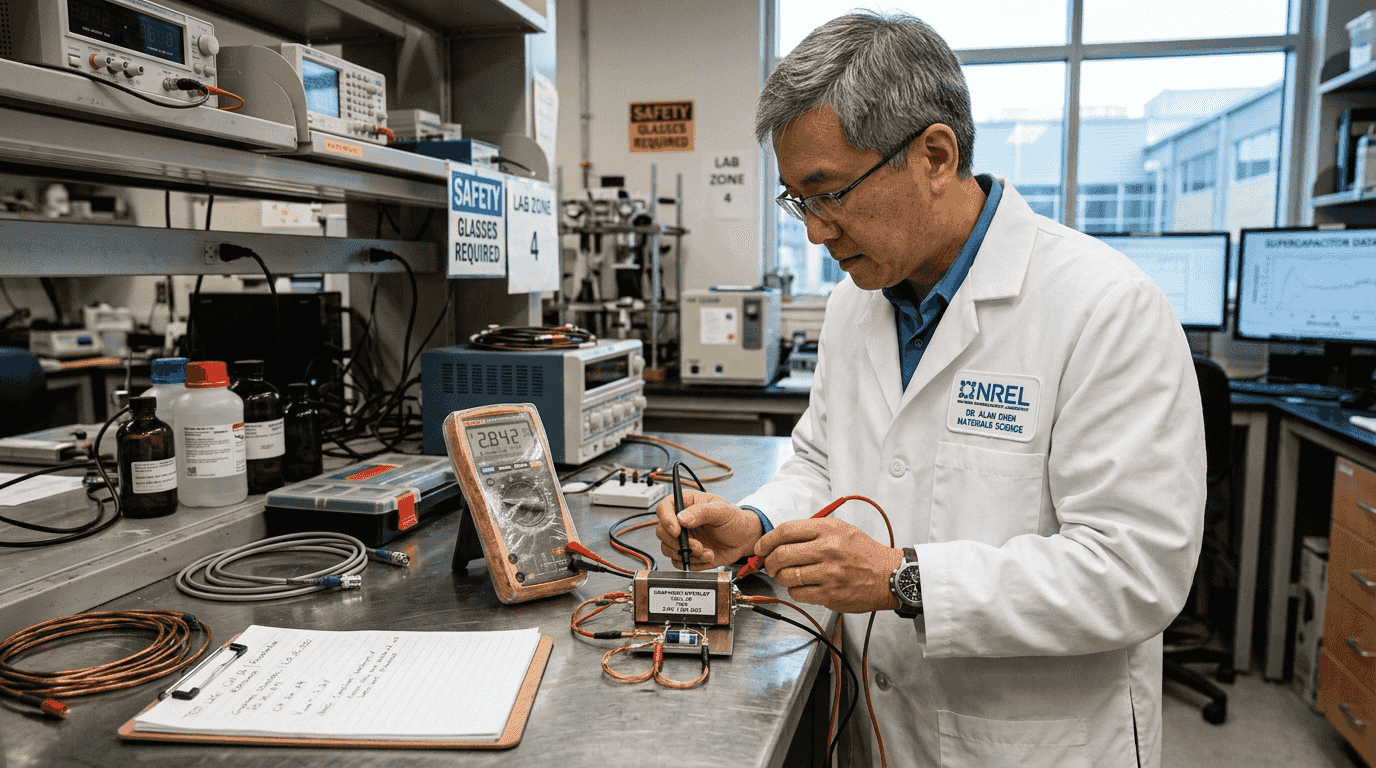
Graphene supercapacitors aren’t just incrementally better than traditional carbon-based devices, they’re transformative. Multiscale graphene achieves volumetric energy densities up to 99.5 Wh/L, nearly ten times what conventional supercapacitors deliver. This leap reshapes expectations for energy storage in residential and commercial applications across Europe. As you evaluate next-generation solutions for your facilities or properties, understanding graphene’s unique advantages and current limitations is essential for making informed decisions in 2026.
Table of Contents
Key takeaways
Point | Details |
Energy density breakthrough | Graphene supercapacitors reach up to 99.5 Wh/L, vastly outperforming typical carbon devices under 10 Wh/L. |
Rapid charging advantage | Graphene-enhanced supercapacitors charge in seconds to minutes, supporting high-power applications. |
Material variations matter | Seven graphene types each influence ion transport, stability, and storage capacity differently. |
Commercial challenges persist | High costs, environmental adaptability, and scalability remain barriers to widespread adoption. |
European market growth | Graphene applications in smart grids, renewables, and transport are expanding through 2026 and beyond. |
Graphene supercapacitors: transforming energy storage
Supercapacitors store electrical energy through electrostatic charge accumulation rather than chemical reactions. Traditional supercapacitors excel at delivering quick bursts of power, making them ideal for applications requiring rapid charge and discharge cycles. Graphene supercapacitors take this further by integrating graphene’s exceptional electrical conductivity and massive surface area into electrode structures.
Supercapacitors offer high power density, rapid charge-discharge cycles, and long life with efficiency, characteristics that become even more pronounced with graphene enhancement. Graphene supercapacitors combine the fast charging of capacitors with high energy efficiency like batteries, bridging the performance gap that has historically separated these two technologies. For energy decision-makers, this means devices that charge faster, last longer, and maintain consistent performance across millions of cycles.
Graphene’s atomic structure provides numerous advantages. Its single-layer carbon arrangement maximizes surface area available for charge storage while maintaining excellent electron mobility. This translates directly into superior energy and power density compared to conventional activated carbon electrodes.
Key benefits of graphene supercaps efficiency include:
Charging times measured in seconds rather than hours
Cycle life exceeding one million charge-discharge cycles
Power delivery capable of handling peak demand spikes
Operating temperature ranges from negative 40°C to positive 70°C
Minimal degradation over decades of use
Pro Tip: Consider graphene supercapacitors as complementary technology rather than battery replacements. Pairing them with lithium batteries creates hybrid systems where supercapacitors handle rapid power fluctuations while batteries provide sustained energy delivery, optimizing both performance and lifespan.
Types of graphene and their impact on energy storage performance
Not all graphene performs identically in energy storage applications. Graphene derivatives influence ion diffusion, charge storage, and electrode stability in supercapacitors through distinct structural and electrochemical characteristics. Understanding these variations helps you select appropriate materials for specific energy management requirements.
Seven primary graphene types dominate current research and commercial development:
Graphene Oxide (GO): Contains oxygen functional groups that enhance hydrophilicity and processability but reduce electrical conductivity. Best suited for applications requiring dispersion in aqueous solutions.
Reduced Graphene Oxide (rGO): Partially restores conductivity through chemical or thermal reduction while maintaining some functional groups for structural stability and ion accessibility.
Pristine Graphene: Offers maximum electrical conductivity and minimal defects but presents production challenges and higher costs. Ideal for applications demanding peak performance.
3D Graphene Frameworks: Porous structures provide excellent ion transport pathways and mechanical stability, particularly valuable in high-power applications.
Nitrogen-Doped Graphene: Heteroatom doping enhances pseudocapacitance and improves electrochemical performance through additional charge storage mechanisms.
Graphene Nanoplatelets: Multi-layer structures balance performance with production scalability, offering practical solutions for commercial implementations.
Graphene Quantum Dots: Nanoscale particles with unique electronic properties, still primarily in research phases but showing promise for specialized applications.
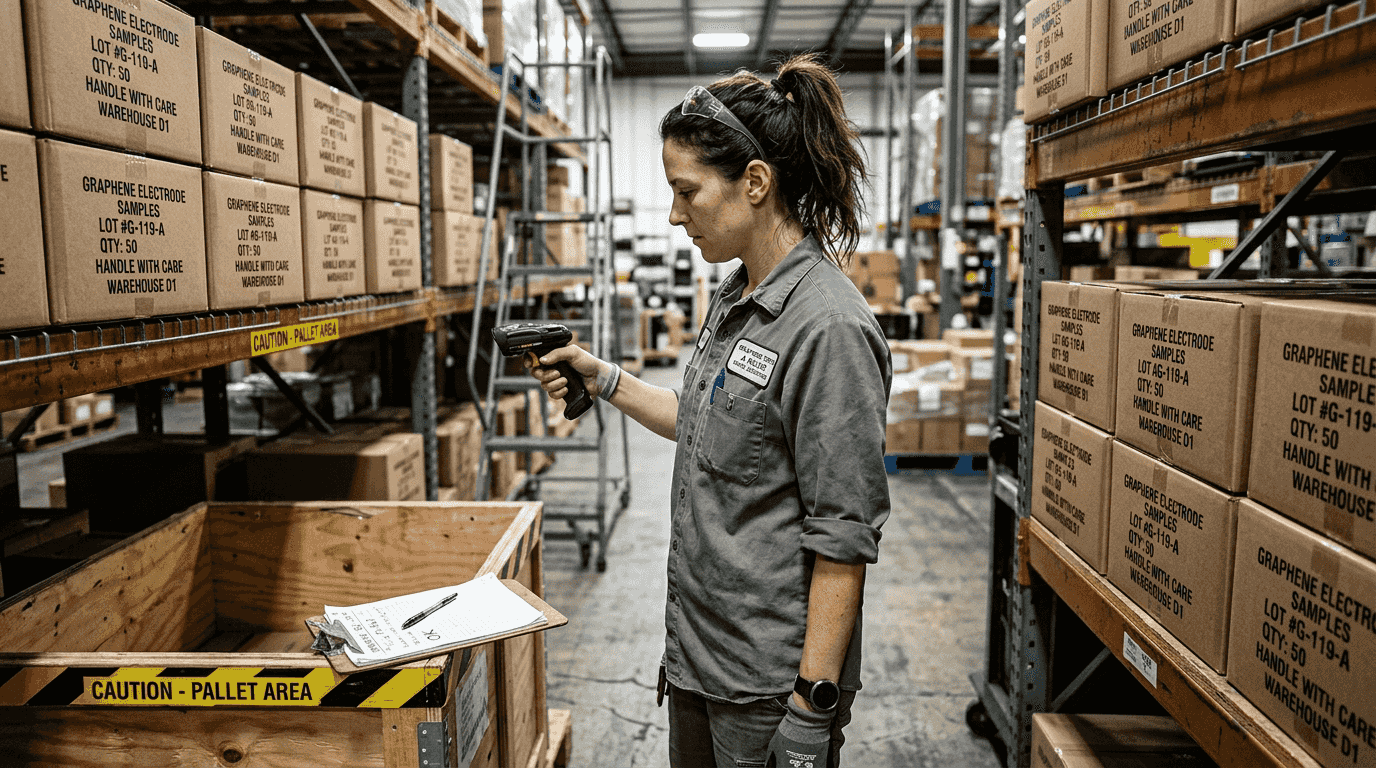
Typical carbon-based supercapacitors have volumetric energy density under 10 Wh/L; Multiscale graphene achieves up to 99.5 Wh/L volumetric energy density, a performance gap that reflects fundamental material differences. The following comparison illustrates how graphene types stack up:
Material Type | Volumetric Energy Density | Primary Advantage | Main Limitation |
Activated Carbon | 5-10 Wh/L | Low cost, established supply | Limited energy density |
Graphene Oxide | 15-25 Wh/L | Easy processing, scalable | Reduced conductivity |
Reduced GO | 30-50 Wh/L | Balanced properties | Variable quality |
3D Graphene | 60-80 Wh/L | Excellent ion access | Complex synthesis |
Multiscale Graphene | 90-99.5 Wh/L | Maximum density | High production cost |
Pro Tip: Match graphene type to your application priority. If rapid response matters most, prioritize pristine or 3D structures. For cost-sensitive projects requiring moderate performance gains, reduced graphene oxide offers the best value proposition in 2026.
The synthesis method significantly impacts final performance. Chemical vapor deposition produces high-quality pristine graphene but requires expensive equipment and controlled environments. Electrochemical exfoliation offers a more economical pathway to graphene supercapacitors in industry applications, though with some performance tradeoffs.
Current challenges and innovations in commercial graphene energy solutions
Despite impressive laboratory results, low energy density, high production costs, and environmental adaptability limit large-scale graphene supercapacitor development. These bottlenecks explain why graphene technology hasn’t yet achieved the widespread commercial penetration many predicted five years ago.
Three core challenges dominate the commercialization landscape. Energy density, while improved, still lags behind lithium-ion batteries for applications requiring sustained power over hours rather than minutes. Production costs remain two to five times higher than conventional supercapacitor materials, limiting adoption to premium applications. Environmental adaptability presents operational concerns, as graphene structures can degrade under certain humidity and temperature conditions without proper encapsulation.
Advances in composite electrode materials and sustainable low-cost processes are key to overcoming these challenges, and 2026 has brought meaningful progress across multiple fronts:
Hybrid composite electrodes combining graphene with metal oxides or conducting polymers boost energy density by 40-60% while maintaining power characteristics
AI-assisted optimization of synthesis parameters reduces production waste and improves yield consistency, cutting manufacturing costs by 25-35%
Sustainable production methods using bio-derived precursors and electrochemical processes eliminate toxic chemicals and lower environmental impact
Advanced encapsulation techniques protect graphene structures from moisture and contaminants, extending operational lifespan in varied climates
Modular manufacturing systems enable distributed production closer to end users, reducing logistics costs and carbon footprint
The graphene supercapacitor industry faces a critical transition period where technological readiness exceeds market infrastructure. Success depends not on individual breakthroughs but on ecosystem collaboration among material suppliers, system integrators, and end users willing to pilot innovative solutions.
Collaboration proves essential for overcoming these barriers. Material suppliers need feedback from integrators about real-world performance requirements. System designers require reliable cost projections to justify graphene specifications. End users must communicate operational priorities so manufacturers can optimize accordingly. Several European consortia have formed specifically to accelerate this knowledge transfer and de-risk enterprise energy storage examples through shared pilot programs.
Current pilot projects focus on applications where graphene’s unique properties justify premium costs. Grid frequency regulation, where millisecond response times prevent blackouts, represents an ideal entry point. Transportation applications like regenerative braking systems in buses and trains also benefit from rapid charge acceptance that would damage conventional batteries.
Applications and future outlook of graphene technology in European energy systems
Graphene supercapacitors are valuable for new energy transportation, defense, and smart grids, sectors where performance requirements align with current capabilities. For European energy decision-makers, several application categories warrant immediate attention.
Key application sectors shaping graphene adoption include:
Renewable energy integration: Smoothing intermittent solar and wind output through rapid charge acceptance during generation peaks and instant discharge during demand spikes
Smart grid stabilization: Providing ancillary services like frequency regulation and voltage support that maintain grid reliability as renewable penetration increases
Electric vehicle systems: Managing regenerative braking energy capture and acceleration power delivery, extending battery lifespan through load sharing
Uninterruptible power supplies: Protecting critical infrastructure with instant backup activation and extended operational life compared to battery-only systems
Peak shaving installations: Reducing demand charges by absorbing power during off-peak periods and delivering it during expensive peak windows
For residential and commercial users, graphene technology delivers specific operational improvements:
Energy management efficiency gains of 15-25% through optimized charge-discharge cycling that traditional batteries cannot sustain
Installation footprint reductions of 30-40% due to higher power density, valuable in space-constrained urban properties
Maintenance intervals extended from 5-7 years to 15-20 years, significantly reducing total cost of ownership
Response times under 100 milliseconds enabling participation in demand response programs that compensate for grid support services
European policies increasingly favor graphene adoption. The EU’s Green Deal and Fit for 55 package create regulatory frameworks that reward rapid-response energy storage through enhanced grid service payments. National subsidy programs in Germany, France, and the Benelux region specifically include graphene supercapacitors in eligible technology categories for 2026 installations.
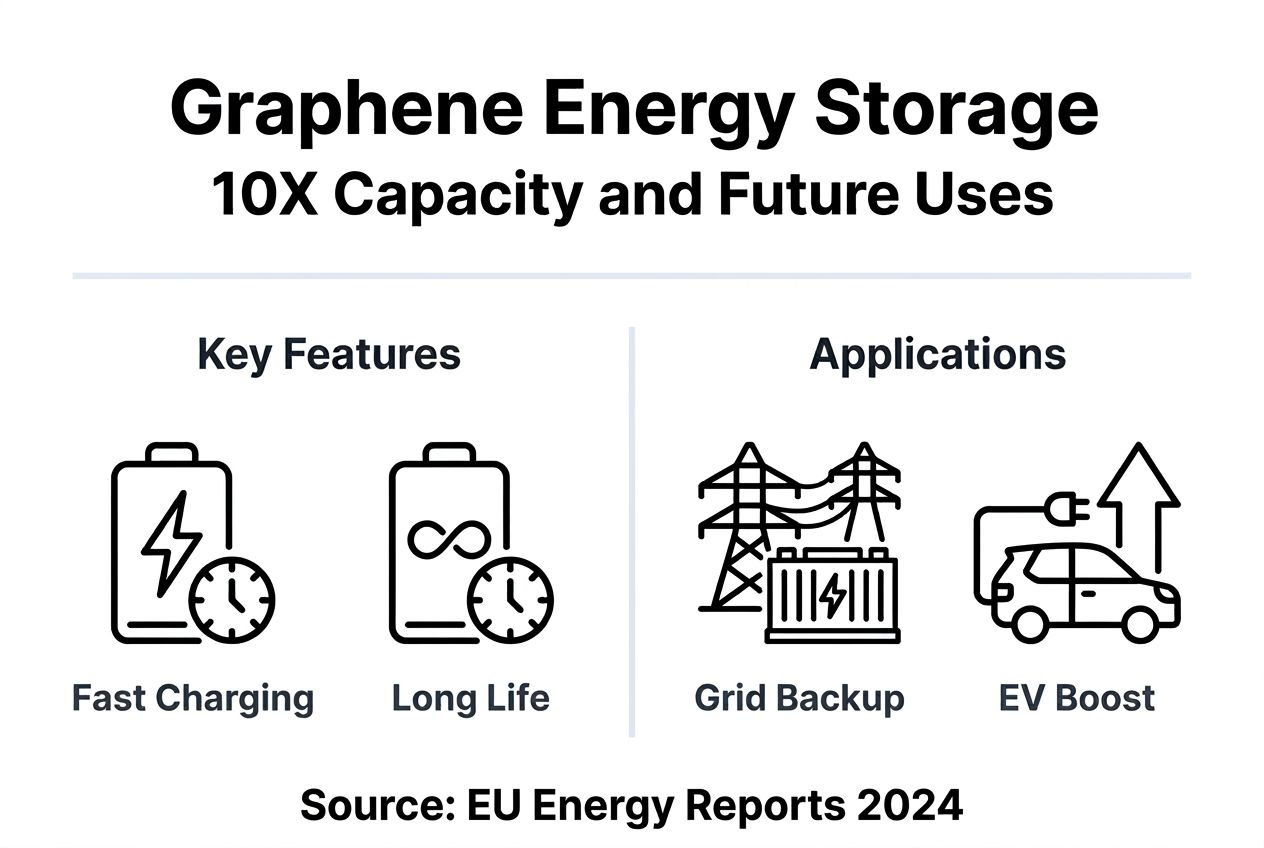
The graphene market is expected to experience significant growth over the next decade, driven by declining production costs and expanding application awareness. Industry forecasts project graphene supercapacitor installations growing at 35-45% annually through 2030, with commercial and industrial applications leading residential adoption by 3-5 years.
Graphene’s role in energy transition plans extends beyond direct storage applications. Enhanced thermal management in power electronics, improved efficiency in solar panel coatings, and superior conductivity in grid infrastructure all benefit from graphene integration. This creates ecosystem effects where multiple touchpoints drive familiarity and acceptance.
Successful integration requires collaboration among stakeholders you likely already work with. Equipment manufacturers must design systems accommodating graphene’s distinct charging profiles. Installers need training on handling and connecting graphene modules safely. Grid operators require communication protocols for coordinating distributed graphene assets. Financial institutions should understand performance characteristics when evaluating residential energy storage types and utility scale storage solutions for project financing.
Discover sustainable energy solutions with Belinus
As graphene technology reshapes energy storage possibilities, staying informed about practical implementations becomes crucial for decision-makers. Belinus provides comprehensive resources exploring how innovative storage technologies integrate with solar PV, EV charging, and intelligent energy management systems.

Explore detailed insights on graphene supercaps energy insights and discover how Belinus’s Energy Wall G1, launching Q1 2026 with 16 kWh graphene supercapacitor technology, delivers the rapid charging and extended lifespan advantages discussed throughout this article. Visit Belinus sustainable energy solutions to access technical specifications, performance comparisons, and consultation services that help you evaluate whether graphene technology aligns with your energy transition goals.
Frequently asked questions
What are the main benefits of graphene supercapacitors compared to batteries?
Graphene supercapacitors charge in seconds to minutes rather than hours, handle millions of charge cycles versus thousands for batteries, and deliver higher power output for applications needing rapid energy bursts. They complement batteries effectively in hybrid systems where supercapacitors manage power fluctuations while batteries provide sustained energy delivery. However, graphene battery benefits include higher energy density for applications requiring extended runtime between charges.
What are the challenges limiting large-scale adoption of graphene technology in energy?
High production costs remain the primary barrier, with graphene materials costing two to five times more than conventional alternatives in 2026. Energy density improvements, while significant, still fall short of lithium-ion batteries for many applications. Environmental adaptability requires advanced encapsulation to protect graphene structures from humidity and temperature variations. Overcoming these challenges demands collaboration across supply chains to share development costs and accelerate manufacturing scale.
How soon can commercial properties in Europe expect to implement graphene-based energy storage?
Pilot projects and research programs indicate commercial-scale production is advancing but remains in early deployment stages during 2026. Market analysis projects substantial growth over the next decade as production costs decline and scalability improves. Early adopters in critical sectors like smart grids, public transportation, and industrial facilities may see practical implementations by 2027-2029, with broader commercial availability expected in the early 2030s. Staying connected with enterprise energy storage timelines helps property managers plan technology roadmaps effectively.
Can graphene supercapacitors replace batteries entirely in renewable energy systems?
Graphene supercapacitors excel at managing short-duration power fluctuations and rapid charge-discharge cycles but currently lack the energy density for overnight or multi-day storage that batteries provide. The optimal approach combines both technologies in hybrid configurations where each handles tasks matching its strengths. Supercapacitors smooth intermittent renewable output and provide instant power response, while batteries store energy for sustained delivery during low-generation periods.
What maintenance do graphene-based energy storage systems require?
Graphene supercapacitors require minimal maintenance compared to battery systems, with typical service intervals extending 15-20 years due to their exceptional cycle life. Periodic inspections verify electrical connections, enclosure integrity, and thermal management system function. Unlike batteries, graphene supercapacitors don’t require capacity testing or cell balancing, reducing operational complexity and costs. Most systems include remote monitoring capabilities that alert operators to performance deviations before they impact operations.
Recommended
Comments