Household electrification: your guide to modern home energy
- 4 hours ago
- 10 min read
TL;DR:
Household electrification involves replacing fossil fuel systems with electric technologies for home energy use.
Successful transition requires upgrades to electrical infrastructure, energy management, and integration of renewable sources.
Barriers include high upfront costs, grid limitations, renter restrictions, and lack of consumer awareness.
Swapping your gas stove for an induction cooktop feels like a win. But if your electrical panel still dates from 1985 and your heating runs on a boiler, you’ve only scratched the surface of what household electrification actually means. True electrification is a systemic shift, not a single purchase. It touches how your home generates, stores, and distributes energy across every major system. This guide will walk you through exactly what that shift involves, what it costs, who can do it, and what the most popular articles consistently get wrong about the process.
Table of Contents
Key Takeaways
Point | Details |
Core definition | Household electrification means replacing fossil-fuel systems with electric technologies for heating, cooking, and hot water. |
Expert steps | Successful electrification requires both equipment upgrades and ensuring home infrastructure supports added electrical load. |
Affordability matters | Upfront costs and local energy prices are the top barriers to making household electrification accessible to all. |
Not one-size-fits-all | What electrification looks like depends on housing type, local policies, and whether you rent or own. |
Practical action | Partial steps, like smarter energy use or storage, can deliver benefits on the path to full electrification. |
What is household electrification?
Household electrification is the process of moving every major energy use in your home away from fossil fuels and toward electricity. That means heating, cooling, cooking, hot water, and sometimes transportation, all powered by electrons instead of gas, oil, or coal.
As LCP Delta reports, “household electrification generally means switching household energy use from fossil-fuel-based heating and devices to electricity-powered solutions.” That definition sounds simple, but the implications run deep.
Electrification is not just about which appliances sit in your kitchen. It’s about whether your entire energy system, from the grid connection to the thermostat, can handle a fundamentally different fuel.
The core technologies driving household electrification include:
Air source or ground source heat pumps for space heating and cooling
Induction stoves replacing gas burners
Heat pump water heaters for domestic hot water
Residential solar PV to generate clean electricity on site
Battery storage to hold that electricity for when you need it most
EV chargers as transportation gets pulled into the electrified home
Each of these works in isolation. But the real transformation happens when they operate as a coordinated system. A heat pump running during cheap overnight hours, charged by a battery that absorbed solar generation during the afternoon, is something entirely different from just “an electric heater.” That’s why residential storage is increasingly treated as a backbone technology, not an optional extra.
The structural side is just as important as the equipment side. Older European homes often have single-phase electrical connections sized for lighting and a few outlets. Add a heat pump, EV charger, and electric water heater simultaneously, and you can overload both the panel and the supply cable. Electrification, done properly, also means assessing and sometimes upgrading the home’s electrical infrastructure.
Understanding smart home energy management becomes equally relevant here. Without some form of intelligent control, an electrified home can actually cost you more in electricity bills than your old gas setup. The promise of electrification is real, but it only pays off when the pieces work together.
How does household electrification actually work?
With the basics defined, let’s break down how electrification is put into practice at home. The process is less like flipping a switch and more like renovating a house room by room, with each step building on the last.
Ember Energy’s research describes it clearly: electrification typically involves “replacing fossil end-uses with electric technologies” such as heat pumps and induction cooking, and then ensuring “the home’s electricity supply, distribution capacity, and control” can support those new loads.
Here is a realistic sequence most households follow:
Energy audit first. Before replacing anything, get a clear picture of where your home currently loses energy. A well-insulated home needs a much smaller heat pump. Skipping this step wastes money.
Replace the heating system. This is usually the highest-impact change. A heat pump replaces your gas or oil boiler and handles both space heating and, in most cases, domestic hot water.
Upgrade cooking. Induction is faster and more efficient than gas. This is often the easiest switch and a good psychological win early in the process.
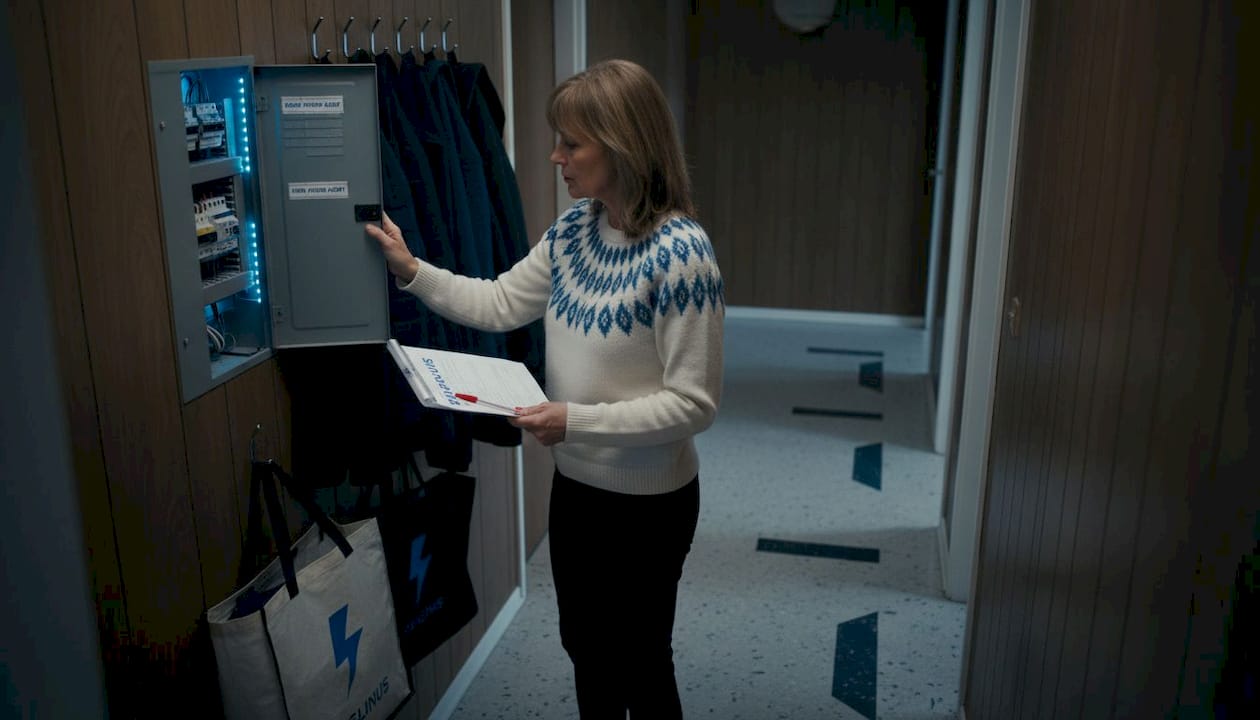
Assess your electrical panel. A 40-amp single-phase supply may not handle simultaneous demand from a heat pump, EV charger, and electric oven. You may need a panel upgrade or load-balancing controls.
Add solar PV if feasible. On-site generation dramatically changes the economics by offsetting the electricity you now use more of.
Add battery storage. This lets you shift solar generation to evening peak hours and take advantage of dynamic tariffs.
Connect everything through an energy management system. This is where the whole setup becomes genuinely smart, coordinating devices automatically.
Step | Technology involved | Typical cost range (Europe) |
Heat pump installation | Air source or ground source | €8,000 to €18,000 |
Induction stove | Countertop or built-in | €400 to €2,000 |
Panel upgrade | Electrical contractor | €1,500 to €5,000 |
Solar PV (5 kW) | Rooftop panels plus inverter | €6,000 to €12,000 |
Battery storage (10 kWh) | LFP or graphene hybrid | €5,000 to €10,000 |
Pro Tip: Don’t try to do everything at once. Prioritize the heating system first because it represents the largest share of your energy use, often 60 to 70 percent of a European household’s total consumption. Get that right, then layer in solar and storage.
The panel and wiring question catches many homeowners off guard. It is not glamorous, but it is critical. An undersized cable running from the street to your home is a real constraint, and utility companies sometimes have waiting lists for supply upgrades. Factor this into your timeline early. Learning to optimize home energy use from day one helps you stay within existing capacity while you wait for infrastructure work.
Battery storage deserves special attention in this sequence. Without it, your solar panels generate power you can’t always use, and your heat pump draws from the grid at peak rates. With storage and a time-of-use tariff, you buy cheap overnight power, store it, and run your home on it during expensive peak hours. The energy storage basics are accessible enough for any homeowner to get a handle on before committing to equipment.
Costs, benefits, and barriers to household electrification
Now that you understand the steps involved, it’s time to look at what electrification means for your wallet and the planet.
The financial picture is not simple. Upfront costs are real and substantial. Ongoing costs depend heavily on local electricity prices and how well your system is designed. But the long-term trajectory, especially as gas prices remain volatile and electricity grids get greener, generally favors electrification.
As Ember Energy notes, “heat pump adoption in Europe is constrained by affordability, upfront costs, and electricity/gas price ratios.” That last point is critical. In countries where electricity costs three to four times more per unit than gas, even a highly efficient heat pump can produce higher bills unless you pair it with solar, storage, or a favorable dynamic tariff.
Factor | Favors electrification | Works against electrification |
Energy prices | Low electricity, high gas | High electricity, cheap gas |
Home insulation | Well insulated | Poor insulation |
Ownership status | Owner occupier | Renter |
Renewable grid | High renewable share | Fossil-heavy grid |
Government incentives | Generous subsidies | Little or no support |
The benefits extend well beyond the monthly bill:
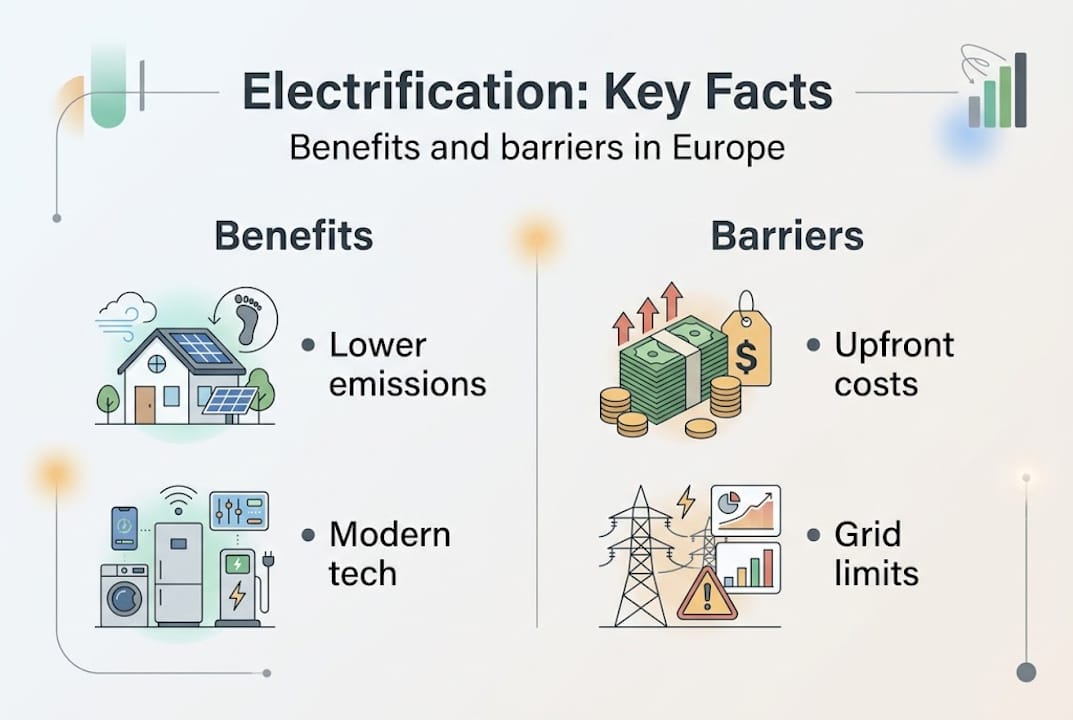
Lower direct emissions, especially as the grid gets greener. A heat pump running on wind power produces a fraction of the CO2 of a gas boiler.
Energy independence, because you are less exposed to gas price spikes. The 2021 to 2022 gas crisis in Europe showed just how vulnerable gas-dependent homes can be.
Improved air quality indoors, since gas combustion produces nitrogen dioxide and other pollutants inside your living space.
Future-proofing, as carbon taxes and fossil fuel restrictions are expected to tighten across Europe through 2030 and beyond.
Asset value, because energy-efficient, low-carbon homes increasingly command higher prices on the property market.
The grid flexibility and cost savings available through smart tariffs and storage can shift the economics considerably. A homeowner who combines solar, a battery, and a time-of-use tariff can effectively cut their net electricity cost to a fraction of the standard rate. Grid-connected battery storage in central Europe is already making this viable at a household scale.
The real question isn’t whether electrification saves money in theory. It’s whether your specific home, in your specific country, with your specific energy prices, makes the numbers work right now or in five years.
For renters, the calculus is much harder. You may not control the boiler, the panel, or the roof. But you can often still benefit from grid flexibility through smart plugs, flexible tariffs, and portable storage in some cases.
Nuances and challenges: what most guides miss
However, real-life electrification isn’t without barriers. Here’s what most articles don’t tell you.
The popular narrative around electrification tends to frame it as a straightforward upgrade: switch the boiler, install solar, enjoy savings. The reality is more complicated, and the complications matter most to people with the least financial cushion.
Research from the Heinrich Böll Foundation highlights the core tension: “without affordability safeguards, electrification can increase energy poverty or be blocked by housing and investment realities.” Tenants lack control. Upfront costs lock out lower-income households. Grid and tariff constraints create invisible ceilings on what’s even technically possible in some locations.
It is also worth noting that the word “electrification” means different things at different scales. Ember Energy’s analysis points out that economy-wide electrification metrics measure the share of final energy delivered as electricity across entire sectors. That is a very different lens from what an individual household experiences when deciding whether to replace their boiler.
Key challenges that deserve more honest coverage:
Tenant and owner divide. Renters in Europe occupy roughly 30 percent of homes. Most lack the legal or financial ability to install heat pumps or solar panels without landlord cooperation, which rarely comes without incentives.
Grid limitations in rural areas. Low-voltage grid infrastructure in rural and semi-rural zones may not support multiple heat pumps and EV chargers on the same street without costly upgrades.
Installer capacity. Certified heat pump installers are in short supply across much of Europe. Wait times of six to twelve months are not unusual in high-demand markets.
Behavioral and comfort expectations. Heat pumps work differently from gas boilers. They run at lower temperatures for longer periods. Homes with old, undersized radiators may feel less comfortable unless radiators are also upgraded.
Equity and subsidy design. Many national incentive programs are structured as tax credits or upfront rebates that require homeowners to pay costs first and reclaim later. That model effectively excludes lower-income households.
Pro Tip: If you’re a renter, ask your landlord about the EU’s Energy Performance of Buildings Directive, which is pushing minimum energy performance standards that may require landlords to upgrade poorly rated properties by the late 2020s. That context can shift the conversation.
Understanding energy efficiency fundamentals in 2026 helps you frame these conversations with clarity. And for homeowners in Belgium or the Netherlands, the top efficiency solutions for Benelux cover the specific incentives and products most relevant to your market.
The equity dimension is not just a social concern. It affects how fast the transition can happen overall. If only high-income homeowners electrify, the grid still carries large fossil fuel loads from everyone else. Broad, inclusive electrification requires policy design that meets people where they are financially, not just where they ideally could be.
Our take: the future of household electrification in Europe
The dominant assumption is that the main barrier to household electrification is technology. It is not. The technology exists, is proven, and is getting cheaper every year. Heat pumps, solar panels, and battery systems are commercially available right now in every European market.
What actually slows the transition is consumer confidence and structural lock-in. Homeowners who don’t fully understand how a heat pump operates, or who have heard secondhand stories about cold winters and high bills, delay the switch indefinitely. Renters feel powerless within a system that wasn’t designed with them in mind.
Our experience across energy projects consistently shows that the households making the fastest, most effective transitions are not the ones with the biggest budgets. They are the ones who took one well-informed first step, usually improving insulation or adding energy independence with storage, and built from there. Partial progress beats paralysis.
Policy needs to catch up on two fronts simultaneously: price incentives that make the economics work, and equity mechanisms that ensure those incentives don’t flow exclusively to people who already have wealth. Grid flexibility, intelligent home storage, and educated homeowners are not nice extras. They are the infrastructure the transition actually runs on.
Ready to electrify your home?
If you’re considering electrifying your own home, here’s how to make your next move smoother and smarter.
Household electrification doesn’t have to feel overwhelming. The key is having the right information and the right support at each stage, from your first energy audit to installing solar, storage, and smart controls.

At Belinus, we work with homeowners and installers across Europe to design energy systems that actually fit how people live. Whether you’re starting from scratch or looking to add battery storage to an existing solar setup, our integrated energy solutions are built around your specific situation. Our smart home energy guidance is a practical starting point to understand how the pieces fit together before you commit to anything. Take the next step when you’re ready, and we’ll help you make it count.
Frequently asked questions
What are the most common technologies used in household electrification?
Heat pumps for space heating, induction cooking appliances, and solar PV paired with battery storage are the foundational technologies, since household electrification means switching all major energy uses away from fossil fuels toward electricity.
Is electrifying my home affordable for renters as well as owners?
Renters face real structural barriers because they typically lack control over major systems, and without affordability safeguards the process can remain out of reach, though new landlord obligations under EU building standards are beginning to shift the balance.
Will switching to electric heating save me money?
It depends on your local electricity-to-gas price ratio, your insulation levels, and available incentives, since heat pump adoption costs vary widely and savings only materialize when the system is properly sized and managed.
How does electrification impact the environment?
An electrified home produces significantly lower direct emissions, and as the grid incorporates more renewables, switching household energy use away from fossil fuels delivers growing climate benefits over time.
Recommended
Comments