Top 3 solar inverter comparison alternatives 2026
- 8 hours ago
- 8 min read
Most buyers seeking advanced solar and energy storage systems for homes or commercial sites struggle to find solutions that balance lithium-free options, integrated energy management, and flexible installation without sacrificing reliability or usability. Standard inverters and battery setups often come with hidden limitations like lack of recyclability, incomplete system integration, and the need for multiple vendors, making both long-term sustainability and smooth operation difficult to achieve. After reading you will be able to compare three leading solar and energy storage ecosystems on sustainability, system integration, and support, empowering you to choose the setup that fits your site requirements and priorities.
Table of Contents
Belinus Energy
At a Glance
The Energy Wall G1 ships as a 16 kWh graphene supercapacitor with a listed launch and price target of Q1 2026 at €7,000 per unit. That lithium-free energy storage form factor is rare in residential offerings and signals a different lifetime and recycling profile.
Core Features
Belinus offers lithium-free, recyclable storage and high-efficiency bifacial solar panels backed by a 35-year warranty. The product family lists sodium-ion cells and graphene supercapacitors alongside modular battery cabinets for homes and industry.
The technical stack includes a centralized Energy Management System with real-time control, plus Solis inverters sized 5 to 25 kW, an ETAP Pro EV Charger for fleet use, and automated quotation software slated for January 2026.
Key Differentiator
Lithium-free, recyclable chemistry combined with Belgian engineering sets Belinus apart. Their suite pairs sodium-ion cells and graphene supercapacitors with modular cabinet design so you can scale from home storage to 400 plus kWh commercial modules without switching chemistry.
Pros
Strong sustainability focus and recyclable chemistries that reduce lithium dependence, attractive for homeowners who prioritize material circularity over conventional lithium setups.
Graphene supercapacitor option for high cycle life and fast charge discharge, useful where repeated short discharge cycles matter more than raw energy density.
Integrated ecosystem across products: Solis inverters with EMS integration, ETAP Pro EV Charger for fleet management, and a centralized EMS that supports tariff optimization and battery arbitrage.
Commercial capabilities include 400+ kWh utility modules, a target Belinus-branded PCS for CNI applications, and service offerings for energy trading and grid-integrated services.
Cons
Public technical documentation and independent third-party reviews are limited and pricing detail is patchy, which makes vendor comparison and procurement due diligence harder for buyers used to widely documented lithium systems.
Who It’s For
Environmentally conscious homeowners and industrial operators in the Benelux who want a lithium-free path to resilience. Good fit for sites where recyclability, long warranties, and multi-technology support matter more than highest energy density.
Unique Value Proposition
The lithium-free Energy Wall G1 with a 16 kWh graphene supercapacitor is the clearest signal of Belinus strategy. Pair that hardware with a centralized EMS that runs 15-minute dynamic tariff optimization, RESTful API access, and mobile plus web dashboards and you get both hardware and operational levers for savings and arbitrage.
Real World Use Case
A homeowner in the Benelux combines high-efficiency bifacial panels with an Energy Wall G1 and Solis inverter. The Belinus EMS shifts loads to low tariff windows and runs battery arbitrage while an ETAP Pro unit charges an EV fleet for a small business on site.
Pricing
Energy Wall G1 is quoted at €7,000 per unit with a Q1 2026 launch target. Broader pricing for other products is not published on the homepage, so project quotes will depend on system size, inverter choice, and commercial storage scale.
Website: https://belinus.com
SMA Solar Technology AG
At a Glance
SMA runs the Solar Academy and an Online Service Center, pairing hardware with installer training and post sale support to shorten commissioning time and reduce downtime for complex projects.
Core Features
SMA delivers tailored energy solutions for homes, businesses, and large power plants with a focus on durable inverter technology and scalable storage options.
The product set includes integrated management for generation, storage, and consumption plus a broad support network and training for PV professionals.
Key Differentiator
Seamless integration of PV, storage, and grid management technology with a focus on safety, reliability, and expert support sets SMA apart. The company couples hardware with professional training and online service tools for dependable system lifecycles.
Pros
Strong reputation for reliability and long lived hardware that reduces replacement risk and unplanned maintenance in multi year projects.
Broad portfolio including inverters, batteries, and management software that lets installers standardize on one vendor for system design and spare parts.
Global presence with local service networks and the Online Service Center to speed troubleshooting and firmware updates.
Recognition through awards and sustainability indices that supports procurement cases for commercial and large scale builds.
Extensive educational resources via the Solar Academy that bring installers up to speed on product configuration and best practices.
Cons
Complexity favors professional installers. Homeowners seeking a DIY kit will find the ecosystem heavy and configuration demanding.
Pricing is positioned at the premium end. Small budget projects may find costs prohibitive compared with entry level alternatives.
The broad product range can overwhelm newcomers when choosing the right model and accessory set for a specific roof or site.
When It May Not Fit
If you want a plug and play kit for a small home rooftop or a hobbyist project, SMA’s professional focus and layered support model will add cost and unnecessary complexity.
Budget conscious homeowners and micro businesses looking for the lowest upfront spend will find more suitable, simpler options elsewhere.
Notable Integrations
Solar Academy for training and certification.
Partnerprogram for certified installers and joint sales.
Online Service Center for remote diagnostics and updates.
Developer Portal for technical documentation and API access.
Who It’s For
Energy conscious homeowners who plan a professionally installed solar plus storage system, PV installers who need vendor training and spare part continuity, and project developers building commercial or utility scale systems.
Unique Value Proposition
Seamless integration of PV, storage, and grid management technology backed by structured professional support and training. For projects that demand long term uptime and clear service pathways, SMA reduces operational risk through education, local service, and integrated tools.
Real World Use Case
A family installs a solar plus storage system sized for daytime self consumption and backup. Their certified installer uses SMA components and Solar Academy training to commission the system quickly and hand over an easy to maintain site.
Pricing
Pricing is not published and is generally tailored to project scope and selected components. Expect project level quotes that reflect system size, export options, and service contracts.
Website: https://sma.de
Deye Inverter
At a Glance
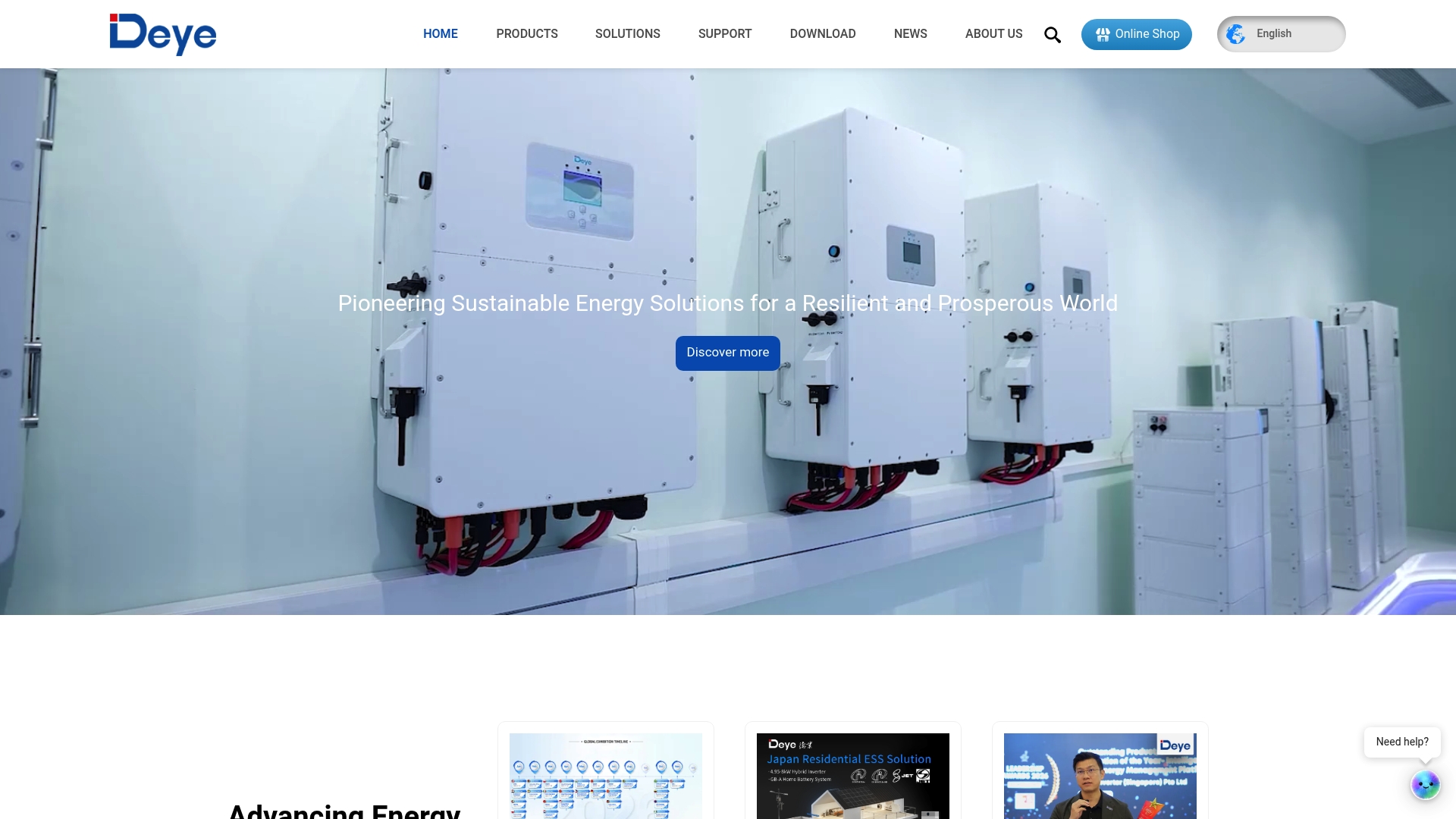
Deye ships high-capacity hybrid inverters that handle single-phase and three-phase setups while supporting unbalanced loads and diesel generator compatibility — features normally found on larger commercial systems, not typical residential kits.
Core Features
Deye covers hybrid, string, off-grid, and microinverters plus energy storage systems and EV chargers. Their stack includes advanced battery management for high voltage and parallel batteries. The integrated Deye Cloud platform provides real-time system monitoring and remote management. Grid stabilization and smart-load support are built in.
Key Differentiator
Supports unbalanced loads, grid stabilization, and hybrid energy storage integration with cloud monitoring. That combination makes Deye a fit for installers who must manage mixed loads and storage at scale. It serves integrators and developers more than DIY homeowners or simple residential installs.
Pros
Broad product range lets one vendor cover residential through industrial projects. This reduces parts complexity and supplier management for installers.
Reliable hybrid tech supports both grid-tied and off-grid modes, giving site operators flexible operation and backup power options.
Deye Cloud simplifies monitoring and maintenance with remote diagnostics, which saves site visits and speeds troubleshooting.
Strong support for high-voltage batteries and parallel strings suits larger storage systems where energy density and footprint matter.
Global availability and multilingual support help international project teams coordinate procurement and service.
Cons
Installation and setup can be complex according to third-party reviews, so expect to involve certified electricians or professional integrators.
Consumer-level automation is limited, so homeowners wanting plug-and-play smart home integration will find the feature set thin.
Advanced hybrid systems carry a potential high initial investment, placing them in the middle to upper price tiers for many buyers.
When It May Not Fit
If you are an individual homeowner seeking a simple DIY solar kit with deep smart home hooks, Deye may be overkill. Small-scale residential users who want automatic third-party smart home integration will face gaps. The product targets professional installers and project developers.
Notable Integrations
Deye Cloud platform for monitoring and performance management.
Deye OSS for installation verification and dealer authentication, which streamlines commissioning and warranty workflows.
Who It’s For
Energy system integrators, renewable energy installers, and commercial or industrial developers who need scalable inverters and storage with centralized monitoring. Choose Deye when project complexity demands multi-phase support and advanced battery topologies.
Unique Value Proposition
The presence of high-capacity hybrid inverters that handle unbalanced loads and diesel generator compatibility changes how you design mixed energy sites. For project teams managing storage, backup, and grid services together, Deye reduces the need for separate stabilizers or custom controls.
Real World Use Case
An industrial facility installs Deye hybrid inverters with parallel battery strings to boost self-consumption and provide reliable backup. Operations monitor performance via Deye Cloud and schedule maintenance remotely, cutting downtime and avoiding surprise failures.
Pricing
Pricing is available on request and generally sits in the middle to high range depending on configuration. Expect higher upfront costs for advanced hybrid systems and parallel battery setups.
Website: https://deyeinverter.com
How the options distinguish themselves in sustainable energy storage
Renewable Energy Solutions Comparison
This comparison highlights sustainability-focused residential and commercial energy systems to help determine an optimal solution for varied use cases.
Product | Core Feature | Key Differentiator | Best For | Pricing | Notable Limitation |
Belinus Energy | Lithium-free 16 kWh Energy Wall | Graphene supercapacitors and central EMS design | Sustainable installations prioritizing recyclability | €7,000/unit | Limited documentation and third-party reviews |
SMA Solar Technology AG | Tailored PV, storage, grid solutions | Integrated management pairing hardware and training | Reliable systems for professional installations | Not disclosed | Complexity and costs favor professional setups |
Deye Inverter | High-capacity hybrid inverters | Diesel generator compatibility and cloud monitoring | Installers managing multi-phase complex setups | Not disclosed | High initial investment and less consumer-focused features |
Choosing the Right Solar Energy Solution for Your Needs
Selecting a solar inverter and energy storage system can feel challenging with so many options on the market. The article highlights key concerns such as lithium dependency, system scalability, and managing dynamic tariffs. Belinus directly addresses these pain points by offering a lithium-free Energy Wall G1 with graphene supercapacitors, integrated with a centralized Energy Management System that optimizes energy use every 15 minutes.
Discover how Belinus combines modular battery storage, efficient Solar Inverters, and ETAP Pro EV Chargers to create tailored solutions for both residential and commercial setups. Act now by visiting Belinus to explore our intelligent energy solutions and take control of your energy costs with smart real-time management.
Frequently Asked Questions
How does the Energy Wall G1 from Belinus Energy stand out in energy storage solutions?
The Energy Wall G1 from Belinus Energy features a 16 kWh graphene supercapacitor, which offers a lithium-free, recyclable energy storage option rarely seen in residential products. This unique characteristic, combined with a 35-year warranty, provides both sustainability and longevity, making it ideal for environmentally conscious homeowners looking for resilience in their energy solutions.
What is the pricing structure for Belinus Energy products, and how does it compare to competitors?
Belinus Energy’s Energy Wall G1 is priced at €7,000 per unit, with a launch target set for Q1 2026. While competitors like SMA and Deye offer strong reliability and diverse product ranges, Belinus Energy’s focus on lithium-free systems and long warranties makes it a compelling option for those prioritizing sustainability and recyclability over mere performance metrics.
Can I scale my energy storage solution using Belinus Energy products?
Yes, Belinus Energy offers modular battery cabinets that allow for easy scaling from residential storage to commercial solutions covering 400+ kWh. This flexibility is crucial for users who may want to expand their energy capabilities as their needs grow, ensuring they do not have to switch chemistry while doing so.
What features of Belinus Energy make it suitable for electric fleet management?
The integration of an ETAP Pro EV Charger with Belinus Energy products offers specialized support for fleet management, making it an excellent fit for businesses seeking to optimize their energy usage for electric vehicles. This feature, combined with the centralized Energy Management System, supports tariff optimization and enhances operational efficiency for fleet operators.
What are the benefits of using the centralized Energy Management System (EMS) from Belinus Energy?
Belinus Energy’s centralized EMS provides real-time control and supports 15-minute dynamic tariff optimization, which helps users maximize savings by shifting energy loads to lower tariff windows. This capability, alongside its RESTful API for easy integration and management, allows users to fully leverage their energy systems for efficiency and cost-effectiveness.
Recommended
Comments