Solar system components explained for Benelux homeowners
You might assume solar panels produce electricity ready to power your home appliances directly. Actually, panels generate direct current (DC) electricity that requires conversion to alternating current (AC) through an inverter before you can use it. Understanding the essential components of residential solar systems helps Benelux homeowners make informed decisions about sustainable energy investments. This guide breaks down solar panels, inverters, batteries, energy management systems, and other critical parts working together to maximize your home’s energy efficiency.
Table of Contents
Key takeaways
Point | Details |
Solar panels convert sunlight | Photovoltaic cells generate DC electricity with 15-23% efficiency depending on panel type |
Inverters enable home use | Convert DC to AC power with over 95% efficiency for appliances |
Battery storage increases savings | Lithium-ion and graphene options store excess energy for night use |
Energy management optimizes costs | Smart systems reduce bills by up to 15% through tariff optimization |
Grid integration provides flexibility | Net metering credits surplus energy exports in Benelux countries |
Introduction to residential solar systems in Benelux
Solar adoption across Belgium, the Netherlands, and Luxembourg has grown steadily as homeowners seek energy independence and lower electricity costs. The Benelux region’s moderate climate provides sufficient sunlight for viable residential solar generation, even during winter months when cloud cover increases.
Regional regulations support grid-tied residential installations through net metering policies across Benelux that allow homeowners to earn credits or reduce electricity bills by exporting surplus energy to utility grids. These policies create financial incentives that improve solar investment returns.
Modern solar systems integrate multiple components beyond panels. Battery storage captures excess daytime generation for evening use when solar production stops. Energy Management Systems (EMS) coordinate all components to maximize self-consumption and minimize grid dependency.
Key factors shaping Benelux solar design:
Weather patterns requiring durable mounting systems for wind and rain
Grid infrastructure supporting bidirectional energy flow
Incentive programs varying by country and region
Building codes specifying installation standards
Integrated systems with batteries and EMS deliver better financial returns than basic panel-only installations. The combination allows you to store cheap solar energy and avoid expensive grid electricity during peak hours.
Solar panels and how they work
Photovoltaic cells inside solar panels use the photovoltaic effect to convert sunlight into electricity. When photons strike silicon cells, they knock electrons loose, creating an electrical current. This DC electricity flows from the panels to your inverter.
Solar panels convert sunlight to DC electricity using photovoltaic cells with efficiencies typically between 15% and 23% for residential panels in Europe. Higher efficiency means more power per square meter, which matters when roof space is limited.
Three main panel types serve residential markets:
Monocrystalline panels use single-crystal silicon wafers, delivering the highest efficiency (18-23%) and longest lifespan. They perform better in low-light conditions common in Benelux winters. The dark uniform appearance appeals to homeowners concerned about aesthetics.
Polycrystalline panels contain multiple silicon crystals, offering moderate efficiency (15-18%) at lower cost. The blue-speckled appearance results from the manufacturing process. These panels provide good value for larger roof areas where space isn’t constrained.
Thin-film panels use lightweight materials like cadmium telluride or amorphous silicon. They offer lowest efficiency (10-13%) but weigh less and handle partial shading better. Best suited for commercial buildings or unique residential applications.
Panel Type | Efficiency Range | Cost Level | Best Application |
Monocrystalline | 18-23% | Higher | Limited roof space, premium aesthetics |
Polycrystalline | 15-18% | Moderate | Standard homes, budget-conscious |
Thin-film | 10-13% | Lower | Unique installations, weight-sensitive |
Your solar panel selection for Central Europe depends on roof orientation, available space, budget, and expected system lifespan. Monocrystalline panels typically justify their higher upfront cost through better long-term production in Benelux conditions.
Pro Tip: Calculate your roof’s usable area before choosing panel type. If space is tight, invest in high-efficiency monocrystalline panels to maximize production within constraints.
Inverters and their role
Your home appliances, lighting, and electronics require AC electricity to function. Inverters convert DC electricity from solar panels into AC electricity with efficiencies over 95%, making solar energy compatible with household electrical systems.
Two main inverter types offer different advantages:
String inverters connect multiple panels in series, feeding DC power to a single central unit. This traditional approach costs less upfront and simplifies maintenance. However, shading on one panel reduces output for the entire string. Best for unshaded roofs with uniform panel orientation.
Microinverters attach to individual panels, converting DC to AC at the source. Each panel operates independently, eliminating the shading vulnerability of string systems. They cost more initially but deliver better performance on complex roof layouts or partially shaded installations.
Inverter Type | Cost | Shading Tolerance | Monitoring | Best For |
String | Lower | Poor | System level | Simple, unshaded roofs |
Microinverter | Higher | Excellent | Panel level | Complex layouts, partial shade |
Inverter efficiency impacts your system’s overall production. A 96% efficient inverter loses 4% of generated power during conversion. Quality inverters maintain high efficiency across varying load conditions throughout the day.
Modern inverters include monitoring capabilities that track production, diagnose issues, and optimize performance. Many integrate with home energy management systems for coordinated control of solar generation, battery storage, and consumption.
Pro Tip: Choose microinverters if your roof has dormers, chimneys, or nearby trees causing intermittent shade. The added cost pays back through better energy harvest over the system’s lifetime.
Battery storage benefits and options
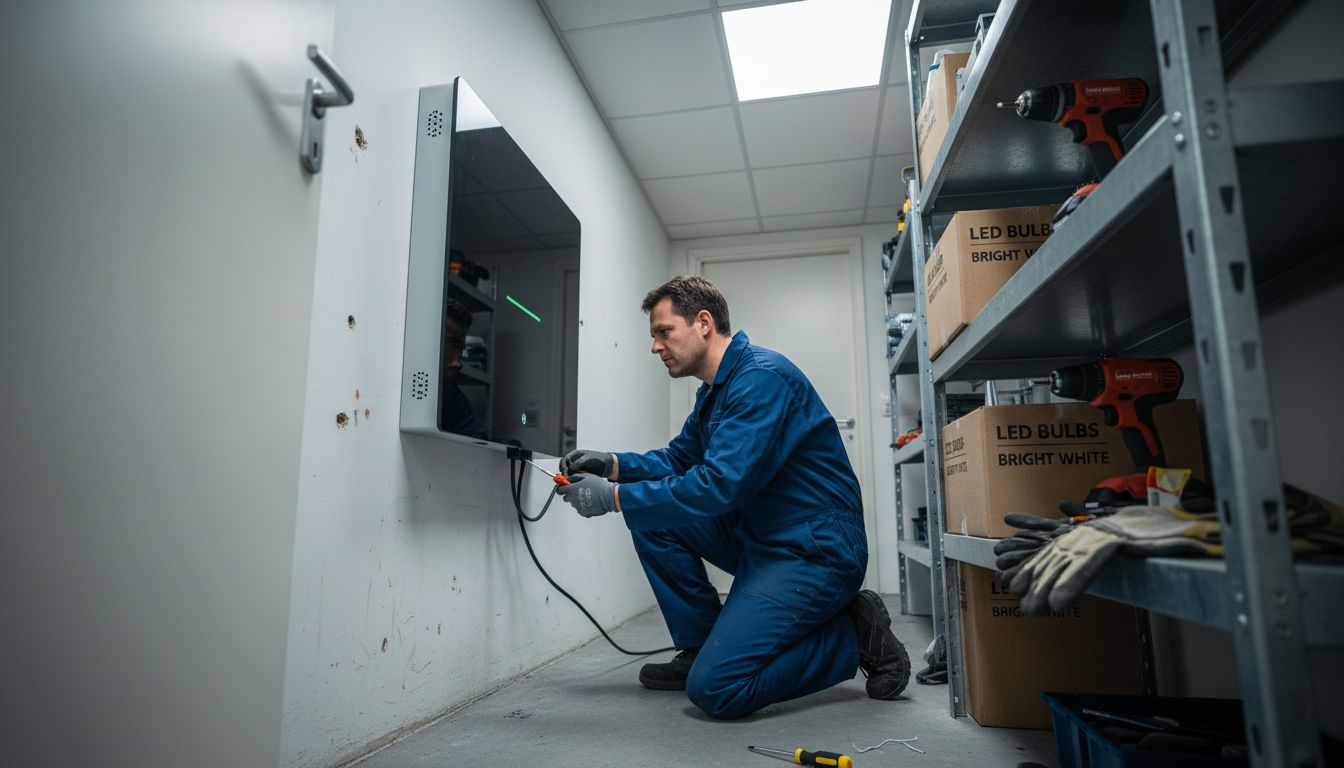
Battery systems store excess solar energy produced during sunny hours for use when panels aren’t generating. This capability increases self-consumption, reduces grid dependence, and provides backup power during outages.
Two main technologies serve residential energy storage:
Lithium-ion batteries dominate current installations due to mature technology, declining costs, and reliable performance. They offer 5,000 to 10,000 charge cycles with 90-95% round-trip efficiency. Typical residential systems range from 5 to 15 kWh capacity.
Graphene supercapacitor batteries represent emerging technology with faster charging, longer lifespan (30+ years), and better cold-weather performance. They cost more initially but require less maintenance and handle deeper discharge cycles without degradation.
Storage capacity determines how much energy you can bank for later use. A 10 kWh battery covers typical evening consumption for average Benelux households. Modular systems let you start small and expand capacity as needs grow or budgets allow.
Increased self-consumption from 30% to 70% or more
Lower electricity bills by avoiding expensive evening grid rates
Energy independence reducing vulnerability to utility rate increases
Backup power maintaining critical loads during grid outages
Grid services revenue through virtual power plant programs
Payback periods in Benelux typically range from 7 to 12 years depending on electricity rates, system size, and available incentives. The battery storage setup process requires professional installation to ensure safety and optimal performance.
Cost savings scale with system size and usage patterns. Studies show energy savings with a 16 kWh battery can reach €860 annually for households optimizing time-of-use rates and maximizing solar self-consumption.
Pro Tip: Size your battery based on actual evening consumption patterns, not maximum possible storage. Monitor your usage for a few months before purchasing to avoid oversizing and wasting money on unused capacity.
Energy management and optimization
Energy Management Systems coordinate solar panels, batteries, appliances, and grid connections to minimize costs and maximize efficiency. These intelligent controllers make real-time decisions about when to store energy, when to use it, and when to import or export from the grid.
Modern EMS platforms integrate with all system components through APIs and IoT connections. They monitor production, consumption, and storage levels continuously, adjusting operation to match dynamic electricity pricing and household needs.
Key EMS features include:
Real-time monitoring tracking energy flows every 15 minutes
Tariff optimization charging batteries during cheap periods
Load management shifting consumption to solar production hours
Predictive algorithms forecasting weather and adjusting storage
Remote control enabling manual overrides through mobile apps
Belinus EMS operates on 15-minute intervals matching dynamic tariff structures in Benelux markets. This granular control enables battery arbitrage, buying cheap grid power at night and selling stored energy during expensive peak hours.
Energy management savings in Benelux reach up to 15% beyond basic solar savings through intelligent coordination of all energy assets. The system learns your consumption patterns and optimizes automatically without requiring constant attention.
Smart controls extend beyond solar and batteries. EMS platforms can schedule heat pumps, water heaters, EV chargers, and other flexible loads to run when solar production peaks or electricity costs drop. This whole-home approach maximizes the value of every kilowatt-hour.
Grid services create additional revenue opportunities. Some utility programs pay homeowners to make battery capacity available for grid stabilization. Your EMS handles participation automatically while ensuring you always have backup power reserved for outages.
Mounting and wiring essentials
Secure mounting systems protect your solar investment from Benelux weather conditions including strong winds, heavy rain, and occasional snow loads. Quality hardware ensures panels remain firmly attached through decades of exposure.
Roof-mounted systems dominate residential installations due to space efficiency and minimal ground footprint. Aluminum rails attach to roof structures using weather-sealed penetrations. Mounting brackets must withstand wind uplift forces exceeding 150 km/h common during winter storms.
Ground-mounted arrays suit properties with adequate yard space and rocky or shaded roofs. These systems cost more due to foundation requirements and additional materials. However, they simplify maintenance access and allow optimal tilt angles independent of roof pitch.
Mounting considerations for Benelux conditions:
Corrosion-resistant materials handling humid maritime climate
Engineered wind ratings certified for local building codes
Drainage design preventing water pooling around connections
Snow load capacity adequate for occasional heavy accumulation
Electrical wiring connects panels to inverters and batteries using specialized solar-rated cables. Proper gauge selection prevents voltage drop over long cable runs. All outdoor connections require weatherproof enclosures protecting against moisture intrusion.
Safety systems include rapid shutdown switches allowing firefighters to de-energize rooftop panels during emergencies. Arc fault protection detects dangerous electrical arcing and disconnects the system automatically. Ground fault protection prevents shock hazards from insulation failures.
Professional installation ensures compliance with national electrical codes and local building permits. Certified installers understand regional requirements for structural attachments, electrical connections, and grid interconnection protocols.
Grid integration and net metering basics
Grid-tied solar systems remain connected to utility power, enabling bidirectional energy flow. Your home draws grid electricity when solar production falls short and exports surplus generation when panels produce more than you consume.
Grid-tied residential solar systems can export surplus energy allowing homeowners to earn credits or reduce electricity bills via net metering policies present across Benelux countries. This arrangement eliminates the need for expensive oversized battery systems to store all possible generation.
Net metering programs credit exported energy at rates varying by country and utility. Some offer one-to-one credit matching retail electricity prices. Others pay wholesale rates lower than what you pay for imported power. Understanding your local policy determines optimal system sizing.
Grid integration requirements:
Utility interconnection agreement authorizing bidirectional flow
Bidirectional meter tracking both imports and exports
Anti-islanding protection preventing energized lines during outages
Power quality compliance maintaining grid voltage and frequency
Export limits cap how much power you can send to the grid simultaneously. Typical residential connections allow 10 to 15 kW export capacity. Larger systems require grid infrastructure upgrades at additional cost.
Balancing self-consumption with exports optimizes financial returns. Battery storage increases the percentage of solar energy you use directly, reducing dependence on net metering credits that may pay less than retail rates. The ideal mix depends on your electricity tariff structure and consumption pattern.
Some utilities offer time-of-use rates paying premium prices for exports during peak demand hours. Smart energy management systems take advantage by storing cheap solar generation and exporting during expensive periods when credits are most valuable.
Common misconceptions about solar components
Many homeowners hold incorrect beliefs about solar technology that lead to poor decisions or unrealistic expectations. Clearing up these misconceptions helps you approach solar investments with accurate information.
Solar panels produce DC electricity, not AC power ready for home use. This surprises people who assume panels generate standard household electricity. Inverters are essential components, not optional accessories. Every grid-tied system needs conversion equipment to make solar energy compatible with appliances.
Battery storage increases energy independence but isn’t required for basic solar systems. Grid-tied installations without batteries export surplus generation and import power at night. Batteries add cost and complexity while boosting self-consumption and backup capability. The decision depends on your goals and budget.
Panel efficiency varies significantly by technology and manufacturer. All solar panels don’t deliver equal performance. Cheap low-efficiency panels require more roof space for the same power output. Quality differences affect long-term production, especially in Benelux’s variable weather conditions.
Key clarifications:
Solar systems need professional installation for safety and warranty compliance
Maintenance requirements are minimal but not zero
Winter production drops but systems remain cost-effective year-round
Shading dramatically reduces output, making site assessment critical
System sizing should match consumption, not maximize roof coverage
Financing options extend beyond cash purchases. Loans, leases, and power purchase agreements provide paths to solar ownership with various payment structures. Each approach has different financial implications for tax benefits, ownership equity, and long-term savings.
Conclusion and practical guidance for Benelux homeowners
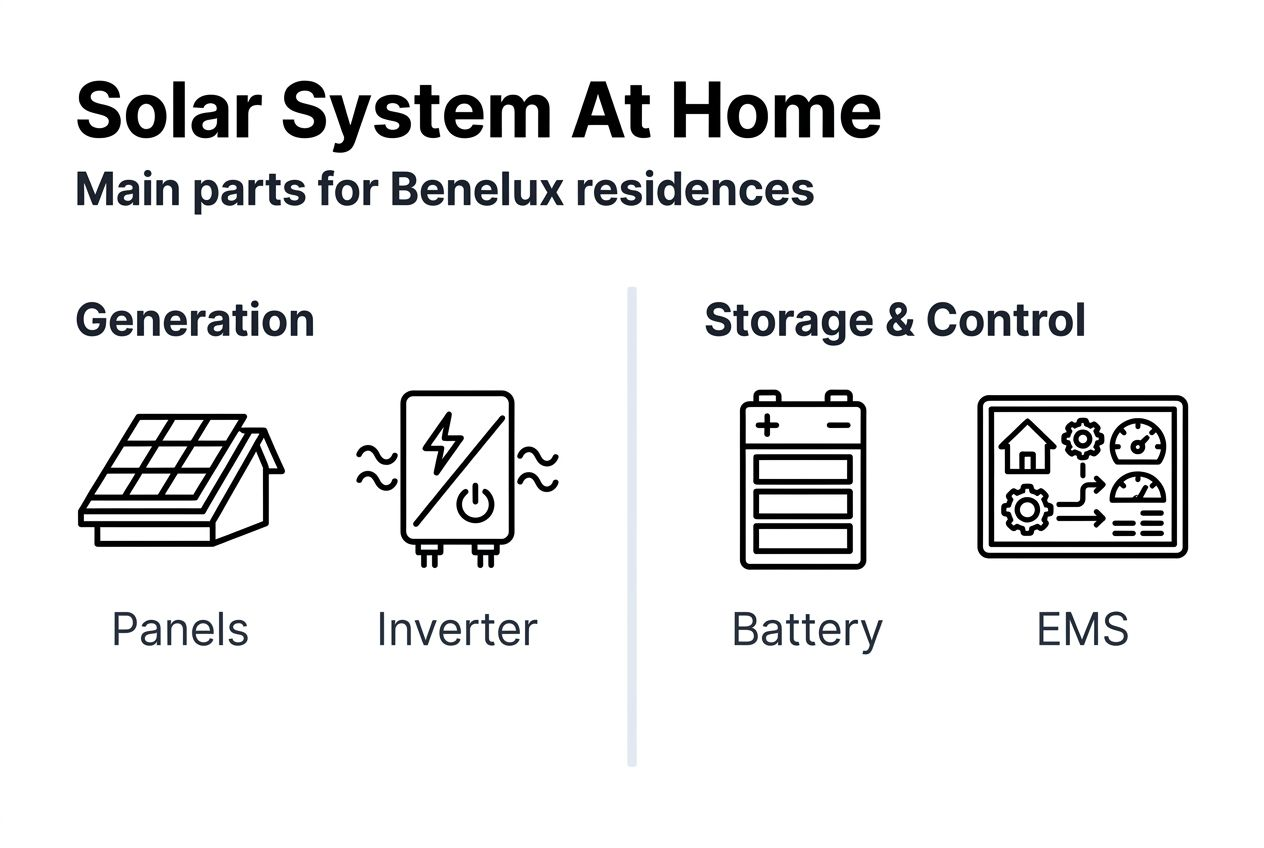
Solar system components work together to capture, convert, store, and manage renewable energy for residential use. Panels generate DC electricity, inverters convert it to AC power, batteries store excess production, and energy management systems optimize everything for maximum savings.
Successful solar adoption requires careful planning matched to your specific situation. Assess your roof’s orientation, available space, and shading conditions before selecting panel types. Evaluate whether microinverters justify their premium for your layout. Size battery storage to actual evening consumption rather than theoretical maximums.
Practical next steps:
Review your annual electricity consumption to estimate system size
Evaluate roof suitability or ground-mount options
Research local net metering policies and available incentives
Consult the solar power checklist for Benelux homeowners
Compare equipment options using the solar panel selection process for Central Europe
Benelux climate conditions support viable solar generation despite common concerns about limited sunlight. Modern components deliver reliable performance through winter months and maximize production during summer peaks. Battery storage and smart energy management multiply savings beyond basic solar generation.
Professional system design accounts for regional building codes, electrical standards, and grid interconnection requirements. Certified installers ensure proper component integration, safety compliance, and optimal performance. The upfront investment in quality equipment and expert installation pays dividends through decades of reliable operation.
Explore your solar energy options with Belinus
Ready to transform your home’s energy system with smart solar technology? Belinus delivers integrated solutions combining high-efficiency panels, advanced battery storage, and intelligent energy management tailored for Benelux homes.
Our comprehensive approach starts with solar PV for homes explained through detailed consultations matching system design to your specific needs. We guide you through battery storage setup including our Energy Wall G1 graphene supercapacitor offering 16 kWh capacity with 30-year lifespan. Our solar energy management solutions coordinate all components through EMS platforms optimizing costs every 15 minutes.
Belinus affiliated companies provide complete project delivery from initial assessment through installation and ongoing support. SolarPlus handles professional installation, Solarimex supplies premium components, and Evonity integrates EV charging for whole-home energy optimization.
Pro Tip: Schedule a consultation with Belinus experts to receive custom system design matching your roof layout, consumption patterns, and budget. Our 25-year financial modeling software shows exactly how components work together to maximize your return on investment.
FAQ
What are the main types of solar panels available for homes?
Monocrystalline panels deliver highest efficiency (18-23%) with sleek dark appearance ideal for limited roof space. Polycrystalline panels offer cost-effective option with moderate efficiency (15-18%) suitable for standard residential installations. Thin-film panels weigh less but provide lower efficiency (10-13%), working best for unique applications where weight matters more than space.
How does battery storage improve solar system performance at home?
Batteries capture excess daytime solar generation for use during evenings and cloudy periods when panels aren’t producing. Storage increases self-consumption from 30% to over 70%, reducing expensive grid electricity purchases. Systems provide backup power during outages and enable participation in grid services programs that create additional revenue streams.
What is net metering and how does it benefit solar homeowners in Benelux?
Net metering credits homeowners for surplus solar energy exported to utility grids, offsetting imported electricity costs. Policies vary across Belgium, Netherlands, and Luxembourg but generally reduce monthly bills by applying export credits against grid consumption. This arrangement eliminates need for oversized battery systems while maintaining grid connection for reliable power supply.
Why do solar panels need inverters if they already produce electricity?
Solar panels generate direct current (DC) electricity incompatible with home appliances requiring alternating current (AC) power. Inverters convert DC to AC with over 95% efficiency, making solar energy usable for standard household devices. Without inverters, panel electricity couldn’t power lights, electronics, or appliances in your home.
How does Energy Management System integration reduce electricity costs?
EMS platforms monitor production, consumption, and storage in 15-minute intervals matching dynamic utility tariff structures. Systems automatically charge batteries during cheap periods and discharge during expensive peak hours. Smart load management shifts flexible consumption like heat pumps and EV charging to solar production hours, reducing grid dependence and lowering bills up to 15% beyond basic solar savings.
Recommended
Comments