Unlock grid flexibility: save costs and boost sustainability
- Mar 29
- 8 min read

Renewables now supply nearly two-thirds of EU electricity, yet most residential property owners and facility managers are leaving serious money on the table. The grid is changing faster than most people realize, and that shift creates both hidden risks and real financial opportunities. Overloads, wasted solar energy, and volatile electricity prices are no longer abstract problems for utilities alone. They land directly on your energy bill and your building’s resilience. This article walks you through what grid flexibility actually means, why it matters right now, and how you can use solar, storage, and EV charging to turn grid pressure into personal savings.
Table of Contents
Key Takeaways
Point | Details |
Flexibility prevents outages | Managing grid flexibility maintains reliability as renewables expand and prevents blackouts and wasted energy. |
Save money and earn new revenue | Homes can save hundreds to thousands of euros per year and even earn from grid services by actively managing flexibility. |
Smart tech is key | Tools like HEMS, smart meters, and dynamic tariffs empower you to optimize benefits from solar, storage, and EVs. |
Proven success in Europe | European case studies show real-world cost savings, fast paybacks, and reduced grid investment needs through flexibility. |
Action starts at home | Residential owners and facility managers hold significant power to drive a more sustainable, cost-effective energy system. |
What is grid flexibility and why does it matter?
Grid flexibility is the ability to adjust electricity supply or demand quickly enough to keep the grid in balance at all times. Think of it like water pressure in a pipe: too much or too little, and the system fails. With renewables flooding the grid at unpredictable times, that balance is harder to maintain than ever.
When flexibility is missing, the consequences are real:
Grid overloads that force network operators to curtail (cut off) renewable generation
Blackouts during peak demand periods when supply can’t keep up
Negative electricity prices when too much solar or wind hits the grid at once
Wasted renewable energy that could have been stored or shifted
As renewable grid services become more central to European energy policy, the pressure on grid operators is intensifying. Flexibility management is now essential to prevent overloads, blackouts, and negative pricing events that ripple through to consumers.
“Flexibility is not a luxury feature of the future grid. It is the foundation the future grid is built on.”
For practical guidance on navigating this shift, flexible power solutions tips offer a useful starting point for property owners exploring their options.
The impact of renewables and electrification on grid needs
Traditional grids were designed around predictable, centralized power plants. You could forecast demand, ramp a gas turbine up or down, and keep everything balanced. That model is breaking down fast.
Solar panels generate power at noon whether you need it or not. Wind turbines produce at night when demand is low. Electric vehicles charge in the evening when everyone gets home, creating demand spikes that older infrastructure was never built to handle. The result is a grid that needs constant, distributed adjustment.
Feature | Traditional grid | Flexible modern grid |
Power sources | Centralized, predictable | Distributed, variable |
Demand management | Passive | Active, real-time |
EV integration | None | Smart charging, V2G |
Consumer role | Passive user | Active flexibility provider |
Price signals | Fixed tariffs | Dynamic, time-of-use |
The numbers back this up. Flexibility needs in Europe are set to double over the next five years, driven by renewables and electrification. For smart residential solar options, this doubling of demand creates a direct opportunity: your home or facility can become part of the solution, and get paid for it.
Key stat: Renewables already supply close to two-thirds of EU electricity, and that share is climbing every year. The grid infrastructure supporting that share was not designed for it.
How residential owners and facility managers drive flexibility
Here is where it gets interesting for you. Residential buildings are not just passive consumers anymore. With the right technology stack, your property can actively contribute to grid balance while cutting your own costs.
The core technologies that make this possible:
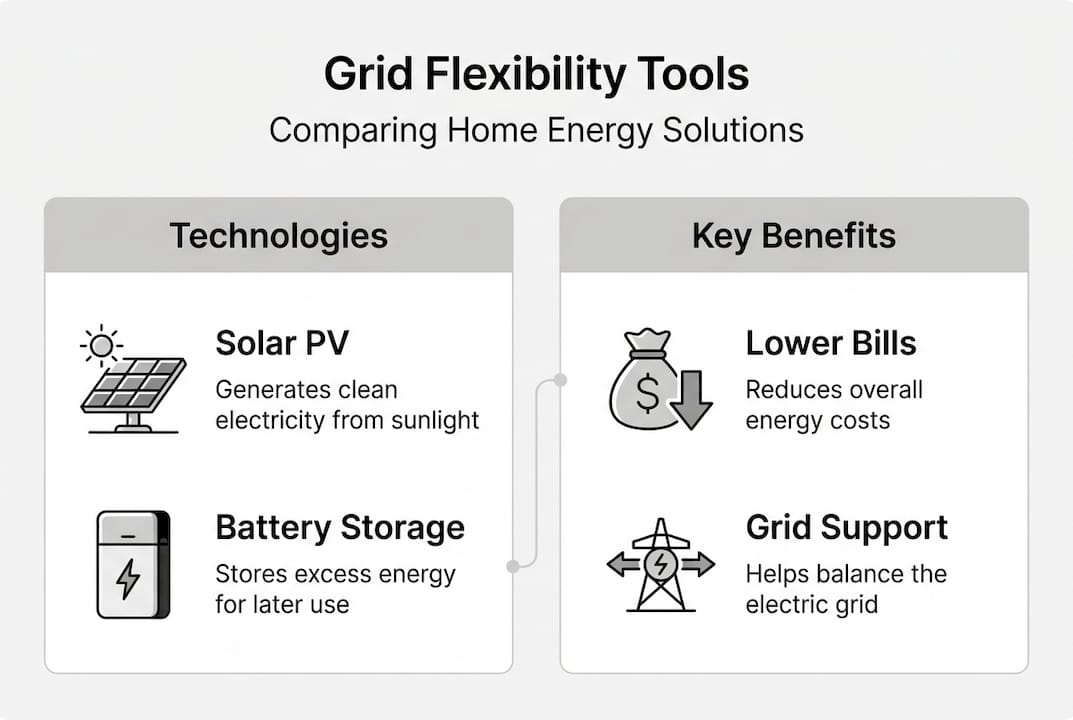
Solar PV panels that generate electricity and reduce your grid draw during peak hours
Battery storage that captures excess solar and releases it when prices are high or the grid needs support
Smart EV chargers that shift charging to off-peak windows or feed power back to the grid via vehicle-to-grid (V2G)
Heat pumps that can pre-heat or pre-cool buildings when electricity is cheap, reducing demand at peak times
The battery storage benefits for homeowners go well beyond backup power. When combined with solar and an EV, a battery system becomes a flexibility asset. Residential solar buildings with batteries, EVs, and heat pumps can meet over half of EU daily flexibility needs by 2030 through demand response and smart management. That is a remarkable shift in who controls grid stability.
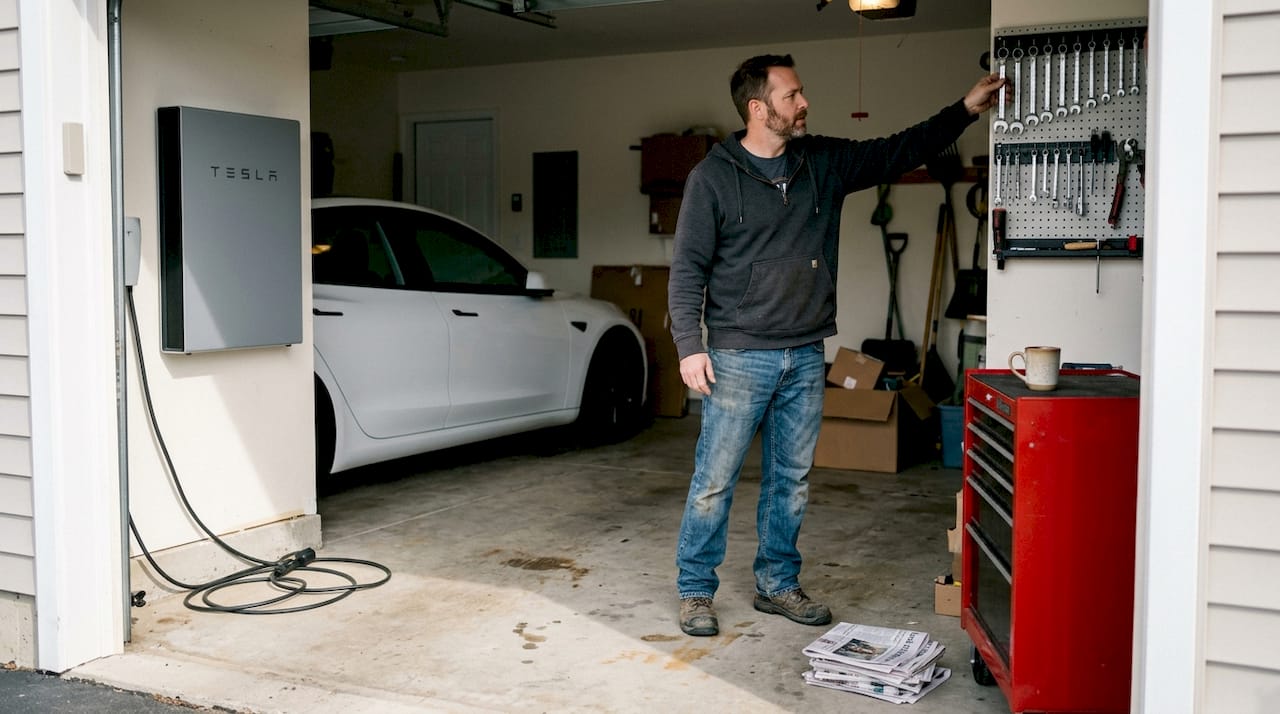
Pro Tip: Don’t think of your battery as just a backup device. Pair it with a home energy management system (HEMS) and dynamic tariffs, and it becomes an active revenue tool. The energy savings and flexibility gains from combining PV with storage are significantly higher than either technology alone.
For a deeper look at how these systems work together, solar plus storage integration guides walk through the practical setup steps.
Technology | Flexibility contribution | Typical savings potential |
Solar PV only | Moderate | Reduces daytime grid draw |
Solar + battery | High | Shifts use, earns arbitrage |
Solar + battery + EV (V2G) | Very high | Adds revenue from grid services |
Full HEMS integration | Maximum | Stacks all value streams |
Economic benefits: savings, revenue, and deferred grid investments
Managing your property’s flexibility is not just an environmental choice. It is a financial one, and the numbers are compelling.
Smart EV charging savings: Residential users can save €450 to €2,900 per year through smart charging alone, depending on usage patterns and tariff structures.
Value stacking: Combining PV, battery, and EV management can push annual savings up to €1,500 or more through layered optimization.
Demand response revenue: Participating in aggregated flexibility markets lets you earn payments for reducing or shifting load on request.
Grid investment deferral: DSOs could save €4 billion annually by using distributed flexibility instead of building new infrastructure. Those savings eventually flow back through lower network tariffs.
“The most cost-effective grid upgrade is often the one you never have to build.”
Pro Tip: Value stacking means earning from multiple sources at once: lower bills from self-consumption, arbitrage income from battery cycling, and demand response payments. A well-configured flexible energy system can layer all three simultaneously.
For property managers overseeing multiple sites, grid-connected storage at each location multiplies these benefits across your entire portfolio.
Smart tools and strategies for managing grid flexibility
Knowing the opportunity is one thing. Acting on it requires the right tools and a clear sequence.
Install a smart meter to get real-time visibility into your consumption and enable time-of-use or dynamic tariff pricing.
Switch to a dynamic tariff so your costs reflect actual grid conditions, giving your system something to optimize against.
Add a HEMS (home energy management system) to automate decisions: when to charge the battery, when to run appliances, when to export.
Connect your EV charger to the HEMS for smart or V2G charging, shifting load automatically to the cheapest or greenest windows.
Join an aggregator to participate in flexibility markets without needing to manage grid signals yourself.
Smart meters, dynamic tariffs, HEMS, aggregation, V2G, and demand response are all recognized methods for managing flexibility at the building level. The key is automation: manual management of these variables is impractical, but a well-configured system handles it invisibly.
Understanding solar inverter benefits is also important here, since the inverter is the gateway between your panels, battery, and the grid. A quality inverter with EMS integration makes the whole system work as one unit. For homeowners focused on energy independence, this integration is the difference between a passive solar setup and a fully active flexibility asset.
Pro Tip: Start with the smart meter and dynamic tariff before adding hardware. Understanding your consumption patterns first means you size your battery and EV charger correctly from day one.
Case study: real-world results from flexible management
Let’s ground all of this in actual European outcomes.
In the Netherlands, real-time pricing (RTP) combined with PV and battery optimization pushed self-consumption ratios up to 57%, with a levelized cost of energy (LCOE) of 0.36 €/kWh and a payback period of just 3.5 years. That is a strong return in a market with relatively moderate solar irradiance.
At the city scale, V2G reduced stationary storage needs by 35% in urban, solar-heavy scenarios compared to passive EV charging. That means fewer large batteries needed at the grid level, lower infrastructure costs, and a cleaner system overall.
Scenario | Key metric | Result |
Dutch RTP + PV + battery | Self-consumption ratio | Up to 57% |
Dutch RTP + PV + battery | Payback period | 3.5 years |
Urban V2G vs. passive charging | Storage need reduction | 35% less stationary storage |
EU-wide flexibility scaling | Annual DSO savings | €4 billion potential |
“Flexibility is cheaper than grid expansion, and the data from real deployments is proving it at scale.”
These are not pilot projects. They are repeatable outcomes for property owners who invest in the right technology stack. For more context on what works in practice, residential solar case studies from similar European markets show comparable results.
Take charge of your energy future with innovative solutions
The evidence is clear: managing grid flexibility is one of the highest-return actions a residential property owner or facility manager can take in 2026. Lower bills, new revenue streams, and a more resilient building are all within reach with the right system design.
At Belinus, we integrate solar PV, battery storage, and EV charging into a single intelligent platform built around our centralized Energy Management System. Whether you are starting with a rooftop solar installation or scaling up to a full multi-site flexibility portfolio, our team and our affiliated brands, including Evonity for EV charging and SolarPlus for installations, are ready to help you build a system that works. Learn more about solar integration and explore solar cost-saving options that fit your property’s specific profile.
Frequently asked questions
How do solar panels and batteries help manage grid flexibility?
Solar panels reduce your grid draw during peak generation hours, while batteries store that energy and release it when the grid needs support or prices are high. Together, residential buildings with batteries and EVs can meet over half of EU daily flexibility needs by 2030.
What are the main benefits of managing grid flexibility for property owners?
The main benefits are lower energy bills, new income from demand response markets, greater energy independence, and contributing to a more stable grid. Residential users can save €450 to €2,900 per year through smart flexibility management alone.
Can electric vehicles meaningfully contribute to grid stability?
Absolutely. Smart charging shifts EV load to off-peak windows, and V2G technology lets your car feed power back to the grid when needed. EV batteries could provide 114 TWh of capacity by 2030, enough to power 30 million homes annually.
What tools can households use for active flexibility management?
The core toolkit includes a smart meter, a dynamic or time-of-use tariff, a home energy management system (HEMS), and a smart EV charger. Smart meters, dynamic tariffs, and HEMS are all recognized methods for building-level flexibility management.
Is flexibility really less expensive than grid upgrades?
Yes, consistently. Flexibility is cheaper than grid expansion and can reduce stationary storage needs by up to 35% in urban, solar-heavy cases, making it the preferred tool for network operators managing rising renewable penetration.
Recommended
Comments