What Is a Virtual Power Plant? A Guide for Europe
- 33 minutes ago
- 8 min read

TL;DR:
A virtual power plant connects decentralized energy assets like solar, batteries, and EVs through software to provide grid services. It offers financial benefits, enhances grid resilience, and can defer infrastructure costs by managing localized energy resources. Proper hardware compatibility and understanding warranty terms are essential to successful VPP participation.
A virtual power plant (VPP) is a networked system of decentralized energy resources that collectively operate as a unified power plant using advanced digital control. Unlike a coal or gas facility, a VPP has no single physical location. It connects rooftop solar panels, battery storage systems, electric vehicles, and smart appliances across homes and businesses, then coordinates them through software to deliver power to the grid on demand. For European households and businesses facing rising energy costs and ambitious climate targets, understanding VPPs is the first step toward turning your energy assets into active grid participants.
What is a virtual power plant and how is it defined?
A VPP is an aggregation of distributed energy resources (DERs) such as rooftop solar, batteries, EVs, and smart appliances, controlled as a single plant to balance grid supply and demand. The industry term is “virtual power plant,” and it is the recognized standard across European energy regulation, grid operators, and technology providers. The “virtual” part is literal: there is no turbine hall or substation. The plant exists entirely in software.
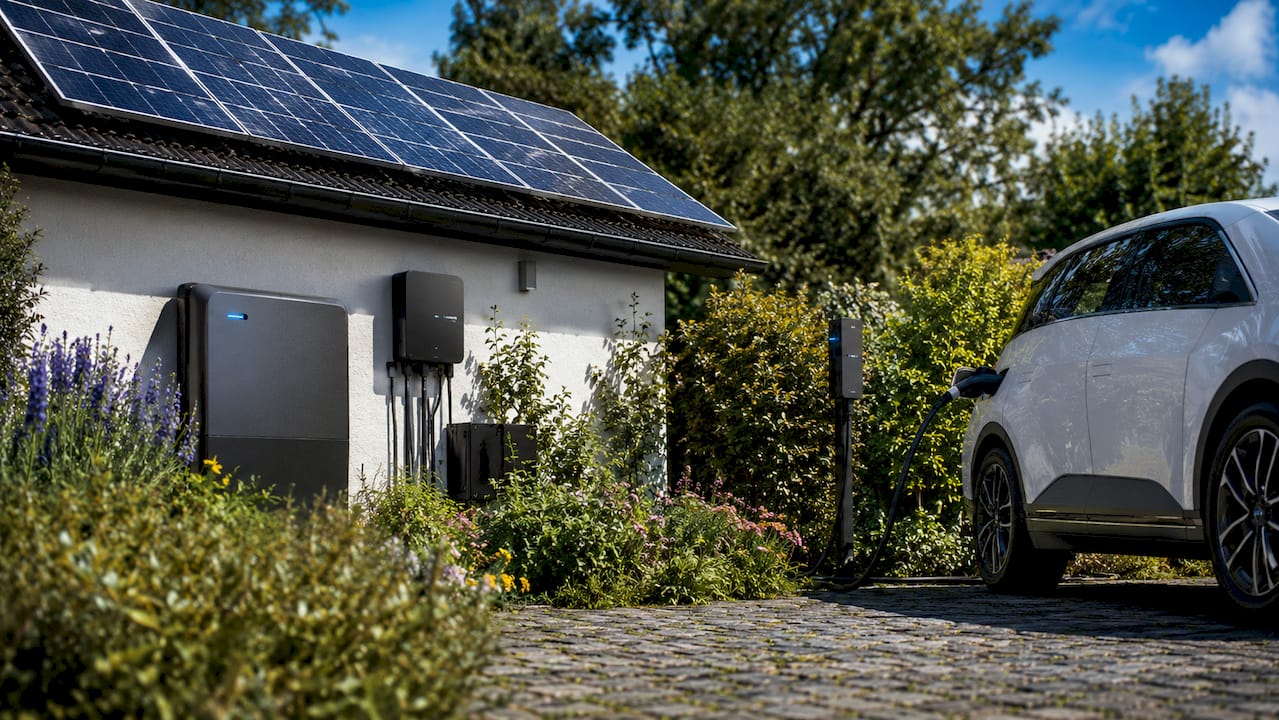
The core components are straightforward. Solar PV systems generate electricity. Battery storage holds surplus energy. EV chargers can absorb or release power. Smart thermostats and industrial loads can reduce consumption on command. A central energy management system (EMS) ties all of these together, sending real-time instructions to each asset based on grid conditions, electricity prices, and user preferences.
VPPs are not a niche experiment. VPPs can defer grid infrastructure projects for up to 5 years by managing localized grid stress. That is a direct financial benefit for grid operators and, ultimately, for energy consumers who would otherwise pay for those upgrades through their bills.
How does a virtual power plant work in practice?
The operational logic of a VPP depends on continuous communication between assets and a central software platform. When the grid needs more power, the platform sends a signal. Batteries discharge. Solar export increases. EV charging pauses. The combined effect mimics what a conventional peaker plant would do, but faster and without burning fuel.
Here is how a VPP is typically formed and operated:
Asset enrollment. A homeowner or business signs a contract with a VPP aggregator or utility. Their solar inverter, battery, or EV charger is registered on the platform.
Hardware verification. The aggregator confirms that the hardware supports the required communication protocols. Active internet connectivity and inverter compatibility are essential to respond to grid signals.
Software integration. The EMS connects to the asset via a RESTful API or proprietary protocol, enabling remote monitoring and control.
Grid signal response. When the grid operator or aggregator sends a dispatch signal, the platform automatically adjusts each asset within seconds.
Settlement and payment. The aggregator calculates each participant’s contribution and issues credits or payments based on energy delivered or load reduced.
The technology behind this is not exotic. Standard LFP batteries, grid-tied solar inverters, and modern EV chargers all have the connectivity needed. The critical variable is software compatibility between the asset and the aggregator’s platform.
Pro Tip: Before signing with any VPP aggregator, ask specifically which inverter firmware versions and battery models are natively supported. Compatibility gaps discovered after enrollment are expensive to fix.
What are the benefits of virtual power plants for individuals and businesses?
The benefits of virtual power plants operate on three levels: financial, environmental, and grid-level. Most participants focus on the financial side first, and that is reasonable.
Demand flexibility programs empower owners to become prosumers earning income from their installed DERs. Instead of exporting surplus solar at a low feed-in tariff, VPP participants can earn higher rates by delivering grid services at peak demand times. For a business running a 100 kWh battery system, that difference in revenue can be significant over a year.
The environmental case is equally strong. VPPs act as shock absorbers balancing intermittent renewable supply with fluctuating demand to avoid blackouts and reduce costs. Every kilowatt-hour a VPP delivers during peak demand is a kilowatt-hour that a high-emission peaker plant does not need to generate.
Key advantages of VPP participation include:
Revenue generation. Earn credits or payments for energy delivered or load reduced during grid stress events.
Lower energy bills. Use battery arbitrage to buy cheap off-peak electricity and avoid expensive peak-rate consumption.
Grid resilience. Distributed assets boost local resilience and reduce the risk of cascading failures during extreme weather.
Sustainability credentials. Businesses can document measurable contributions to renewable integration for ESG reporting.
Deferred infrastructure costs. Grid operators avoid expensive upgrades, and those savings flow back through regulated tariffs.
Pro Tip: Commercial operators with predictable load profiles, such as cold storage facilities or manufacturing plants, typically earn more from VPP demand response than residential participants. Model your specific load curve before committing to a contract.
How do virtual power plants compare to traditional power plants?
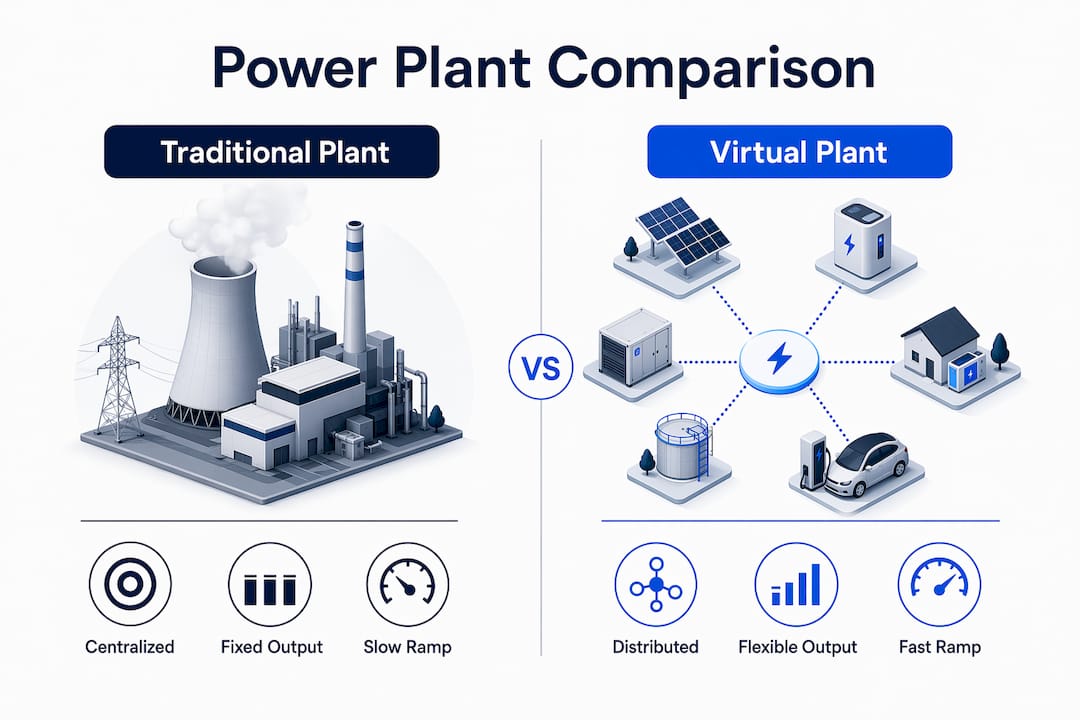
The fundamental difference is architecture. A traditional power plant is a single, centralized asset that generates electricity from fuel or water. A VPP is a distributed network of assets that generates, stores, and shifts electricity across many locations. Both deliver grid services. The mechanics are entirely different.
Traditional plants are built for baseload or peaking roles. They are slow to ramp up and expensive to build. A gas peaker plant can take 10–30 minutes to reach full output. A VPP can respond in seconds because batteries and smart loads react almost instantly to software commands.
Attribute | Traditional power plant | Virtual power plant |
Physical location | Single centralized site | Distributed across many locations |
Fuel source | Fossil fuels, nuclear, hydro | Solar, wind, batteries, demand response |
Response time | Minutes to hours | Seconds to minutes |
Resilience | Single point of failure | No single point of failure |
Build cost | High capital expenditure | Aggregated existing assets |
Grid infrastructure deferral | No | Yes, up to 5 years |
Emissions | High (fossil fuel plants) | Near zero |
The resilience column is where VPPs have a structural advantage. VPPs are distributed, inherently resilient, and can adapt rapidly to extreme weather, preventing cascading failures. A storm that knocks out a single substation does not disable a VPP. Its assets are spread across a region.
Utilities often overlook full VPP value streams in planning, limiting VPP expansion despite cost-effectiveness and resilience benefits. That gap is closing as European grid operators face pressure from rising renewable penetration and aging infrastructure.
What practical challenges should participants be aware of?
Joining a VPP is not plug-and-play. The technical and contractual requirements are real, and ignoring them leads to poor outcomes.
Hardware compatibility is the most common barrier. Many solar inverters are not VPP-ready; upgrading to compatible systems later can be costly due to proprietary protocols. Verify hardware compatibility before purchasing any new solar or storage equipment if VPP participation is a goal.
Battery health is the second major concern. VPP agreements may cause battery capacity degradation due to frequent cycling; checking warranty terms is essential to avoid voiding coverage. Some aggregators offer warranty protection as part of their contract. Others do not. Read the terms carefully.
Common pitfalls and best practices for prospective participants:
Verify inverter firmware. Confirm your inverter supports the aggregator’s communication protocol natively, not through a third-party adapter.
Review battery warranty terms. Check whether the manufacturer’s warranty covers VPP cycling rates before enrolling.
Understand override controls. Participants must actively monitor system performance and may need to override controls during outages for backup energy. Confirm your system has a manual override.
Read the contract exit terms. Some VPP contracts lock participants in for 3–5 years. Understand the penalties for early exit.
Assess your connectivity. A dropped internet connection during a grid event means your assets cannot respond. Reliable broadband is a prerequisite.
The grid integration of smart energy for property owners requires planning these details upfront. Getting them right at the start saves significant cost and frustration later.
Key Takeaways
A virtual power plant aggregates distributed energy resources through software to deliver grid services faster, cheaper, and more cleanly than any single centralized plant can.
Point | Details |
Core definition | A VPP connects solar, batteries, EVs, and smart loads into one software-controlled grid asset. |
Financial upside | Participants earn income through higher feed-in tariffs and demand response credits. |
Grid resilience advantage | Distributed assets prevent cascading failures and can defer infrastructure upgrades by up to 5 years. |
Hardware compatibility | Verify inverter and battery compatibility with the aggregator’s platform before enrolling. |
Battery warranty risk | Frequent VPP cycling can degrade battery capacity; review warranty terms before signing any contract. |
VPPs in Europe: what the next five years will actually look like
Rising electricity market rates enhance VPP profitability, making grid flexibility services highly valuable as renewable penetration rises. I have watched this dynamic play out across Central Europe over the past several years, and the trajectory is clear. The economics of VPP participation are getting better, not worse.
What I find underappreciated is the regulatory gap. European grid operators are under pressure to integrate more wind and solar, but many utilities still plan their grids as if VPPs do not exist. The Rocky Mountain Institute has documented this blind spot directly. That gap creates an opportunity for early movers. Businesses and households that build VPP-ready infrastructure now will be positioned to capture value as aggregator markets mature and regulatory frameworks catch up.
The technology side is less of a barrier than most people assume. The real friction is contractual and organizational. Businesses need someone to own the VPP relationship, monitor performance, and manage the aggregator contract. Households need a system that handles this automatically. Both needs are solvable with the right energy management platform.
My honest advice: do not wait for the perfect VPP program to appear. Install compatible hardware now, understand your flexible energy system options, and position yourself to enroll when the right aggregator enters your market. The window for early-mover advantage in European VPP markets is open, but it will not stay open indefinitely.
— Marc
How Belinus helps you get VPP-ready
Belinus builds the hardware and software infrastructure that makes VPP participation practical for European homes and businesses.
The Belinus Energy Management System runs on 15-minute dynamic tariff optimization and supports battery arbitrage, grid services, and third-party integrations through a RESTful API. The Energy Wall G1, a 16 kWh graphene supercapacitor system launching in Q1 2026, is designed for grid-interactive operation. Commercial operators can scale to MW capacity using Belinus utility storage modules. Whether you are a homeowner evaluating battery storage for grid services or a business building a full distributed energy portfolio, Belinus provides the system design, hardware, and EMS to connect you to the grid as a productive asset. Visit Belinus to request a consultation.
FAQ
What is a virtual power plant in simple terms?
A virtual power plant is a network of home and business energy assets, such as solar panels, batteries, and EV chargers, connected by software to act as a single power source for the grid.
How does a virtual power plant work?
A central software platform sends real-time signals to enrolled assets, instructing batteries to discharge, solar export to increase, or loads to reduce, delivering grid services within seconds.
What are the main benefits of virtual power plants?
VPP participants earn income through demand response payments and higher feed-in tariffs, reduce their energy bills through battery arbitrage, and contribute to grid resilience and renewable integration.
What hardware do I need to join a virtual power plant?
You need a grid-tied solar inverter, a battery storage system, and a reliable internet connection. All hardware must be natively compatible with the aggregator’s communication protocols.
Can a VPP damage my battery?
Frequent cycling under VPP control can accelerate battery capacity loss. Review your battery manufacturer’s warranty terms before enrolling to confirm that VPP cycling rates are covered.
Recommended
Comments