Residential Storage: Impact on Energy Independence
- steve39584
- Jan 21
- 7 min read

Rising energy bills and unpredictable weather push many Central European homeowners to rethink how they power their homes. The drive for energy independence is stronger than ever, especially as solar and residential storage become more accessible and effective. With modern systems, homeowners can harness the power of the sun, intelligently store electricity for later use, and gain control over both their costs and their household resilience. Discover how residential energy storage offers a practical path to reliable, cost-effective energy at home.
Table of Contents
Key Takeaways
Point | Details |
Residential Energy Storage Benefits | Capturing and using renewable energy reduces electricity costs and enhances energy independence for homeowners. |
Technology Options | Lithium-ion batteries are preferred for their efficiency and lifespan, while alternatives like redox flow and thermal storage offer unique advantages. |
Financial Considerations | Investments yield long-term savings through reduced bills and potential grid revenue; efficiency and incentives enhance financial viability. |
Strategic System Design | Proper sizing and integration of energy storage systems are crucial to avoid inefficiencies and maximize benefits. |
Residential Storage and Home Energy Explained
Residential energy storage represents a transformative approach to home power management, enabling homeowners to capture, store, and strategically use electricity generated from renewable sources like solar panels. Energy storage technologies allow households to balance energy supply and demand, creating more resilient and efficient home power systems.
At its core, residential storage involves capturing excess energy produced during peak generation periods - typically sunny midday hours for solar installations - and storing this electricity in advanced battery systems for later use. This approach provides multiple advantages, including reduced electricity costs, increased energy independence, and greater grid stability. Modern storage solutions can intelligently manage power flow, automatically switching between grid supply, stored battery power, and renewable generation based on real-time household energy requirements.
The technical complexity of home energy storage involves sophisticated power conversion systems that manage electricity flow, voltage regulation, and battery charging cycles. These systems utilize advanced inverter technologies and smart energy management platforms that can predict and optimize energy consumption patterns. Homeowners can now leverage intelligent systems that learn household energy habits, automatically prioritizing stored renewable energy during peak pricing hours or grid stress scenarios.
Pro Tip: Consider installing a smart energy monitoring system alongside your residential storage setup to track real-time energy consumption and optimize your storage strategy for maximum financial and environmental benefits.
Key Residential Storage Technologies Compared
Home energy storage technologies have evolved dramatically, offering homeowners diverse options for managing electricity generation and consumption. Comprehensive energy storage systems now range from traditional battery technologies to cutting-edge solutions that provide unprecedented flexibility and efficiency.

The primary residential storage technologies include lithium-ion batteries, lead-acid batteries, and emerging alternatives like redox flow batteries and thermal energy storage. Lithium-ion batteries currently dominate the market due to their high energy density, longer lifecycle, and compact design. These batteries typically offer 80-90% round-trip efficiency, making them ideal for solar panel integration and daily energy management. Lead-acid batteries, while less expensive, have shorter lifespans and lower performance characteristics, making them less attractive for modern residential applications.
Advanced storage technologies are pushing the boundaries of home energy management. Redox flow batteries, for instance, offer unique advantages like scalable capacity and longer durational storage capabilities. Thermal energy storage systems provide an alternative approach, storing excess electricity as heat and converting it back when needed. These technologies represent critical innovations in residential energy storage options, enabling homeowners to maximize renewable energy utilization and reduce grid dependency.
Here’s a side-by-side comparison of leading residential energy storage technologies:
Technology | Efficiency (Round-Trip) | Typical Lifespan | Key Advantages |
Lithium-ion | 80-90% | 10-15 years | High density, compact size |
Lead-acid | 70-80% | 3-5 years | Lower cost, mature tech |
Redox flow | 70-85% | 15-20 years | Scalable, long duration |
Thermal storage | 50-70% | 20+ years | Seasonal storage, simple |
Pro Tip: When selecting a home energy storage system, prioritize technologies that offer the best balance between initial investment, expected lifespan, efficiency ratings, and compatibility with your existing renewable energy infrastructure.
How Storage Optimizes Solar and EV Use
The synergy between solar energy systems, battery storage, and electric vehicles represents a revolutionary approach to home energy management and sustainability. Solar integration with storage enables homeowners to capture excess energy during peak sunlight hours and strategically deploy it throughout the day, maximizing renewable energy utilization and reducing grid dependence.
Electric vehicles play a crucial role in this energy ecosystem through advanced bi-directional charging technologies. By transforming EVs into mobile battery storage units, homeowners can create a dynamic energy management system that balances solar generation, home consumption, and vehicle charging needs. This approach allows EV batteries to absorb surplus solar electricity during the day and potentially feed power back to the home during peak demand periods, creating a flexible and intelligent energy network.
The technical sophistication of modern electric vehicle grid integration goes beyond simple charging. Smart charging algorithms can now automatically optimize charging times to align with solar production, minimize grid stress, and reduce electricity costs. Homeowners can leverage intelligent energy management systems that predict consumption patterns, weather conditions, and electricity pricing to make real-time decisions about energy storage, solar usage, and EV charging strategies.
Pro Tip: Invest in a smart energy management system that provides real-time monitoring and automated optimization of solar generation, battery storage, and electric vehicle charging to maximize your home energy efficiency.
Financial Benefits and Cost Considerations
Residential energy storage investments have become increasingly attractive as technology cost structures evolve dramatically. Homeowners can now expect significant long-term financial benefits that offset initial installation expenses, with projected cost reductions making storage systems more accessible than ever before. The financial equation goes beyond simple electricity savings, encompassing grid services, energy independence, and potential revenue streams from smart energy management.
The economic landscape of home energy storage is characterized by multiple revenue streams. Net metering programs allow homeowners to sell excess solar energy back to the grid, while advanced storage systems enable strategic energy arbitrage - purchasing electricity during low-cost periods and using stored energy during peak pricing hours. Residential energy market dynamics have transformed storage from a luxury expense to a strategic financial investment, with typical systems delivering return on investment within 5-7 years through reduced electricity bills and potential incentive programs.
Comprehensive financial analysis reveals nuanced benefits beyond immediate cost savings. Energy storage systems provide resilience against power outages, potentially reducing insurance costs and protecting valuable electronics. Advanced systems with intelligent management can optimize charging during low-rate periods, leverage time-of-use electricity pricing, and even participate in utility demand response programs, creating additional financial incentives for homeowners willing to integrate smart energy technologies.
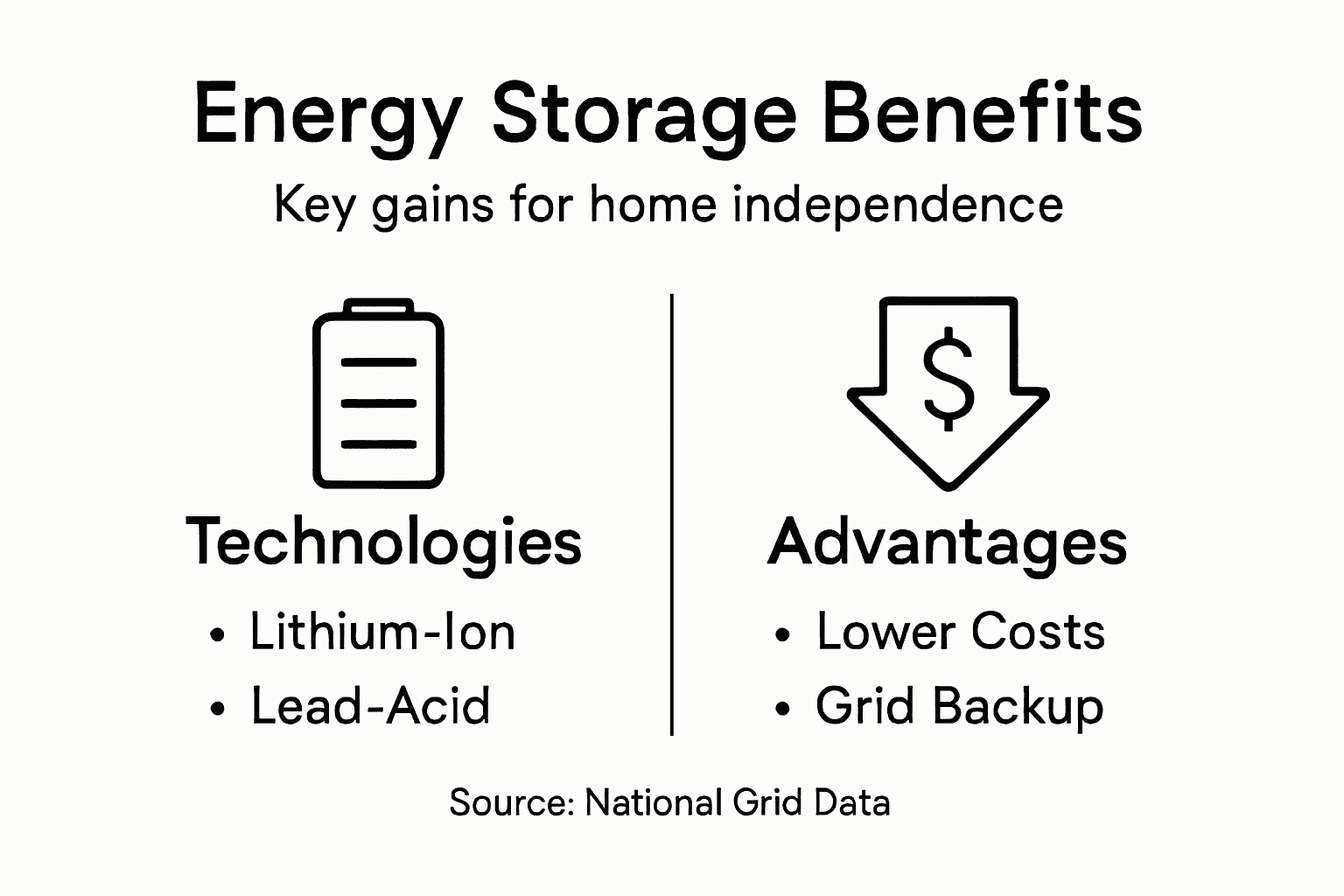
The following table summarizes the main financial benefits and cost considerations for homeowners:
Benefit Type | Description | Example Impact |
Electricity savings | Reduce bill by using stored solar energy | Lower monthly electricity cost |
Incentives | Rebates/tax credits for storage investments | Faster ROI, lower investment |
Grid revenue | Sell power back or provide grid services | Additional homeowner income |
Outage resilience | Protection during blackouts | Fewer power disruption losses |
Pro Tip: Calculate your potential energy savings by obtaining detailed electricity usage data and consulting with a local energy storage professional who can model precise financial returns based on your specific home energy consumption patterns.
Common Pitfalls and Practical Guidance
Navigating the residential energy storage landscape requires a strategic approach to avoid common mistakes that can undermine system performance and financial returns. Residential storage deployment challenges often stem from inadequate planning, misaligned system design, and insufficient understanding of technological capabilities and limitations.
One of the most critical considerations is proper system sizing and integration. Homeowners frequently make the mistake of over-sizing or under-sizing storage capacity, which can lead to reduced efficiency and unnecessary expenses. Integrated storage system design demands a comprehensive assessment of household energy consumption patterns, solar generation potential, and future electricity needs. This involves analyzing historical energy usage data, understanding peak demand periods, and considering potential changes in household energy consumption.
Technical considerations extend beyond initial installation. Battery degradation, maintenance requirements, and compatibility with existing solar or electric vehicle systems are crucial factors that can impact long-term performance. Successful implementation requires ongoing monitoring, periodic system assessments, and a willingness to adapt as technology evolves. Homeowners should prioritize systems with robust warranty provisions, clear performance tracking capabilities, and flexible integration options that can accommodate future technological advancements.
Pro Tip: Conduct a comprehensive energy audit and consult with multiple storage system professionals to develop a tailored solution that precisely matches your household’s unique energy consumption profile and future needs.
Unlock True Energy Independence with Belinus Residential Storage Solutions
Managing your home energy storage to maximize independence and resilience requires advanced, reliable technology designed with your unique needs in mind. The article highlights common challenges like optimizing battery sizing, integrating renewable generation, and achieving cost-effective storage management. Belinus addresses these pain points by offering innovative products such as the Energy Wall G1 graphene supercapacitor and highly efficient Solis Inverters, all seamlessly integrated through our intelligent Energy Management System.

Take control of your home energy future today by exploring our comprehensive residential solutions at Belinus. Benefit from real-time battery arbitrage, dynamic tariff optimization, and smart EV charging options. Don’t let inefficiencies or outdated technology hold you back. Visit Belinus Residential Solutions now to discover how you can boost your energy independence and reduce your electricity costs with cutting-edge energy storage technology.
Frequently Asked Questions
What is residential energy storage?
Residential energy storage allows homeowners to capture and store excess electricity generated from renewable sources like solar panels for later use, improving energy management and independence.
How do home energy storage systems work?
Home energy storage systems capture excess energy during peak generation periods and store it in batteries for later use. They manage power flow based on real-time household energy needs, optimizing energy consumption.
What are the benefits of using residential energy storage?
Benefits include reduced electricity costs, increased energy independence, enhanced grid stability, and the ability to utilize renewable energy more effectively through intelligent energy management systems.
How can I optimize my home energy storage system?
Consider installing a smart energy monitoring system to track real-time consumption, and select technologies that balance initial investment with efficiency ratings and compatibility with your renewable energy setup.
Recommended
Comments