16 kWh Battery Saves €860/Year: Maximize Home Energy 2026
- 3 days ago
- 11 min read
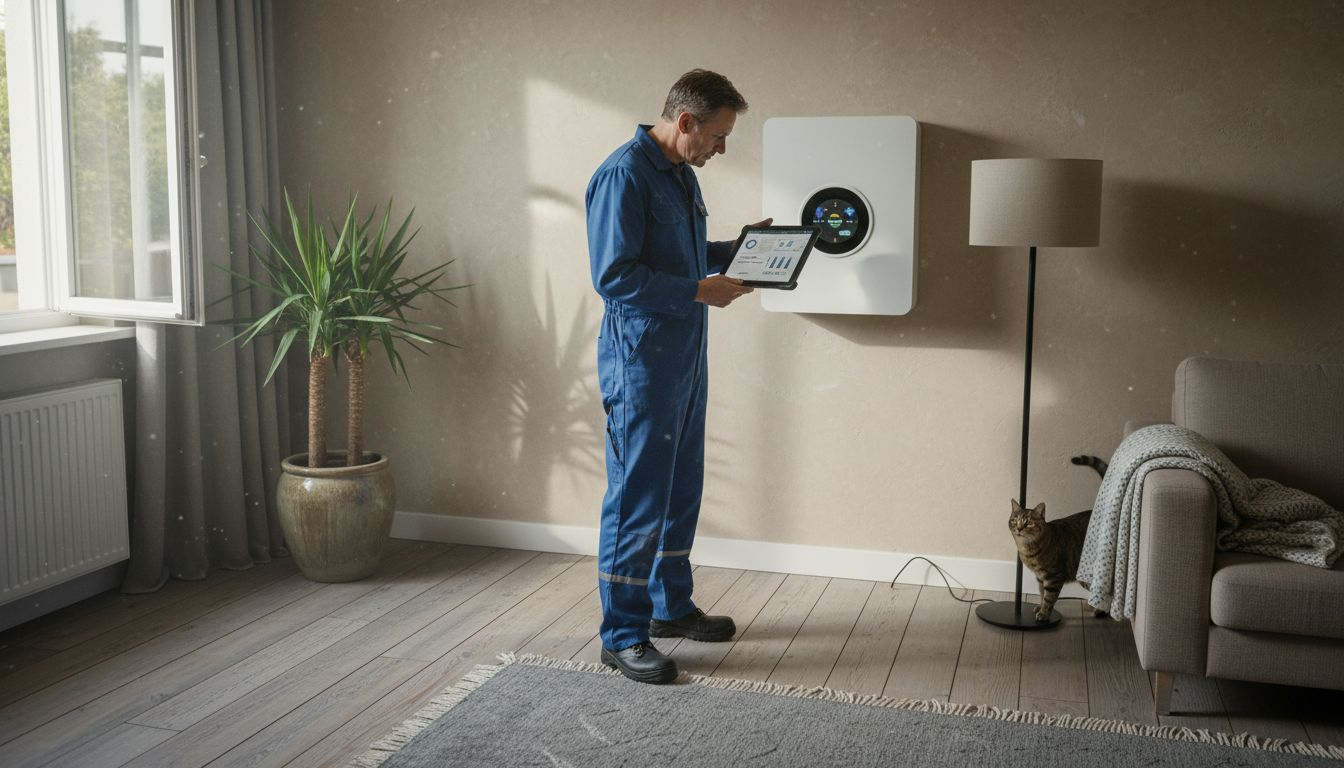
Many homeowners believe bigger batteries automatically deliver bigger savings. That’s a myth. In 2026, a 16 kWh battery strikes the ideal balance between cost, capacity, and financial return for most Benelux homes. With feed-in tariffs declining and dynamic pricing creating new opportunities, choosing the right battery size matters more than ever. This guide explains why 16 kWh is optimal and how it can slash your electricity bills significantly.
Table of Contents
Understanding The Energy Landscape And New Tariffs In The Benelux
Why 16 Kwh Is The Ideal Battery Capacity For Residential Homes
Economic Benefits: How 16 Kwh Batteries Reduce Electricity Costs
Technical Advantages Of Graphene Supercapacitors In 16 Kwh Batteries
Backup Power Reliability And Use Cases With 16 Kwh Batteries
Making Informed Decisions: How To Choose And Implement A 16 Kwh Battery
Key Takeaways
Point | Details |
Optimal capacity | 16 kWh batteries balance solar self-consumption, backup power, and cost effectively for typical Benelux homes. |
Significant savings | Annual savings up to €860 possible through dynamic tariff optimization and reduced grid imports. |
Superior technology | Graphene supercapacitors offer double the lifespan and enhanced safety compared to conventional LFP batteries. |
Smart integration | EMS connectivity maximizes cost savings by automating charge cycles based on real-time tariff signals. |
Myth-busting | Oversized batteries waste money; 16 kWh delivers the best ROI for most residential applications. |
Understanding the Energy Landscape and New Tariffs in the Benelux
The energy market in the Benelux region transformed dramatically in 2026. Feed-in tariffs dropped, meaning you earn less selling surplus solar power back to the grid. Reverse metering policies ended across Belgium, Netherlands, and Luxembourg, making stored solar energy far more valuable than exported energy.
Dynamic time-of-use tariffs now dominate the market. Electricity prices fluctuate up to six times between off-peak and peak hours. This creates golden opportunities for homeowners with battery storage. Charge your battery when rates are low, use that stored energy during expensive peak periods, and watch your savings grow.
Key benefits of energy storage under new tariffs:
Avoid high grid import costs during peak pricing windows
Store cheap off-peak electricity for later use
Maximize the value of every kilowatt-hour your solar panels generate
Achieve better alignment between solar production and household consumption
Reduce dependency on grid electricity when prices spike
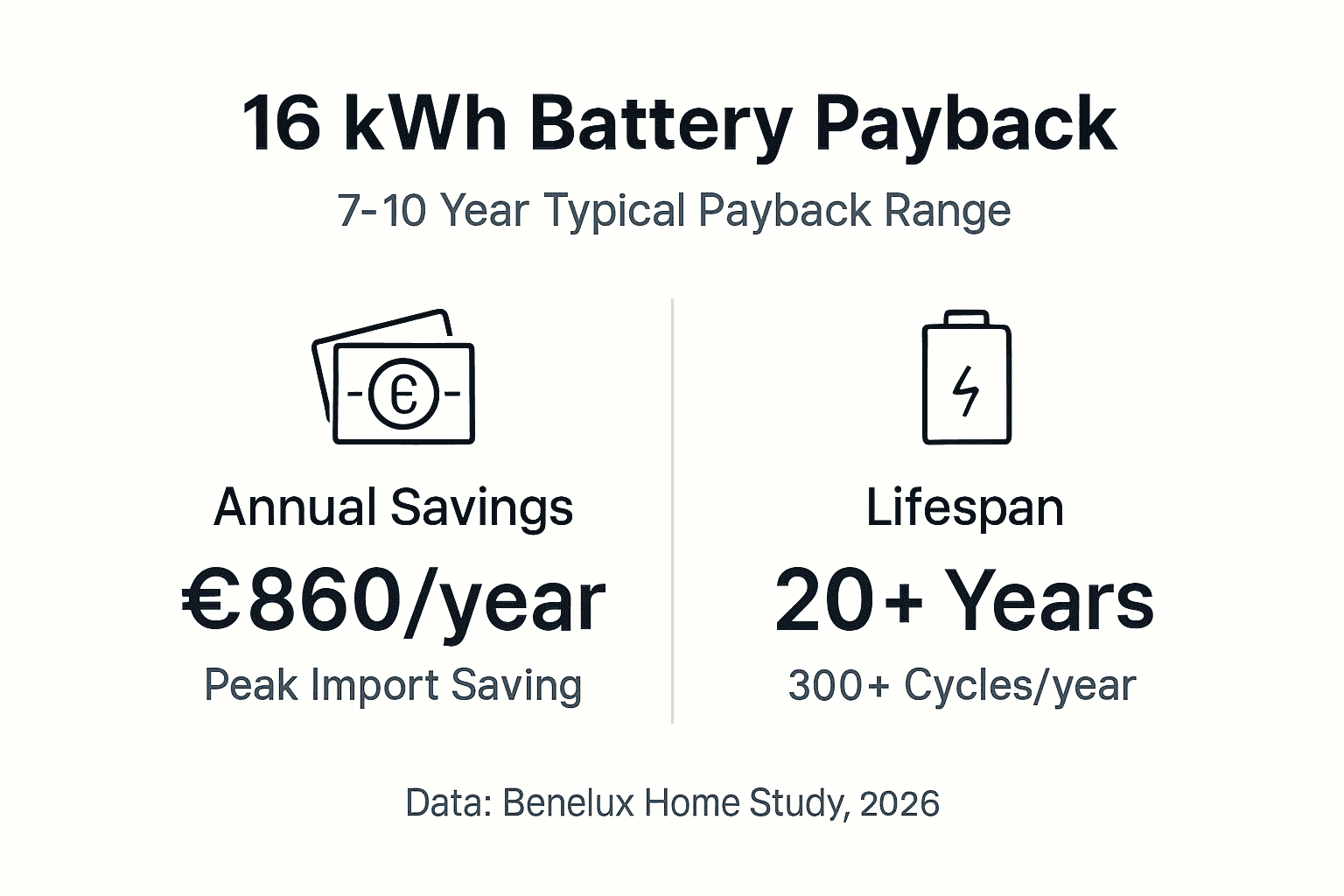
For a 16 kWh battery with 9 kWh usable capacity, cycling 300 times annually at €0.32/kWh retail-export price differential yields approximately €864 in annual savings. That’s real money back in your pocket every year. With energy efficiency and tariff optimization becoming essential, understanding these market dynamics helps you make smarter investment decisions.
The shift from generous feed-in tariffs to dynamic pricing fundamentally changed the economics of home energy storage. Batteries are no longer just backup devices. They’re active financial tools that work around the clock to minimize your energy costs.
Why 16 kWh is the Ideal Battery Capacity for Residential Homes
Choosing the right battery size matters as much as choosing the right chemistry. A 16 kWh battery powers an average household for several hours during outages while optimizing daily energy flows. It’s the Goldilocks zone: not too small, not too large, just right.
Oversized batteries seem appealing until you realize you’re paying for capacity you rarely use. Undersized batteries leave money on the table by failing to capture enough solar energy or provide adequate backup. For typical medium-sized Benelux homes with solar PV, 16 kWh hits the sweet spot.
Why 16 kWh stands out:
Covers evening and morning energy needs when solar production is low or zero
Fits comfortably in residential spaces without excessive footprint
Provides meaningful backup power for essential loads during grid failures
Delivers strong ROI by matching typical household consumption patterns
Supports future expansion through modular design if energy needs grow
Modular architecture allows you to start with 16 kWh and add capacity later. This flexibility matters as your family grows, you add electric vehicles, or install heat pumps. Modular battery design future-proofs your investment without forcing you to overbuy capacity upfront.
Pro Tip: Calculate your household’s evening and morning consumption (typically 6pm to 8am) to verify 16 kWh meets your needs. Most Benelux homes consume 8 to 12 kWh during these periods, making 16 kWh capacity ideal.
The economics improve further when you consider energy systems saving up to 15% through intelligent load management. Right-sizing your battery ensures every euro invested works hard to reduce your bills.
Economic Benefits: How 16 kWh Batteries Reduce Electricity Costs
The financial case for 16 kWh batteries is compelling. Without storage, typical solar self-consumption rates hover around 30%. With a properly sized battery, that jumps to 70 to 80%. You use more of what you generate and buy less from the grid.
Annual savings reaching €860 come from three sources: avoiding peak-rate grid imports, maximizing solar self-consumption, and intelligent arbitrage under dynamic tariffs. Your battery charges when electricity is cheapest and discharges when it’s most expensive.
Consider this comparison:
Scenario | Annual Grid Import | Self-Consumption Rate | Estimated Annual Savings |
No battery | 4,500 kWh | 30% | €0 baseline |
8 kWh battery | 3,200 kWh | 55% | €420 |
16 kWh battery | 1,800 kWh | 75% | €860 |
24 kWh battery | 1,600 kWh | 78% | €780 (diminishing returns) |
Notice how 24 kWh actually saves less than 16 kWh? That’s the oversizing penalty. You paid for extra capacity that cycles inefficiently, degrading faster while delivering minimal additional benefit. Efficient battery setups match capacity to realistic usage patterns.
Dynamic tariff optimization amplifies these savings. Modern batteries don’t just store solar energy. They buy cheap grid electricity overnight and release it during expensive afternoon peaks. This arbitrage opportunity adds €150 to €250 annually on top of solar self-consumption benefits.
Key savings mechanisms:
Reduced grid imports during peak pricing (largest contributor)
Higher solar self-consumption eliminates wasted generation
Time-of-use arbitrage exploits price volatility
Lower capacity charges in some tariff structures
Avoided grid upgrade costs as more neighbors add solar
Pro Tip: Track your actual consumption patterns for one month before choosing battery size. Evening usage from 6pm to midnight reveals how much capacity you truly need.
The payback period for quality 16 kWh systems typically ranges from 7 to 10 years. With 20+ year lifespans, that means a decade or more of pure savings after your investment pays for itself.
Technical Advantages of Graphene Supercapacitors in 16 kWh Batteries
Not all 16 kWh batteries are created equal. Chemistry matters enormously for longevity, safety, and total cost of ownership. Graphene supercapacitor batteries offer more than double the cycle life compared to standard lithium iron phosphate (LFP) batteries.
Graphene supercapacitors excel in thermal stability. They tolerate temperature extremes without degrading rapidly. This matters in Benelux climates where batteries might face hot summers and cold winters. Reduced fire risk and improved safety give homeowners peace of mind.
Daily cycling under dynamic tariffs demands robust chemistry. Charging and discharging 300+ times annually stresses conventional batteries. Graphene supercapacitors handle this workload with minimal capacity fade over decades, not just years.
Feature | Graphene Supercapacitor | Standard LFP |
Cycle life | 20,000+ cycles | 8,000 cycles |
Thermal stability | Excellent (wider operating range) | Good (limited range) |
Degradation rate | <1% per year | 2 to 3% per year |
Safety profile | Superior (low thermal runaway risk) | Good (some thermal concerns) |
Cost per kWh | Higher upfront | Lower upfront |
Total cost of ownership | Lower (longer lifespan) | Higher (earlier replacement) |
The longer lifespan fundamentally changes the economics. A graphene battery lasting 25 years eliminates replacement costs that LFP owners face at year 10 or 12. Your upfront premium pays for itself through extended service life.
Key technical advantages:
Faster charging capabilities support rapid response to tariff signals
Wider operating temperature range maintains performance year-round
Minimal capacity loss over time preserves savings throughout system life
Enhanced safety reduces insurance and liability concerns
Better suited to frequent shallow cycling demanded by smart EMS
Learn more about graphene supercapacitor benefits and how this technology is transforming residential energy storage. The initial cost difference shrinks dramatically when you calculate cost per cycle over the battery’s lifetime.
Common Misconceptions About Battery Capacity and Payback
Myths about battery sizing lead to expensive mistakes. Let’s debunk the most common misconceptions so you make informed decisions based on facts, not fiction.
Myth 1: Bigger batteries always save more money. Reality: Oversized batteries reduce economic returns because unused capacity never generates savings. You paid for kilowatt-hours that sit idle most days.
Myth 2: Payback periods are the same for everyone. Reality: Your results depend on consumption patterns, solar production, local tariff structures, and how intelligently your system operates. Two neighbors with identical batteries can see different returns.
Myth 3: Any battery works well with dynamic tariffs. Reality: Battery size must align with your typical daily consumption and the price spread between peak and off-peak periods. Too small and you miss opportunities. Too large and you waste money.
Myth 4: Batteries only provide backup power. Reality: Modern batteries are active financial instruments. Backup capability is a bonus. The primary value comes from daily cost optimization through smart charging and discharging.
Common sizing errors to avoid:
Buying based on maximum consumption days instead of typical usage
Ignoring future load additions like heat pumps or EV chargers
Focusing solely on blackout duration without considering daily economics
Choosing capacity based on what neighbors bought instead of your needs
Underestimating the value of modular expandability
Careful analysis matching battery capacity to household needs and realistic consumption patterns separates smart investments from costly mistakes. Use actual usage data, not guesses, when sizing your system.
Explore home energy storage comparisons to understand how different capacities perform across various household profiles. The right size for a couple differs dramatically from what a family of five with an EV needs.
Integration with Smart Energy Management Systems
A 16 kWh battery reaches its full potential only when paired with intelligent controls. Smart Energy Management Systems (EMS) transform static storage into dynamic optimization engines that continuously minimize your costs.
Modern EMS platforms analyze real-time tariff signals, weather forecasts, and your consumption patterns. They decide when to charge from solar, when to buy cheap grid electricity, and when to discharge stored energy. This automation runs 24/7 without requiring your attention.
Key EMS capabilities that boost savings:
Automatic charging during off-peak periods when electricity is cheapest
Intelligent discharge timing to avoid peak-rate grid imports
Weather-aware solar forecasting optimizes daily charge strategies
Load prioritization ensures critical circuits receive power first during outages
Remote monitoring lets you track performance and adjust settings from anywhere
EMS integration can deliver up to 15% additional electricity bill reductions beyond basic battery operation. That extra optimization compounds over decades, adding thousands of euros to your lifetime savings.
Advanced systems support Vehicle-to-Home (V2H) bidirectional charging, preparing your home for future EV integration. As EVs become mobile energy storage, EMS orchestrates complex energy flows between solar, stationary batteries, vehicles, and the grid.
Pro Tip: Prioritize EMS-compatible batteries and inverters when shopping. Proprietary closed systems lock you into single vendors and prevent future integration with emerging technologies.
Intelligent solar energy management transforms good battery investments into exceptional ones. The hardware provides capacity. The software extracts maximum value from every kilowatt-hour.
Backup Power Reliability and Use Cases with 16 kWh Batteries
Grid reliability concerns are rising across the Benelux region. Extreme weather, infrastructure aging, and increasing electricity demand strain distribution networks. A 16 kWh battery powers an average household for several hours, providing critical resilience when the grid fails.
Typical essential loads during outages:
Refrigeration and food preservation (200 to 400W continuous)
Lighting throughout the home (100 to 300W depending on usage)
Internet router and communication devices (50 to 100W)
Phone charging and emergency devices (20 to 50W)
Medical equipment if required (varies by device)
A 16 kWh battery easily supports these loads for 12 to 24 hours, far exceeding typical outage durations in Benelux cities. You maintain comfort and safety while neighbors struggle with darkness and spoiled food.
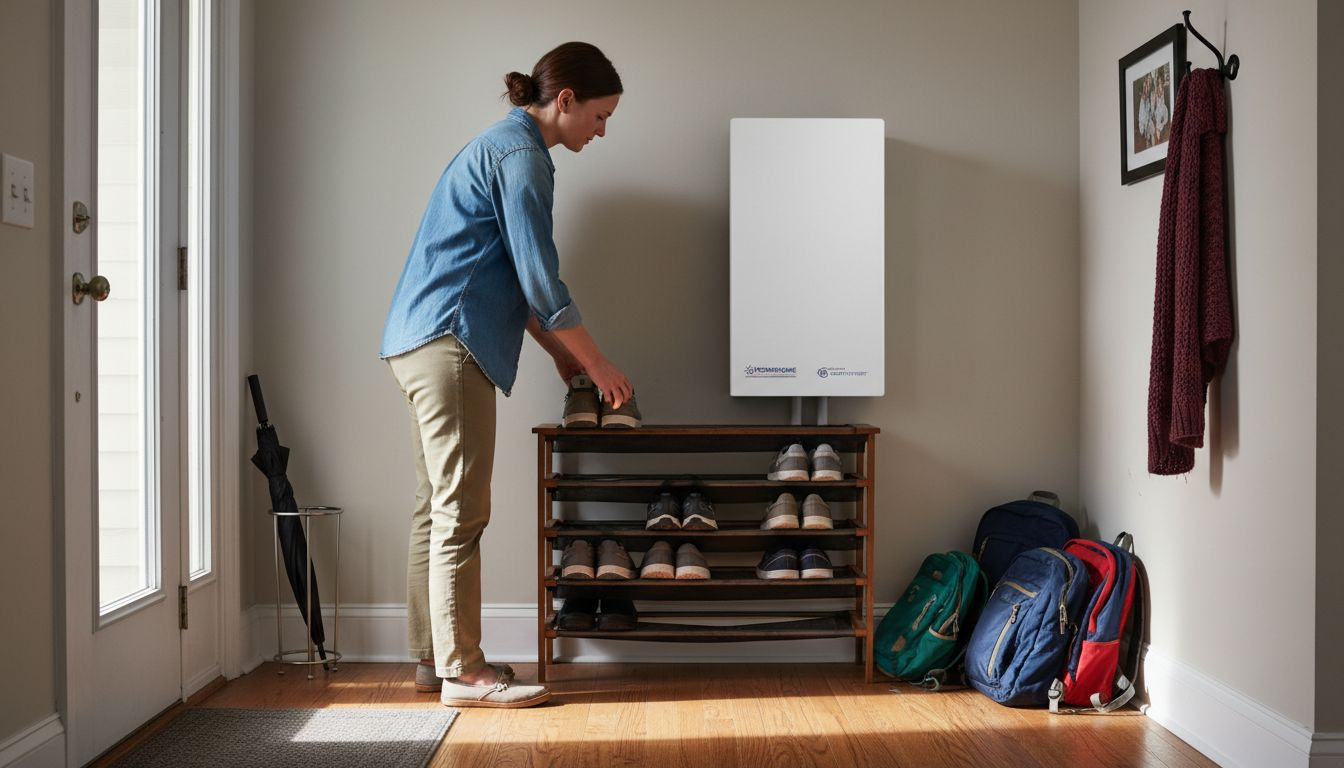
The compact footprint fits residential spaces without requiring dedicated utility rooms. Modern battery enclosures are designed for garage or basement installation, keeping valuable living space available for other purposes.
Real-world reliability benefits extend beyond blackouts. Microoutages (brief voltage dips lasting seconds) occur frequently and disrupt electronics. Battery systems with built-in uninterruptible power supply (UPS) functionality eliminate these nuisances, protecting sensitive equipment.
Understand the full range of battery backup benefits including improved power quality, surge protection, and immunity from grid instabilities. Energy independence means more than just avoiding blackouts.
Making Informed Decisions: How to Choose and Implement a 16 kWh Battery
Ready to move forward? Follow this systematic approach to ensure your 16 kWh battery investment delivers maximum value:
Assess your energy profile: Review 12 months of electricity bills to understand consumption patterns. Identify peak usage times and seasonal variations. Calculate your evening/overnight consumption (6pm to 8am) to verify 16 kWh meets your needs.
Evaluate chemistry options: Compare graphene supercapacitors and LFP batteries. Consider total cost of ownership, not just upfront price. Factor in cycle life, warranty terms, and degradation rates over 20+ years.
Verify EMS compatibility: Ensure your chosen battery integrates with smart energy management systems. Confirm support for dynamic tariff optimization and future expandability. Avoid proprietary closed systems.
Plan physical installation: Measure available space in garage or basement. Consider ventilation, temperature ranges, and access for maintenance. Verify electrical panel capacity supports battery integration.
Calculate financial returns: Model your specific savings using actual consumption data and local tariff structures. Include dynamic pricing benefits, capacity charge reductions, and solar self-consumption improvements.
Choose modular systems: Select modular battery systems that support future expansion. Start with 16 kWh and add capacity later if needs change. Avoid oversizing upfront.
Engage qualified installers: Work with certified professionals experienced in residential battery installations. Verify proper permits, grid connection approvals, and compliance with local regulations.
Configure smart features: Set up monitoring apps, configure tariff schedules, and enable automated optimization. Test backup switchover to ensure reliable operation during outages.
Proper planning and implementation separate successful battery projects from disappointing ones. Take time to understand your needs before committing to specific products or vendors.
Explore detailed battery storage setup tips covering technical requirements, regulatory considerations, and optimization strategies for maximum savings.
Explore Advanced Solar and Battery Solutions with Belinus
Transforming your home into an energy-efficient powerhouse requires expertise and quality products. Belinus specializes in integrated solar PV, battery storage, and smart EMS solutions tailored for Benelux homeowners seeking energy independence.

Our Energy Wall G1 delivers 16 kWh of graphene supercapacitor storage, combining superior lifespan with intelligent tariff optimization. Paired with Solis inverters and our centralized EMS, you get a complete system engineered for maximum savings under 2026 dynamic pricing.
Discover how solar PV for homes integrates seamlessly with advanced battery storage. Learn why install solar PV and how our battery storage setup services deliver turnkey energy independence. Start your journey toward lower bills and greater resilience today.
Frequently Asked Questions
What size battery do I need for an average Benelux home?
A 16 kWh battery typically covers daily consumption and backup needs efficiently for average Benelux homes with solar PV. Sizing depends on your specific usage patterns, but 16 kWh balances cost and usability well for most households.
How much can I save annually using a 16 kWh battery with dynamic tariffs?
Typical annual savings reach approximately €860 by optimizing battery use with dynamic tariffs and maximizing solar self-consumption. Actual savings vary based on consumption patterns, location, and specific tariff structures in your area.
Can a 16 kWh battery provide reliable backup during outages?
Yes, it typically supplies critical loads for several hours during outages in average homes. The capacity fits residential spaces comfortably and offers peace of mind amid increasing grid reliability concerns across the Benelux region.
Is graphene supercapacitor technology worth the extra cost?
Graphene supercapacitors offer double the cycle life and superior safety compared to standard LFP batteries. The longer lifespan reduces total cost of ownership by eliminating replacement expenses, making the upfront premium worthwhile for long-term value.
Recommended
Comments