Battery Backup Explained: Energy Independence for Homes
- Jan 27
- 9 min read
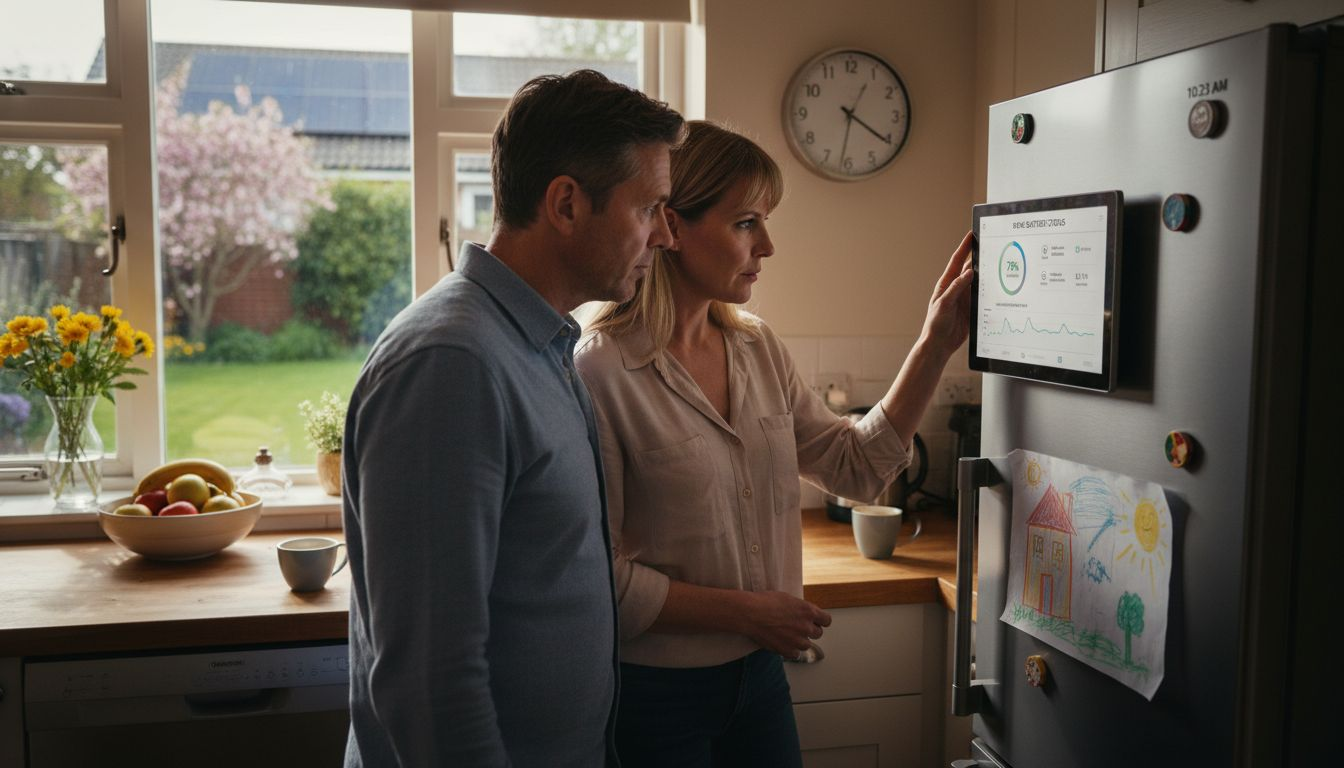
Relying only on the power grid in the Benelux region can feel unpredictable, with energy costs rising and supply often at the mercy of outside factors. For homeowners using solar panels, storing the energy you produce becomes just as important as generating it. Battery backup lets you keep that midday power for evening use, making your home more resilient and your energy bills more predictable. This guide shows how battery backup fundamentally reshapes energy independence and offers peace of mind against unexpected outages.
Table of Contents
Key Takeaways
Point | Details |
Importance of Battery Backup | Battery backup systems allow homeowners to store excess solar energy for later use, reducing reliance on grid electricity and lowering energy costs. |
Choosing the Right Battery Type | Lithium-ion batteries are the most effective choice for residential use in terms of cost, performance, and lifespan compared to other options like lead-acid and flow batteries. |
Optimization for Savings | Smart energy management systems enhance battery performance by optimizing charge and discharge times based on energy tariffs and consumption patterns, leading to increased savings. |
Avoiding Common Mistakes | Proper sizing of the battery system is crucial to avoid overspending; conduct an energy audit to determine actual consumption before purchasing. |
What Is Battery Backup and Why It Matters
Battery backup is a system that stores electrical energy for use when you need it most. Instead of relying solely on the grid or your solar panels, a home battery captures excess power and releases it on demand. This gives you control over when and how you use your own generated energy.
For Benelux homeowners, this matters enormously. Your solar panels produce peak power during midday hours, but your household typically consumes more energy in the morning and evening. Without battery storage, that midday surplus flows back to the grid at lower rates. With a battery backup system, you capture that power and use it during peak consumption periods when grid electricity costs significantly more.
Battery storage fundamentally reshapes energy independence by removing your dependence on grid pricing and supply disruptions. The European Union actively promotes battery adoption because these systems strengthen energy security and reduce reliance on fossil fuel imports. Countries across the Benelux region recognize that renewable energy integration and battery backup work together to create a stable, affordable energy future.
Consider the practical impact: imagine a sunny Sunday when your solar system generates excess power. That energy either vanishes into the grid, or it sits in your battery, waiting for Tuesday evening when you need it. The difference in your monthly energy bill becomes measurable within months.
Batteries also provide something the grid cannot: resilience during outages. Whether caused by storms, maintenance, or grid instability, a charged battery keeps your essential systems running. This peace of mind alone justifies the investment for many homeowners.
Pro tip: Size your battery to match your daily consumption patterns, not maximum possible capacity. Most Benelux homes need 5-10 kWh daily; oversizing costs more while undersizing leaves you buying grid power at expensive rates.
Main Types of Battery Backup Systems
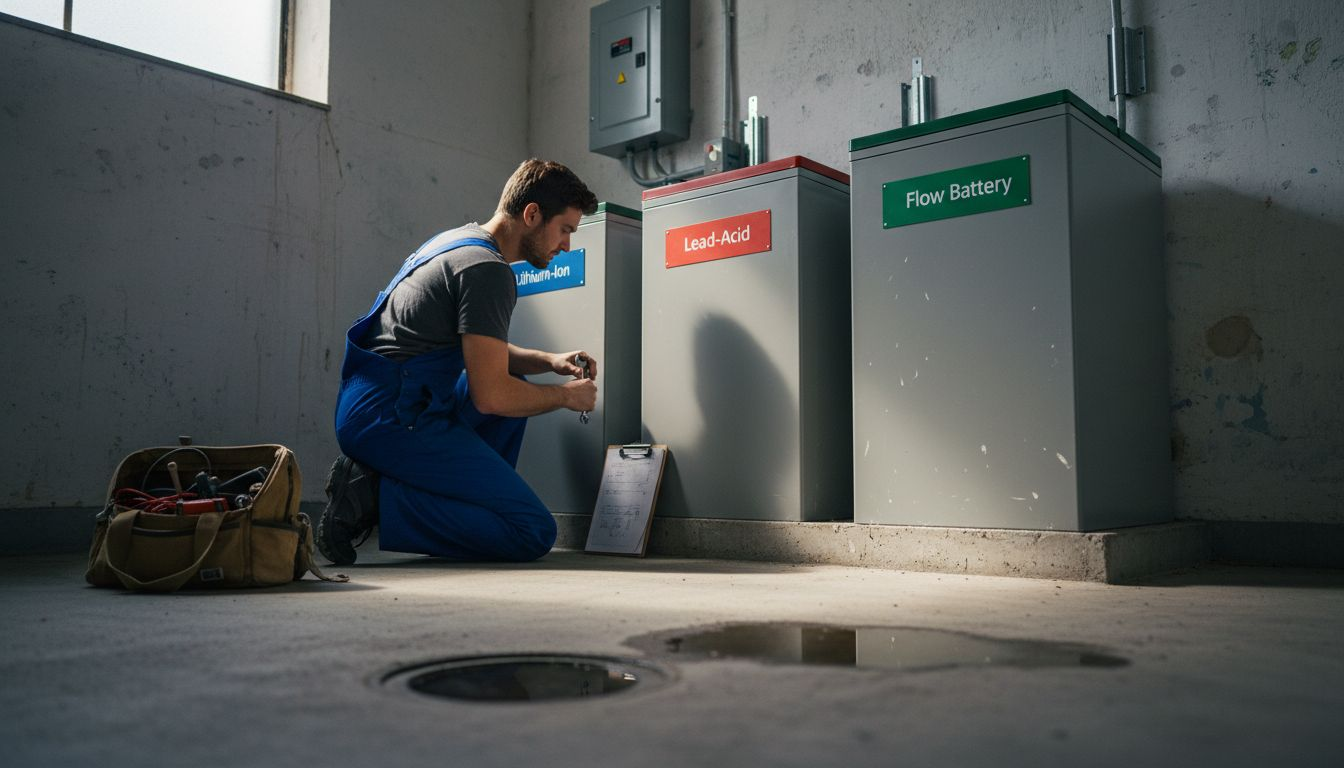
Not all batteries are created equal. The type you choose determines how long your backup lasts, how quickly it charges, and what you pay upfront. Understanding your options helps you select the right system for your home’s needs.
Lithium-Ion Batteries
Lithium-ion dominates the residential market because it delivers superior performance at increasingly affordable prices. These batteries charge quickly, discharge efficiently, and maintain their capacity over thousands of cycles. For Benelux homeowners pairing solar panels with battery backup, lithium-ion offers the best combination of lifespan (10-15 years) and round-trip efficiency (around 90-95 percent). Lithium-ion technology currently leads grid storage and residential applications due to cost reductions and proven reliability.
Lead-Acid Batteries
Lead-acid batteries are older technology, significantly cheaper upfront, but they require more maintenance and offer shorter lifespans (5-10 years). They also charge slower and lose more energy during the charge-discharge cycle. Many homeowners overlook them because modern lithium-ion prices have dropped considerably, making the cost advantage disappear once you factor in replacement frequency.
Flow Batteries
Flow batteries store energy in liquid electrolyte tanks and can discharge for longer periods than lithium-ion systems. They excel in applications requiring sustained, multi-hour backup. However, they take up more physical space and cost more per kWh than lithium-ion, making them less common in residential settings across Europe.
Advanced Energy Storage Technologies
Battery energy storage systems continue evolving with multiple chemistry options designed for specific applications. Graphene-based supercapacitors represent emerging solutions that complement traditional batteries. These technologies offer rapid charging capabilities and exceptional cycle life, positioning them as next-generation solutions for intelligent home energy management.
For most Benelux homeowners, lithium-ion remains the practical choice. It balances cost, performance, and longevity in ways other technologies cannot match right now.
Here’s a side-by-side comparison of main home battery types for Benelux homeowners:
Battery Type | Lifespan | Maintenance Needs | Best Use Case |
Lithium-Ion | 10-15 years | Minimal | Everyday home backup |
Lead-Acid | 5-10 years | Moderate | Budget-limited applications |
Flow Battery | 10-20 years | Low | Extended backup, large homes |
Graphene/Supercap. | 15+ years | Very low | Fast response, smart systems |
Pro tip: Compare the warranty terms and round-trip efficiency ratings, not just capacity and price. A battery with 95 percent efficiency delivers measurably better returns than one rated at 85 percent over a 10-year ownership period.
How Battery Backup Works With Solar
Solar panels and batteries are a perfect pair. Your panels generate electricity during daylight, but you need power at night and on cloudy days. A battery captures the excess daytime energy and releases it precisely when you need it most.
Here’s the flow: sunlight hits your panels, the inverter converts DC electricity to AC power for your home, and any surplus flows into the battery instead of back to the grid. When evening arrives and solar production drops, your battery automatically supplies stored energy to power your lights, heating, and appliances. No grid involvement. No peak-rate charges.
Battery storage enables daylight solar energy to be used when generation is unavailable, which is the core advantage that transforms solar from a part-time power source into a reliable, round-the-clock solution. An intelligent Energy Management System monitors real-time production and consumption, deciding whether to charge the battery, power your home directly, or sell excess back to the grid at favorable rates.
Consider a typical Benelux scenario. You work during the day while your solar panels generate maximum power. Without a battery, that energy either gets wasted or sold at wholesale rates. With a battery, that daytime surplus sits waiting for evening when you cook dinner, run laundry, and watch television. Your battery delivers that stored energy at exactly the moments when grid electricity costs the most.
Solar panels combined with battery storage create resilient systems that operate independently during outages. When storms knock out the grid, your charged battery keeps essential systems running. This resilience transforms solar from an economical choice into a security choice.
The real magic happens when you optimize your battery’s charge-discharge timing. Modern systems track electricity tariffs, weather forecasts, and consumption patterns. They charge batteries during low-cost periods and discharge during high-cost periods, maximizing savings automatically without you lifting a finger.
Pro tip: Size your battery capacity to store 3-5 hours of typical home consumption, not your entire daily usage. This captures the daily charging cycle while avoiding oversizing costs.
Key Features and Smart Management
A battery sitting in your garage is just a metal box. What transforms it into an intelligent energy partner is the system managing it. Smart battery management separates mediocre installations from exceptional ones that deliver measurable savings year after year.
Battery Management Systems
Every modern battery includes a Battery Management System that acts like a digital bodyguard. Battery management systems electronically monitor and control rechargeable battery performance, tracking voltage, temperature, and charge levels across every cell. This prevents overcharging, stops deep discharge damage, and balances cells so they age uniformly. Without this protection, your battery degrades rapidly and becomes unsafe.
Real-Time Optimization
Battery management features integrate monitoring functions with energy optimization algorithms that maximize your financial returns. An intelligent Energy Management System watches your home’s consumption patterns, solar production, and grid electricity prices. It learns when you shower, when you cook, and when you sleep. Using this data, it charges your battery during cheapest periods and discharges during expensive ones.
Consider Tuesday evening in Amsterdam. Your battery spent the day fully charged. At 6 PM when cooking begins, the system automatically supplies battery power instead of grid electricity. At 11 PM when consumption drops, it stops discharging. Your system works continuously, optimizing every cycle based on your unique household behavior.
Advanced Features
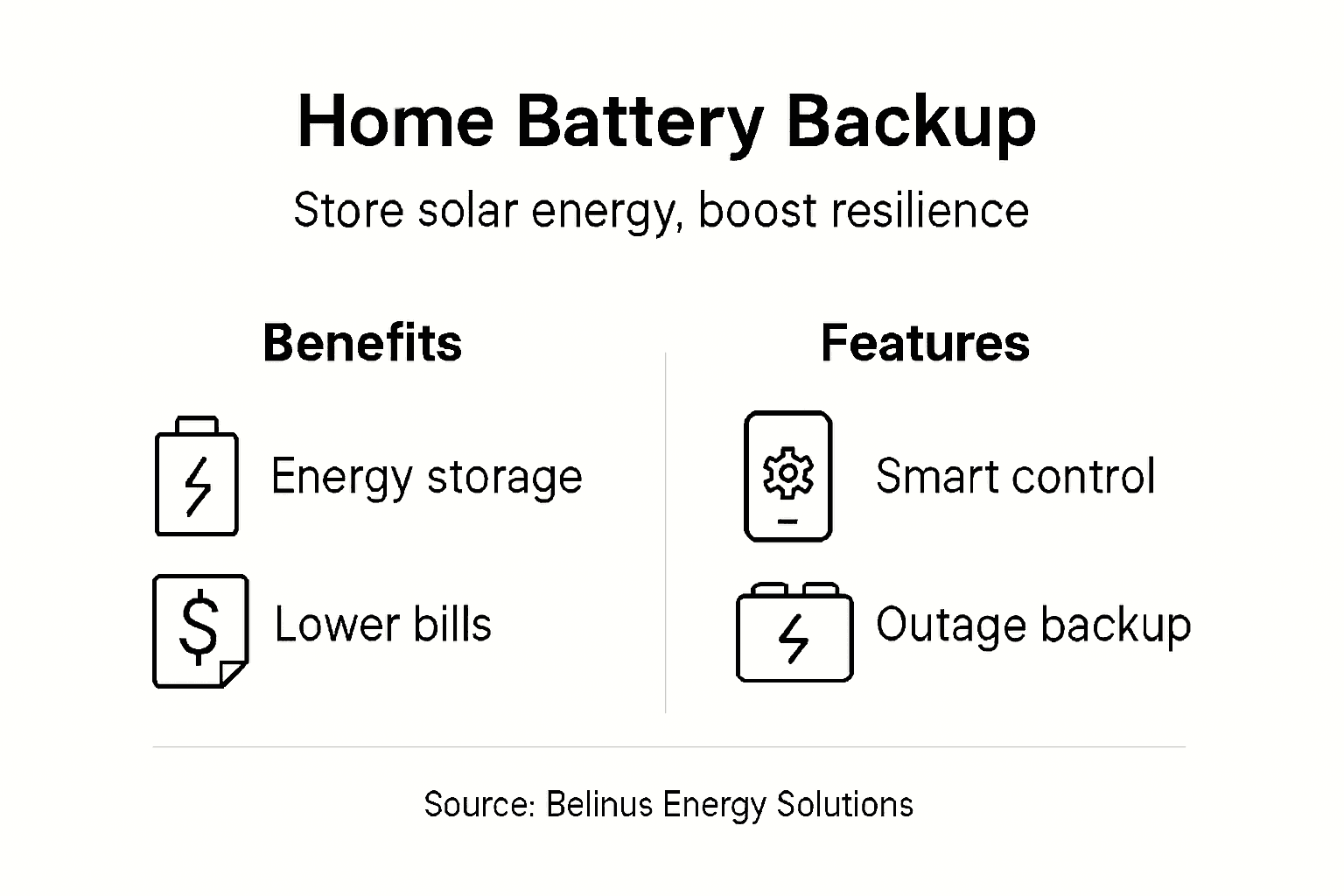
Modern systems offer capabilities that were impossible five years ago. Real-time tariff tracking lets your battery respond instantly to price changes. Weather forecasting ensures the system charges aggressively before clouds arrive. Mobile apps provide complete visibility into production, consumption, and savings.
Smart energy management systems provide homeowners with granular control and transparency over their power usage and financial optimization. You see exactly which appliances consumed power, when your battery charged or discharged, and how much money you saved versus grid-dependent neighbors.
This transparency creates accountability and motivation. Many homeowners discover they can shift consumption patterns slightly and save hundreds more annually without sacrificing comfort.
The following table highlights key smart energy management system functions and their benefits:
Feature | What It Does | Homeowner Benefit |
Real-time Tariff Tracking | Adjusts battery use by price changes | Maximizes annual energy savings |
Weather Forecast Sync | Plans charging based on weather | Ensures stored energy on cloudy days |
Appliance Monitoring | Tracks usage by device | Alerts on high-consumption habits |
Mobile App Control | Provides remote system management | Enables convenient energy oversight |
Pro tip: Enable time-of-use tariff integration in your energy management system immediately after installation. This single feature typically saves 15-25 percent annually compared to fixed-rate tariff scenarios.
Costs, Risks, and Common Pitfalls
Battery backup systems deliver genuine value, but they require careful planning. Mistakes made during installation or sizing can erase years of potential savings. Understanding the real costs and pitfalls separates smart investments from expensive regrets.
The Price Reality
Battery costs have fallen dramatically over the past decade. A 10 kWh lithium-ion system in the Benelux region typically costs between 8,000 and 12,000 euros installed. This sounds substantial until you calculate the payback period. Most homeowners recover their investment within 8 to 12 years through electricity savings alone, with another decade of profits ahead.
However, battery storage cost reductions must be balanced against supply chain vulnerabilities and safety considerations that affect long-term reliability and insurance costs. Some providers charge premium rates for battery backup coverage, and these insurance premiums can add 200 to 400 euros annually depending on your system size and provider.
Oversizing and Tariff Mistakes
The most common pitfall is buying more capacity than you need. A homeowner with 8 kWh daily consumption purchases a 15 kWh battery thinking bigger is better. That extra 7 kWh sits unused most days, costing money upfront without generating returns. A properly sized system stores only what you use, maximizing cost efficiency.
Second mistake: failing to optimize your electricity tariff. Dynamic pricing plans with time-of-use rates can save 20-30 percent annually. Fixed-rate tariffs make battery optimization pointless. Before purchasing a system, confirm your utility offers smart tariffs that reward off-peak charging.
Safety and Thermal Risks
Safety risks including thermal runaway and fire hazards require proper management and installation standards. Quality batteries with certified Battery Management Systems minimize these risks dramatically. Cheap systems from unknown manufacturers cut corners on safety monitoring and cell balancing, creating genuine hazards.
Install only with certified installers who follow local electrical codes. Skipping professional installation to save money introduces fire risk and voids warranties.
Pro tip: Request a detailed energy audit before purchasing any system. This analysis reveals your actual daily consumption patterns and prevents costly oversizing decisions.
Take Control of Your Home Energy with Belinus Battery Solutions
The challenge of matching your solar energy production with household consumption can leave you paying more for grid electricity than necessary. Our world’s evolving energy landscape calls for smarter solutions to store excess power efficiently and use it when it matters most. Belinus understands the pain points of homeowners seeking reliable, cost-effective battery backup that delivers true energy independence and peace of mind during outages.

Unlock the potential of advanced battery technologies like our upcoming Energy Wall G1 graphene supercapacitor and intelligent Energy Management System that dynamically optimizes charging and discharging based on your consumption and real-time tariffs. With integrated solutions including Solis Inverters and seamless solar storage, you can maximize savings while enhancing resilience against grid instability. Visit Belinus today and step into a future where your home energy works for you. Request a consultation now and start optimizing your solar and battery investments immediately.
Frequently Asked Questions
What is battery backup and why is it important for homeowners?
Battery backup is a system that stores electrical energy for use during times of high demand or outages. It allows homeowners to control their generated energy, maximizing savings and resilience during power interruptions.
How do battery systems work with solar panels?
Battery systems capture excess energy generated by solar panels during the day and store it for use at night or during low production periods. This ensures that homeowners can utilize their solar energy more efficiently, reducing reliance on the grid.
What are the main types of battery backup systems available?
The main types of battery backup systems include lithium-ion batteries, lead-acid batteries, flow batteries, and advanced energy storage technologies. Each type varies in lifespan, maintenance needs, and efficiency, making some more suitable for residential use than others.
How can I ensure my battery backup system is sized properly?
To size your battery correctly, analyze your daily energy consumption patterns. It’s recommended to size your battery to store about 3-5 hours of typical home usage to optimize efficiency without oversizing, which can lead to unnecessary costs.
Recommended
Comments