Battery backup installation workflow for homes in 2026
- Mar 9
- 13 min read

Installing a battery backup system integrated with solar PV can feel overwhelming for European homeowners and small businesses navigating complex regulations and technical requirements. Between EU certification mandates, fire safety codes, and system sizing decisions, the path from planning to operation isn’t always clear. This guide breaks down the complete installation workflow into practical steps, ensuring you can confidently deploy a compliant, efficient battery backup system that maximizes your renewable energy investment and delivers reliable backup power when you need it most.
Table of Contents
Key takeaways
Point | Details |
EU regulations require certification | Battery systems over 2 kWh need CE marking and digital Battery Passports from 2027. |
Pre-installation assessment is critical | Energy audits and site evaluations determine proper sizing and safe placement. |
Installation follows strict safety standards | Fire safety codes like PAS 63100:2024 mandate ventilation and location requirements. |
Energy management systems optimize performance | EMS enable 15-minute tariff optimization and battery arbitrage for cost savings. |
Common mistakes cause safety risks | Poor ventilation and regulatory oversights lead to fire hazards and system failures. |
Introduction to battery backup systems and solar PV integration
Battery backup systems store electrical energy for use during power outages, peak demand periods, or when electricity tariffs are high. For European homeowners and small businesses, these systems represent more than emergency power. They enable strategic energy management that reduces grid dependency and electricity costs.
Integrating battery storage with solar PV creates a synergistic relationship that maximizes renewable energy utilization. Solar panels generate power during daylight hours, often producing more than immediate consumption needs. Without storage, excess energy either exports to the grid at low feed-in rates or goes unused. Battery backup energy independence becomes achievable when storage captures this surplus for evening use or grid outages.
The European market has accelerated adoption of integrated solar and storage systems driven by rising energy costs and ambitious renewable energy targets. Modern battery technologies including lithium iron phosphate (LFP), pre-lithiated LFP, and emerging graphene supercapacitors offer diverse performance characteristics suited to different applications.
Key benefits of solar PV and battery integration include:
Energy autonomy during grid failures or planned maintenance
Time-shifting energy consumption to avoid peak tariff periods
Maximizing self-consumption of solar generation
Participating in grid services and demand response programs
Reducing carbon footprint by displacing fossil fuel generation
Understanding this foundation helps you appreciate why proper installation workflows matter. The technical and regulatory complexity demands systematic planning and execution to capture these benefits safely and effectively.
Prerequisites and regulatory compliance
Before any installation work begins, you must navigate European regulatory requirements that govern battery storage systems. The EU Battery Regulation EU 2023/1542 mandates strict compliance for battery storage systems including CE certification, labeling, and a Battery Passport for systems over 2 kWh starting February 2027. These requirements ensure product safety, sustainability, and lifecycle traceability.
CE marking demonstrates conformity with essential health, safety, and environmental protection standards. Your battery system must carry this marking along with documentation proving compliance before installation can proceed legally. The certification process involves testing, quality management verification, and declaration of conformity by the manufacturer.
The Battery Passport requirement represents a significant regulatory innovation. This digital document tracks the battery’s manufacturing origin, materials composition, carbon footprint, and recycling information throughout its lifecycle. Systems exceeding 2 kWh capacity will require this passport from 2027, affecting most residential and commercial installations.
Building regulations add another compliance layer. EU solar energy building mandates 2026 require new buildings and those undergoing major renovations to incorporate solar-ready designs from May 2026. This includes structural provisions for battery storage integration, appropriate electrical infrastructure, and fire safety considerations.
Local permitting requirements vary across European jurisdictions but typically include:
Building permit or notification for electrical system modifications
Grid connection approval from your distribution network operator
Fire safety inspection for battery installations over certain capacities
Planning permission if external equipment affects building aesthetics
Consult your battery storage EU regulations guide and local authorities early in the planning process. Regulatory compliance failures can delay projects by months and incur costly retrofits. Professional installers familiar with regional requirements streamline this process significantly.
Pre-installation assessment and planning
Proper system design begins with detailed energy and site assessments that inform equipment selection and installation approach. Skipping this phase leads to undersized systems that fail to meet backup needs or oversized installations that waste capital.
Start by analyzing 12 months of electricity consumption data from your utility bills. Identify daily usage patterns, seasonal variations, and peak demand periods. If you have existing solar PV, review generation data to understand surplus energy available for storage. This analysis reveals how much battery capacity you need for your specific backup duration goals and self-consumption targets.
Site evaluation examines physical and environmental factors affecting installation:
Available space with adequate ventilation for heat dissipation
Proximity to electrical panel and solar inverter for efficient wiring
Structural support capable of bearing battery weight (often 200-400 kg)
Temperature-controlled environment between 0°C and 35°C for optimal performance
Accessibility for maintenance and emergency response
Choosing between AC-coupled and DC-coupled configurations depends on your existing solar setup and future plans. AC-coupled systems connect batteries to your AC electrical panel, offering installation flexibility and compatibility with any solar inverter. DC-coupled systems link batteries directly to solar charge controllers, delivering higher efficiency by minimizing conversion losses but requiring compatible hybrid inverters.
Criteria | AC-Coupled | DC-Coupled |
Installation complexity | Lower, works with existing systems | Higher, needs hybrid inverter |
Round-trip efficiency | 85-90% | 92-96% |
Retrofit suitability | Excellent | Limited |
Cost | Moderate | Higher upfront |
Future expansion | Easy | Moderate |
SolarPower Europe’s Technical Due Diligence Guidelines covering lifecycle assessment including feasibility, procurement, construction, commissioning, and operation for hybrid solar PV and battery storage projects provide professional frameworks for reliability assessment. These guidelines help evaluate system bankability and long-term performance expectations.
Consult battery systems sizing guide resources and professional assessment services to validate your calculations. Consider future consumption changes like electric vehicle charging or business expansion that might increase energy needs within the battery’s 10-15 year lifespan.
Pro Tip: Add 20-30% buffer capacity to your calculated battery size to account for degradation over time and unexpected consumption spikes. This ensures your system maintains adequate backup capability throughout its service life.
Technical due diligence also includes reviewing installer qualifications, equipment warranties, and maintenance requirements. Request multiple quotes comparing system designs, component brands, and total cost of ownership including installation, commissioning, and ongoing service. The battery storage setup overview clarifies equipment options and integration approaches.
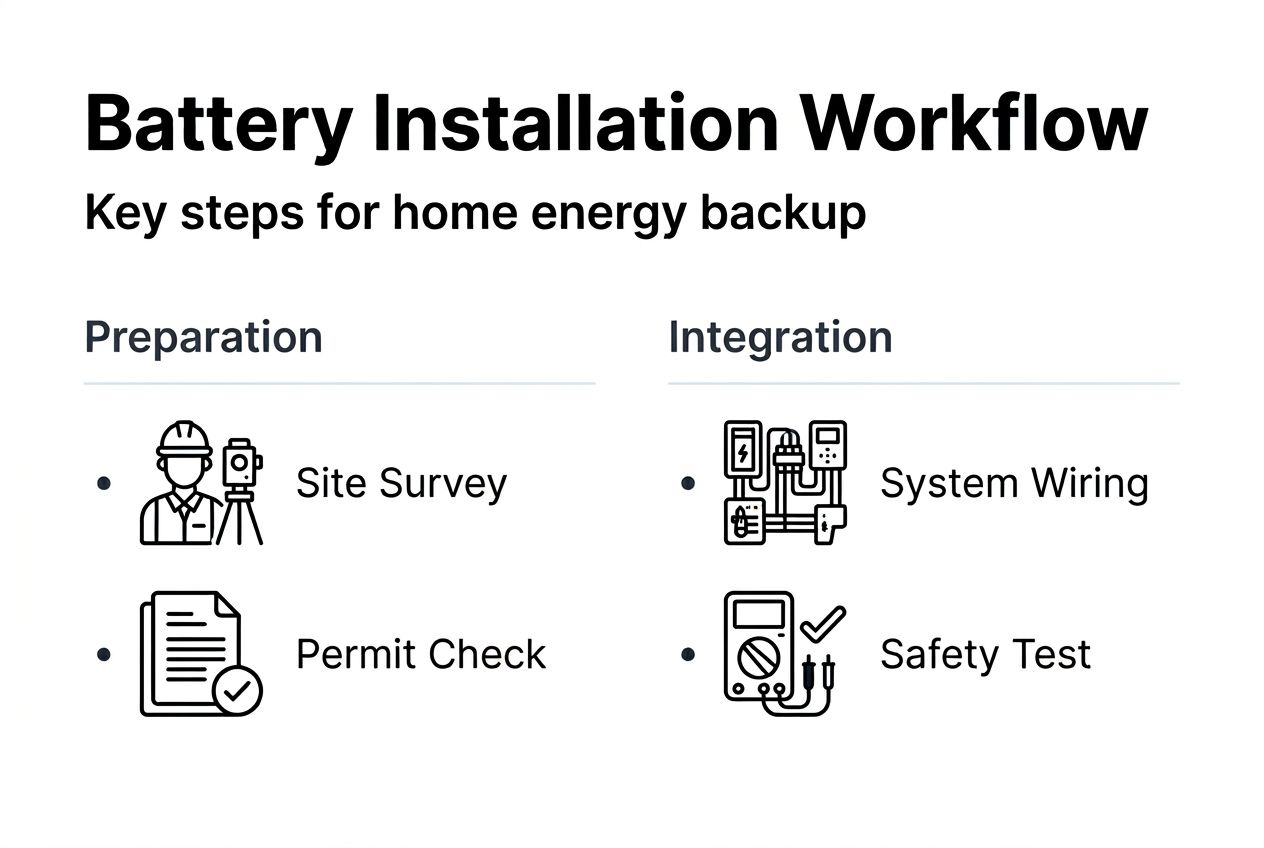
Step-by-step installation workflow
Professional battery backup installation typically spans 2 to 4 days depending on system complexity and site conditions. Understanding the workflow helps you prepare your property and coordinate with installers effectively.
Site preparation (Day 1 morning): Clear the installation area and ensure access for equipment delivery. Installers verify electrical infrastructure capacity, inspect mounting locations, and confirm ventilation adequacy. Any necessary electrical panel upgrades or ventilation modifications happen during this phase.
Equipment staging and mounting (Day 1 afternoon to Day 2): Battery modules, inverters, and balance of system components arrive on site. Installers mount equipment to walls or floors using manufacturer-specified brackets, ensuring level positioning and structural integrity. Proper mounting prevents vibration damage and maintains thermal management.
Electrical integration (Day 2 to Day 3): Licensed electricians connect batteries to inverters, inverters to solar PV systems (if present), and the complete system to your electrical panel. This critical phase demands precision wiring, proper cable sizing, and thorough grounding for safety. Connection points receive protective enclosures meeting IP ratings for moisture and dust resistance.
Safety system installation (Day 3): Fire detection, thermal monitoring, and emergency disconnect mechanisms integrate with the battery system. Installers configure battery management systems (BMS) that monitor cell voltages, temperatures, and state of charge. These safety layers prevent thermal runaway and enable rapid shutdown if anomalies occur.
Commissioning and testing (Day 3 to Day 4): The system undergoes comprehensive testing including charge/discharge cycles, grid synchronization verification, and emergency backup simulations. Solar and storage integration guide principles ensure seamless coordination between solar production, battery storage, and household consumption.
Documentation and training (Day 4): Installers provide certification of compliance with safety standards, warranty registration, and user manuals. Customer training covers system operation, monitoring interfaces, and basic troubleshooting. You receive emergency contact information and maintenance schedules.
Installation Step | Duration | Key Safety Checks |
Site preparation | 2-4 hours | Ventilation, structural support |
Equipment mounting | 4-8 hours | Level installation, secure fastening |
Electrical integration | 8-12 hours | Proper grounding, cable sizing |
Safety systems | 4-6 hours | BMS calibration, thermal monitoring |
Commissioning | 4-8 hours | Charge cycles, grid synchronization |
Documentation | 2-3 hours | Compliance certification, training |
Pro Tip: Schedule installation during mild weather when temperature extremes won’t stress initial battery conditioning. Avoid peak summer heat or winter cold that can affect commissioning accuracy.
Critical fire safety procedures following PAS 63100:2024 standards govern installation locations. Batteries must not install in escape routes, bedrooms, or confined spaces with inadequate ventilation. Minimum clearances around equipment facilitate heat dissipation and emergency access.
Installation safety and integration best practices
Safety standards protect occupants, property, and first responders throughout the battery system’s operational life. PAS 63100:2024 fire safety guidelines restrict installation locations to prevent hazards, specifically prohibiting bedroom installations and requiring minimum separation from combustible materials.

Coordinated engineering, procurement, and construction (EPC) workflows ensure all installation aspects work together harmoniously. Battery backup installations co-located with solar PV require coordinated engineering, procurement, and construction best practices to mitigate complexity and ensure safety. This coordination involves electrical engineers, mechanical installers, and fire safety experts collaborating throughout the project.
Key integration practices include:
Thermal management systems that maintain optimal operating temperatures
Ventilation designs providing continuous air exchange to disperse heat and gases
Emergency shutdown systems accessible to occupants and emergency services
Clear labeling of all electrical connections and safety equipment
Cybersecurity measures protecting connected energy management systems from unauthorized access
Environmental considerations extend beyond fire safety. Battery installations must protect against moisture ingress, extreme temperature fluctuations, and physical damage from impacts or vibration. Proper enclosures and climate control systems maintain performance and longevity.
Updated EPC guidelines version 3 released in 2026 incorporate cybersecurity best practices for grid-connected storage systems. As batteries participate in demand response and energy trading, robust network security prevents malicious interference with system operation. Firewalls, encrypted communications, and regular security updates form essential protection layers.
“Fire safety represents the paramount priority in battery storage installations. Proper ventilation, approved locations, and coordinated safety systems prevent the rare but serious risks of thermal events.”
Pro Tip: Many installation failures trace to poor coordination between trades. Ensure your installer uses integrated project management that sequences electrical, mechanical, and safety work logically. Rushed installations that skip coordination meetings lead to rework and safety compromises.
Regular inspections post-installation verify continued compliance with safety standards. Annual professional reviews check ventilation effectiveness, electrical connection integrity, and BMS functionality. These preventive measures catch degradation before it causes failures.
Post-installation energy management
Installing the hardware represents only half the value equation. Intelligent energy management systems (EMS) transform static battery storage into dynamic assets that optimize costs and grid interaction continuously.
Modern EMS platforms offer 15-minute tariff optimization that responds to real-time electricity pricing. When grid rates spike during peak demand, your system automatically draws from battery storage instead of expensive grid power. During low-rate periods, batteries recharge from the grid or solar generation. This automated arbitrage can reduce electricity costs by 30-50% compared to unmanaged consumption.
Real-time battery arbitrage extends beyond simple time-shifting. Advanced EMS participate in grid services including frequency regulation, voltage support, and demand response programs. Distribution network operators increasingly compensate storage systems for these services, creating additional revenue streams that improve investment returns.
User interfaces make sophisticated energy management accessible through native mobile apps and web dashboards. You can monitor real-time energy flows, historical performance data, and cost savings from a smartphone. Manual overrides let you prioritize backup reserves before predicted weather events or adjust charging strategies based on upcoming solar forecasts.
Benefits of comprehensive EMS integration include:
Maximized self-consumption of solar generation reducing grid exports
Automated response to dynamic tariffs without manual intervention
Predictive algorithms that learn consumption patterns and optimize accordingly
Remote diagnostics that identify performance issues before they cause failures
Integration with electric vehicle chargers and heat pumps for whole-home energy optimization
The batteries role in grid services continues expanding as utilities seek distributed flexibility resources. Your home battery can contribute to grid stability while earning compensation, transforming from pure cost center to revenue-generating asset.
EMS platforms with RESTful APIs enable integration with third-party services and future smart home technologies. This open architecture prevents vendor lock-in and ensures your system adapts to evolving energy market structures.
Pro Tip: Enable automatic software updates on your EMS platform to receive the latest optimization algorithms and security patches. Manufacturers continuously improve tariff prediction models and efficiency strategies through over-the-air updates.
Explore solar storage energy management strategies that align battery operation with your household priorities. Whether maximizing backup duration, minimizing costs, or reducing carbon footprint, modern EMS can tailor operation to your specific goals.
Common installation mistakes and troubleshooting
Even professional installations occasionally suffer from avoidable errors that compromise safety, performance, or compliance. Understanding frequent mistakes helps you verify quality work and avoid problematic installers.
Common installation errors include:
Ignoring local regulations beyond EU standards, leading to permit rejections
Inadequate ventilation causing overheating and accelerated degradation
Improper electrical connections creating fire risks or voltage imbalances
Insufficient energy assessment resulting in undersized systems
Skipping commissioning tests that would reveal configuration errors
Poor cable management allowing moisture ingress or physical damage
Ignoring fire safety norms causes about 20% of battery incidents; ventilation and electrical connection errors also frequently cause failures. These statistics underscore why professional installation by qualified technicians matters enormously.
Consequences of installation mistakes range from minor performance losses to catastrophic failures. Inadequate ventilation shortens battery lifespan by 30-40% as elevated temperatures accelerate chemical degradation. Electrical faults can trigger fires, void warranties, and create liability for property damage. Regulatory violations may require expensive system removal or modifications before grid connection approval.
Simple preventive fixes include:
Hiring installers with manufacturer certifications and liability insurance
Verifying all required permits before work begins
Conducting detailed pre-installation energy audits
Insisting on comprehensive commissioning with documented test results
Scheduling annual professional inspections to catch emerging issues
Troubleshooting common problems often starts with monitoring system data. Unexpected capacity losses, charging irregularities, or temperature warnings signal issues requiring professional attention. Modern BMS generate diagnostic codes that help technicians identify specific component failures quickly.
Maintenance prevents many common failures. The solar battery maintenance guide outlines cleaning schedules, connection inspections, and firmware updates that preserve system health. Simple tasks like verifying ventilation remains unobstructed prevent expensive repairs.
Warranty protection depends on following manufacturer maintenance requirements and using approved installers. Document all service activities and retain records proving compliance with warranty terms. This documentation proves invaluable if component failures occur within warranty periods.
Expected outcomes, costs, and performance metrics
Setting realistic expectations helps you evaluate installation success and long-term system value. Understanding typical costs, timelines, and performance benchmarks provides context for your investment.
Average installation costs for 16 kWh residential battery backup systems in Europe range from €12,000 to €18,000 including equipment, labor, commissioning, and basic EMS. Premium systems with advanced features or graphene supercapacitor technology like the Energy Wall G1 command higher prices but offer superior performance characteristics. Commercial installations scale costs based on capacity, with per-kWh pricing decreasing for larger systems.
Project duration averages 2 to 4 days for straightforward residential installations following the prescribed workflow. Complex projects involving electrical panel upgrades, structural reinforcement, or challenging access may extend to one or two weeks. Commercial installations require longer timelines proportional to system size and site complexity.
Key performance metrics you should monitor include:
Round-trip efficiency measuring energy losses during charge and discharge cycles
Depth of discharge capability indicating usable capacity percentage
Cycle life representing total charge/discharge cycles before significant degradation
Response time for backup power activation during grid failures
Self-consumption rate showing percentage of solar generation used on-site
Technology | Efficiency | Cycle Life | Cost per kWh | Backup Response |
LFP Battery | 92-95% | 6,000-8,000 | €750-€950 | 10-20 ms |
Graphene Supercap | 96-98% | 50,000+ | €1,100-€1,400 | <5 ms |
Lead Acid | 80-85% | 1,500-2,500 | €400-€600 | 20-50 ms |
Energy autonomy percentage varies by consumption patterns, solar generation, and battery capacity. Well-designed systems achieve 60-80% energy independence, meaning grid imports drop to 20-40% of total consumption. Homes with high daytime consumption and generous solar PV reach the upper end of this range.
Reliability metrics include system availability (percentage of time fully operational) and mean time between failures (MTBF). Quality installations achieve 99%+ availability with MTBF exceeding 10 years for major components. Regular monitoring identifies performance degradation trends before they impact reliability.
Compliance verification confirms your system meets all regulatory requirements for safe operation and grid connection. Professional installers provide certification documents proving conformity with EU Battery Regulation, building codes, and electrical standards. Maintain these records for warranty claims, insurance purposes, and future property sales.
Monitor system health through EMS dashboards that track capacity retention, charge cycle counts, and efficiency trends. Gradual capacity loss of 1-2% annually represents normal aging for lithium-based batteries. Sudden performance drops warrant professional inspection to identify potential issues.
Discover professional battery backup solutions tailored for Europe
Navigating the complex landscape of battery backup installation requires expertise spanning regulatory compliance, technical engineering, and energy market dynamics. Belinus energy solutions combines these specializations to deliver comprehensive systems optimized for European homeowners and small businesses.
Our Energy Wall G1 with 16 kWh graphene supercapacitor technology offers industry-leading cycle life and efficiency launching in Q1 2026. Integrated with intelligent EMS providing 15-minute tariff optimization, our systems transform energy storage from backup power into active cost management tools.

Explore our battery system sizing guide to determine optimal capacity for your property. Professional assessment services evaluate your energy profile, site conditions, and regulatory requirements to design compliant, high-performance installations. Our solar battery maintenance tips help you preserve system value throughout its operational life.
Contact our team for tailored advice on integrating battery backup with your existing solar PV or planning complete energy solutions from the ground up. We navigate EU regulations, coordinate professional installation, and provide ongoing support ensuring your system delivers reliable, cost-effective energy independence for years to come.
FAQ
What are the key EU regulations affecting battery backup installations in 2026?
EU Battery Regulation 2023/1542 requires CE marking, safety labeling, and digital Battery Passports for systems over 2 kWh starting February 2027. Building code mandates effective May 2026 require new construction and major renovations to incorporate solar-ready and battery-ready infrastructure including proper electrical capacity and fire safety provisions.
How do I determine the right battery size for my European home or small business?
Analyze 12 months of electricity consumption data and existing solar PV generation to identify usage patterns and surplus energy. Consider your desired backup duration during outages and future consumption changes like EV charging. Consult battery system sizing guide resources and professional assessment services to validate calculations, adding 20-30% buffer capacity for degradation and unexpected demand.
What safety precautions are most important during battery backup installation?
Follow PAS 63100:2024 fire safety guidelines requiring adequate ventilation and prohibiting installations in bedrooms, escape routes, or confined spaces. Ensure qualified electricians perform all electrical connections with proper grounding and cable sizing. Verify installers implement thermal monitoring, emergency shutdown systems, and maintain required clearances around equipment for heat dissipation and emergency access.
How can energy management systems improve the performance of battery backup installations?
EMS enable automated 15-minute tariff optimization that shifts consumption to low-cost periods, reducing electricity bills by 30-50%. Real-time battery arbitrage and participation in grid services create additional value through demand response compensation. User-friendly mobile and web dashboards simplify monitoring while predictive algorithms learn your consumption patterns to optimize performance automatically. Explore solar storage energy management strategies aligned with your priorities.
Recommended
Comments