Top 4 Best Residential EV Charger Alternatives 2026
- 3 hours ago
- 12 min read
Finding a residential EV charger that meets durability, energy management, and solar integration goals is rarely straightforward for homeowners in 2026. Most mainstream chargers focus on basic plug and charge features, missing advanced load balancing, solar prioritization, and fully managed service contracts. This comparison breaks down pricing, installation models, and technical features so you can match four top alternatives to your home’s actual requirements.
Table of contents
Belinus
At a glance
Belinus’s marketing materials state the Energy Wall G1 is a 16 kWh graphene supercapacitor sold at €7,000 per unit with a Q1 2026 launch. The company combines that hardware with solar panels, multiple storage chemistries, and an EMS for home and commercial use. That mix targets customers who want long term durability and technology-driven control.
Core features
Belinus offers a wide range of solar panels and energy storage options across several chemistries. The product stack includes graphene supercapacitors and sodium ion batteries alongside more common LFP options. The platform uses an AI based energy management system to schedule charging, direct self consumption, and tap market opportunities. Systems are modular and configurable for residential to industrial scale. The group also supports installations through affiliated companies.
Key differentiator
Belinus differentiates with its use of non lithium storage such as graphene supercapacitors and sodium ion batteries paired with AI energy management. That combination aims to reduce reliance on conventional lithium while improving charge response and lifetime. The offering emphasizes Belgian engineering and social responsibility as part of its design and warranty approach.
Pros
The product lineup includes graphene supercapacitors, which promise fast charge response and durability when compared to standard battery cells. This suits homeowners who want frequent cycle performance.
The modular system design lets you scale from a small residential battery to larger commercial storage without replacing the control platform. That lowers upgrade friction over time.
The EMS provides automated tariff aware scheduling and real time management for battery arbitrage and grid services. You get software control over consumption and export.
Warranty terms and performance guarantees are a core emphasis, which signals confidence in component longevity and manufacturing quality. Those commitments help protect long term asset value.
The company works with affiliated installers and wholesalers, which simplifies procurement and installation for domestic buyers in Europe.
Cons
Public pricing is limited and often quoted per project, so customers must request a tailored quote for system cost and local installation. This makes quick price comparison harder.
Who it’s for
Belinus fits environmentally conscious homeowners and businesses in Europe who want durable, non lithium storage options and sophisticated energy control. Choose Belinus if you plan to integrate solar, want a long lived storage asset, and are willing to work with a vendor that uses Belgian engineering and partner installers.
Unique value proposition
Belinus’s documentation states its centralized EMS performs 15 minute dynamic tariff optimization. That feature translates into concrete savings when local tariffs vary by time of day. For homeowners with solar and a battery the EMS can shift charging to the cheapest windows and target export when prices allow. The result is a predictable operating model for reducing grid purchases.
Real world use case
A homeowner installs Belinus solar panels with a modular storage pack and links the system to the EMS. The system charges during low price periods and uses stored energy at peak times. The owner sees lower electricity bills while retaining backup power for short outages.
Pricing
According to the company, storage units start from entry level options with 12 year warranties and scale up to industrial solutions with 20 year warranties. Solar panels carry performance guarantees of 35 years by the vendor. Detailed system pricing and installation charges require a site specific quote.
Website: https://belinus.com
Peblar
At a glance
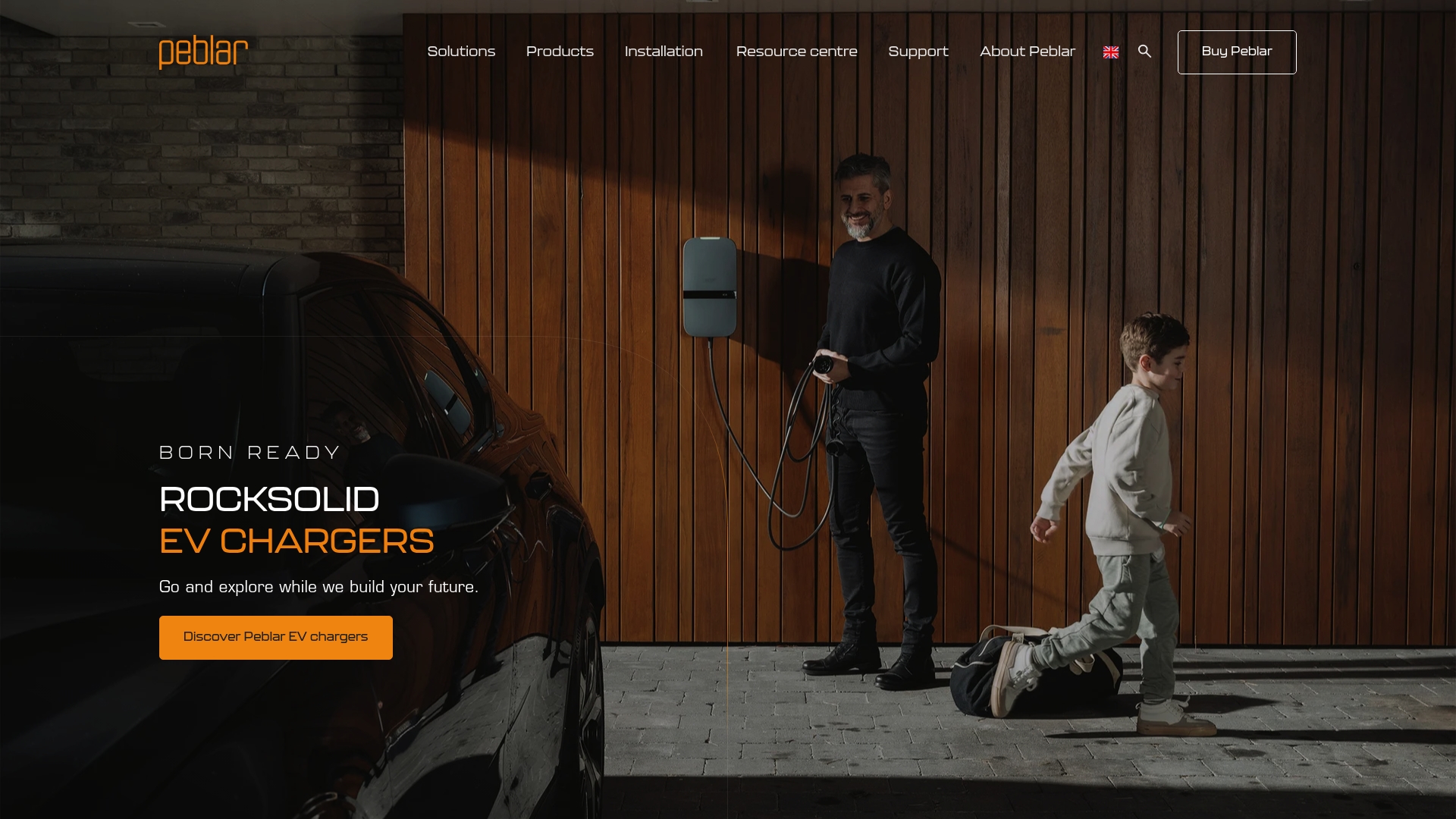
All chargers are produced in-house in Eindhoven, Netherlands. That vertical production gives Peblar tight control over component selection and assembly quality.
The product line targets residential, commercial, fleet, and multiunit installations with aesthetics and durability in mind. European standards guide safety and connectivity choices.
Core features
Peblar focuses on hardware quality, connectivity, and scalable mounting and power options.
Integrated single printed circuit board for mechanical durability and fewer connection points.
Support for load balancing, group load management, and smart charging to reduce peak demand.
Remote management and over the air software updates for operational convenience.
Flexible mounting options wall or pole plus models for residential and commercial power levels.
Key differentiator
Peblar builds its chargers entirely in-house, which drives consistent assembly and component traceability. That localized manufacturing supports model variants such as white label options and MID meter choices.
Design choices emphasize a clean exterior that fits modern facades while keeping service access simple. The company pairs that design focus with broad partner support for back office systems.
Pros
In-house manufacturing: Tight production control reduces component mismatch and simplifies warranty handling compared with generic import units.
Durable, attractive design: The chargers look intentional on a home wall or a corporate car park and resist common wear factors.
Smart charging features: Built-in load balancing and group management lower the chance of tripping local distribution equipment during peak hours.
Remote management and updates: Administrators can push firmware and check status without on site visits, which speeds maintenance.
Broad integration support: Works with major back office setups and energy management platforms for billing and monitoring.
Cons
Limited shipping footprint focuses mainly on Europe, which restricts availability outside that region.
Price sits at a premium level compared with basic consumer chargers, which may deter budget buyers.
Smaller organizations without an existing management system may find integrations complex to set up.
When it may not fit
If you need the cheapest charger for a single car and minimal features, Peblar is likely overkill. The product suits buyers who plan coordinated management or who value long service life.
Large global rollouts outside Europe will face availability and logistics limits. Also, DIY installers may need a qualified electrician for optimal setup and load configuration.
Notable integrations
Peblar supports common industry integrations that matter for managed charging deployments.
OCPP 1.6 J back office systems
Smart home and energy management platforms
Billing and monitoring software
Who it’s for
Homeowners who want a neatly designed, durable charger and are comfortable paying for quality. Business owners and fleet managers who need remote monitoring, billing, and scalable load management will benefit most.
Property managers at multiunit developments who need branded or white label options will find Peblar appropriate.
Real world use case
A facilities manager orders white label Peblar chargers for an office lot. Installers mount units on poles and walls with a consistent aesthetic.
The manager uses the back office connection to monitor sessions, bill departments, and enable group load management to avoid tripping the site main during midday peaks.
Pricing
Pricing varies by model and configuration and generally sits in the premium segment. Exact figures are available on request and depend on options such as MID meters, white labeling, and bulk order discounts.
Shipping and installation costs vary by country and site complexity. Contact Peblar for a tailored quote.
Website: https://peblar.com
CubeCharging
At a glance
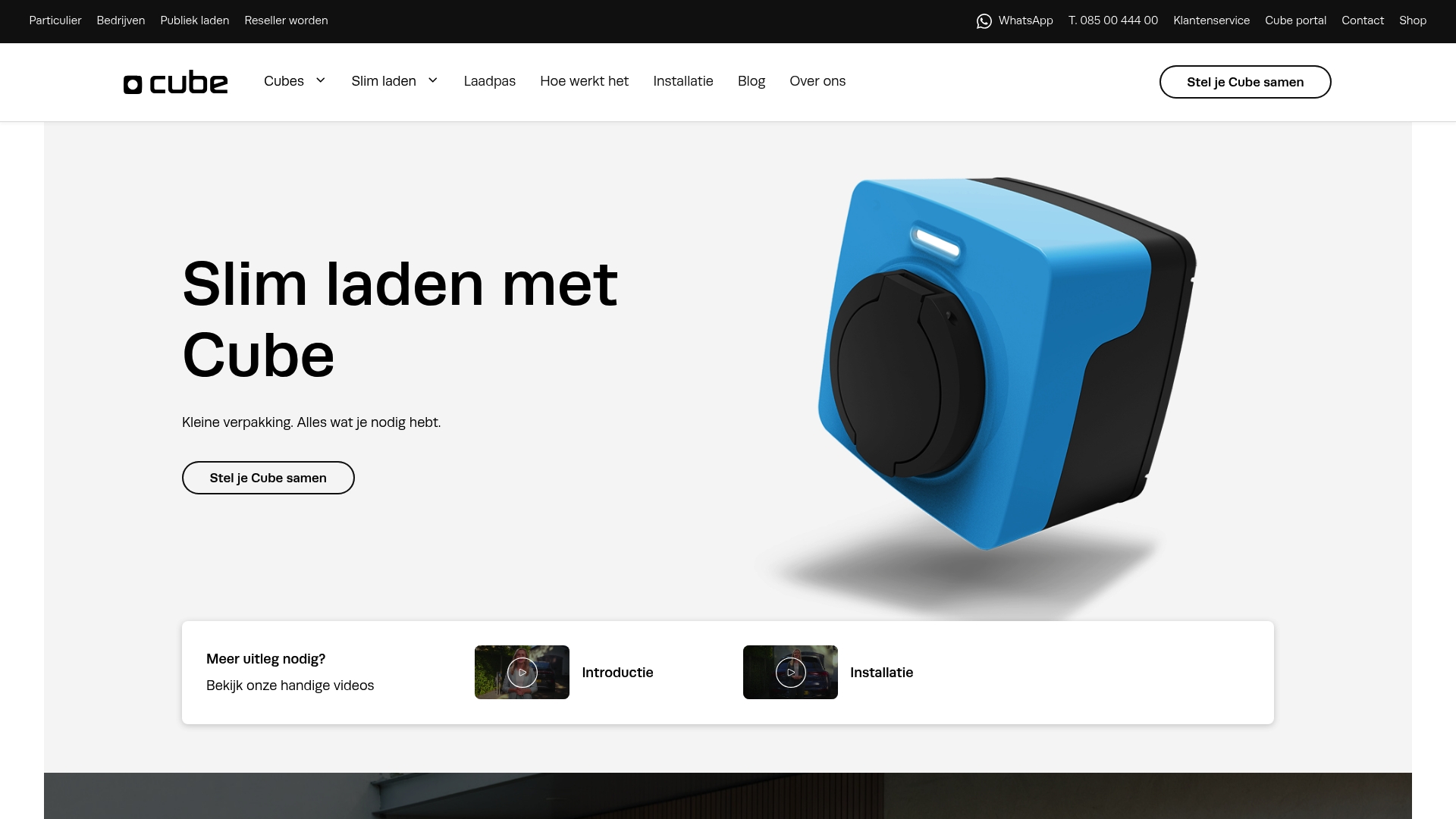
CubeCharging builds its charging hardware in the Netherlands and advertises that local production delivers shorter supply lines and higher reliability. The product line covers compact home units and multi-socket stations for businesses and public sites. The company highlights automatic load balancing as a core capability to distribute power across multiple chargers.
Core features
CubeCharging packages include hardware, installation, and aftercare. The lineup spans home chargers to large charging plazas.
In-house designed hardware in the Netherlands ensures tight quality control and local support.
Compatibility with all electric vehicles and public charging networks supports flexible use at home and on the road.
Automatic load balancing manages available grid power to avoid costly upgrades while maximizing simultaneous charging.
Full service delivery covers delivery, local installation, and ongoing maintenance from CubeCharging.
Key differentiator
CubeCharging combines Dutch design and production with advanced smart features such as automatic load balancing and broad European network compatibility. That combination prioritizes reliability and operational clarity for fleet operators and homeowners who prefer locally made equipment and a single supplier for hardware and service.
Pros
Dutch manufacturing yields easier communication with installers and faster spare part supply compared with distant factories. This often shortens repair loops.
The broad model range fits single home outlets and multi-socket company sites, so you can use one vendor as needs grow.
Built-in load management reduces the chance you need an expensive grid upgrade at your home or workplace. It also keeps multiple cars charging at usable speeds.
The vendor offers a full service that includes consultation, local installation, and planned maintenance. That lowers the project management burden for building owners.
Stated compatibility with European public networks simplifies roaming and billing when staff or visitors use outside chargers.
Cons
The company concentrates on the Dutch market, which limits local support and warranty logistics for buyers outside the region.
Prices sit above many low-cost imports because of local production and higher component quality. That raises upfront cost for budget buyers.
A wide product range can overwhelm first time buyers who only need a simple home charger. The decision requires vendor guidance.
When it may not fit
If you live well outside the Netherlands and need rapid on-site support the vendor may not have local coverage. Buyers seeking the lowest possible purchase price will find cheaper imports. If you want a single ultra simple consumer choice without consulting, the broad lineup may feel more complex than helpful.
Who it’s for
Homeowners in Europe who value local production, clear service contracts, and robust hardware will appreciate CubeCharging. Small businesses and fleet managers who want a single supplier for advice, installation, and maintenance are also a natural fit.
Real world use case
A small company installs a Cube Smart station on its site after a site survey. Local installers set up multiple sockets and configure automatic load balancing. Employees use company cards for charging and the company bills energy use centrally while CubeCharging handles ongoing maintenance.
Pricing
CubeCharging lists typical prices from about 695 euros to 1,155 euros excluding VAT, with installation included in those figures. Custom configurations and subscription options are available on request, but the website does not show fixed discount or subscription rates.
Website: https://cubecharging.com
Snigg
At a glance
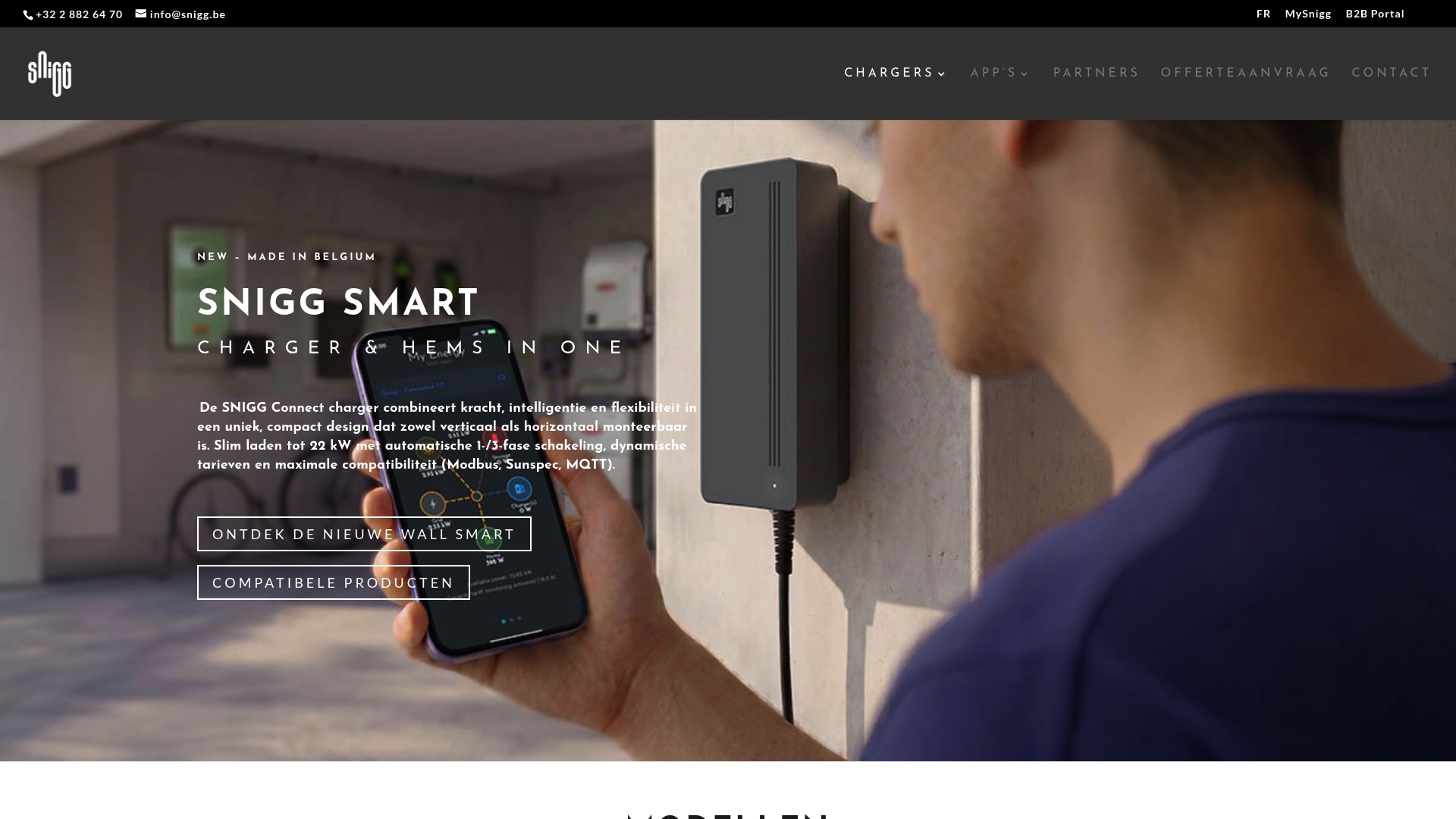
SunOverload solar charging is built into SNigg chargers. The system can prioritize solar energy when available to reduce grid draw and charging costs. SNigg pairs that capability with the MySnigg management platform for real time monitoring and split billing. The hardware is Made in Belgium, aimed at installers and property managers rather than direct retail buyers.
Core features
Compact adaptable enclosure that supports both vertical and horizontal mounting, useful where wall space varies.
Built in energy management with real time monitoring, dynamic load balancing, and solar integration for coordinated home energy use.
Protocol compatibility including OCPP 1.6, Modbus, Sunspec, and MQTT to connect with third party energy systems.
Preprogramming and on site technical support options for installers, plus split billing and automatic fault detection in the platform.
Local manufacturing focus with Belgian craftsmanship and partner support for project deployment.
Key differentiator
SNigg stands out for its combination of on device solar prioritization and a vendor managed platform. The hardware and platform link directly into building energy systems through standard protocols. That integration makes SNigg a fit where installers must coordinate EV charging with rooftop solar and building loads.
Pros
Local manufacturing means tighter control over build quality and faster access to spare parts in parts of Europe. This supports long term maintenance.
Broad protocol support simplifies integration into existing energy management setups. Installers spend less time adapting systems.
Built in energy features such as dynamic load balancing and SunOverload reduce peak grid demand and help use available solar.
Installer focused services include preprogramming and on site assistance, which speeds complex multi unit deployments.
The MySnigg platform centralizes monitoring, fault alerts, and billing, which helps property managers track usage and charge residents.
Cons
Price is likely higher than basic consumer chargers because of advanced features and local production. The site does not list fixed retail prices.
The product targets professional installers and integrators, so buying direct and DIY setup may be difficult.
Public information on consumer app features is limited, so end user experience may vary by installer configuration.
When it may not fit
SNigg is not ideal if you want a low cost plug and play home charger. It is also a poor match if you lack an installer or do not need solar or building energy integration. Small single unit owners with simple needs will find basic chargers easier to buy and use.
Who it’s for
The product fits professional EV charging installers, commercial property managers, and organizations that already run on site solar. It also suits integrators who need protocol compatibility and preprogramming support. Homeowners who want a managed installation through an installer will find SNigg useful.
Real world use case
An installer fits a residential complex with SNigg stations and preprograms them before delivery. The stations join the MySnigg platform for split billing and proactive alerts. Property managers then route surplus solar to cars during daytime charging windows to lower bills.
Pricing
SNigg does not publish set prices on its website. Pricing appears to depend on model, firmware options, and installation services, with custom quotes provided by partners. Expect project level pricing rather than off the shelf retail figures.
Website: https://snigg.be
Comparison of alternatives
Among the offerings compared, each brand provides unique strengths tailored to different user priorities. Selecting the most appropriate choice depends on specific use cases and expectations.
Energy storage technology and design options
Belinus’s utilization of graphene supercapacitors results in energy storage systems with exceptional durability and charge efficiency. Comparatively, Peblar focuses on aesthetic hardware design and localized manufacturing to ensure product quality. CubeCharging offers network-integrated multi-device charging solutions. Each system addresses distinct consumer needs, from durability and aesthetic integration to installation scale.
End-to-end service infrastructure
CubeCharging integrates hardware manufacturing, installation, and maintenance services for a straightforward customer experience. Conversely, SNigg emphasizes advanced solar integration with SunOverload for efficient home energy use but relies on third-party configurations for setup. This distinction highlights CubeCharging’s emphasis on end-to-end service while allowing SNigg’s niche solar-focused approach to stand out for specific requirements.
Best fit
For consumers seeking highly durable and efficient energy storage systems that incorporate cutting-edge graphene supercapacitors, Belinus provides a powerful solution.
CubeCharging is suitable for customers requiring local support with installation and maintenance through a straightforward service model.
SNigg caters to users prioritizing solar integration and energy management compatibility for energy utilization in various setups.
Our pick
Belinus stands out as a premier option because of its integration of graphene supercapacitors, ensuring longevity and superior performance in energy storage. However, consumers who value localized support services or extensive solar-focused integration might find competitors more aligned with those specific needs.
Choosing the ideal residential EV charger involves evaluating key aspects like features, design, and regional availability to find the product that best fits your priorities.
Product | Key Feature | Primary Differentiator | Best For | Pricing | Limitation |
Belinus | Modular energy storage with integrated AI EMS | Graphene supercapacitors for fast charge response and durability | Homeowners and businesses desiring advanced storage | Not disclosed | Public pricing requires tailored project quote. |
Peblar | Durable hardware with in-house production | Clean design with remote management support | Those needing aesthetic and scalable solutions | Not disclosed | Focus primarily within European market. |
CubeCharging | Automatic load balancing and local manufacturing | Dutch production prioritizing reliability and service integration | Homeowners and small businesses in the Netherlands | €695-€1155 excl. VAT | Market focus limits on-site support outside the Netherlands. |
SNigg | Integrated solar prioritization with MySnigg platform | Professional installation with advanced protocol compatibility | Property managers integrating solar energy | Not disclosed | Not suited for individual, non-integrator users. |
Discover Belinus for the best residential EV chargers and energy solutions
Choosing the right residential EV charger means balancing advanced technology, long-term durability, and smart energy management. Belinus stands out by offering a 16 kWh graphene supercapacitor Energy Wall G1 combined with an intelligent Energy Management System that schedules energy use and optimizes tariffs every 15 minutes. This precision control helps homeowners reduce electricity costs while integrating seamlessly with solar panels and other battery chemistries.
With Belinus, you get a modular system designed for scalability, backed by Belgian engineering and strong performance guarantees. Explore how Belinus’s residential solutions like the Energy Wall and ETAP Pro EV Charger can enhance your home’s energy ecosystem. Take action now to request a personalized quote and plan your transition to smarter, more efficient EV charging today.
FAQ
What makes Belinus a strong choice for residential energy storage?
Belinus offers a 16 kWh graphene supercapacitor, which promises longevity and fast charge response. This advanced storage technology aims to reduce reliance on traditional lithium options, making it a durable choice for homeowners. Consider selecting Belinus if you value innovative energy management and want to integrate solar solutions effectively.
How does Belinus compare to CubeCharging in terms of service?
CubeCharging emphasizes local production and full service delivery, including consultation, installation, and maintenance. Belinus focuses on its AI-based energy management system which allows users to optimize energy consumption but may require installation support through partner networks. Choose CubeCharging if you prefer comprehensive installation and service directly from the manufacturer.
Can i expect long-term warranty coverage with Belinus?
Belinus offers a 12-year warranty on its entry-level storage options and extends up to 20 years for industrial solutions. This warranty indicates their confidence in product durability and performance, making it a reliable investment for those looking to secure long-term energy storage solutions.
What are the costs associated with purchasing a Belinus system?
Belinus charges €7,000 per unit, and pricing often varies based on specific project needs and local installation. Prospective buyers should prepare to request a tailored quote as pricing is not publicly disclosed for every scenario.
Does Belinus support real-time energy management?
Yes, Belinus integrates an AI-based energy management system that provides automated, real-time monitoring and scheduling. This system enables users to maximize energy savings by optimizing charging times based on local tariff rates, enhancing the overall efficiency of their energy use.
Recommended
Comments