Optimize Energy Costs with Commercial Solar Planning
- Feb 22
- 9 min read
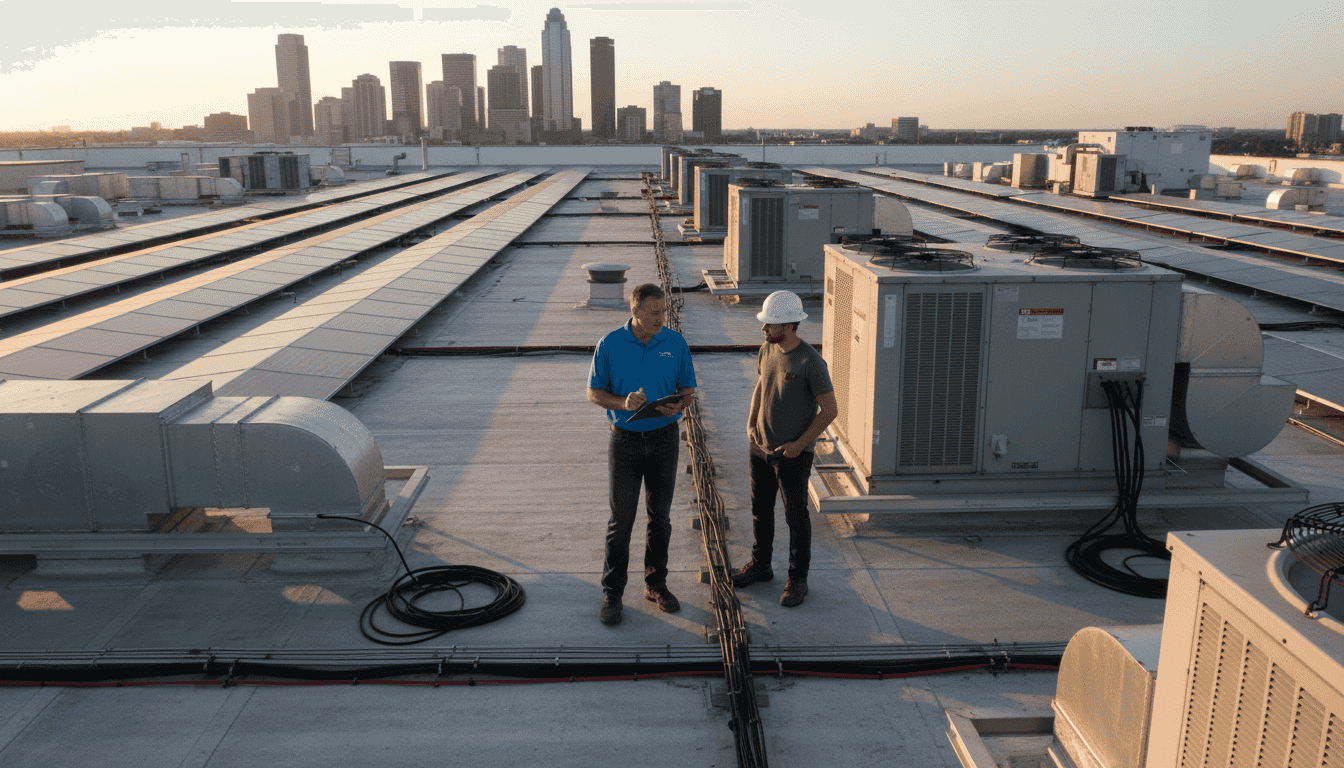
Managing energy costs while driving sustainability often leaves facilities managers in Belgium searching for solutions that fit their unique sites and operational demands. As market conditions shift and local regulations demand smarter energy use, assessing whether solar power is a practical investment becomes essential. This guide walks you through precise energy assessment and tailored commercial solar planning, helping you streamline decisions that impact both your bottom line and environmental goals.
Table of Contents
Quick Summary
Key Point | Explanation |
1. Assess Energy Consumption First | Review utility bills for past 12 months to understand peak usage and average consumption in kilowatt-hours (kWh). |
2. Evaluate Site Conditions Thoroughly | Inspect roof or ground space, shading patterns, and structural integrity to determine installation feasibility and solar performance. |
3. Consider Integrated Solar and Storage | Assess if battery storage is financially beneficial based on electricity rates and peak demand charges for energy management. |
4. Design Custom System Architecture | Choose between rooftop and ground-mounted systems while planning for electrical integrations, ensuring the design suits facility needs. |
5. Verify Financial Projections Carefully | Request energy yield estimates and analyze cost metrics like payback period and cost per kilowatt-hour to gauge investment viability. |
Step 1: Assess Energy Needs and Site Conditions
Before you install any solar panels, you need a clear picture of your facility’s energy consumption and whether your site can actually support a system. This assessment determines system size, expected returns, and whether solar makes financial sense for your operation.
Start by gathering your energy consumption data from the past 12 months. Review your utility bills and identify peak usage periods, seasonal variations, and average monthly consumption in kilowatt-hours (kWh). This tells you how much solar capacity you’ll realistically need to offset.
Next, evaluate your site’s physical conditions. You’ll need to assess roof or ground space availability, structural load capacity, and shading patterns throughout the year. Trees, neighboring buildings, and geographic features all affect solar performance.
Key assessment areas include:
Energy demand profiles (daily, monthly, and seasonal patterns)
Available installation space (roof condition, orientation, structural integrity)
Shading analysis from obstacles and natural features
Local grid infrastructure and connection requirements
Site accessibility for installation and maintenance
Solar potential depends heavily on your location’s solar radiation levels. Solar irradiation and site-specific conditions must be precisely measured to estimate realistic electricity yield. In Central Europe, understanding local grid infrastructure and energy demand management becomes critical since moderate solar potential and grid constraints shape project viability.
Measure solar exposure by analyzing sun angles, seasonal variations, and potential obstructions. Professional solar assessments use GIS-based analysis and shading simulations to project year-round performance accurately. For your facility, this means identifying the optimal orientation and tilt angle for maximum energy capture.
Document your facility’s electricity rates, time-of-use pricing, and demand charges. These costs directly impact your return on investment and help determine whether battery storage makes sense alongside your panels.
Accurate energy consumption data and precise site analysis prevent costly oversizing or undersizing your system, directly affecting your financial returns.
Pro tip: Request 12 months of detailed utility billing data before your site assessment, and photograph shading patterns at different times of year to give your solar partner the complete picture needed for an accurate design.
Step 2: Select Integrated Solar and Storage Solutions
Now that you understand your energy needs and site conditions, it’s time to design a system that captures solar energy and stores it for maximum use. The right combination of solar panels and battery storage directly impacts your facility’s energy independence and financial performance.
Start by determining whether battery storage makes sense for your operation. Consider your electricity rate structure, demand charges, and self-consumption goals. If you have high peak demand charges or significant time-of-use rate variations, battery storage becomes more financially attractive.
Evaluate these factors when selecting components:
Solar panel capacity needed to meet your annual energy demand
Battery storage size for peak shaving and load shifting
Inverter specifications and compatibility with your grid connection
Integration capabilities with your facility’s existing electrical systems
Warranty terms and performance guarantees
Hybrid PV and battery storage systems enable load shifting and optimize self-consumption, which is critical for managing solar variability in Central Europe. These integrated solutions help you capture more of the solar energy your panels generate rather than exporting excess power to the grid at lower rates.
Match your battery storage capacity to your facility’s peak loads and consumption patterns. A system sized too small won’t capture the benefits of load shifting. A system sized too large wastes capital on unused capacity. Your previous energy assessment determines the optimal balance.
Consider whether you need single-phase or three-phase system components based on your facility’s electrical infrastructure. Larger commercial operations typically require three-phase systems for efficiency and balanced power distribution.
Evaluate inverter types. String inverters work well for simpler rooftop installations. Hybrid inverters combine solar and battery management in one unit. Modular systems offer flexibility for future expansion as your energy needs change.
Battery storage transforms solar from a generation system into a complete energy management solution, enabling you to shift consumption away from peak pricing periods.
Pro tip: Request detailed load profiles and demand charge breakdowns from your utility to accurately size your battery system, ensuring you capture maximum financial benefit from storage during peak periods.
Step 3: Design Custom System Architecture
With your component selections finalized, you now need to design the specific system architecture that will work best for your facility. This is where technical decisions align with your facility’s electrical infrastructure, budget constraints, and long-term expansion plans.

Start by deciding between ground-mounted and rooftop installations. Ground-mounted systems offer flexibility in orientation and easier maintenance access. Rooftop systems save valuable land space and may require less structural work if your roof can handle the load. Your site assessment determines which option is feasible.
Here’s how rooftop and ground-mounted solar installations differ for commercial facilities:
Aspect | Rooftop Installation | Ground-Mounted Installation |
Land Usage | No extra land needed | Requires dedicated ground area |
Maintenance Access | May be restricted by roof design | Easier, open access |
Orientation Control | Limited by roof direction | Flexible, optimized for sun intensity |
Installation Cost | Roof prep may add expense | Potential site prep costs |
Expansion Potential | Limited by roof size | Easier to add capacity later |
Evaluate how your solar panels will be electrically connected. String configurations group panels in series, reducing wiring complexity and component costs. Microinverter systems allow individual panel optimization, which is helpful if shading varies across your roof. Hybrid approaches combine both for balanced performance and cost.
Key architectural decisions include:
String vs. microinverter topology for panel management
AC coupling or DC coupling for battery integration
Central inverter sizing for your total system capacity
Electrical protection and monitoring at multiple system levels
Future expansion pathways for additional panels or storage
Custom solar architectures require balancing performance, cost, and sustainability objectives while meeting local regulations and grid requirements. Your design must account for Belgium’s specific grid connection standards and any utility interconnection agreements.
Plan your electrical layout carefully. Determine where your inverter and battery storage will be located, ensuring adequate ventilation and cooling for equipment. Route wiring efficiently to minimize losses and installation complexity.
Consider how your system will integrate with your facility’s existing electrical panel and metering infrastructure. Some systems require additional monitoring equipment to track solar generation and battery performance in real time.
A well-designed system architecture maximizes efficiency, minimizes installation costs, and provides clear pathways for future upgrades without complete system redesign.
Pro tip: Work with your solar designer to create a single-line diagram showing all electrical connections, protection devices, and monitoring points before installation begins, ensuring everyone understands the complete system layout.
Step 4: Verify Performance and Cost Savings
Before committing to your solar investment, you need solid projections showing exactly how much energy your system will generate and what financial returns you can realistically expect. This verification step separates ambitious promises from achievable outcomes.
Start by requesting a detailed energy yield estimate from your solar designer. This should include monthly projections for the next 25 years, accounting for seasonal variations and system degradation over time. The estimate must be based on precise solar irradiance data specific to your location, not generic regional averages.
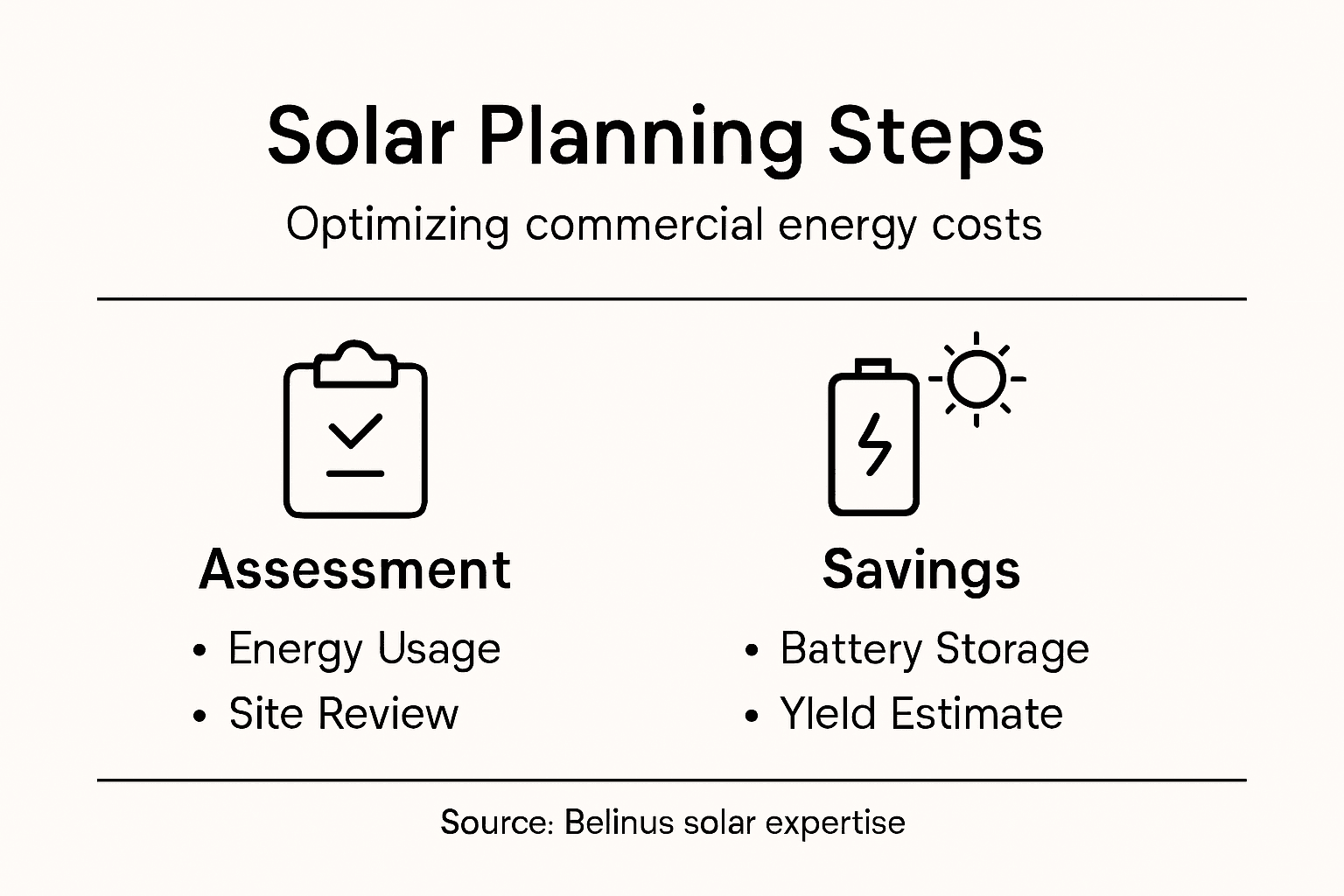
Review the assumptions underlying all performance predictions. Quality estimates specify the solar irradiance data source, system efficiency losses, and weather normalization factors used in calculations. Ask whether projections account for seasonal shading changes you identified during your site assessment.
Verify these performance factors:
Annual energy yield in kilowatt-hours
Monthly generation profiles matching your consumption patterns
System efficiency accounting for inverter losses and wiring resistance
Degradation rates (typically 0.5 percent annually for quality panels)
Weather data representative of actual conditions at your site
Detailed feasibility studies validate cost savings through comprehensive economic analysis including upfront investment, operational costs, and expected returns tailored to regional conditions. Request a complete financial model showing your payback period, internal rate of return, and 25-year net present value.
Calculate your actual cost per kilowatt-hour generated by dividing total system costs by expected lifetime energy production. Compare this against your current electricity rates and projected rate increases. Include maintenance costs, insurance, and any monitoring system subscriptions.
This table summarizes key financial calculations for evaluating solar investments:
Metric | What It Measures | Why It Matters |
Payback Period | Years to recover upfront cost | Assesses investment speed |
Net Present Value | Long-term project benefit | Evaluates total financial gain |
Cost per kWh | Lifetime system energy cost | Compares to utility rates |
Internal Rate of Return | Project profitability (%) | Gauges overall return vs. alternatives |
Analyze how battery storage impacts your financial returns. Model the difference between systems with and without storage to quantify the value of load shifting and peak demand reduction specific to your facility.
Validate that projections account for Belgium’s current energy market conditions, grid connection fees, and any applicable subsidies or tax credits available to your operation.
Accurate performance projections and honest financial analysis build confidence in your investment and align expectations with actual system performance once it goes operational.
Pro tip: Request performance monitoring data from similar installations in Belgium operated by your solar provider, allowing you to compare projected yields against real-world results from comparable systems.
Take Control of Your Commercial Energy Costs with Integrated Solar and Storage Solutions
The challenge of accurately assessing your facility’s energy needs and designing a tailored solar system can feel overwhelming. This article highlights the importance of precise energy demand profiling, site evaluation, and selecting the right combination of solar panels and battery storage to maximize financial returns. If you want to avoid costly oversizing or undersizing and ensure your commercial solar investment truly optimizes cost savings, you need a partner who understands these complexities.
At Belinus, we specialize in delivering fully integrated energy solutions that combine scalable solar PV and battery storage with intelligent Energy Management Systems tailored to your commercial facility. Our custom system designs align with your site conditions and financial goals so you can harness real performance benefits like load shifting, peak demand reduction, and tariff optimization. With technologies like our centralized EMS offering dynamic 15-minute tariff optimization and real-time battery arbitrage, you gain maximum control over your energy costs. Explore how our Utility Storage and grid-integrated services transform solar from a generation source into a complete energy management asset.

Get started today by partnering with Belinus. Visit our website to learn more about how our expert team designs and delivers commercial solar installations that fit your needs perfectly. Take the first step toward energy independence and smarter cost control now at Belinus.
Frequently Asked Questions
How can I assess my facility’s energy needs for solar planning?
To assess your facility’s energy needs, gather your energy consumption data from the past 12 months and identify patterns in peak usage and seasonal variations. Review your utility bills to understand your average monthly consumption, which will help determine the solar capacity required to offset your energy costs.
What factors should I consider when choosing solar and storage solutions?
When choosing solar and storage solutions, consider your facility’s energy demand, electricity rate structure, and whether battery storage is needed for peak shaving. Evaluate solar panel capacity, battery size, inverter specifications, and how these components integrate with your existing electrical systems.
What are the advantages of rooftop versus ground-mounted solar installations?
Rooftop installations save land space and can be less expensive if your roof is suitable, while ground-mounted systems offer flexibility for orientation and easier maintenance access. Decide based on your site’s specific conditions and future expansion plans, and calculate the costs associated with each option to make an informed decision.
How can I verify the financial return on my solar investment?
To verify the financial return on your solar investment, request detailed energy yield estimates from your solar designer, including projections for the next 25 years. Assess metrics such as the payback period, net present value, and cost per kilowatt-hour generated to understand the complete economic viability of your solar system.
What should I include in my solar system’s architectural design?
In your solar system’s architectural design, include details on panel configurations, inverter types, and how the system will connect to your existing electrical panel. Plan for future expansion capacity and ensure the design adheres to local regulations and grid requirements for compliance and efficiency.
Recommended
Comments