Why choose energy management? Maximize savings & efficiency
- 3 hours ago
- 8 min read

Many European homeowners install solar panels expecting dramatic savings, then discover they’re only using about 30% of the energy they generate. The rest gets exported to the grid, often at low rates, while they still pay full price for evening electricity. That gap between generation and actual savings is exactly where energy management steps in. HEMS plus batteries can boost self-consumption to 50-70%, turning a modest solar setup into a genuinely powerful cost-cutting tool.
Table of Contents
Key Takeaways
Point | Details |
Maximize solar savings | Energy management systems can more than double self-consumption rates, meaning greater bill reductions. |
Reduce grid dependency | Homes and businesses are less exposed to volatile prices when energy flows are smartly managed. |
Quick payback | Solar plus storage and smart management cut return-on-investment periods to under 7 years in Europe. |
Market on the rise | European energy management adoption is booming, making now a prime time to invest. |
Understanding energy management: What it means today
Energy management, at its core, is the practice of controlling when and how energy flows through your home or business. A Home Energy Management System, or HEMS, is the digital brain that coordinates all your energy assets automatically. Instead of your solar panels, battery, EV charger, and heat pump each operating independently, a HEMS ties them together into one intelligent system.
HEMS coordinate solar PV, batteries, EVs, and heat pumps to maximize self-consumption, respond to dynamic tariffs, and enable grid interaction. Without this coordination, your battery might charge from the grid at peak rates while your solar panels are simultaneously exporting cheap power. That kind of mismatch costs you money every single day.
Here’s what a modern HEMS typically manages:
Solar PV output: Directs generated power to priority loads or storage first
Battery storage: Charges and discharges based on tariffs and consumption patterns
EV charging: Schedules charging during cheap or solar-surplus periods
Heat pumps: Shifts heating and cooling to low-cost windows
Grid interaction: Buys or sells energy based on real-time pricing
Without a HEMS in place, you’re essentially flying blind. Your solar consumption optimization potential goes unrealized, and your solar plus storage solutions never perform at their peak.
Pro Tip: A good HEMS doesn’t just react to energy flows. It learns your usage patterns over time and adjusts automatically, so savings compound month after month without any manual effort from you.
Core benefits of energy management for homes and businesses
The benefits of energy management aren’t abstract. They show up directly on your electricity bill, your carbon footprint, and your resilience when energy prices spike.
For homeowners, the primary win is increased self-consumption. Every kilowatt-hour you use directly from your own solar or battery is one you don’t buy from the grid. For businesses, the advantages go further. Smart energy systems enable peak shaving, load shifting, and demand response, reducing grid fees and enhancing competitiveness amid volatile prices. Grid fees tied to peak demand can represent a significant share of a commercial energy bill, and shaving those peaks pays off fast.
Here are the core benefits at a glance:
Lower electricity bills: More self-consumed solar means less grid electricity purchased
Peak demand reduction: Businesses avoid expensive demand charges by smoothing consumption
Price volatility protection: Stored energy acts as a buffer against sudden tariff spikes
Energy independence: Less reliance on grid supply means fewer disruptions
Reduced carbon footprint: Higher self-consumption means less fossil-fuel grid power consumed
Better ROI on solar: Your panels and battery work harder, shortening payback periods
The numbers back this up. A German home with 9.45 kWp solar plus battery achieved €2,400 annual savings at €0.38/kWh, with 66.8% self-consumption. That’s not a best-case scenario. That’s a real household with a well-managed system.
“Advanced energy management systems, when combined with solar and storage, can cut payback periods to as little as 4 to 7 years, making the investment case compelling even at today’s hardware prices.”
For a detailed breakdown of what these savings look like in the Benelux region, the energy system cost savings data is worth reviewing. And if you’re still weighing whether to add storage, the solar plus storage guide walks through the full financial picture.
How energy management boosts solar & storage value
Solar panels without energy management are like a high-performance engine without a transmission. The power is there, but it’s not being used efficiently. This is where HEMS becomes the real differentiator.
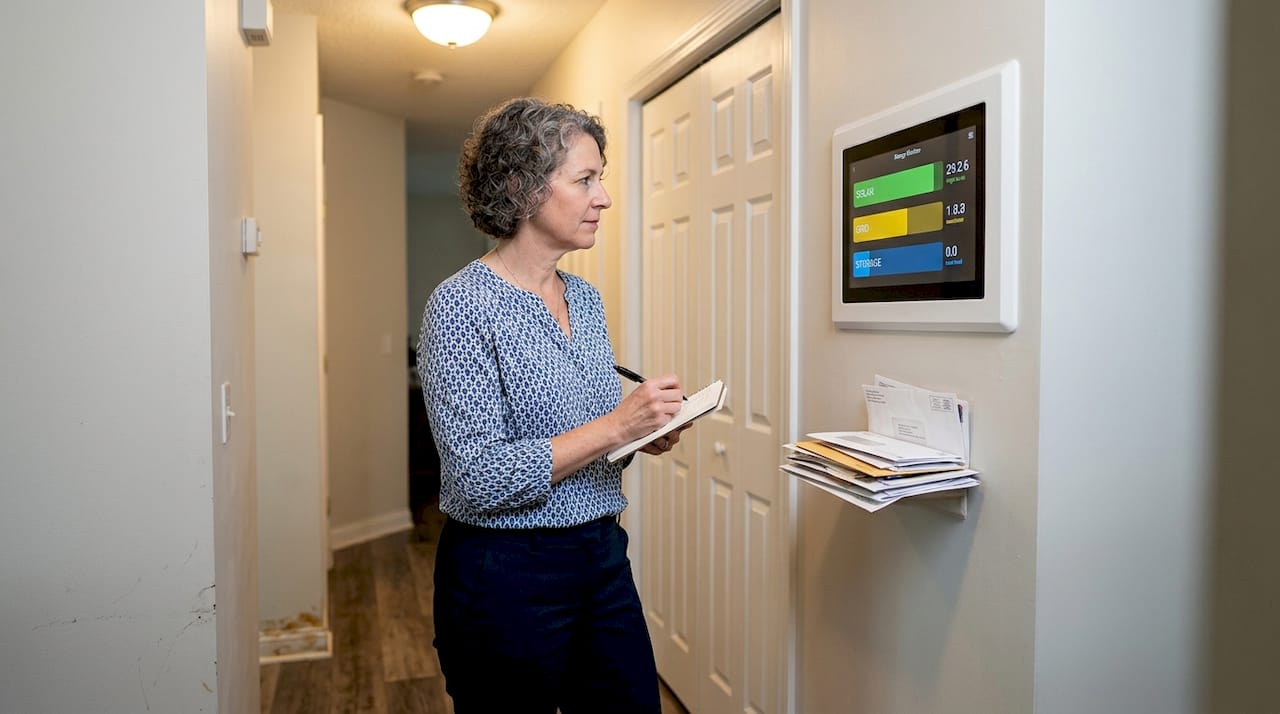
The comparison is stark. Without HEMS, a typical solar-only household self-consumes around 30% of what they generate. Add a battery and a HEMS, and self-consumption jumps to 50-70%. Add dynamic tariffs to the mix, and the savings potential climbs even further.
Setup | Self-consumption | Annual savings estimate | Payback period |
Solar only, no HEMS | ~30% | Low | 10-15 years |
Solar + HEMS, no battery | ~40-45% | Moderate | 8-12 years |
Solar + battery, no HEMS | ~45-55% | Good | 7-10 years |
Solar + battery + HEMS | ~50-70% | Best | 4-7 years |
Export limits without HEMS erode solar value significantly, especially as more grids restrict how much you can feed back. A HEMS solves this by consuming or storing surplus power before it hits export limits.
Here’s how a HEMS specifically boosts your system’s value:
Direct usage prioritization: Routes solar power to active loads first, before charging the battery or exporting
Intelligent storage charging: Fills the battery during solar surplus or cheap tariff windows
Smart export management: Avoids curtailment by shifting loads to absorb excess generation
Dynamic tariff optimization: Buys grid power only during the cheapest periods, sells during peaks
Predictive scheduling: Uses weather and usage forecasts to plan energy flows in advance
For a deeper look at how this plays out across Central Europe, the solar management in Europe overview covers regional specifics. And if you’re new to batteries, the home battery storage basics guide is a solid starting point.
Pro Tip: Dynamic tariffs can supercharge your savings, but only if your HEMS automates the load shifting. Manual management of time-of-use rates is impractical. Automation is the key.
Energy management in the European context: Trends and growth
The shift toward managed energy isn’t just happening at the household level. It’s a continent-wide movement driven by policy, economics, and the aftermath of the 2021-2022 energy crisis that pushed millions of Europeans to rethink their energy dependency.
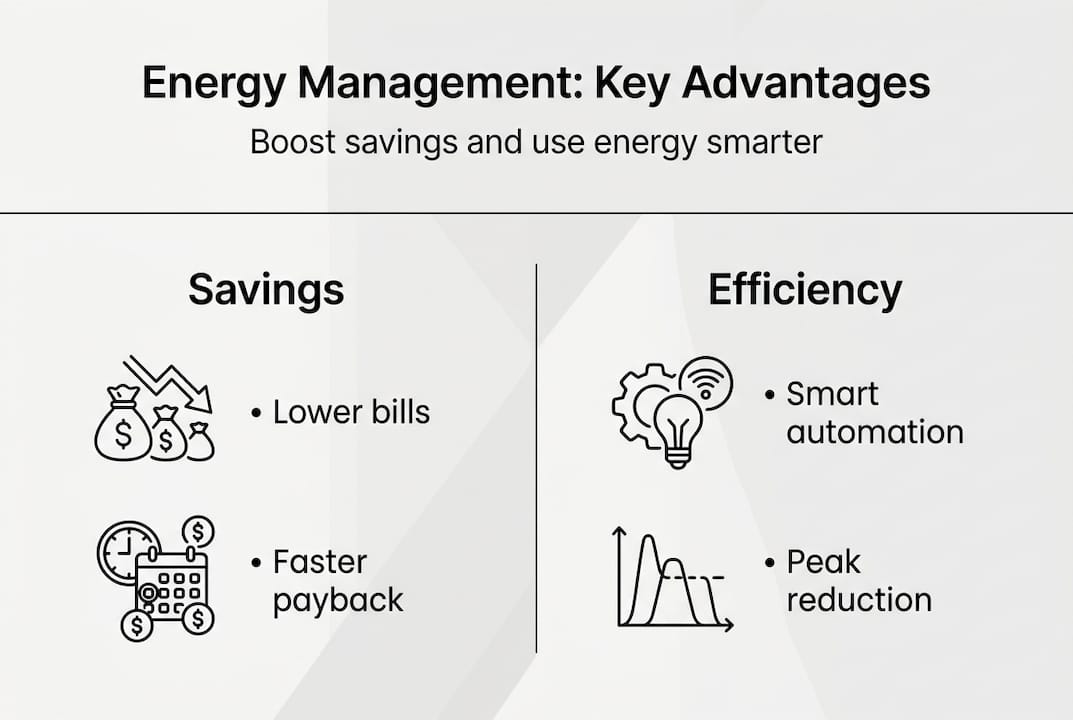
The numbers tell the story clearly. The European HEMS market is projected to grow from USD 1.89B in 2026 to USD 3.92B by 2031 at a 15.71% compound annual growth rate. That’s nearly doubling in five years, driven by smart meter rollouts, falling battery costs, and growing consumer demand for control over energy bills.
Metric | Value |
European HEMS market size (2026) | USD 1.89 billion |
Projected market size (2031) | USD 3.92 billion |
Annual growth rate (CAGR) | 15.71% |
C&I flexibility market opportunity (2030) | €8 billion |
Typical self-consumption without HEMS | ~30% |
Typical self-consumption with HEMS + battery | 50-70% |
For commercial and industrial users, the opportunity is even larger. The C&I flexibility market in Europe offers an €8B opportunity by 2030 through storage and load management. Businesses that invest in energy management now are positioning themselves ahead of competitors who will be forced to adapt later under regulatory pressure.
Key drivers accelerating adoption across Europe include smart meter mandates in most EU member states, the expansion of dynamic electricity tariffs, incentives for solar and battery installations, and a post-crisis cultural shift toward energy independence. If you’re exploring how multi-technology systems fit into this landscape, the multi-tech systems guide covers the options available in 2026.
Navigating challenges and getting started
Knowing the benefits is one thing. Taking the first step is another. The most common barriers we hear from homeowners and business operators are upfront costs, confusion about which system to choose, and fear of being locked into a single vendor’s ecosystem.
Upfront costs and a fragmented vendor landscape discourage some, but sustainability goals and post-crisis energy independence now outweigh these concerns for a growing majority. The key is approaching the decision systematically rather than reactively.
Here’s a practical starting sequence:
Audit your current usage: Understand your peak consumption times, your current tariff structure, and where your biggest costs come from
Define your priorities: Is your main goal bill reduction, backup power, EV charging, or carbon reduction? Your answer shapes the right system
Seek integrated solutions: Look for platforms that manage solar, storage, and EV charging together, not separate products bolted together
Check compatibility: Ensure any system you consider supports your existing inverter, meter, and grid connection
Compare total cost of ownership: Look beyond the purchase price to include installation, software fees, and expected savings over 10 years
Ask about open protocols: Systems built on open standards give you flexibility to upgrade or switch components later
For tailored guidance, the custom solutions for energy management resource walks through how to match a system to your specific situation. And for quick wins while you plan a larger system, the practical energy-saving tips page offers immediate actions you can take today.
Pro Tip: Choose platforms with open protocols like Modbus or OCPP. Proprietary systems may seem convenient upfront but can limit your options when you want to add new devices or switch providers down the line.
Discover your next step with Belinus
If this article has shown you anything, it’s that the difference between a good solar investment and a great one comes down to how intelligently your energy is managed. Belinus brings together solar PV, battery storage, and EV charging under one integrated Energy Management System, built specifically for homes and businesses across Europe.
Whether you’re a homeowner looking to maximize your solar returns or a business operator ready to cut demand charges and gain energy independence, Belinus solutions are designed to fit your exact situation. Our EMS runs on 15-minute dynamic tariff optimization, supports multiple battery technologies, and connects through a native mobile app so you always know what your energy is doing. Reach out to our team to get a personalized assessment and see what a well-managed energy system could mean for your bills.
Frequently asked questions
Does energy management really lower my electricity bill?
Yes. By increasing how much of your own solar power you actually use and cutting peak demand charges, smart energy management can deliver annual savings up to €2,400 for a typical household with solar and battery storage.
Is energy management only relevant for homes with solar panels?
No. Peak shaving, load shifting, and demand response benefit any household or business by reducing costs during expensive grid periods, even without solar generation on site.
What’s the typical payback period for an energy management system?
With solar and battery integration, payback drops to 4 to 7 years. Without a HEMS, export limits and missed optimization opportunities stretch that timeline considerably.
How fast is energy management adoption growing in Europe?
The European HEMS market grows at 15.71% annually, projected to nearly double from USD 1.89 billion in 2026 to USD 3.92 billion by 2031.
Recommended
Comments