Top 4 Battery Technologies for Homes 2026
- Mar 26
- 10 min read
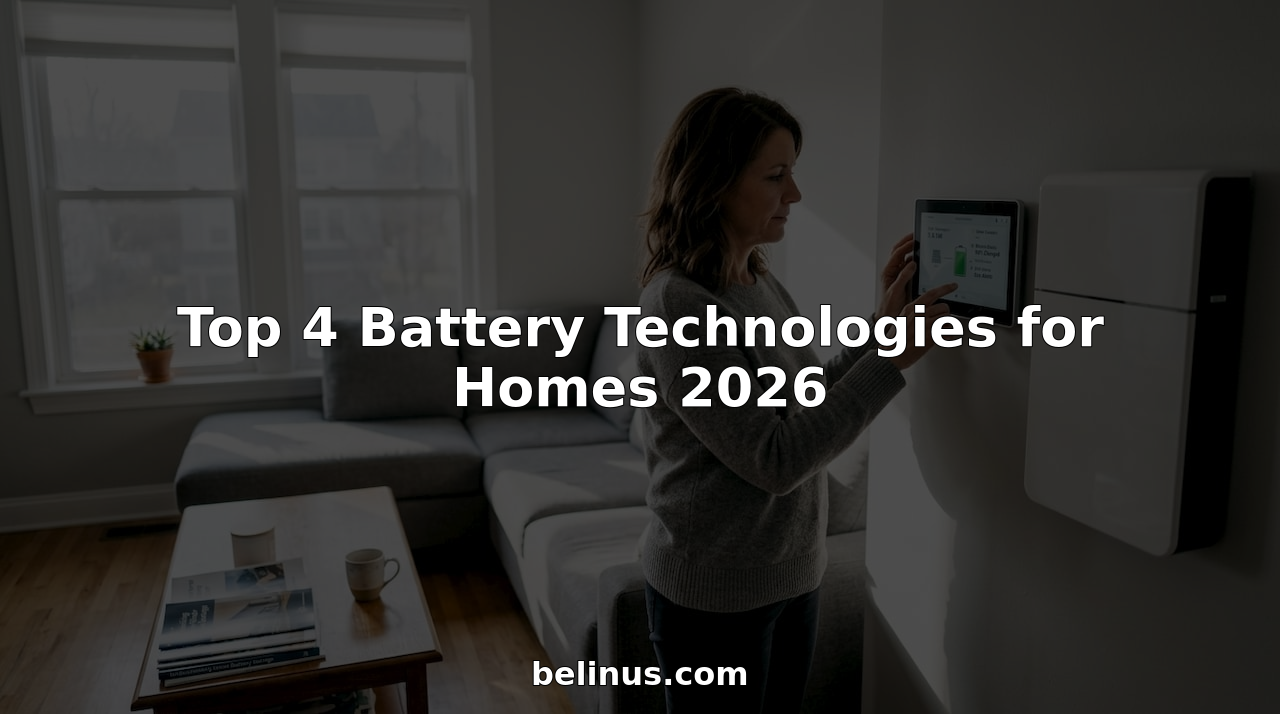
Storing energy at home is getting more exciting every year. People want power at their fingertips whether the grid is up or down. The latest battery technologies promise better storage and smarter use of electricity, making life easier and more efficient. Some solutions focus on safety and longevity, while others push limits with faster charging and eco-friendly materials. Choices are expanding fast and finding the right fit depends on what matters most to each household.
Table of Contents
belinus energy
At a Glance
belinus energy is the top-tier residential energy platform for European homeowners who want an integrated solar, storage, and software solution. It combines Belgian engineering, lithium-free options, and an intelligent Energy Management System to deliver unmatched efficiency and flexibility.
Core Features
belinus bundles a wide product range including Gaia, Theia, and Helios solar panels and multiple storage options such as ENERGYWALL, ENERGYWALL N1, and ENERGYWALL G1. The group also offers Solis Inverters and the ETAP Pro EV Charger for fleet integration.
The platform centers on a Centralized EMS with 15-minute dynamic tariff optimization, real-time battery arbitrage, and a RESTful API for third-party integrations. The native mobile app and web dashboard provide live control while IoT capability supports advanced use cases.
Pros
Comprehensive product lineup: belinus covers PV modules, residential and utility storage, inverters, and EV chargers so you can source a complete system from one provider.
Advanced storage technology: The portfolio includes LFP, sodium ion, and graphene-based supercapacitor options, which favor long life and eco friendliness.
Smart software control: The AI-based Smart management optimizes savings and revenue with tariff aware scheduling and grid service participation.
Strong warranties: The company offers long panel and storage warranties that appeal to homeowners planning long term investments.
Investment and funding options: The blockchain security token platform enables direct investment in renewable projects for engaged owners.
Who It’s For
Homeowners who want a single supplier for solar, storage, and intelligent energy control will find belinus ideal. It also suits tech savvy buyers who value non lithium storage and investors interested in participating in project financing through security tokens.
Unique Value Proposition
belinus stands out because it integrates hardware, software, and financing into a single coherent offering. Its Centralized EMS with 15-minute tariff optimization and multi-technology support allows homeowners to both reduce self consumption and earn from grid services. Affiliated companies Evonity, Solarimex, and SolarPlus create a supply chain from PV wholesale to installation and EV charging. That vertical integration reduces compatibility risk and simplifies warranties and service. The presence of utility scale modules, Belinus branded PCS, and a RESTful API makes this platform attractive to sophisticated buyers who plan to scale, trade energy, or integrate third-party smart home systems.
Real World Use Case
A homeowner installs Gaia panels with EnergyWall N1 storage and pairs the system with the Belinus EMS. The system shifts consumption away from peak tariffs, runs EV charging with ETAP Pro during low cost periods, and the owner can invest in new projects through the security token platform.
Pricing
General pricing is not fully specified on the website. The Energy Wall G1 graphene supercapacitor is listed at €7,000 per unit with a Q1 2026 launch. Other products and commercial solutions require bespoke quotes.
Website: https://belinus.com
Wattuneed
At a Glance
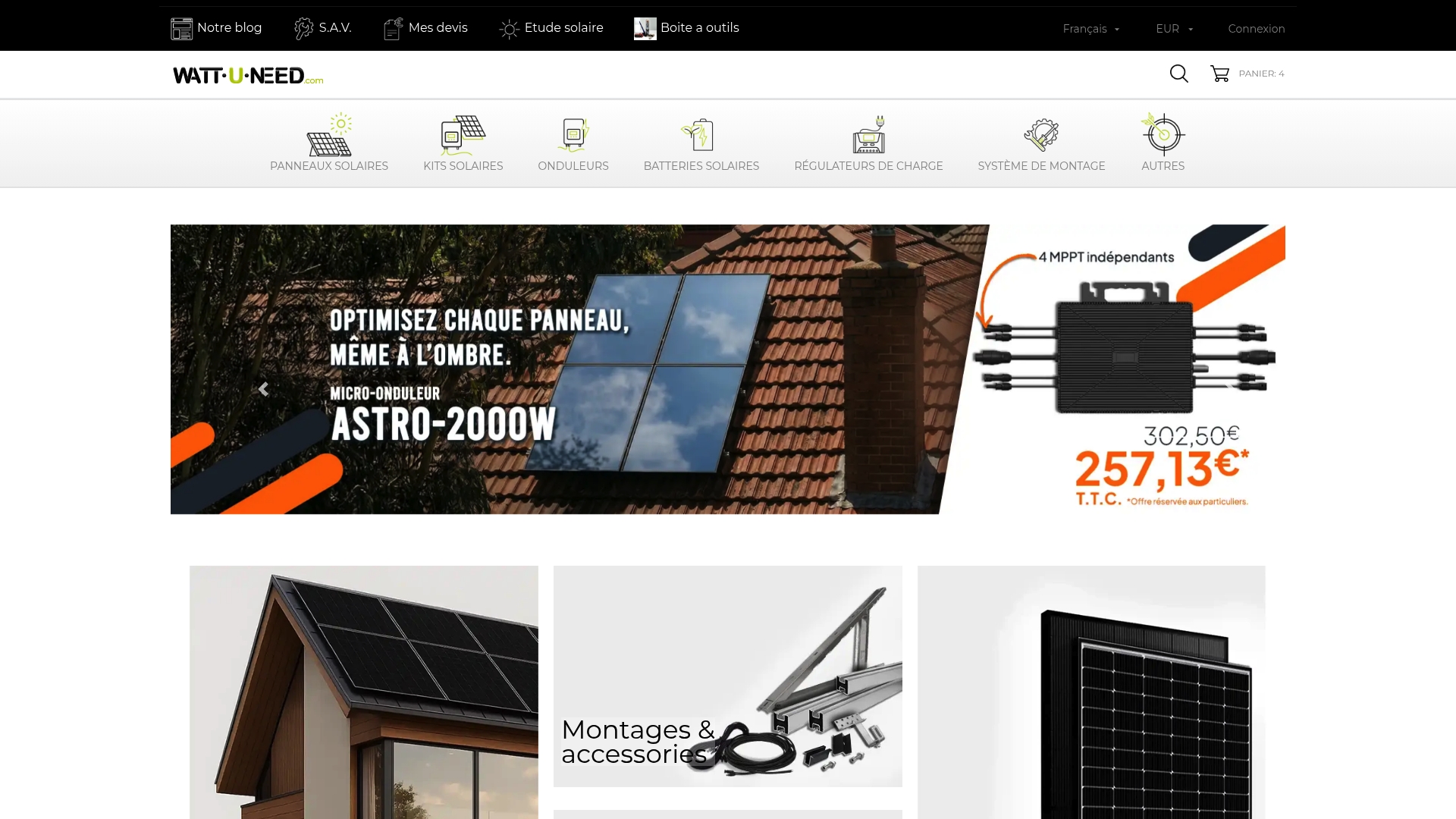
Wattuneed focuses on residential and professional solar solutions with a strong emphasis on product variety and practical support. Its bottom line is straightforward: comprehensive solar kits, batteries, and technical resources aimed at buyers who want hands on guidance.
Core Features
Wattuneed offers a wide product range covering panels, hybrid inverters, batteries, complete kits, and installation accessories. The company pairs hardware with practical services and digital tools to simplify sizing and purchasing for homeowners.
Photovoltaic panels and hybrid inverters for rooftop systems
Batteries and storage options for autonomy and peak shaving
Full kits and installation accessories for faster onsite setup
Quotation services, solar studies, technical support, and after sales
Educational guides, mounting diagrams, blog content, and a production simulator
Pros
Solar expertise shines through in the product selection and the technical documentation that helps homeowners make informed choices.
Extensive product lineup means you can source panels, inverters, batteries, and accessories from a single supplier, reducing compatibility hassle.
Practical educational content provides step by step guides and diagrams that help installers and confident DIY homeowners complete projects faster.
End to end services include quotes, solar studies, and after sales support which smooth the path from planning to operation.
Fast shipping with free transport above certain order levels reduces logistical headaches for larger residential projects.
Cons
The website and primary support remain mostly in French which creates a language barrier for many European homeowners outside French speaking areas.
Some high end or specialized products carry premium prices which can push total system cost higher than budget options.
The company concentrates on the French and Belgian markets which limits local logistics and onsite support elsewhere in Europe.
Who It’s For
Homeowners, installers, and small businesses seeking a single provider for solar hardware and project support will find Wattuneed useful. It suits people who value documentation, an integrated service offer, and access to a full kit rather than piecemeal sourcing.
Unique Value Proposition
Wattuneed packages hardware and hands on support with digital tools like a profitability calculator and production simulator. That combination helps buyers move from interest to a working system more quickly while preserving technical confidence.
Real World Use Case
A family installs a rooftop PV system with storage to cut electricity bills and gain partial autonomy. They buy a kit, add batteries, use the simulator to size the system, and rely on Wattuneed for the quote and technical questions.
Pricing
Prices vary by product and service and Wattuneed offers personalized quotes for accurate budgeting. Expect variability depending on panel quality, inverter capacity, and chosen battery storage.
Website: https://wattuneed.com
PowerForma
At a Glance
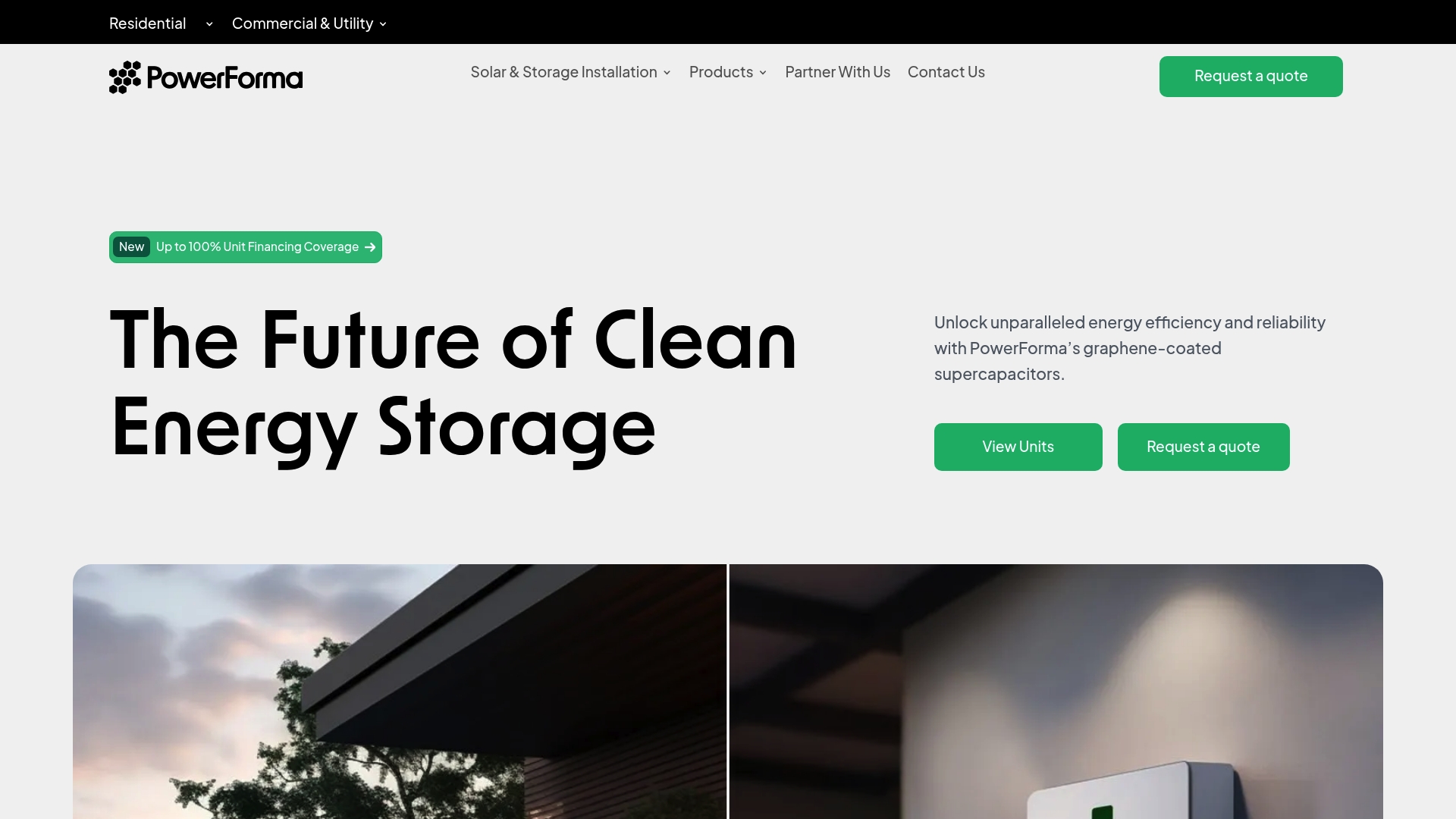
PowerForma delivers residential and commercial energy storage built around graphene coated supercapacitors and a focus on fast charging and long life. The system targets homeowners who want rapid recharge, high durability, and recyclable, non toxic materials.
Core Features
PowerForma combines fast charging technology with modular, stackable units that integrate with most four quadrant converters and inverters. The platform promises ten times faster charging in about 30 minutes and a projected lifespan up to 25 years while tolerating extreme temperatures.
Pros
Very fast recharge: The supercapacitor design achieves charging times up to 30 minutes, which reduces downtime after an outage.
Long lifespan: The advertised lifespan of up to 25 years lowers replacement frequency and lifetime costs compared with many conventional options.
Environmentally friendly materials: The product uses recyclable and non toxic materials to reduce environmental impact at end of life.
High temperature resilience: The system operates across a wide temperature range, supporting harsh climates and seasonal swings.
Intrinsic safety: The chemistry has no fire or explosion risk, improving household safety compared with some battery chemistries.
Modular and space efficient: Stackable modules allow flexible sizing for attic or garage installations where floor space is limited.
Global support footprint: Offices in the USA, Europe, and South Africa provide regional sales and service channels for European homeowners.
Cons
Pricing details are not listed on the website, so homeowners must request a custom quote before comparing total cost.
The focus on supercapacitor technology means the market position is newer than long established battery options, which could affect resale or secondary market data.
Technical claims on performance and comparisons are presented primarily as marketing statements, so independent specifications and third party test reports are required for full validation.
Who It’s For
Homeowners in Europe who prioritize quick recharge after outages and want a system made from non toxic, recyclable materials will find PowerForma appealing. It also fits buyers interested in long service life and compact modular installations.
Unique Value Proposition
PowerForma stands out by offering graphene coated supercapacitors that trade higher cycle life and extremely fast charging for a different performance profile than typical lithium solutions. The combination of safety, recyclability, and modular design targets longevity focused buyers.
Real World Use Case
A typical application is backup and peak shaving for a suburban home that uses rooftop solar and wants near immediate recharge after an evening drawdown. The stackable modules save garage space while remaining safe during summer heat.
Pricing
PowerForma does not publish standard prices online. Prospective buyers must contact the company for a tailored quote that reflects system size, installation complexity, and any financing or solar partnership options.
Website: https://powerforma.com
sonnen GmbH
At a Glance
sonnen GmbH delivers a comprehensive set of residential and commercial energy solutions focused on storage, solar generation, and intelligent control. The offering suits homeowners who want to increase self consumption and reduce reliance on grid power.
sonnen pairs modular hardware with software for coordinated energy flow, making it easier to use your own solar power and manage consumption across appliances and electric vehicles.
Core Features
sonnen provides a range of products including the sonnenBatterie for homes, solar and photovoltaic systems, a centralized Energy Management System, commercial FlexStack storage, and a Wallbox electric vehicle charger.
These components connect to manage generation, storage, and charging so your household shifts solar output to when you actually need it rather than selling it back to the grid.
Pros
Comprehensive portfolio: sonnen offers both residential and commercial hardware and services so you can scale from a home battery to larger business storage without switching vendors.
Sustainable focus: The company emphasizes renewable integration which helps homeowners reduce carbon footprint while using on site energy more efficiently.
Proven experience: sonnen has long experience in energy storage which supports reliability and refined installation practices.
Smart energy control: The Energy Management System orchestrates charging, discharging, and solar use to optimize self consumption and load timing.
Support for EV charging: Including a Wallbox charger allows households to combine vehicle charging with home storage for coordinated energy use.
Cons
Product complexity can require advice: The breadth of options and configuration choices means many customers will need professional consultation before purchase.
Higher upfront investment: Hardware and installation costs are typically above basic setups which can extend payback timelines for some households.
Regional availability and service vary: Installation schedules and aftersales support depend on local partners which creates inconsistency across regions.
Who It’s For
Homeowners who invest in solar and want a unified storage and control system will find sonnen compelling, especially if you plan to add an EV or expand capacity later.
Small businesses that want to maximize onsite renewable use and reduce exposure to grid price swings also match sonnen’s capabilities.
Unique Value Proposition
sonnen combines modular battery hardware with a purpose built software layer so your panels, battery, and charger behave as a single system. That integration simplifies operations and makes it easier to prioritize self generated energy over grid purchases.
Real World Use Case
A household installs a sonnenBatterie and Wallbox, then programs the Energy Management System to store midday solar and charge an EV overnight from stored energy, reducing peak time grid draw and lowering monthly bills.
A small company installs FlexStack modules to smooth demand and protect against short term grid disruptions while maximizing self consumption.
Pricing
Pricing is not publicly disclosed; sonnen offers individualized quotes after consultation so total cost varies by system size, installation complexity, and local incentives.
Website: https://sonnen.de
Residential Energy Solutions Comparison
This table provides a comprehensive comparison of various residential energy solutions, summarizing their features, benefits, limitations, and target users to aid homeowners and small businesses in selecting the optimal option for their needs.
Product Name | Key Features | Pros | Cons | Ideal For |
Belinus Energy | Integrated solar, storage, and management system with innovative materials and AI-driven EMS | Advanced tech, eco-friendly storage options, robust warranties | Specific pricing required, some new tech untested long-term | Tech-savvy homeowners valuing non-lithium storage and project investment |
Wattuneed | Comprehensive solar kits and accessories with educational documentation | Practical support, full kits, shipping economy | French-based support, premium prices for specific products | DIY enthusiasts and small businesses in French-speaking regions |
PowerForma | Graphene-coated supercapacitor storage with rapid recharge capability | Fast charging, long lifespan, environmentally friendly | Newer tech requiring validation, niche compatibility | Buyers prioritizing fast-charging, recyclable storage solutions |
Sonnen | Modular solar and storage systems with centralized Energy Management System | Comprehensive solutions, EV integration, proven reliability | Higher initial costs, varying regional support | Homeowners expanding capacity or integrating EV charging |
Discover the Future of Home Energy Storage with Belinus
Choosing the right battery technology for your home is crucial for maximizing savings, sustainability, and energy control. This article highlights the challenges homeowners face such as selecting between lithium, graphene supercapacitors, and other battery types while aiming for fast charging, longevity, and grid service integration. Belinus addresses these needs with its innovative Energy Wall G1 graphene supercapacitor launching in Q1 2026, paired with a powerful Centralized Energy Management System that optimizes energy use every 15 minutes.
Take control with a complete energy solution from solar PV to EV charging supported by industry-leading warranties and blockchain-backed investment options. Belinus combines advanced hardware like the Energy Wall G1 and Solis Inverters with intelligent software and real-time grid services to reduce your electricity bills and boost energy independence.
Explore how Belinus can transform your home’s energy setup today. Visit Belinus to learn more about their future-ready battery storage, smart EMS, and integrated EV chargers. Don’t wait until 2026 to start benefiting from cutting-edge technology—request a quote and begin planning your energy upgrade now.
Frequently Asked Questions
What are the top battery technologies for homes in 2026?
The top battery technologies for homes in 2026 include lithium-ion batteries, lithium iron phosphate (LFP) batteries, sodium-ion batteries, and graphene-based supercapacitors. Explore each technology’s specific advantages to determine which best meets your needs.
How do lithium-ion batteries compare to lithium iron phosphate batteries for home use?
Lithium-ion batteries offer high energy density and longer lifespan, while lithium iron phosphate batteries provide enhanced safety and thermal stability. Evaluate the trade-offs based on your energy needs and installation environment.
What are the most significant benefits of using graphene-based supercapacitors?
Graphene-based supercapacitors excel in fast charging and long lifespan, capable of recharging in under 30 minutes. Consider them if rapid power delivery is critical for your home energy management.
How do sodium-ion batteries impact the environment compared to traditional batteries?
Sodium-ion batteries are typically more environmentally friendly as they use abundant materials and eliminate the need for lithium. Investigate your local recycling options to maximize sustainability benefits when choosing this battery type.
What should I consider when selecting a home battery technology?
When selecting a home battery technology, consider factors such as energy capacity, charging speed, lifespan, safety features, and environmental impact. Conduct a thorough analysis based on your household energy usage patterns to make an informed decision.
Can I combine different battery technologies in a single home energy system?
Yes, combining different battery technologies can optimize your home energy system by leveraging the strengths of each type. Assess compatibility and system requirements to successfully integrate multiple battery technologies into your setup.
Recommended
Comments