Custom Energy Solutions Explained: Lowering Costs, Reducing Emissions
- Feb 25
- 14 min read
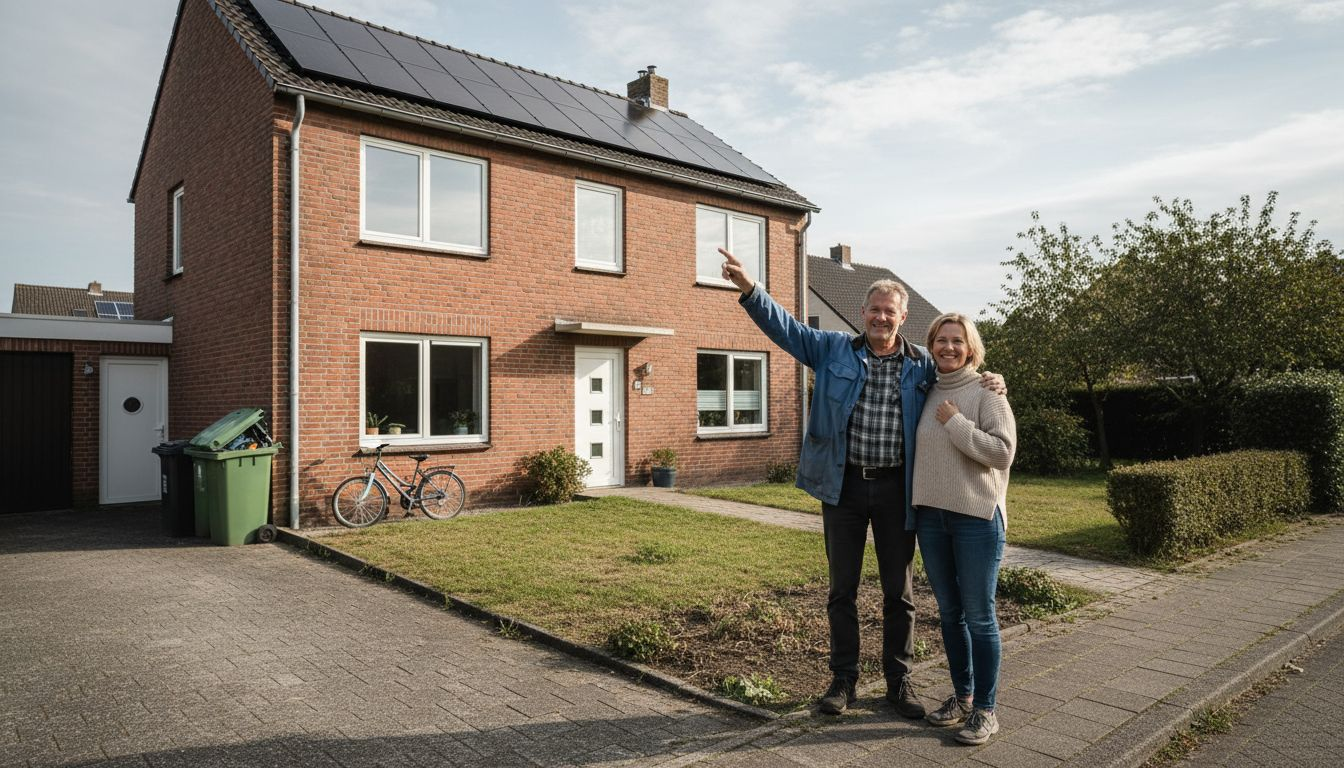
Trying to improve your home’s energy efficiency in Central Europe can feel like solving a puzzle with missing pieces. With so many buildings in the region needing significant upgrades, choosing the right mix of solar, storage, and electric vehicle integration is more important than ever. By exploring how a custom energy solution fits your unique space, you can reduce household costs while shrinking your environmental footprint at the same time.
Table of Contents
Key Takeaways
Point | Details |
Custom Energy Solutions Are Tailored | These solutions consider individual home energy profiles, local resources, and financial goals to maximize efficiency and savings. |
Integration of Technologies Is Crucial | Successful custom setups combine solar generation, battery storage, heat pumps, and smart management systems for optimal performance. |
Local Factors Influence Design and Compliance | Each region in Central Europe has specific energy needs and regulatory requirements that must be addressed in the planning stages. |
Long-Term Financial and Environmental Benefits | Homeowners can expect significant savings on energy bills and reduced carbon footprints over time, often justifying the initial investment. |
Defining Custom Energy Solutions for Homes
A custom energy solution is a tailored combination of renewable energy generation, storage, and management technology designed specifically for your home’s unique needs. Rather than a one-size-fits-all approach, these solutions account for your location, energy consumption patterns, budget, and long-term goals.
In Central Europe, where buildings often struggle with energy efficiency, custom solutions become even more valuable. Decarbonizing heating and cooling is essential for meeting EU climate objectives, and residential homes can lead this transition through targeted renewable integration.
What Makes a Solution “Custom”?
Custom energy solutions go beyond installing standard equipment. They’re built around:
Your home’s specific energy profile and consumption patterns
Available renewable resources (solar potential, heat pump viability)
Integration with existing systems and future plans
Your financial capacity and return-on-investment timeline
Local grid conditions and energy tariffs
Instead of guessing what you need, a genuine custom solution starts with data about your actual usage, roof orientation, shading, and climate zone.
A custom energy solution isn’t just solar panels or a heat pump—it’s these components working together through intelligent management to maximize savings and minimize emissions.
The Core Components
Most residential custom energy solutions combine several technologies:
Renewable generation – Solar panels capturing your local sunlight
Energy storage – Battery systems that hold excess power for nighttime use or grid services
Smart management – An intelligent system optimizing when and how you use stored energy
EV integration – If you own an electric vehicle, charging coordinated with your solar production
Heat systems – Modern heat pumps replacing fossil fuel heating
Each component matters, but their coordination creates the real value. A solar panel without storage captures sunlight but can’t use it at night. Storage without smart management wastes potential savings. Integration across all systems is where custom solutions shine.
Why Central Europe Needs Custom Solutions
About 75% of buildings in this region need energy upgrades, making customization critical. Generic solutions often miss the mark because Central European homes have distinct characteristics: older construction requiring specific heating approaches, varying climate zones across the region, and unique grid dynamics in each country.
Custom solutions address this by considering your building’s actual envelope, local weather patterns, and regional energy pricing. This tailored approach cuts energy bills while reducing dependency on imported fuels—a key concern across the region.
How Custom Solutions Lower Costs
Your savings come from multiple angles:
Reduced consumption through efficiency improvements and smart management
Lower peak-hour charges by shifting usage to cheaper time periods
Self-generated electricity instead of buying from the grid
Battery arbitrage – storing cheap power and using it when prices spike
Grid services revenue – your battery can provide services back to the grid
These benefits compound when all components work together. Solar energy consumption optimization becomes far more effective when paired with storage and intelligent scheduling.
Emissions Reduction Reality
Every kilowatt hour you generate from renewables replaces fossil fuel electricity. Every heating season using a heat pump instead of gas eliminates direct emissions. Over 25 years, a properly designed custom solution can offset hundreds of tons of CO2—equivalent to taking a car off the road for decades.
The measurement is straightforward: compare your new renewable-powered usage against your previous fossil fuel baseline. Most custom solutions in Central Europe achieve 60-80% emissions reductions within five years.
Pro tip: Before discussing solutions with an installer, gather three months of your actual energy bills and identify when you use the most electricity—this data is invaluable for designing a system that truly fits your home.
Types of Systems and Technology Integrations
Custom energy solutions combine multiple technologies working together. The most common setup pairs solar generation with battery storage, but real-world systems often include heat pumps, EV charging, and smart controls. Understanding each type helps you see how they create synergy.
Decentralized energy generation and consumption is central to European home energy systems, allowing your home to become largely self-sufficient while still connecting to the grid when needed.
Solar Photovoltaic Systems
Solar panels convert sunlight directly into electricity. In Central Europe, modern panels generate usable power even on cloudy days, though output peaks during summer months.
Key aspects of residential solar:
System size ranges from 3-15 kW for typical homes
Roof orientation matters—south-facing roofs capture the most energy
Shading analysis determines realistic production (trees, chimneys, neighboring buildings)
Inverter quality converts DC power to usable AC electricity
Performance monitoring tracks real-time generation and system health
Solar works best when paired with storage, since generation peaks midday but most households use electricity in morning and evening hours.
Here’s a comparison of major technologies commonly integrated into custom home energy solutions:
Component | Main Benefit | Typical Sizing | Added Value |
Solar Photovoltaics | Lowers grid dependence | 3-15 kW per home | Reduces annual bills |
Battery Storage | Energy use flexibility | 8-16 kWh capacity | Enables bill optimization |
Heat Pump System | Efficient heating/cooling | Matched to heat load | Cuts heating emissions |
EV Charging Integration | Smart vehicle charging | 7-22 kW charger | Maximizes solar self-use |
Energy Management System | Real-time coordination | Digital/software | Enhances overall savings |
Battery Storage Systems
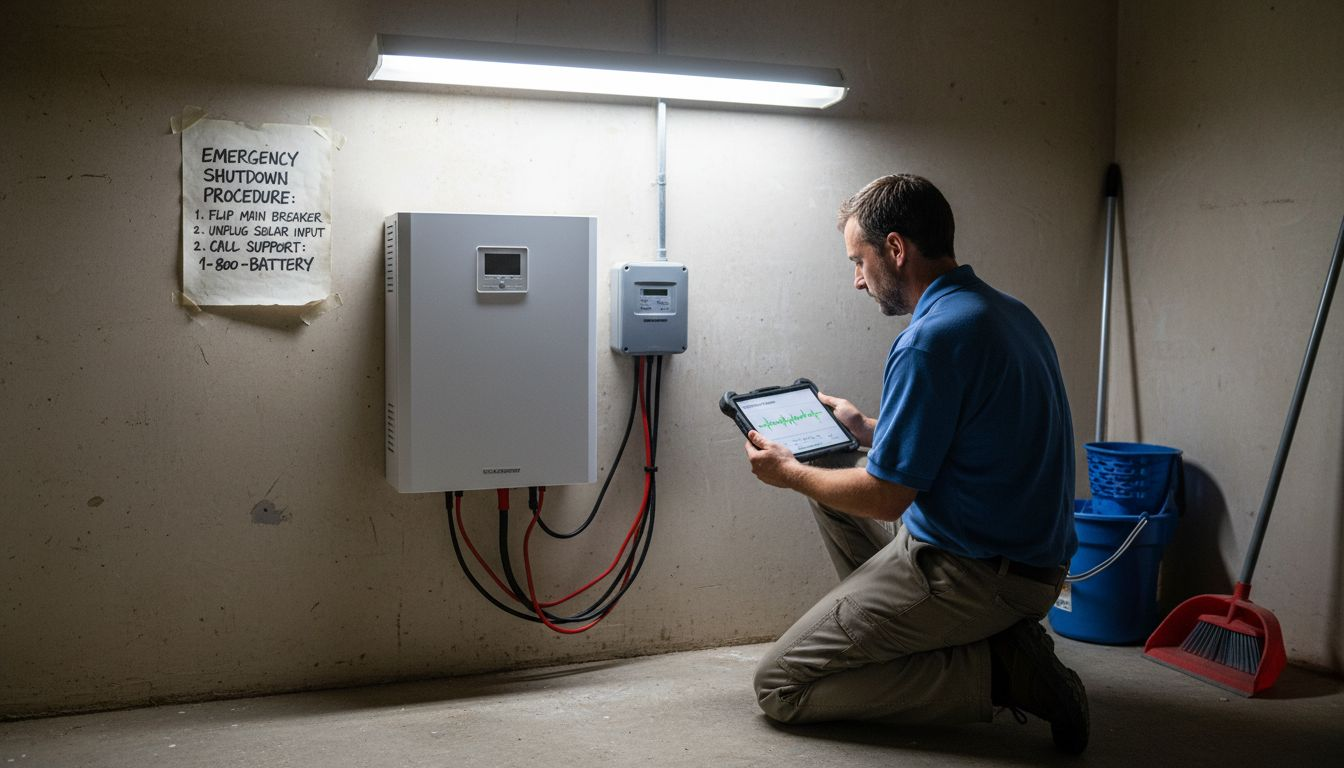
Batteries store excess solar energy for later use. Modern residential batteries typically range from 8-16 kWh, enough to cover evening loads or provide backup during grid issues.
There are different battery chemistries available. Lithium iron phosphate (LFP) technology is industry standard, offering safety, longevity, and consistent performance. Some advanced systems use graphene supercapacitors for rapid response and durability.
Battery storage transforms solar from a daytime-only resource into 24/7 protection against rising energy costs and grid disruptions.
Heat Pumps for Heating
Heat pumps replace gas boilers by extracting warmth from outdoor air or ground. They’re highly efficient even in cold Central European winters, providing heating and hot water year-round.
Integrating heat pumps with custom energy solutions means:
Running heat pumps when solar generation is highest
Reducing heating costs by 60-70% compared to gas
Eliminating heating-related emissions from your home
Coordinating with storage to handle peak heating demand
EV Charging Integration
If you own an electric vehicle, intelligent charging coordination multiplies your savings. Rather than charging whenever you plug in, smart systems charge when solar is generating or electricity prices are lowest.
Why integrating PV and storage becomes essential is clear when you consider that EV charging can consume 8-15 kWh daily—roughly matching your solar production capacity.
Smartly timed charging reduces your grid electricity purchases and maximizes renewable self-consumption.
Smart Energy Management Systems
The technology that ties everything together is a centralized energy management system (EMS). This brain of your system constantly monitors energy prices, solar output, battery state, heating demand, and vehicle charge status.
The EMS makes real-time decisions like:
Charging your EV when solar generation peaks
Shifting heating loads to periods of high solar production
Storing battery energy during cheap-rate hours
Providing grid services for additional revenue
Without this intelligent coordination, you’re just collecting expensive equipment.
Pro tip: Ask installers about their energy management interface—you should be able to see real-time data on your phone showing exactly when solar is generating, how much battery is stored, and what your home is actually consuming.
How Smart Energy Management Systems Work
A smart energy management system (EMS) is the operating system of your home’s energy setup. It constantly observes what’s happening—how much solar you’re generating, battery charge levels, electricity prices, heating demand—and automatically optimizes everything to save you money and reduce emissions.
Think of it as an invisible operator making thousands of tiny decisions daily. Monitoring, controlling, and optimizing energy consumption in real time through sensors and automation is exactly how modern energy management systems function.
The Data Collection Layer
Your EMS starts by gathering information from every component. Smart meters track grid consumption, solar inverters report generation minute-by-minute, battery systems share charge status, and thermostats report heating demand.
This data flows continuously:
Solar inverters transmit generation data every 15 minutes or less
Battery management systems update charge level in real time
Smart meters record consumption and grid pricing signals
Weather forecasts predict tomorrow’s solar potential
Utility pricing data arrives showing peak and off-peak rates
Without complete data, the system can’t make smart decisions. The more sensors connected, the better the optimization.
Real-Time Decision Making
The EMS analyzes incoming data and decides instantly how to route energy. When solar is generating strongly at midday, it might charge your battery and shift your EV charging to start immediately rather than tonight.
When evening arrives and solar stops, the system deploys stored battery energy for household loads. If electricity prices spike, it might temporarily reduce heating demand or delay dishwasher operation to cheaper hours.
Smart energy management turns your home from a passive consumer buying whatever electricity the grid offers into an active participant controlling costs through informed timing.
Dynamic Tariff Response
Many European electricity providers offer variable pricing that changes hourly or every 15 minutes. Your EMS automatically responds to these price signals without requiring your input.
When prices drop during off-peak hours:
Schedule EV charging to begin immediately
Shift heating loads to benefit from cheaper electricity
Run energy-intensive appliances ahead of schedule
Store excess solar energy in batteries for later use
When prices spike:
Discharge batteries to supply home loads
Defer non-essential loads until prices fall
Prioritize renewable energy generation over grid purchases
This coordination alone typically reduces energy bills by 15-30% for Central European homeowners.
Integration With Grid Services
Advanced EMS installations can participate in grid support programs. Your battery provides frequency stability or reserve capacity when the grid needs it, generating additional revenue while supporting the transition to renewable energy.
Home and Building Energy Management Systems are transforming passive consumers into active market participants. This means your system isn’t just saving your household money—it’s strengthening European grid stability.
User Interface and Transparency
You access your EMS through a mobile app or web dashboard. Real-time displays show current solar generation, battery charge percentage, household consumption, and projected costs for the day.
Historical data reveals patterns:
When your home uses most energy
How weather affects solar production
What times prices are typically lowest
Which appliances consume the most electricity
This visibility helps you understand your energy behavior and make informed decisions about usage timing.
Pro tip: Set your EMS notifications to alert you when solar generation peaks—this visual feedback helps you shift manual loads like laundry or dishwashing to maximize renewable self-consumption.
Financial and Environmental Impacts for Homeowners
Custom energy solutions deliver dual benefits: they save you money while reducing your carbon footprint. For Central European homeowners, this combination addresses both household budgets and climate responsibility.
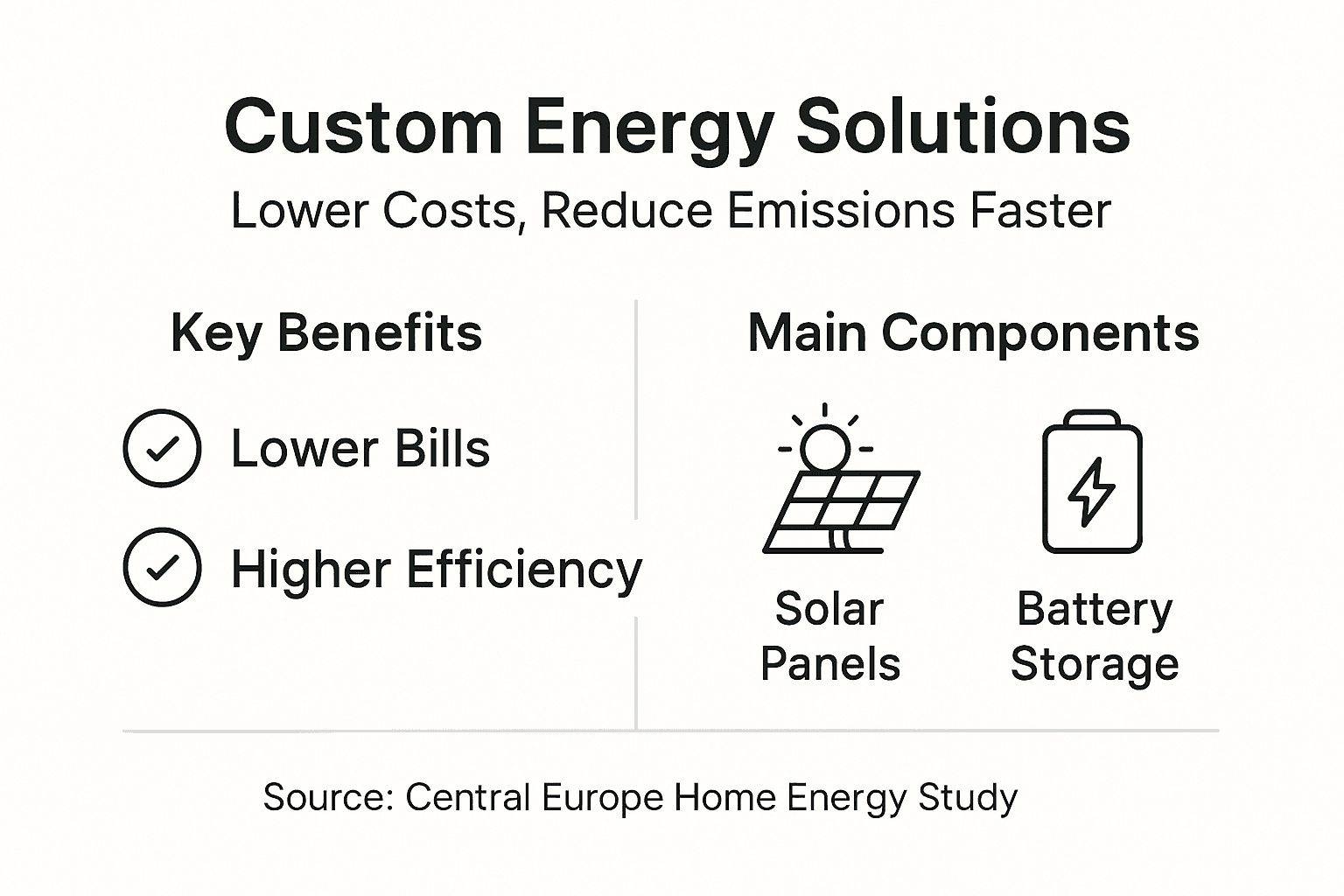
The financial story is compelling. Renewable energy integration significantly reduces greenhouse gas emissions and lowers costs through energy savings over the lifetime of your system. Most installations pay for themselves within 8-12 years through reduced electricity bills alone.
Cost Savings Timeline
Your savings accumulate in distinct phases. Year one typically brings 20-30% reductions in energy bills as solar generation and smart management kick in.
Cost savings break down as:
Reduced grid purchases – Solar generates electricity instead of buying from the grid
Peak-hour avoidance – Smart systems shift loads to cheaper time periods
Battery arbitrage – Storing cheap electricity and using it during expensive hours
Heat pump efficiency – Replacing gas heating with electric heat pumps reduces heating costs by 60-70%
EV charging optimization – Coordinating vehicle charging with solar peaks and low-rate windows
After 15 years, typical savings exceed 15,000–25,000 EUR compared to continuing with traditional energy sources.
Below is a summary of financial and environmental impacts for a typical custom energy setup:
Impact Area | Typical Value (10 kW system) | Key Outcome |
Payback Period | 8-12 years | Investment recovered |
25-Year Savings | €15,000–€25,000 | Significant net cash saved |
Yearly CO2 Reduction | 3.6–4.8 tons | Major emissions decrease |
Property Value Gain | 3–5% increase | Higher home resale value |
Environmental Impact Calculations
Measuring emissions reduction is straightforward. Each kilowatt hour of solar electricity replaces fossil fuel generation, avoiding roughly 0.4 kg of CO2 emissions in Central Europe.
For a typical 10 kW residential system:
Annual solar generation: 9,000–12,000 kWh
Annual CO2 avoided: 3.6–4.8 tons
25-year total: 90–120 tons of CO2 not released to the atmosphere
This equals removing a gasoline-powered car from the road for 15–25 years.
Every custom energy solution transforms your home from a net consumer of fossil fuels into a carbon-neutral generator of clean electricity.
Return on Investment Reality
Investment varies by system size and configuration. A typical 10 kW solar plus 16 kWh battery setup costs 18,000–28,000 EUR in Central Europe.
Using conservative savings estimates:
Year 1-4 – Payback phase, annual savings offset initial costs
Year 5-8 – Accelerating returns as equipment proves reliable
Year 9-25 – Pure profit from near-zero operating costs
Heat pump integration shortens payback timelines significantly since heating represents 40-50% of typical household energy consumption.
Government Incentives and Financing
Most Central European countries offer financial support for residential renewable installations. Residential storage impact on energy independence becomes even more valuable when combined with available subsidies and favorable financing terms.
Available support includes:
Direct subsidies covering 20-40% of system costs
Tax credits for renewable energy installations
Reduced VAT rates on solar and battery equipment
Low-interest financing programs for residential systems
Feed-in tariffs paying you for excess generation
These incentives reduce effective system costs by 30-50%, dramatically improving payback timelines.
Long-Term Value Beyond Cost Savings
Financial benefits extend beyond electricity savings. Property values increase when homes feature installed renewable energy systems—typically 3-5% premium at resale.
Additional benefits include:
Energy independence from volatile electricity prices
Protection against future rate increases
Backup power during grid outages
Eligibility for premium insurance rates
Contributing to EU climate neutrality targets
Pro tip: Before committing to any system, collect 12 months of actual energy bills showing monthly consumption and costs—this precise baseline data helps calculate realistic payback timelines and verify savings after installation.
Common Pitfalls in System Design and Compliance
Many custom energy projects fail not because of technology but because of poor planning and regulatory oversights. Understanding common mistakes helps you avoid costly delays and compliance penalties.
The regulatory environment matters more than you might think. Complex EU energy compliance involves diverse regulations on efficiency, decarbonization, and workforce requirements that vary by country. Non-compliance risks penalties, project delays, and system disconnection from the grid.
Design Without Consumption Data
The most common pitfall starts before installation even begins. Many homeowners size systems based on guesses about energy use rather than actual consumption patterns from utility bills.
This leads to:
Oversized systems that waste money on unnecessary capacity
Undersized systems that fail to meet real household needs
Mismatched battery storage relative to actual usage patterns
Poor solar orientation due to incomplete roof analysis
Inadequate space for future EV charging or heat pump integration
Proper design requires 12 months of consumption data, detailed roof surveys, and consideration of future household changes like vehicle purchases or home expansion.
Ignoring Local Grid Connection Requirements
Each Central European country and regional utility enforces different grid connection standards. Installing a system without confirming local requirements creates serious problems.
Common grid connection oversights include:
Failing to notify utilities before installation begins
Installing inverters that don’t meet national grid codes
Exceeding maximum export limits set by your utility
Lack of proper metering for bidirectional power flow
Missing anti-islanding protection required by regulations
These issues prevent system activation and require expensive retrofits.
Compliance begins before your first panel goes on the roof—not after. Contact your utility and local authorities before design work starts.
Undersizing Battery Storage
Many installations pair large solar arrays with inadequate battery capacity. This creates a system that generates excess power but cannot use or store it effectively.
Battery undersizing results in:
Wasted solar generation during midday peak production
Continued high evening grid consumption despite daytime solar
Poor return on investment since stored energy is underutilized
Inability to shift loads to cheap-rate windows
Limited backup capability during grid outages
Proper battery sizing should match 4-6 hours of peak household consumption, not arbitrary capacity figures.
Poor Installer Selection
Choosing installers based solely on lowest price creates systemic problems. Inexperienced installers miss compliance requirements, design systems poorly, and provide inadequate support.
Evaluate installer credentials:
Certified training in your country’s electrical codes
Experience with heat pump integration, not just solar
Familiarity with your regional utility connection procedures
Proven track record with energy management system integration
References from recent residential installations
Warranty support for 5+ years after installation
Quality installation costs 10-15% more upfront but saves thousands in future repairs and optimization.
Neglecting Energy Management Integration
Some systems install solar and batteries without implementing smart energy management. This leaves thousands of euros in potential savings on the table.
Without proper EMS integration, you miss:
Dynamic tariff response capabilities
Heat pump scheduling optimization
EV charging coordination with solar peaks
Battery arbitrage during price fluctuations
Grid service revenue opportunities
Compliance Documentation Gaps
Proper permits and certifications must be obtained and maintained. Skipping paperwork creates problems at sale time or when claiming incentives.
Required documentation typically includes:
Building permits from local authorities
Electrical installation certificates
Grid connection approval from utilities
Performance test reports confirming system operation
Insurance policy updates reflecting system changes
Warranty registration with manufacturers
Pro tip: Request a compliance checklist from your installer before work begins—this document should itemize every permit, certification, and test required in your jurisdiction, with timelines and responsible parties clearly identified.
Unlock the Power of Custom Energy Solutions for Your Home
If you are searching for a way to lower energy costs while reducing emissions through truly personalized technology, you are not alone. The article highlights key challenges like matching solar generation with your home’s real consumption, sizing battery storage properly, and integrating your heat pump and EV charging with smart management. These are common pain points for homeowners in Central Europe aiming to maximize savings and environmental impact through a custom approach.
At Belinus, we specialize in addressing exactly these issues by offering complete residential solutions that combine high-performance solar PV, advanced battery storage like our 16 kWh graphene Energy Wall G1, and intelligent Energy Management Systems that optimize your energy in real time. With our Energy Wall G1 and Solis Inverters, you get modular, scalable technology designed to synchronize solar production, storage, heating, and EV charging seamlessly. Plus, our centralized EMS continuously shifts usage to cheaper time periods while supporting grid services, multiplying your financial and emissions benefits.
Take control of your home’s energy future now by partnering with Belinus. Visit Belinus today to explore custom designs that fit your unique energy profile and start saving on energy costs while lowering your carbon footprint. Don’t settle for generic solutions when you can have smart, integrated technology tailored for maximum impact on your energy bills and the environment.
Frequently Asked Questions
What are custom energy solutions?
Custom energy solutions are tailored combinations of renewable energy generation, storage, and management technologies designed specifically for a home’s unique energy needs, factoring in consumption patterns, available resources, and financial capabilities.
How do custom energy solutions reduce costs?
Custom energy solutions lower costs through reduced energy consumption, optimizing energy usage timing, self-generated electricity, and utilizing energy storage for peak demand periods, leading to substantial savings on energy bills.
What components are typically included in a custom energy solution?
Typical components include solar panels for renewable generation, battery storage for energy flexibility, heat pumps for efficient heating and cooling, EV charging integrations, and smart energy management systems for optimal coordination and savings.
How do smart energy management systems enhance custom energy solutions?
Smart energy management systems enhance custom solutions by continuously monitoring energy consumption, solar generation, and grid prices to make real-time decisions that optimize energy loads, balance storage, and maximize savings.
Recommended
Comments