Energy Wall Technology Explained: Smarter Home Energy Integration
- Apr 24
- 8 min read
TL;DR:
Europe’s residential battery storage market grew 72% in 2025, with systems becoming more intelligent and modular.
Energy wall technology features wall-mounted lithium batteries, hybrid inverters, and smart energy management systems.
Proper integration, software optimization, and future-proof sizing are key to maximizing savings and system lifespan.
Europe’s residential battery storage market grew 72% to 10.1 GWh in 2025, yet most homeowners still struggle to explain what an energy wall system actually does. The term gets thrown around by installers, manufacturers, and real estate developers alike, often without a clear definition. If you’re investing in solar PV or EV charging, understanding how this technology works isn’t optional. It’s the difference between a system that pays for itself and one that underperforms for years. This guide covers the mechanics, integration options, financial returns, and practical trade-offs so you can make an informed decision.
Table of Contents
Key Takeaways
Point | Details |
Smart integration | Energy wall systems combine batteries, solar, and EV charging for maximum home energy savings and flexibility. |
Modular and expandable | Most systems can be easily expanded to match growing energy needs or future upgrades. |
High safety, trusted brands | Current models use safe LFP batteries or fireproof supercapacitors, with reliable warranties up to 10 years. |
Real financial return | With the right home usage, most systems pay for themselves in under 9 years. |
What is energy wall technology?
With the rapid expansion of battery storage, it’s vital to define exactly what sets energy wall technology apart from older, bulkier storage solutions.
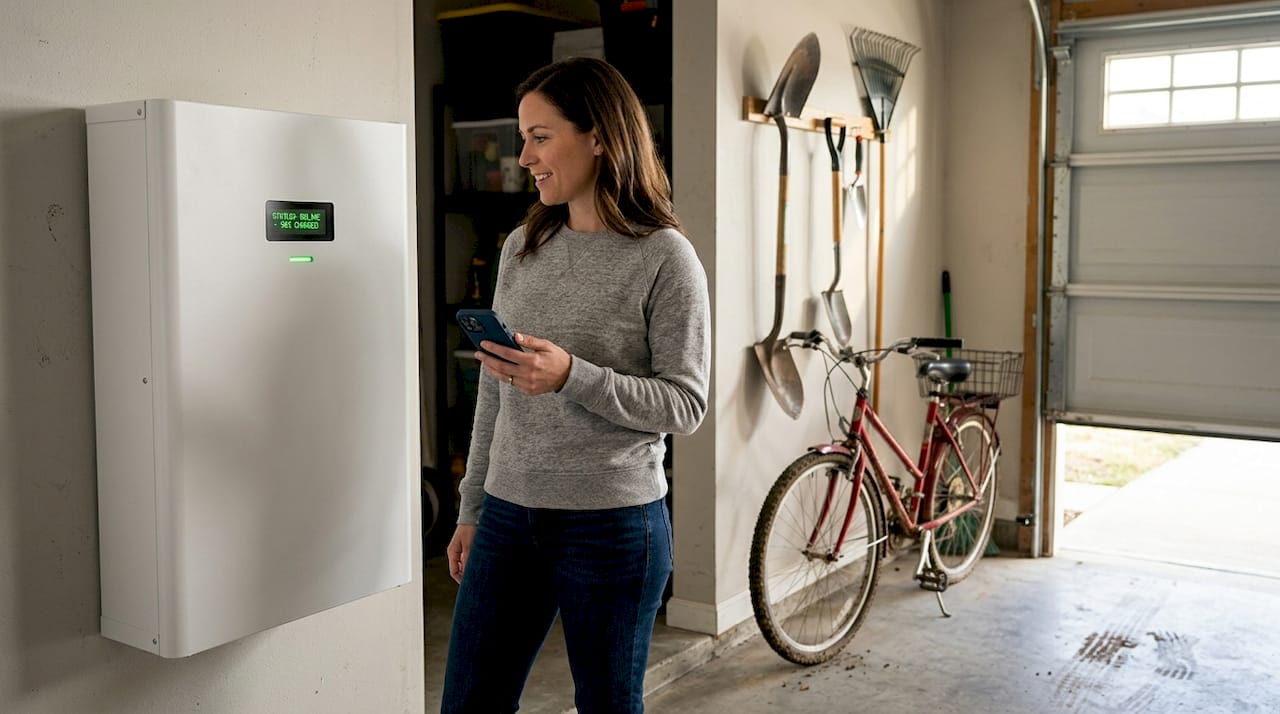
Energy wall technology refers to wall-mounted, modular lithium-based home battery systems designed for integration with solar PV, the grid, and EV charging. That definition matters because it separates these systems from the floor-standing cabinets or basic lead-acid backup units of the past. The wall-mount format keeps installation tidy and accessible, while the modular design means you can scale capacity as your needs grow.
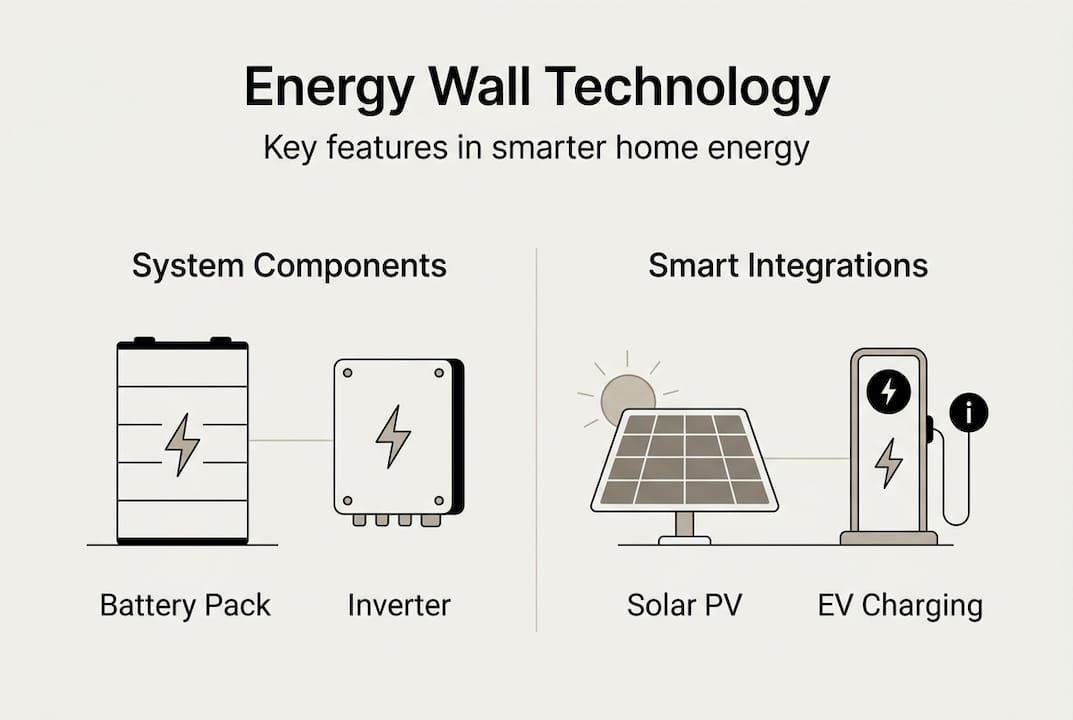
Most systems use lithium iron phosphate (LFP) or nickel cobalt aluminum (NCA) cells, though graphene supercapacitor variants are now entering the residential market. Capacity typically ranges from 9 to 40 kWh, and the best systems pair the battery with a hybrid inverter and an intelligent energy management system (EMS). The EMS is what separates a smart energy wall from a simple backup battery. It monitors solar output, grid pricing, household load, and even weather forecasts to make real-time charging and discharging decisions.
Here’s how leading residential systems compare at a glance:
Feature | EWALL Home | VARTA.wall |
Chemistry | Graphene supercapacitor | LFP lithium |
Capacity range | 16 kWh (modular) | 6.5 to 13 kWh |
Cycle life | 500,000+ cycles | 4,500 to 7,000 cycles |
EMS integration | Yes (Belinus EMS) | Yes (VARTA.iq) |
Installation format | Wall-mounted | Wall-mounted |
Essential components in every energy wall system:
Battery module (LFP, NCA, or supercapacitor cells)
Hybrid inverter (AC or DC coupled)
Energy management system (EMS) with scheduling and tariff logic
Mobile app and web dashboard for monitoring and control
Pro Tip: When evaluating modular battery systems, always check whether the manufacturer allows post-install expansion within the same enclosure. Adding a second module two years later should not require a full rewire. Look for systems that treat expandability as a core design feature, not an afterthought. The LFP battery benefits in terms of thermal stability and long cycle life also make them a strong baseline for any expandable setup.
How energy wall systems work: Inverters and energy management
Now that we’ve identified the building blocks, let’s break down how these systems actually operate day to day.
At the heart of every energy wall system is the inverter. Solar panels generate direct current (DC). Your home runs on alternating current (AC). The inverter bridges that gap. In a DC-coupled setup, solar energy flows directly into the battery before conversion, which is slightly more efficient. In an AC-coupled setup, solar energy is converted first, then stored. Most modern hybrid inverters support both configurations, which matters if you’re retrofitting an existing solar installation. Understanding how inverters work helps you ask the right questions when getting quotes.
The EMS is where the real intelligence lives. Here are its main functions:
Self-consumption optimization stores excess solar energy for evening use instead of exporting it at low feed-in rates
Dynamic tariff scheduling charges the battery when grid electricity is cheapest and discharges during peak pricing windows
Weather-based forecasting adjusts charging strategy based on predicted solar yield for the next 24 to 48 hours
Peak shaving reduces demand spikes that trigger higher grid fees on time-of-use tariffs
Storm Watch and outage backup pre-charges the battery when severe weather is predicted, ensuring power continuity
VARTA’s AI-driven VARTA.iq platform integrates with 700+ devices and supports dynamic electricity tariffs, giving homeowners granular control over when and how energy flows through the system.
Self-consumption rates of 60 to 80% are achievable with a well-configured EMS, meaning up to 80 cents of every euro of solar energy you generate stays in your home rather than being sold back at a fraction of retail price. Real-time control via a smart home energy workflow app also lets you see live energy flows, set charging windows, and receive alerts when the system detects anomalies.
Integration with solar PV, EV charging, and heat pumps
The value of energy wall technology multiplies when it’s integrated across multiple energy systems in the home.
A standalone battery is useful. A battery that coordinates with your solar array, your EV charger, and your heat pump is transformative. Modern energy walls connect to solar PV through maximum power point tracking (MPPT) controllers that capture energy with up to 99.9% efficiency. Bidirectional EV chargers supporting vehicle-to-home (V2H) technology allow your car’s battery to act as an additional storage layer during grid outages or peak pricing events.
Heat pumps are another major integration point. Because heat pumps draw significant power, scheduling them to run when solar output is high or when battery charge is at its peak cuts your reliance on expensive grid electricity. European certifications like VDE-AR-N 4105 in Germany and G98/G99 in the UK ensure these integrated systems meet grid connection standards.

Integration type | Supported feature |
Solar PV | MPPT capture, export limiting, surplus storage |
EV wallbox (V2H) | Bidirectional charging, scheduled EV top-up |
Heat pump | Load scheduling, solar-priority operation |
Grid services | Dynamic tariffs, peak shaving, frequency response |
Remote control | App-based monitoring, alerts, manual override |
Key benefits homeowners and developers gain from integrated systems:
Reduced electricity bills through energy consumption optimization and solar maximization
Greater energy independence from volatile grid pricing
Future-proofing as EV adoption and dynamic tariffs expand across Europe
Whole-home backup capability during outages when 3-phase backup is configured
Simplified smart home integration through a single app interface
Performance, savings, and safety: What owners need to know
Understanding integration is important, but how do these choices impact your bottom line and home safety?
Let’s start with the numbers most buyers want to see:
Payback period: 6 to 9 years in Germany, with higher solar self-consumption accelerating returns
Bill savings: Up to 85% reduction in electricity costs claimed for optimized solar and battery setups
Installed cost: Approximately 400 to 600 EUR per kWh of storage capacity
Cycle life: LFP batteries deliver 4,500 to 7,000 cycles, which translates to well over a decade of daily use
Warranty standard: 10 years is the current industry benchmark for leading residential systems
Safety is a genuine differentiator between chemistries. LFP cells are far more thermally stable than older NCA or NMC lithium-ion formulations. They don’t enter thermal runaway as easily and perform reliably between minus 20°C and 55°C, which matters in northern European winters. Supercapacitor systems like ENWALL go further, using fireproof electrostatic storage with no liquid electrolyte, 99% round-trip efficiency, and an expected lifespan of 15 to 30 years with 500,000 cycles. The trade-off is that supercapacitors currently offer lower energy density per kilogram, so a 16 kWh supercapacitor unit is physically larger than an equivalent LFP pack. For most homes, LFP battery safety and longevity make it the practical default. For those who prioritize absolute fire safety and maximum lifespan, supercapacitor options are worth the premium.
One often-overlooked edge case is cold climate reliability. LFP cells can suffer reduced capacity below minus 10°C if the battery management system doesn’t include heating elements. Always confirm cold-weather specs with your installer before committing to a system in a northern or high-altitude location.
A smarter path: Lessons from the frontlines of energy wall adoption
Most buyers fixate on battery capacity. It’s the number printed largest on every spec sheet. But after working with homeowners and developers across Europe, the pattern is clear: the EMS software drives more of your real-world savings than the raw kilowatt-hours of storage. A 15 kWh system with intelligent tariff management and accurate weather forecasting consistently outperforms a 20 kWh system running basic charge and discharge schedules. Chasing headline capacity while ignoring software quality is the single most common and costly mistake.
Compatibility gaps are the second pitfall. Not every energy wall plays nicely with bidirectional EV chargers or dynamic tariff platforms. Some systems are technically V2H capable but require a specific wallbox brand to unlock that feature. Others support dynamic tariffs in principle but haven’t been certified for all European grid operators. Always verify compatibility before signing a contract, not after. Practical guidance on optimizing home energy use consistently shows that a properly matched system beats a premium-spec mismatch every time.
On the storage sizing question, the instinct to buy the minimum that covers today’s load almost always leads to regret. EV adoption, heat pump installations, and expanding household loads mean your storage needs in three years will likely exceed today’s estimate. Modular systems solve this, but only if local electricians are trained on the specific platform. Before installing, confirm that at least two certified installers in your area know the system you’ve chosen.
Future-proof your home’s energy with expert solutions
If you’re ready to take the next step in energy independence, reliable guidance is essential.
Choosing the right energy wall system isn’t just a product decision. It’s a 15-year infrastructure commitment for your home or development. Getting the combination of battery chemistry, inverter sizing, and EMS software right from day one means the difference between a system that delivers maximum return and one that falls short of expectations.
At Belinus, we design integrated solar PV, battery storage, and EV charging solutions built around an intelligent EMS that optimizes every kilowatt-hour in real time. Whether you’re a homeowner exploring your first battery installation or a developer planning multi-unit energy infrastructure, our team can model your specific scenario and match the right technology to your goals. Explore our solutions and start building toward genuine energy independence.
Frequently asked questions
What is the main benefit of installing an energy wall system in my home?
An energy wall system boosts your solar self-consumption to 60 to 80%, lowers your energy bills significantly, and keeps your home powered during grid outages.
How long does it take to recover the investment in an energy wall system?
Most European homeowners reach payback in 6 to 9 years, with bill savings up to 85% when solar and battery storage work together efficiently.
Are energy wall systems safe for residential use?
Yes. Modern systems use either LFP lithium or supercapacitor technology that is fireproof, chemical-free, and rated for reliable operation across a wide temperature range.
Can I add more capacity to my energy wall after installation?
Leading systems support modular expansion post-install for up to two years after initial setup, so you can start with what you need today and grow as your energy demand increases.
Recommended
Comments