Grid-Connected Battery Storage: Cutting Energy Costs
- Jan 10
- 7 min read

Most American battery technologies now offer Central European users unprecedented control over their energy costs and carbon footprint. With electricity prices fluctuating and pressure mounting to embrace greener solutions, advanced grid-connected storage systems have become essential for residential and commercial energy managers. This overview spotlights how strategic adoption of battery storage can dramatically improve flexibility, enabling smarter consumption and supporting a more stable and sustainable electrical grid. Over 80 percent of new energy projects now include battery storage integration.
Table of Contents
Key Takeaways
Point | Details |
Grid-Connected Battery Storage | Offers innovative energy management by enabling users to store electricity from the grid and optimize usage for cost savings. |
Battery Technology Variety | Includes lithium-ion, flow batteries, and pumped hydro, each suited to different applications and performance needs. |
Grid Services Role | Enhances grid stability through frequency regulation, voltage support, and peak shaving, contributing to a reliable power supply. |
Regulatory Compliance | Upcoming regulations in Central Europe mandate sustainability and lifecycle tracking, necessitating proactive planning by manufacturers. |
What Is Grid-Connected Battery Storage?
Grid-connected battery storage represents an innovative energy management approach that transforms how residential and commercial users interact with electrical systems. At its core, these systems enable users to store and manage electricity directly linked to the public electrical grid, creating unprecedented flexibility in energy consumption and generation.
These sophisticated systems work by capturing excess electricity from renewable sources like solar panels or during off-peak hours when electricity rates are lowest. The stored energy can then be strategically deployed during peak demand periods, effectively reducing overall energy costs and minimizing grid strain. By integrating battery technologies with grid infrastructure, users gain the ability to optimize their energy usage, reduce electricity expenses, and contribute to a more stable and sustainable electrical ecosystem.
The technical architecture of grid-connected battery storage involves several critical components: power conversion systems, smart energy management interfaces, and advanced battery technologies capable of rapid charge and discharge cycles. These systems not only store energy but also provide grid stabilization services, helping balance electrical supply and demand in real time. Modern implementations can support multiple battery chemistries, including lithium iron phosphate (LFP), graphene supercapacitors, and emerging technologies that enhance storage efficiency and longevity.
Pro Tip: When considering grid-connected battery storage, evaluate your specific energy consumption patterns and peak demand times to maximize potential cost savings and system efficiency.
Key Variations and Technology Types
Grid-connected battery storage encompasses a diverse array of battery technology variations designed to meet increasingly complex energy management requirements. These technologies range from mature lithium-ion systems to emerging alternatives, each offering unique performance characteristics and addressing specific grid flexibility challenges.
The current landscape of grid-connected battery storage is dominated by lithium-ion batteries, which have achieved remarkable technological maturity with technology readiness levels (TRL) between 8 and 9. These batteries provide high energy density, rapid charge and discharge capabilities, and proven reliability across residential and commercial applications. However, the energy storage ecosystem extends far beyond lithium-ion, including alternative technologies such as flow batteries, pumped hydro storage, and emerging hydrogen-based solutions that offer complementary performance profiles.
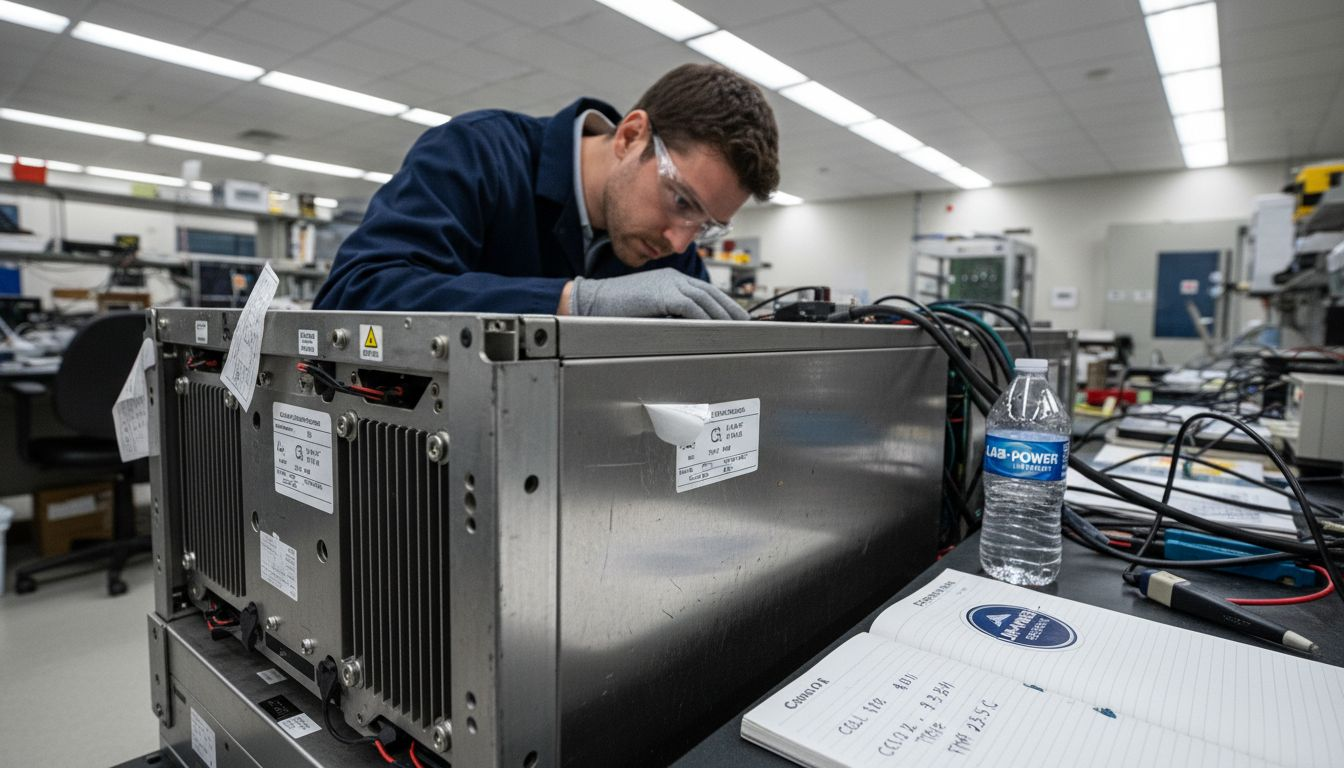
Each battery technology type presents distinct advantages and limitations. Lithium-ion batteries excel in short-duration, high-power applications, while flow batteries provide superior long-duration storage capabilities. Pumped hydro storage remains a critical large-scale grid stabilization technology, capable of managing massive energy volumes, whereas emerging technologies like hydrogen storage promise potential breakthroughs in long-term, large-capacity energy management. The strategic selection of battery technology depends on specific grid requirements, geographic constraints, economic considerations, and intended application scenarios.
Pro Tip: Consult with energy storage professionals to conduct a comprehensive assessment of your specific grid infrastructure and performance needs before selecting a battery storage technology.
Here’s a comparison of leading grid-connected battery storage technologies and their best use cases:
Technology | Ideal Application | Main Advantage | Common Limitation |
Lithium-ion | Homes & businesses | High energy density | Thermal management required |
Flow batteries | Long-duration, large-scale grids | Long lifecycle, deep discharge | Lower energy density |
Pumped hydro | Bulk grid storage | Massive capacity, proven tech | Geographic limitations |
Hydrogen storage | Seasonal energy storage | Large capacity potential | Low round-trip efficiency |
How Storage Systems Enable Grid Services
Battery storage systems play a critical role in providing essential grid services and infrastructure support, transforming the traditional electrical grid into a more dynamic and responsive network. These advanced systems act as intelligent intermediaries, managing energy flows, stabilizing voltage, and ensuring consistent power quality across increasingly complex electrical ecosystems.
The primary grid services enabled by modern storage technologies include frequency regulation, voltage support, peak shaving, and congestion management. Frequency regulation involves rapidly charging or discharging energy to maintain consistent electrical system frequency, while voltage support helps stabilize electrical pressure across transmission lines. Peak shaving allows storage systems to supply energy during high-demand periods, reducing strain on generation infrastructure and potentially lowering electricity costs for consumers and grid operators alike.
Beyond these core services, battery storage systems provide additional critical capabilities such as black start functionality, which enables power grid restoration after a complete shutdown, and renewable energy integration. By storing excess energy generated from intermittent sources like solar and wind, these systems help smooth out fluctuations and ensure a more reliable, consistent power supply. The rapid response times of advanced battery technologies make them particularly valuable for maintaining grid stability as renewable energy sources continue to expand their share of total electrical generation.
Pro Tip: Conduct a comprehensive grid service assessment to understand which storage system capabilities can most effectively address your specific infrastructure challenges and energy management goals.
Regulatory Requirements in Central Europe (2026)
The landscape of battery storage regulation in Central Europe is being transformed by comprehensive legislative frameworks, most notably the EU Battery Regulation 2023/1542689337_EN.pdf), which establishes rigorous standards for sustainability, safety, and environmental performance. This regulatory approach represents a significant shift towards creating a more transparent, accountable, and environmentally responsible battery ecosystem across the European energy storage sector.
Key regulatory requirements for battery storage systems in 2026 encompass multiple critical dimensions. Manufacturers and operators must comply with stringent carbon footprint limitations, ensuring that battery production and lifecycle management meet increasingly strict environmental standards. The regulation mandates minimum recycled materials content, compelling manufacturers to integrate circular economy principles into their design and production processes. Additionally, comprehensive safety standards require detailed technical documentation, CE marking, and ongoing conformity assessments that demonstrate compliance with evolving European environmental and technological benchmarks.
The implementation of battery passports represents a groundbreaking approach to tracking and managing battery lifecycle information. These digital documents will provide comprehensive transparency about each battery’s origin, composition, performance characteristics, and environmental impact. For energy storage system developers and operators in Central Europe, this means developing robust tracking mechanisms, investing in advanced documentation technologies, and potentially redesigning existing battery management systems to meet these new regulatory requirements. The phased enforcement approach allows businesses time to adapt, but also signals a clear trajectory towards more sustainable and accountable energy storage technologies.
Pro Tip: Proactively develop a comprehensive compliance strategy that anticipates regulatory changes, integrating sustainability and traceability into your battery storage system design from the earliest stages of development.
Financial, Safety, and Performance Implications
Grid-connected battery storage systems present a complex landscape of financial opportunities and technical challenges, characterized by multiple revenue potential and strategic risks. These advanced energy solutions offer investors and operators a multifaceted approach to energy management, combining economic incentives with technological sophistication.
Financially, battery storage systems create diverse revenue streams through peak load management, grid services, and ancillary service provisions. Operators can generate income by participating in frequency regulation markets, providing backup power, and supporting grid stabilization efforts. The economic model extends beyond traditional energy sales, transforming battery storage into a flexible asset capable of generating returns through multiple channels. Performance metrics increasingly emphasize not just energy capacity, but also response time, cycle life, and adaptability to changing grid requirements.
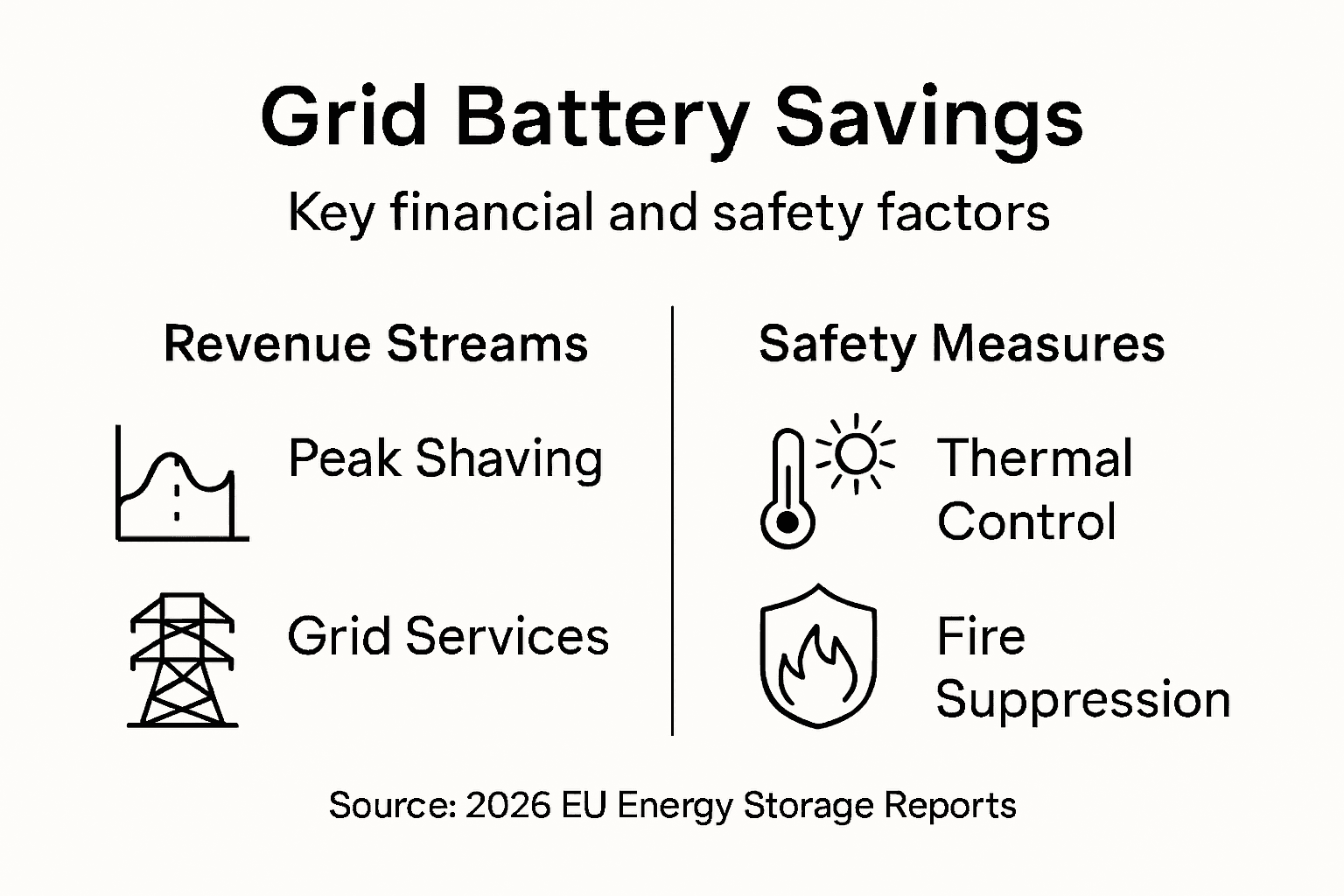
Safety remains a paramount concern, particularly with lithium-ion battery technologies. Advanced battery management systems and rigorous safety protocols are essential to mitigate risks such as thermal runaway and potential fire hazards. This requires continuous monitoring, sophisticated cooling systems, and proactive maintenance strategies. The integration of cutting-edge fire suppression technologies and comprehensive safety frameworks ensures that the performance advantages of battery storage are balanced with robust protection mechanisms for personnel and infrastructure.
Pro Tip: Conduct comprehensive due diligence that evaluates not just the financial projections, but also the safety infrastructure, technological resilience, and long-term performance potential of any battery storage investment.
Below is a summary of the main financial, safety, and regulatory implications for battery storage projects:
Implication Area | Key Consideration | Business Impact |
Financial | Multiple revenue streams possible | Improved ROI and diversification |
Safety | Advanced fire prevention required | Reduced operational risk |
Regulatory | Lifecycle tracking & recycled content | Increased compliance costs and oversight |
Unlock Real Savings with Advanced Grid-Connected Battery Storage
The article highlights how grid-connected battery storage tackles the critical challenge of cutting energy costs while delivering essential grid services like peak shaving and frequency regulation. If you are aiming to reduce electricity expenses and enhance energy management with cutting-edge technologies like graphene supercapacitors and lithium iron phosphate batteries this is your moment. Understanding the need for seamless integration with grid infrastructure and real-time energy management, Belinus offers comprehensive solutions tailored for both residential and commercial users.

Explore how our innovative Energy Wall G1 leverages graphene supercapacitor technology to store and dispatch energy precisely when you need it most. Our intelligent Energy Management System dynamically optimizes tariff structures and battery arbitrage to maximize your return on investment and provide reliable grid services. Don’t wait for regulatory changes and rising energy prices to impact your bottom line. Visit Belinus and discover how to harness scalable battery storage, advanced inverters, and EV charging integration designed to empower your energy future today.
Frequently Asked Questions
What is grid-connected battery storage?
Grid-connected battery storage is an energy management system that allows users to store and manage electricity connected to the public electrical grid, optimizing energy usage, reducing costs, and enhancing grid stability.
How do grid-connected battery storage systems save on energy costs?
These systems capture excess electricity from renewable sources or off-peak hours and store it for use during peak demand periods, reducing overall energy expenses and alleviating strain on the grid.
What are the different types of battery technologies used in grid-connected systems?
Common battery technologies include lithium-ion, flow batteries, and pumped hydro storage, each offering distinct advantages such as energy density, long-duration storage capabilities, and large-scale capacity management.
What are the key benefits of installing a grid-connected battery storage system?
Key benefits include reduced energy costs, enhanced energy independence, improved grid reliability, and the ability to provide grid services like frequency regulation and peak shaving.
Recommended
Comments