Multi-technology energy systems guide for Europe 2026
- Mar 17
- 10 min read
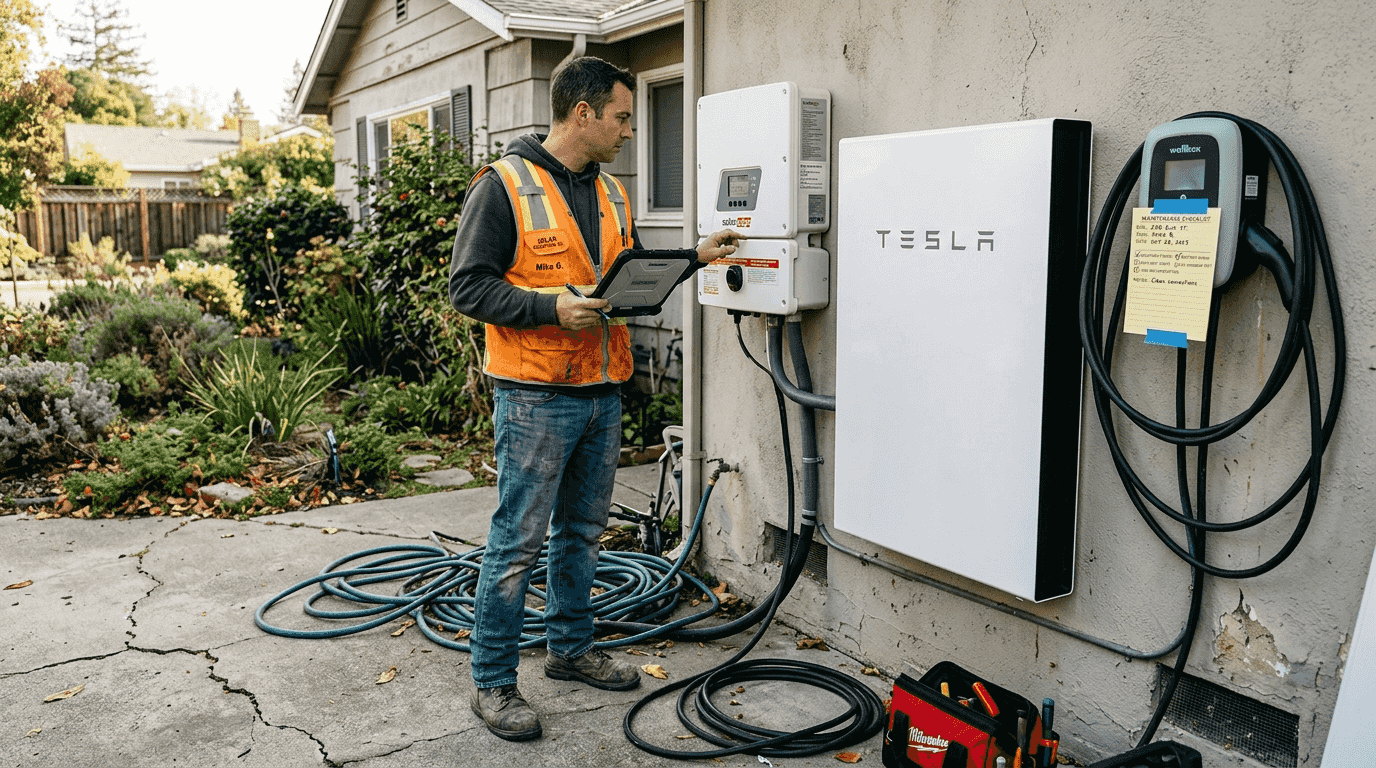
Installing solar panels on your roof used to be the endpoint of your renewable energy journey. Today, it’s just the beginning. European homes and businesses are discovering that combining solar with battery storage and EV charging creates an integrated ecosystem that slashes energy costs while boosting independence from the grid. Yet navigating the technical specifications, regulatory frameworks, and optimization strategies across multiple technologies can feel overwhelming. This guide breaks down everything you need to know about multi-technology energy systems, from current EU capacity data to practical implementation steps that maximize your investment and sustainability goals.
Table of Contents
Key takeaways
Point | Details |
Multi-technology integration | Combining solar, battery storage, and EV charging optimizes energy use and reduces costs for homes and businesses. |
Rapid EU capacity growth | Battery energy storage capacity is expanding quickly across Europe, driving energy independence opportunities. |
Regulatory complexity | Deployment success depends heavily on each member state’s specific regulatory environment and incentive structures. |
Co-location advantages | Pairing storage with renewable generation helps manage electricity price volatility and grid stability. |
Smart system benefits | Intelligent integration through energy management systems enhances savings and sustainability performance. |
Understanding multi-technology energy systems in Europe
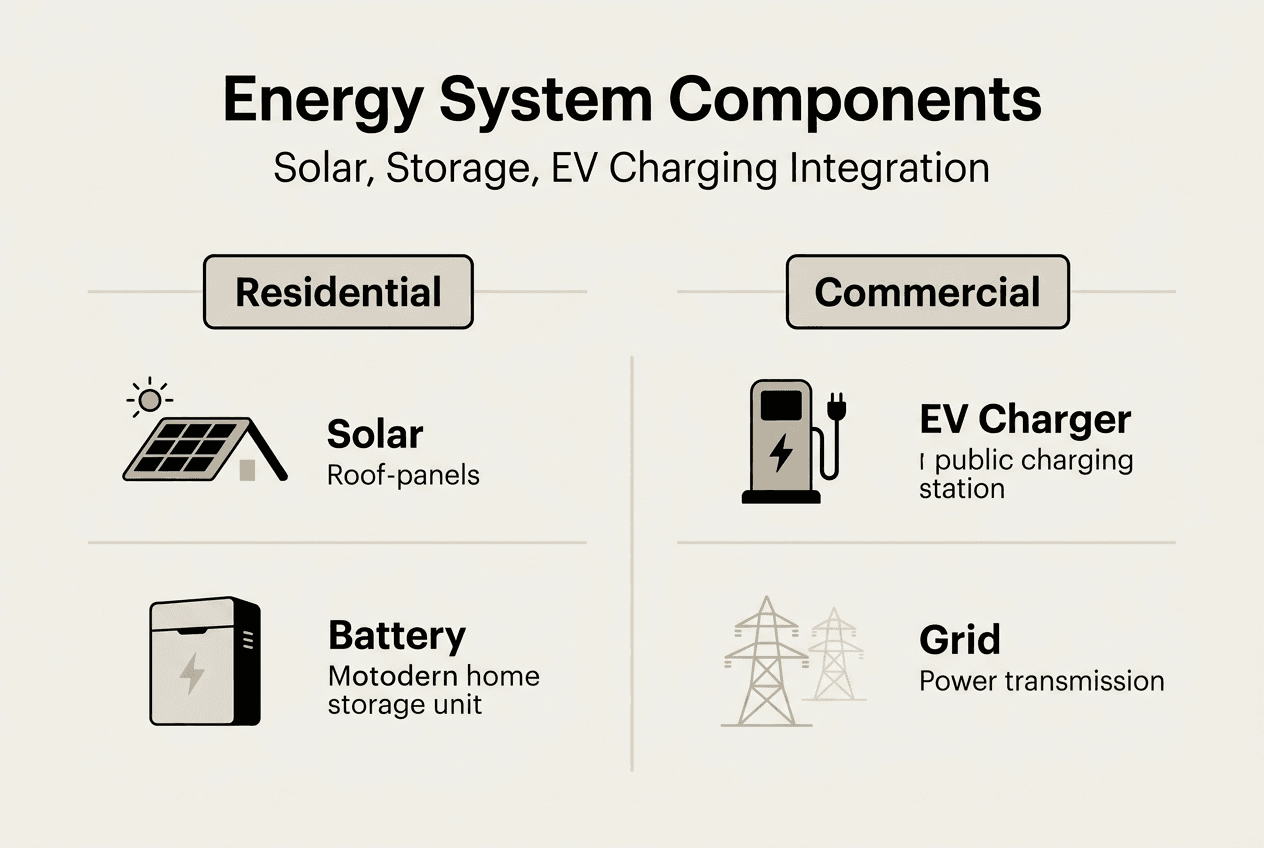
Multi-technology energy systems integrate three core components: solar photovoltaic panels that generate electricity from sunlight, battery energy storage systems (BESS) that store excess power for later use, and electric vehicle charging infrastructure that powers transportation from your own renewable generation. This integration transforms passive energy consumption into active energy management.
The European Union’s battery storage landscape is experiencing remarkable growth. The EU had BESS capacity around 25 GW in 2022, representing a foundation that continues expanding rapidly as costs decline and technology improves. This capacity spans utility-scale installations, commercial facilities, and residential behind-the-meter systems that give property owners direct control over their energy flows.
The financial and operational benefits drive adoption across market segments. Homeowners cut electricity bills by storing solar generation during peak production hours and discharging batteries when grid prices spike in the evening. Commercial buildings smooth demand charges and participate in grid services programs that generate additional revenue streams. Both residential and commercial users gain resilience against grid outages while supporting higher renewable energy penetration across the electrical network.
Typical residential setups combine 5-10 kW solar arrays with 10-20 kWh battery systems and 7-22 kW EV chargers, sized to match household consumption patterns and vehicle needs. Commercial installations scale dramatically larger, with 50-500 kW solar capacity paired with 100-1000 kWh storage banks and multiple charging points for employee or fleet vehicles. The key is right-sizing each component to work together efficiently rather than optimizing individual technologies in isolation.
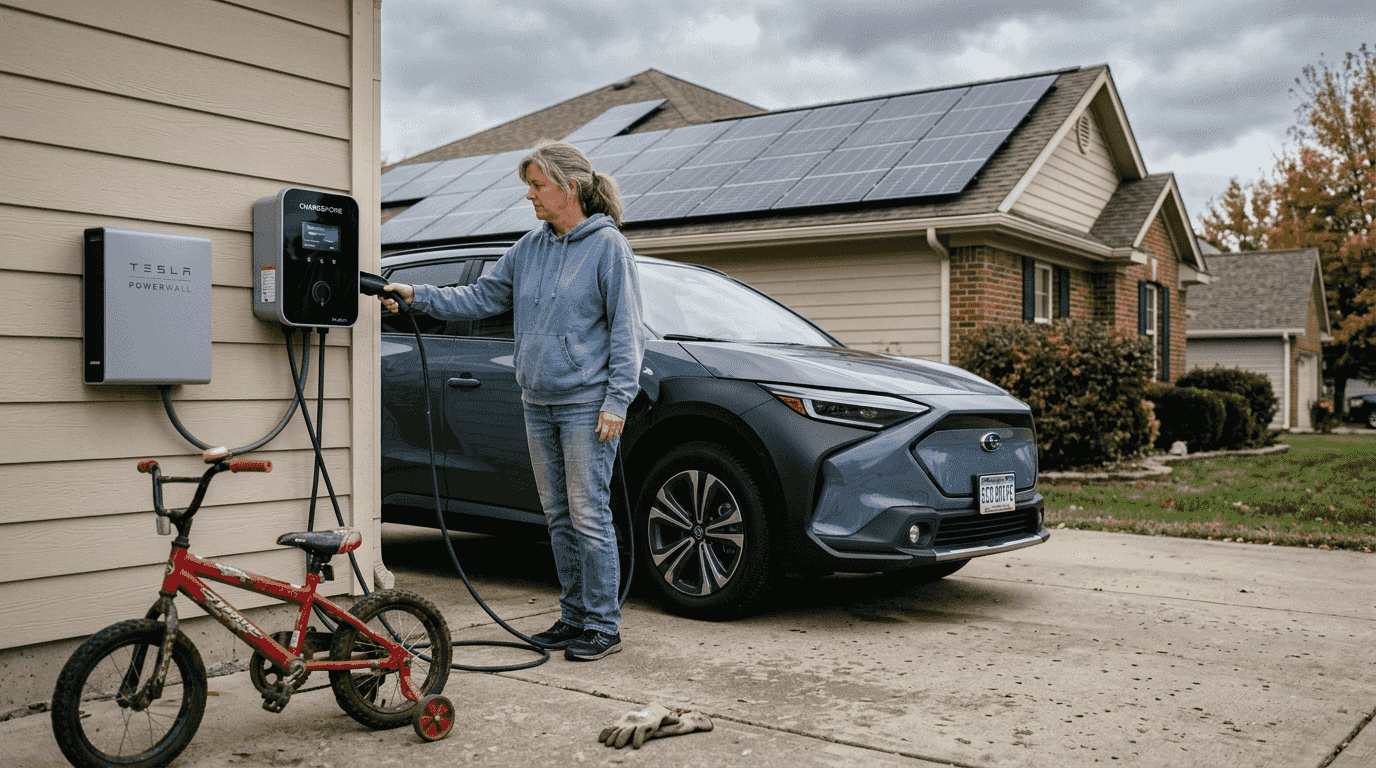
Pro Tip: Start your system design by analyzing your actual energy consumption patterns over a full year, including seasonal variations and peak demand periods, before selecting component sizes. Many installers offer monitoring tools that reveal surprising insights about when and how you use power.
For those new to energy storage concepts, understanding residential energy storage basics provides essential foundation knowledge. The technology has matured significantly, with lithium-ion batteries now offering 10-15 year warranties and round-trip efficiencies exceeding 90 percent. Newer chemistries like lithium iron phosphate (LFP) deliver enhanced safety profiles while graphene supercapacitors promise even longer lifecycles for premium applications.
Solar PV generates clean electricity during daylight hours, with production varying by season and weather conditions
Battery storage captures excess generation for use during evening peaks or grid outages
EV charging infrastructure converts stored energy into transportation fuel, completing the integration loop
Smart inverters and energy management systems orchestrate power flows to maximize economic and environmental value
The role of regulatory environments and transmission in energy system integration
Deployment of hybrid storage assets relies heavily on each member state’s regulatory environment, creating a patchwork of opportunities and challenges across Europe. Germany’s feed-in tariff structures differ substantially from Spain’s net metering rules, while France emphasizes self-consumption incentives that shape system economics in unique ways. This regulatory diversity means identical technology configurations can deliver vastly different returns depending on installation location.
Transmission network expansion plays an equally critical role in maximizing multi-technology system benefits. Research highlights transmission expansion importance at all sector coupling levels, demonstrating that grid infrastructure upgrades complement distributed energy resources rather than competing with them. Stronger transmission enables better price signals, facilitates energy trading across regions, and helps balance variable renewable generation at scale.
Sector coupling represents the next frontier in energy system evolution. By linking electricity generation with transportation through EV charging and heating through heat pumps, integrated systems achieve efficiency gains impossible in siloed approaches. A home with solar panels, battery storage, an EV charger, and a heat pump can shift energy consumption across different end uses based on real-time generation, storage levels, and price signals. This flexibility reduces overall energy costs while supporting grid stability.
The regulatory landscape continues evolving rapidly. Some countries now allow battery owners to participate in frequency regulation markets, earning payments for providing grid stabilization services. Others offer enhanced feed-in tariffs for systems that include storage, recognizing their value in managing renewable intermittency. Tax incentives, grants, and low-interest financing programs vary widely, making local expertise essential for project planning.
“The complexity of navigating different regulatory frameworks across EU member states means system designers must stay current with policy changes and understand how rules impact project economics in each specific market.”
For property owners, this regulatory complexity underscores the importance of working with experienced integrators who understand local rules and can optimize system design accordingly. What works brilliantly in the Netherlands might underperform in Italy due to different tariff structures, grid connection requirements, or incentive programs. The broader European push toward distributed energy and clean power futures is creating more favorable conditions overall, but details matter enormously.
Feed-in tariffs determine compensation rates for excess solar generation exported to the grid
Net metering rules affect whether you receive retail or wholesale credit for exported power
Self-consumption incentives encourage using generated electricity on-site rather than exporting it
Grid service participation allows battery owners to earn revenue providing frequency regulation and other ancillary services
Permitting requirements and connection standards vary significantly between jurisdictions
Innovations and trends: co-location and hybrid storage assets
Co-location remains nascent in the EU but has potential to become primary for developing variable renewable energy, protecting projects from rising periods of negative electricity prices. Co-location means installing battery storage at the same site as solar or wind generation, sharing grid connection infrastructure and optimizing energy flows before power reaches the transmission network. This approach delivers multiple advantages over standalone installations.
The cost-saving benefits emerge from several mechanisms. Co-located storage captures generation that would otherwise be curtailed during periods of grid congestion or negative pricing. It smooths output profiles, making renewable projects more predictable and valuable to grid operators. Shared infrastructure reduces total capital costs compared to separate installations. Most importantly, batteries provide price volatility protection by storing energy when wholesale rates drop or turn negative, then discharging during high-price periods.
Storage Type | Installed Capacity (GW) | Primary Application | Growth Rate |
Utility-scale standalone | 15.2 | Grid services and arbitrage | 35% annual |
Residential behind-meter | 6.8 | Self-consumption optimization | 45% annual |
Co-located with renewables | 3.0 | Generation smoothing and curtailment reduction | 60% annual |
Commercial and industrial | 2.5 | Demand charge management | 40% annual |
Grid price volatility has increased substantially as renewable penetration grows. Solar-heavy grids now regularly see midday price crashes when generation exceeds demand, followed by evening price spikes as the sun sets and consumption peaks. Co-located storage exploits these patterns automatically, charging when prices are low or negative and discharging during expensive peak hours. For project developers, this arbitrage opportunity improves return on investment while providing grid operators with valuable flexibility.
The technology is particularly compelling for commercial and utility-scale projects where economies of scale reduce per-kilowatt-hour storage costs. A 500 kW solar array paired with 1 MWh of battery capacity can completely reshape its revenue profile, shifting from pure generation to a dispatchable resource that delivers power when it’s most valuable. Grid connected battery storage in central Europe is expanding rapidly as developers recognize these advantages.
Pro Tip: Evaluate whether co-location makes sense for your project by analyzing historical wholesale electricity prices in your region. If you see frequent negative pricing periods or wide spreads between midday and evening rates, co-located storage likely offers strong economic returns that justify the additional investment.
Residential applications of co-location principles work differently but deliver similar benefits. Your rooftop solar and home battery create a micro co-located system that optimizes energy flows within your property boundary. While you can’t participate in wholesale markets the same way utility projects do, you achieve comparable value by avoiding retail electricity purchases during expensive peak hours. The key is sizing your battery to capture most solar production while meeting evening and morning consumption needs.
Practical steps to optimize your multi-technology energy system
Implementing an integrated energy system requires careful planning and sequential decision-making. Follow these steps to maximize performance and return on investment:
Conduct a comprehensive energy audit examining 12 months of electricity consumption data, identifying peak usage periods, seasonal variations, and baseload requirements that will inform component sizing decisions.
Assess your solar generation potential using tools that account for roof orientation, shading, local weather patterns, and available mounting area to determine realistic annual production estimates.
Calculate optimal battery capacity by matching storage to the gap between solar generation timing and consumption patterns, typically sizing to store 50-80 percent of daily solar production for evening use.
Evaluate EV charging needs based on vehicle battery size, daily driving distance, and whether you need single or multiple charging points for household or fleet applications.
Research available incentives in your specific location, including grants, tax credits, feed-in tariffs, and financing programs that can significantly improve project economics.
Select compatible components that work together seamlessly, prioritizing systems with integrated energy management capabilities rather than cobbling together incompatible technologies.
Work with certified installers experienced in multi-technology systems who understand local regulations, grid connection requirements, and optimization strategies specific to your market.
Commission smart monitoring and control systems that provide real-time visibility into energy flows and enable automated optimization based on time-of-use rates and consumption patterns.
Battery sizing deserves special attention because undersized systems leave solar generation unexploited while oversized installations waste capital on capacity you’ll rarely use. How to size battery systems for European properties efficiently provides detailed guidance on this critical calculation. Most residential systems land in the 10-20 kWh range, while commercial installations scale based on demand profiles and economic optimization rather than simple consumption matching.
The financial analysis should extend beyond simple payback calculations to consider total lifecycle value. A well-designed system delivers 20-25 years of service, with solar panels maintaining 80-85 percent of original output after two decades and batteries requiring potential replacement after 10-15 years depending on chemistry and cycling patterns. Factor in rising electricity prices, potential revenue from grid services, and the value of energy security when evaluating proposals.
Smart energy management systems represent the brain of integrated installations. These platforms monitor generation, storage levels, consumption, grid prices, and weather forecasts to make split-second decisions about power flows. When should excess solar charge your battery versus your EV? Should you discharge storage to avoid peak demand charges or save capacity for an anticipated grid outage? Advanced systems handle these tradeoffs automatically, learning your patterns and preferences over time.
Maintenance requirements remain minimal but important. Solar panels need occasional cleaning and annual inspections. Batteries require monitoring for performance degradation and thermal management. EV chargers benefit from periodic connectivity checks and software updates. Budget roughly 1-2 percent of system cost annually for maintenance and monitoring services. For example, a 16 kWh battery saving €860 yearly requires minimal upkeep relative to its value delivery.
Explore integrated energy solutions with Belinus
Navigating the complexity of multi-technology energy systems becomes significantly easier with expert guidance tailored to your specific situation. Belinus specializes in integrated solar, battery storage, and EV charging solutions designed for European homes and businesses, combining technical expertise with deep understanding of local regulatory environments across member states. Our approach focuses on right-sizing systems to your actual needs rather than overselling capacity you won’t use.

The Belinus ecosystem brings together solar installation through SolarPlus, EV charging infrastructure via Evonity, and wholesale components from Solarimex, all orchestrated by intelligent energy management systems that optimize performance in real time. Whether you’re a homeowner seeking energy independence or a commercial property manager looking to cut operating costs, our team can design solutions that deliver measurable results. Explore integrated energy solutions at Belinus to discover how multi-technology systems can transform your energy profile.
Pro Tip: Take advantage of expert consultations to navigate complex regulatory environments and identify all available incentives in your jurisdiction. The right guidance often uncovers financial support programs that dramatically improve project economics and accelerate payback periods.
Frequently asked questions
What components make up multi-technology energy systems?
They typically include solar PV panels that generate electricity from sunlight, battery energy storage units that capture excess production for later use, and electric vehicle charging infrastructure that powers transportation from renewable sources. These components work together through smart energy management systems that optimize power flows based on generation, consumption, pricing, and grid conditions. The integration creates value greater than the sum of individual parts.
How does co-located energy storage benefit solar projects?
It stabilizes energy supply by storing excess generation during high production periods and discharging when solar output drops or demand peaks. Co-location reduces price volatility risk by avoiding negative pricing periods and capturing arbitrage opportunities between low and high rate periods. The approach enhances grid reliability while improving project economics through shared infrastructure and optimized dispatch strategies.
Are there incentives for installing integrated energy systems in Europe?
Yes, many EU countries offer subsidies, tax credits, grants, or favorable financing for solar, storage, and EV charging installations, but availability varies significantly depending on local regulations and policy priorities. Germany, Spain, France, Italy, and the Netherlands each maintain different incentive structures that can cover 20-40 percent of system costs in some cases. Research current programs in your specific location or consult with experienced installers who track policy changes.
What size battery is ideal for a typical European home?
It depends on your consumption patterns, solar array size, and economic goals, but most residential systems range from 10-20 kWh to capture midday solar production for evening use. A household consuming 15-20 kWh daily with a 5-7 kW solar array typically benefits from 12-16 kWh of storage capacity. Sizing tools and expert advice help determine the optimal capacity that balances upfront investment with long-term value delivery.
How do smart energy management systems improve multi-technology installations?
They continuously monitor generation, storage levels, consumption, grid prices, and weather forecasts to make automated decisions about charging batteries, powering EV chargers, or exporting to the grid. Advanced platforms learn your usage patterns and preferences, optimizing energy flows to minimize costs while maintaining desired backup capacity. The result is hands-off operation that consistently delivers better economic and environmental performance than manual control.
Can commercial buildings participate in grid services with battery storage?
Many European markets now allow commercial battery owners to provide frequency regulation, demand response, and other ancillary services that generate additional revenue beyond simple energy arbitrage. Participation requirements and compensation structures vary by country and grid operator. Buildings with larger storage installations (100+ kWh) typically find grid services programs most attractive, as economies of scale improve returns relative to administrative complexity.
Recommended
Comments