Solar Inverter Benefits: Lower Bills, Higher Efficiency
- Jan 14
- 8 min read

Surprising to many, advanced solar inverter technology used in American homes is now driving down utility bills across Central Europe, with some families saving up to 30 percent on annual electricity costs. With energy prices climbing and efficiency becoming a top priority, affordable residential solar inverters have shifted from luxury upgrades to practical investments. Discover how choosing the right inverter empowers homeowners to cut expenses, make smarter energy choices, and build long-term resilience into every home.
Table of Contents
Key Takeaways
Point | Details |
Understanding Solar Inverters | Solar inverters are essential for converting DC electricity to AC, but they also provide added functionalities like system monitoring and grid support. |
Choosing the Right Inverter | Homeowners should evaluate inverter types based on their energy needs and installation environment to maximize efficiency. |
Energy Optimization Technologies | Maximum Power Point Tracking (MPPT) is crucial for enhancing energy capture and system performance under varying conditions. |
Financial Considerations | Payback periods for solar inverters typically range from 5 to 10 years, making long-term economic analysis vital for potential investors. |
Solar Inverters Defined and Common Misconceptions
A solar inverter serves as the critical translation device in any photovoltaic system, transforming direct current from solar panels into usable alternating current for residential and commercial electrical networks. These sophisticated electronic devices do far more than simple power conversion - they represent the brain of a solar energy system.
Solar inverters operate through complex electronic processes that convert variable DC electricity generated by solar panels into stable AC electricity matching the precise frequency and voltage requirements of home electrical systems. Modern inverters incorporate advanced technologies like maximum power point tracking (MPPT), which optimizes energy harvest by dynamically adjusting panel output to maximize efficiency. They also include critical safety features such as anti-islanding protection, preventing electricity from being fed into the grid during power outages.
Common misconceptions about solar inverters often stem from oversimplifying their functionality. Many people assume inverters merely switch DC to AC power, but advanced inverters provide comprehensive grid services and system monitoring. These intelligent devices can communicate system performance, support grid stability, and even enable battery storage integration for emergency backup power. Some modern hybrid inverters can seamlessly switch between grid-connected and off-grid modes, offering unprecedented flexibility for homeowners.
Pro tip: When selecting a solar inverter, prioritize system compatibility, efficiency ratings, and warranty length rather than focusing exclusively on initial purchase price.
Main Types of Solar Inverters for Homes
Homeowners exploring solar energy solutions have several critical inverter technologies to consider, each designed to meet specific residential energy needs. The primary types of solar inverters include string inverters, microinverters, hybrid inverters, and power optimizers. When selecting an appropriate system, understanding the unique characteristics of solar installation options becomes crucial for maximizing energy efficiency.
String inverters represent the most traditional and cost-effective option, where multiple solar panels connect in series to a single inverter. These systems are typically less expensive but can suffer performance limitations if one panel experiences shading or damage. In contrast, microinverters attach directly to individual solar panels, allowing each panel to operate independently and potentially increasing overall system performance. This design provides greater flexibility and improved energy generation, especially in environments with partial shading or complex roof configurations.
Hybrid inverters emerge as a sophisticated solution for homeowners seeking comprehensive energy management. These advanced devices integrate solar panel conversion with battery storage capabilities, enabling seamless transitions between grid-connected and off-grid power modes. Power optimizers offer a middle ground, working alongside string inverters to optimize individual panel performance while maintaining a centralized conversion system. Each technology presents unique advantages, making the selection process dependent on specific home energy requirements, budget constraints, and long-term efficiency goals.
Pro tip: Consult a professional solar installer to conduct a comprehensive site assessment, which will help determine the most suitable inverter technology for your specific home energy needs and roof characteristics.
Here’s how the main types of residential solar inverters differ in features and suitability:
Inverter Type | Best For | Key Strength | Potential Drawback |
String Inverter | Simple, cost-focused homes | Lower cost, easy setup | Reduced efficiency in shading |
Microinverter | Shaded/complex roofs | Independent panel output | Higher initial cost |
Hybrid Inverter | Energy storage integration | Supports batteries | More complex installation |
Power Optimizer | Custom performance tuning | Optimizes each panel | Requires pairing with inverter |
How Inverters Optimize Energy Efficiency
Solar inverters play a crucial role in maximizing photovoltaic system performance through advanced energy optimization technologies. The primary mechanism for improving energy efficiency is maximum power point tracking (MPPT), a sophisticated electronic technique that dynamically adjusts the electrical operating point of solar panels to extract maximum possible energy under varying environmental conditions.
MPPT technology addresses multiple performance challenges that can significantly reduce solar system output. These intelligent systems continuously monitor and analyze panel voltage, current, and temperature, making real-time adjustments to compensate for environmental variations such as partial shading, temperature fluctuations, and panel orientation differences. By implementing multi-MPPT trackers, inverters can optimize each panel’s individual performance, effectively mitigating efficiency losses that would traditionally impact the entire solar array.
Advanced inverters incorporate additional efficiency-enhancing features beyond MPPT. These include sophisticated thermal management systems, anti-islanding protection, and smart grid support services that not only optimize energy generation but also contribute to overall grid stability. The integration of these technologies enables solar systems to maintain high performance levels, reduce energy losses, and provide more consistent power output across diverse environmental conditions.
Pro tip: Request a detailed performance modeling report from your solar installer that demonstrates how MPPT technologies will specifically improve energy generation for your unique installation site.
Integrated Energy Management and Smart Solutions
Modern solar energy systems are evolving beyond simple power generation, integrating sophisticated smart grid technologies that transform residential energy management. Intelligent energy management systems now combine solar inverters, battery storage, and advanced software platforms to create dynamic, responsive home energy ecosystems that optimize power consumption, generation, and storage in real-time.
These sophisticated solutions leverage artificial intelligence and machine learning algorithms to analyze energy consumption patterns, predict household demand, and automatically adjust power flows. Homeowners can now benefit from intelligent features like automatic load shifting, which redirects solar energy to high-consumption appliances during peak generation periods, minimizing grid dependency and reducing overall electricity costs. Grid interactive inverters enable two-way communication with utility networks, allowing households to participate in demand response programs and potentially generate revenue by feeding excess energy back into the electrical grid.
The integration of digital technologies extends beyond simple energy optimization. Advanced energy management platforms provide comprehensive monitoring and control through user-friendly mobile applications and web dashboards. These interfaces give homeowners unprecedented visibility into their energy production, consumption, and storage, enabling data-driven decisions about energy use. Cybersecurity features ensure that these smart systems remain protected, maintaining the integrity and privacy of personal energy data while delivering sophisticated energy management capabilities.
Pro tip: Request a demonstration of your solar inverter’s energy management software to understand its full range of smart features and optimization capabilities.
Costs, Payback, and Financial Implications
Understanding the financial landscape of solar inverter investments requires a comprehensive analysis of long-term economic considerations. Payback periods for solar inverter systems typically range from 5 to 10 years, depending on regional electricity prices, installation costs, available government incentives, and overall system performance. Homeowners should evaluate not just the upfront investment, but the cumulative financial benefits over the system’s entire operational lifecycle.
Key financial metrics for solar inverter investments include net present value, internal rate of return, and total cost of ownership. Modern solar inverters represent a sophisticated financial instrument that generates returns through multiple channels: direct electricity cost reduction, potential grid feed-in revenues, and increased property value. The economic calculation extends beyond simple energy savings, incorporating factors like reduced maintenance costs, technological efficiency improvements, and protection against future electricity price volatility.
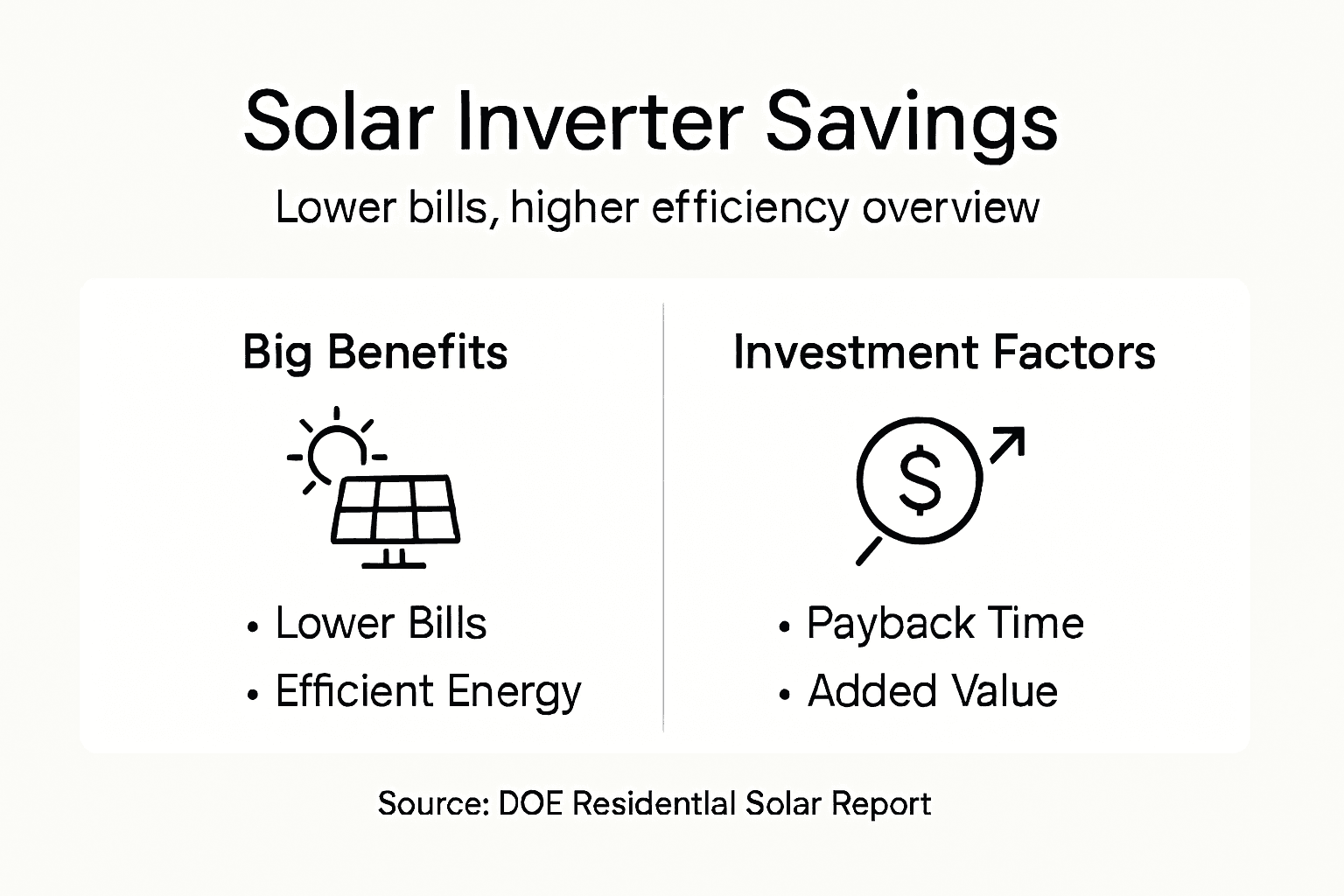
Regional variations play a significant role in solar inverter financial planning. Central European markets, characterized by progressive renewable energy policies and moderate solar radiation, offer particularly attractive investment scenarios. Homeowners can leverage government incentives, tax credits, and feed-in tariffs that dramatically improve the financial attractiveness of solar inverter installations. Advanced financial modeling tools now enable precise 25-year performance projections, allowing investors to make data-driven decisions with unprecedented accuracy.
Pro tip: Request a comprehensive financial model from your solar installer that includes detailed projections of energy savings, potential revenues, and break-even timelines specific to your property and local energy market.
Added Value: Reliability, Property Value, and Risks
Solar inverter reliability represents a critical factor in long-term system performance, with photovoltaic system longevity directly impacting overall investment value. System degradation is an inevitable process that affects solar technologies, with modern inverters engineered to minimize performance decline and extend operational lifespans beyond traditional expectations.

Beyond immediate energy generation, solar inverter installations significantly enhance property marketability and valuation. Real estate markets increasingly recognize solar infrastructure as a premium feature, with studies suggesting potential property value increases of 4-6% for homes with high-quality solar systems. The reliability of the inverter becomes a critical selling point, as potential buyers assess the long-term performance and maintenance history of the solar energy system.
Risk mitigation strategies are fundamental to maximizing solar inverter value. Homeowners should focus on comprehensive warranty coverage, regular professional maintenance, and selecting inverters from manufacturers with proven track records of technological innovation and customer support. Environmental factors such as temperature fluctuations, humidity, and electrical grid stability can impact inverter performance, making it crucial to choose systems designed to withstand local climate conditions and potential electrical infrastructure challenges.
Pro tip: Conduct annual professional inspections and maintain detailed performance documentation to protect your solar inverter investment and maximize its long-term reliability and value.
Here is a summary of additional value a solar inverter adds to your property and investment:
Added Value Area | Description | Long-Term Impact |
Reliability | Reduces risk of system failures | Consistent power output |
Property Value | Seen as premium real estate feature | 4-6% home value boost |
Risk Mitigation | Maintenance and warranty strategies | Protects investment |
Climate Resilience | Handles environmental stress factors | Maximizes lifespan |
Unlock Maximum Savings and Efficiency with Advanced Solar Inverter Solutions
The article highlights the crucial role solar inverters play in transforming your home’s energy use through efficiency improvements and intelligent energy management. If you want to overcome challenges like partial shading, optimize energy harvest with maximum power point tracking, and integrate battery storage for reliable backup power, then Belinus has you covered. Our integrated approach combines cutting-edge Solis Inverters tailored for residential use with the powerful Belinus Energy Management System to take control of your electric bills and energy flow.
Experience the difference of a comprehensive solution that not only converts solar power efficiently but also dynamically manages your storage and consumption in real time. With options like our Energy Wall G1 graphene supercapacitor and future-proof smart software, you can reduce reliance on the grid and protect your investment against rising electricity costs now. Discover how you can enhance your home’s value, reliability, and performance by exploring Belinus’ Residential Solutions today and make the smart choice to benefit from the full potential of your solar system.
Frequently Asked Questions
What are the main benefits of using a solar inverter?
Solar inverters provide several benefits, including the conversion of direct current (DC) from solar panels into alternating current (AC) for home use, optimization of energy generation through advanced technologies, and enhanced system monitoring capabilities. They also help reduce electricity bills by maximizing solar energy utilization.
How does a solar inverter improve energy efficiency?
Solar inverters incorporate technologies like maximum power point tracking (MPPT) that dynamically adjust and optimize the energy output from solar panels based on environmental conditions. This ensures that homeowners receive the maximum possible energy generation from their solar installations.
What types of solar inverters are available for residential use?
The main types of solar inverters for homes include string inverters, microinverters, hybrid inverters, and power optimizers. Each type has unique advantages based on efficiency, cost, and system requirements, tailored to meet specific energy needs and roof configurations.
How does a solar inverter affect my home’s property value?
Installing a solar inverter can significantly enhance your property’s value, as homes with efficient solar energy systems are increasingly seen as desirable. Studies suggest that such installations can increase property values by 4-6%, making them a smart investment for homeowners.
Recommended
Comments