Solar Panel Selection Process for Central European Homes
- Feb 2
- 7 min read
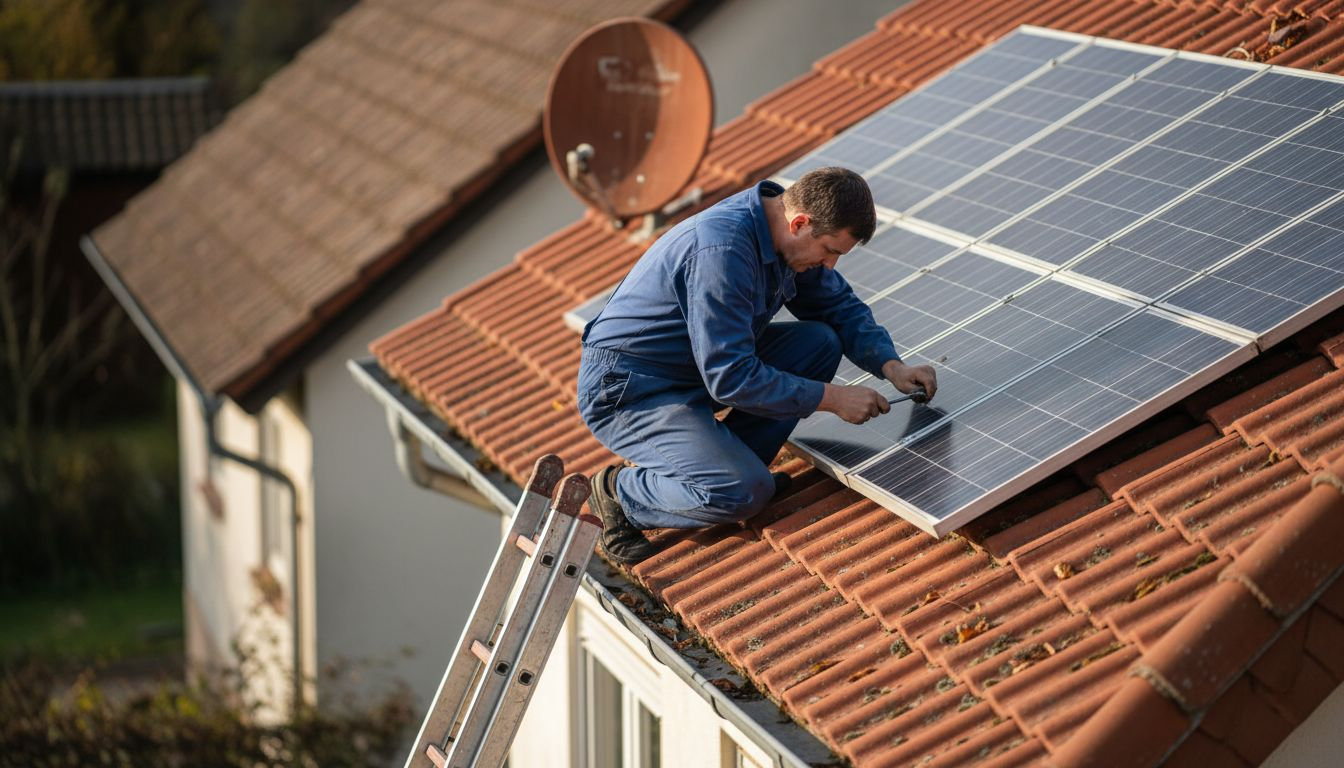
Switching to solar power is an exciting opportunity for Central European homeowners seeking greater energy independence. With rooftop solar systems now able to meet as much as 40 percent of Europe’s long-term electricity demand by 2050, your house could play a key role in this transition. Whether you are focused on advanced solar panel technology or want the added reliability of battery storage, the following guide explains how to evaluate your property’s solar potential, compare system options, and set up future-ready energy solutions.
Table of Contents
Quick Summary
Key Insight | Explanation |
1. Assess solar needs thoroughly | Evaluate roof orientation, angle, shading, and condition to determine solar potential for your home. |
2. Compare solar panel technologies | Research efficiency, lifespan, cost, and suitability of options like monocrystalline and thin-film panels for informed decisions. |
3. Evaluate battery storage options | Consider lithium-ion and flow batteries, focusing on lifespan and capacity to optimize energy management for your solar system. |
4. Select optimal solar panel system | Balance performance metrics, durability, and compatibility with local climate conditions when choosing your solar panels. |
5. Integrate advanced energy management | Use intelligent systems for real-time monitoring and optimization to enhance your home’s solar energy efficiency. |
Step 1: Assess your home’s solar needs
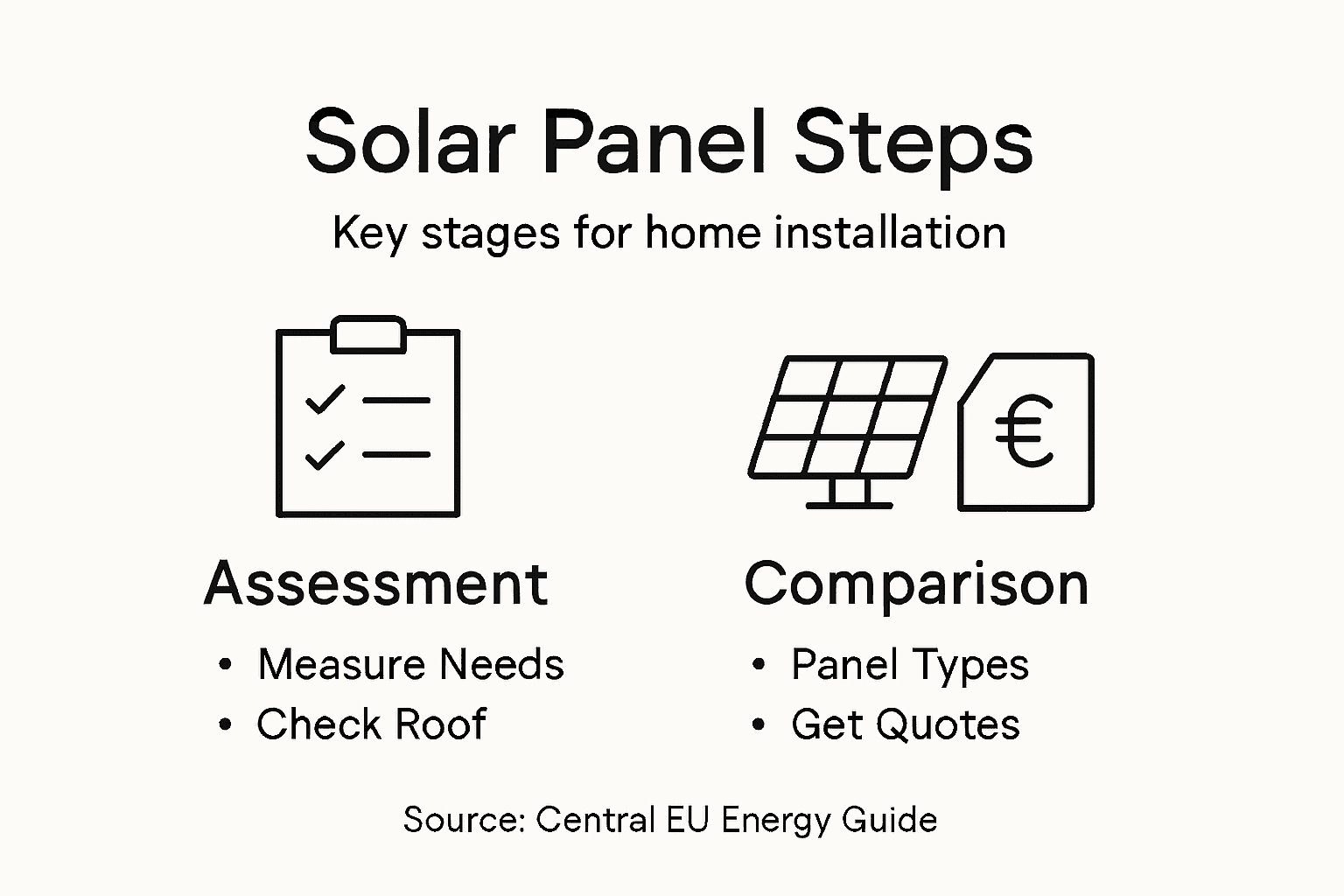
Assessing your home’s solar potential is the critical first stage in transitioning to solar energy. This comprehensive evaluation will help you understand whether solar is a viable and cost-effective solution for your specific residential environment.
To begin your solar assessment, you’ll want to examine several key factors. Rooftop solar potential in Europe indicates massive untapped capacity, but your individual home requires personalized analysis:
Roof orientation: South-facing roofs receive maximum sunlight in Central Europe
Roof angle: Optimal angles range between 30-40 degrees for maximum solar efficiency
Shading obstacles: Identify trees, chimneys, or neighboring buildings that might block sunlight
Roof condition: Ensure your roof can support solar panel installation for 25+ years
Measuring your current energy consumption provides another crucial datapoint. Review your electricity bills from the past 12 months to understand your average monthly usage. Solar growth in Central European countries demonstrates that residential installations can significantly reduce electricity costs.

Consider scheduling a professional solar assessment. Trained experts can perform precise measurements using specialized equipment, providing a detailed analysis of your home’s solar readiness.
Pro tip: Before investing, use online solar potential calculators to get a preliminary estimate of your home’s solar generation capacity.
Step 2: Compare suitable solar panel technologies
Comparing solar panel technologies is a critical step in selecting the right system for your Central European home. Understanding the nuanced differences between various solar technologies will help you make an informed investment decision.
Photovoltaic technology developments reveal multiple options for residential solar installations. The primary solar panel technologies to consider include:
Monocrystalline silicon: Highest efficiency (17-22%), most expensive
Polycrystalline silicon: Moderate efficiency (15-17%), lower cost
Thin-film: Flexible applications, lower efficiency (10-13%)
Emerging technologies: Perovskite and organic solar cells with innovative potential
Each technology offers unique advantages. Solar cell technology comparisons indicate crystalline silicon remains dominant in traditional residential installations. Performance metrics to evaluate include:
Here’s a concise comparison of major solar panel technologies for residential use:
Technology Type | Efficiency Range | Typical Cost | Suitability for Homes |
Monocrystalline | 17-22% | Highest | Best for limited roof space |
Polycrystalline | 15-17% | Moderate | Good for standard budgets |
Thin-Film | 10-13% | Lowest | Suitable for large surfaces |
Emerging Technologies | Varies | Generally high | Ideal for future upgrades |
Efficiency rates
Durability and lifespan
Temperature coefficient
Cost per watt
Aesthetic appearance
Consider your specific home requirements, budget constraints, and long-term energy goals when selecting solar panel technologies. Professional consultations can provide personalized recommendations based on your unique residential setup.
Central European homes benefit most from technologies balancing efficiency, cost, and local climate adaptability.
Pro tip: Request performance data sheets from multiple manufacturers to conduct a side-by-side comparison of solar panel technologies.
Step 3: Evaluate compatible battery storage options
Evaluating battery storage options is crucial for maximizing your solar energy system’s performance and efficiency. Understanding the nuanced landscape of energy storage technologies will help you make an informed decision for your Central European home.
Battery energy storage trends reveal multiple technologies suitable for residential applications. The primary battery storage options include:
Lithium-ion batteries: Most common, high energy density
Lead-acid batteries: Lower cost, shorter lifespan
Flow batteries: Excellent for long-duration storage
Graphene supercapacitors: Emerging technology with rapid charge capabilities
Key evaluation criteria for battery storage systems:
This table summarizes key battery storage options and their practical advantages:
Battery Type | Lifespan | Best Application | Notable Advantage |
Lithium-ion | 10-15 years | Everyday home storage | High energy density |
Lead-acid | 5-10 years | Backup/emergency use | Lower initial cost |
Flow Batteries | 10-20 years | Long-duration storage | Stable over deep cycles |
Graphene Supercapacitors | 10+ years | Fast charge/discharge | Rapid cycling capability |
Total storage capacity
Depth of discharge
Round-trip efficiency
Lifecycle and warranty
Temperature performance
Solar battery storage research suggests Central European homes should aim for 2.5-7.5% battery storage capacity relative to their solar installation. This balance ensures optimal energy system reliability and cost-effectiveness.
Battery storage technology is rapidly evolving, with innovations continuously improving energy management capabilities.
Pro tip: Prioritize batteries with smart management systems that allow real-time energy monitoring and grid interaction.
Step 4: Select and verify the optimal solar panel system
Selecting the right solar panel system involves carefully balancing performance, cost, and long-term reliability for your Central European home. This critical step requires a comprehensive approach to ensure you make an informed investment.
Solar panel system selection demands thorough evaluation of multiple factors critical to your energy goals. Key considerations include:
Performance metrics: Conversion efficiency and energy output
System durability: Expected lifespan and warranty coverage
Climate adaptability: Performance in Central European weather conditions
Grid compatibility: Seamless integration with local electrical infrastructure
Economic assessment of photovoltaic systems reveals important verification strategies for optimal selection:
Calculate Levelized Cost of Energy (LCOE)
Analyze one-axis tracking system performance
Evaluate regional energy production potential
Compare long-term financial benefits
Assess installation and maintenance costs
Consider working with certified solar installation professionals who can provide detailed performance modeling and system recommendations tailored to your specific home requirements.
Verification is not just about selecting panels but ensuring they match your unique energy consumption and regional environmental conditions.
Pro tip: Request comprehensive performance simulations and ask installers to provide detailed energy production estimates specific to your home’s geographical location.
Step 5: Integrate with advanced energy management solutions
Integrating advanced energy management solutions transforms your solar installation from a simple power generator into an intelligent, responsive home energy ecosystem. This critical step ensures you maximize efficiency, reduce costs, and enhance your overall energy independence.
Smart solar building technologies demonstrate remarkable potential for residential energy optimization through comprehensive IoT and cloud-based control systems. Key integration strategies include:
Smart monitoring: Real-time energy consumption tracking
Predictive algorithms: Automated load balancing and optimization
Remote management: Mobile and web-based control interfaces
Grid interaction: Dynamic energy trading capabilities
Solar building flexibility solutions reveal critical components for comprehensive energy management:
Connect solar panels with battery storage systems
Integrate heat pump technologies
Enable electric vehicle charging interfaces
Implement time-varying price signal responses
Configure demand response mechanisms
The ultimate goal is creating a seamlessly interconnected energy ecosystem that adapts to your consumption patterns and local grid dynamics.
Advanced energy management transforms your home into an intelligent, self-optimizing power generation and consumption platform.
Pro tip: Prioritize energy management systems with open API architectures that allow future technology integrations and upgrades.
Unlock the Full Potential of Your Central European Solar Home with Belinus Solutions
Choosing the right solar panel system and battery storage technology for your home can feel overwhelming. You want to balance efficiency, cost, and local climate adaptability while ensuring long-term reliability. This is where Belinus steps in. We understand that optimizing your rooftop’s solar potential and integrating advanced energy management are critical to maximizing your solar investment. With our comprehensive energy solutions, including cutting-edge graphene supercapacitor batteries and intelligent EMS integration, you can confidently overcome challenges like performance verification and energy storage optimization.
Take control of your energy future now. Explore how Belinus integrates smart solar technologies, battery storage, and EV charging through a centralized energy management system that adapts to your unique home needs. Don’t wait for tomorrow’s innovations when you can access advanced solutions today. Visit Belinus to discover residential solutions tailored for Central European homes and start your journey towards energy independence. See how we support your solar panel selection process with expert technology, seamless integration, and future-ready energy management at Belinus.
Frequently Asked Questions
What factors should I assess when evaluating my home’s solar potential?
Assess your roof orientation, roof angle, shading obstacles, and roof condition to determine your solar potential. Additionally, review your electricity bills from the past year to understand your average monthly energy consumption.
How do I compare different solar panel technologies for my home?
Compare solar panel technologies by looking at their efficiency rates, cost per watt, durability, and aesthetic appeal. Create a comparison table based on your specific needs and budget, which will help you make a more informed decision.
What is the importance of battery storage for my solar energy system?
Battery storage is crucial for maximizing the efficiency and reliability of your solar energy system. Evaluate options such as Lithium-ion and Flow batteries based on their lifespan and total storage capacity to ensure your system meets your energy needs.
How can I verify the optimal solar panel system for my home?
Verify the optimal solar panel system by evaluating performance metrics, system durability, and compatibility with your local electricity grid. Conduct a thorough analysis of installation and maintenance costs to ensure it aligns with your long-term energy goals.
What are the benefits of integrating advanced energy management solutions?
Integrating advanced energy management solutions allows you to monitor and control your energy consumption in real time, improving efficiency and potentially reducing costs. Aim to connect your solar panels with battery storage and other smart technologies to create a responsive energy ecosystem for your home.
Recommended
Comments