Solar PV Fleet: Transforming Energy for Businesses

European businesses are facing mounting pressure to cut costs while meeting strict sustainability goals. With operational savings reaching 10-15% through solar PV fleet solutions, energy managers in Central Europe need scalable strategies like their American counterparts. Understanding solar PV fleet integration is crucial for companies aiming to reduce grid reliance and optimize electricity expenses. This guide unpacks the core benefits, technical components, and risks so you can make informed decisions for your commercial or industrial energy portfolio.
Table of Contents
Key Takeaways
Point | Details |
Solar PV Fleet Solutions Enhance Sustainability | Integrating solar technologies into vehicle fleets aids companies in reducing operational costs and carbon emissions while promoting energy independence. |
Comprehensive Energy Audits Are Crucial | Conducting energy audits allows businesses to effectively identify consumption patterns and integration points for solar PV solutions. |
Legal Frameworks Support Solar Adoptions | Evolving regulations and incentives in Central Europe facilitate solar PV fleet deployments, providing financial benefits and enhancing market stability. |
Risk Management Is Essential for Success | Implementing robust risk management strategies addresses potential operational and financial risks, ensuring project sustainability and bankability. |
Defining Solar PV Fleet Solutions
Solar PV fleet solutions represent a transformative approach for businesses seeking sustainable and cost-effective energy management. At their core, these solutions integrate photovoltaic systems directly into company vehicle fleets and infrastructure, enabling autonomous energy generation and reducing grid electricity dependence. Vehicle-integrated photovoltaic technologies are emerging as a critical strategy for Central European companies looking to modernize their energy consumption.
The fundamental concept involves strategically deploying solar panels across company assets - from vehicle rooftops to charging stations and corporate facilities. This approach goes beyond traditional solar implementations by creating an interconnected ecosystem that generates, stores, and manages renewable energy. Solar PV fleet solutions for businesses deliver multiple benefits, including reduced operational costs, lower carbon emissions, and enhanced energy independence.
Key components of a comprehensive solar PV fleet solution typically include:
Solar-enabled electric vehicle charging stations
Integrated photovoltaic systems on company vehicle rooftops
Smart energy management systems for real-time power optimization
Battery storage infrastructure for excess energy capture
Advanced monitoring and analytics platforms
These solutions are particularly compelling for Central European businesses navigating increasingly stringent environmental regulations and rising energy costs. By investing in solar PV fleet technologies, companies can simultaneously reduce operational expenses, demonstrate environmental leadership, and create long-term strategic advantages in a rapidly evolving energy landscape.
Pro Tip: When evaluating solar PV fleet solutions, conduct a comprehensive energy audit first to identify your specific consumption patterns and potential integration points.
Types and Components of Solar PV Fleets
Solar PV fleet technologies represent a sophisticated ecosystem of interconnected components designed to transform energy generation and management for businesses. European solar PV manufacturing strategies emphasize a comprehensive approach that includes multiple critical system elements working together to optimize renewable energy production.
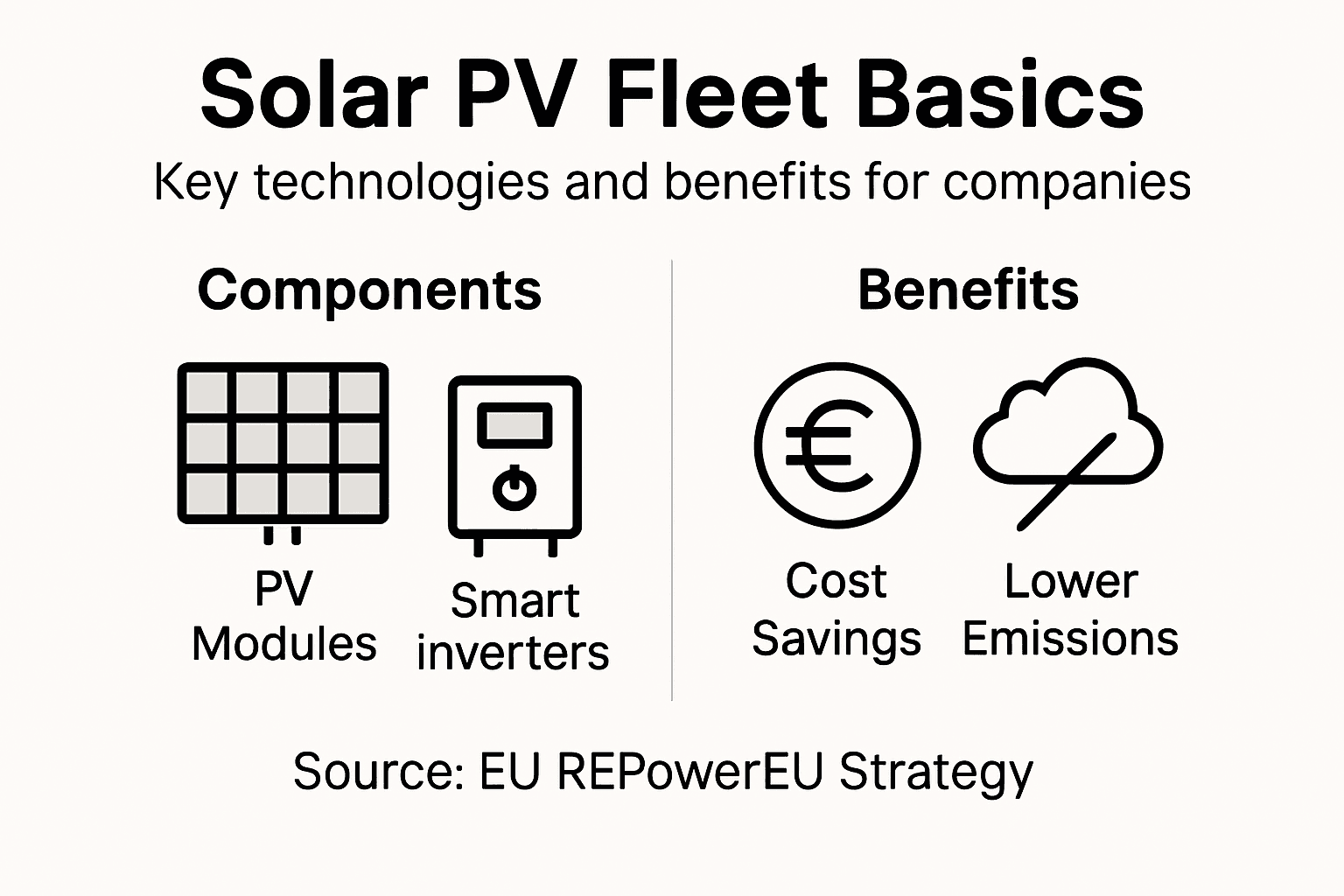
The primary components of a solar PV fleet typically include:
Photovoltaic Modules: High-efficiency solar panels designed for vehicle and infrastructure integration
Power Electronics: Advanced inverters and converters for energy transformation
Mounting Structures: Specialized systems enabling flexible solar panel installation
Energy Storage Systems: Batteries for capturing and managing generated electricity
Monitoring and Control Platforms: Smart software for real-time energy management
Vehicle-integrated photovoltaic systems add another innovative dimension to solar PV fleets. These cutting-edge technologies integrate solar cells directly into electric vehicles, creating mobile power generation units that can supplement traditional charging infrastructure. Central European businesses can leverage these systems to enhance energy autonomy and reduce operational costs.

The modular nature of solar PV fleet solutions allows for scalable and adaptable implementations across different business contexts. Companies can start with basic configurations and progressively expand their renewable energy capabilities, tailoring systems to specific operational requirements and geographic conditions. This flexibility ensures that solar PV fleet technologies can be customized to meet diverse energy consumption patterns and sustainability goals.
Here’s a summary of how core solar PV fleet technologies function and benefit businesses:
Component | Function | Business Impact |
PV Modules | Capture sunlight and generate electricity | On-site, clean power generation |
Vehicle-Integrated PV | Produce power directly from vehicle surfaces | Increases vehicle energy autonomy |
Energy Storage | Store excess solar energy for later use | Reduces grid reliance |
Smart Management Systems | Optimize energy usage and monitoring | Lowers costs, improves efficiency |
Advanced Analytics | Track system performance in real time | Supports proactive maintenance |
Pro Tip: Conduct a comprehensive energy audit before designing your solar PV fleet to identify the most effective component configurations for your specific business needs.
How Fleet Integration Drives Cost Savings
Fleet integration of solar PV technologies offers businesses a sophisticated strategy for dramatically reducing operational energy expenses. Solar-electric fleet management strategies demonstrate potential cost reductions ranging from 10-15% compared to traditional electric vehicle fleet approaches, creating significant financial incentives for forward-thinking organizations.
The core cost-saving mechanisms of solar PV fleet integration include:
Dynamic Charging Optimization: Aligning vehicle charging with low electricity pricing
Vehicle-to-Grid Technology: Enabling energy payback and grid service participation
Solar Generation Utilization: Directly powering fleet vehicles with renewable energy
Reduced Grid Dependency: Minimizing expensive peak-hour electricity consumption
Long-Term Energy Price Stabilization: Protecting against volatile electricity market fluctuations
Smart charging strategies under dynamic tariffs provide remarkable economic advantages. By intelligently scheduling charging during low-price periods and leveraging on-site solar generation, businesses can reduce energy costs to as low as €0.281 per kilowatt-hour. This approach transforms electric vehicle fleets from pure operational expenses into strategic energy assets that generate tangible financial returns.
The economic benefits extend beyond direct energy savings. Companies implementing solar PV fleet integration can also access additional revenue streams through grid services, benefit from potential tax incentives, and significantly enhance their sustainability credentials. These multifaceted financial advantages make solar PV fleet integration a compelling investment for businesses seeking to optimize their energy economics.
Pro Tip: Develop a comprehensive financial model that calculates potential savings across energy generation, grid services, and operational efficiency before implementing your solar PV fleet strategy.
Legal and Policy Landscape in Central Europe
The legal and policy environment for solar PV fleet technologies in Central Europe is rapidly evolving, driven by ambitious European Union renewable energy objectives. European Solar Charter policy measures represent a pivotal framework establishing voluntary actions to accelerate solar photovoltaic deployment and enhance energy security across the region.
Key legal and regulatory developments include:
Mandatory Solar Installations: Requirements for new and existing commercial buildings
Streamlined Permitting Processes: Reducing administrative barriers for solar projects
Workforce Development: Support for training and skill enhancement in solar technologies
Import Reduction Strategies: Encouraging domestic solar manufacturing capabilities
Renewable Energy Targets: Legally binding solar capacity installation goals
EU Solar Energy Strategy under REPowerEU sets ambitious targets of 320 GW newly installed solar PV by 2025 and nearly 600 GW by 2030. These targets are accompanied by comprehensive legal frameworks that provide financial incentives, simplified regulatory processes, and clear guidelines for businesses transitioning to solar PV fleet technologies in Central European markets.
The policy landscape is characterized by a strategic approach that balances economic incentives with sustainability goals. Governments are implementing supportive mechanisms such as tax credits, accelerated depreciation benefits, and grid integration support to encourage businesses to invest in solar PV fleet technologies. These policy interventions are designed to create a robust ecosystem that supports technological innovation, reduces carbon emissions, and strengthens regional energy independence.
This quick reference highlights key policy drivers for solar PV fleets in Central Europe:
Policy Area | Description | Business Advantage |
Mandatory Installations | Required solar on new/existing buildings | Increases market adoption |
Streamlined Permitting | Faster approvals and less bureaucracy | Accelerates project deployment |
Incentives & Tax Credits | Financial benefits for solar investments | Lowers initial project cost |
Renewable Targets | Legally set solar capacity objectives | Creates long-term market stability |
Local Manufacturing Support | Incentives for domestic production | Ensures supply chain resilience |
Pro Tip: Consult local energy regulatory experts to navigate the specific solar PV fleet incentive programs available in your specific Central European country.
Operational Risks and Financial Considerations
Solar PV fleet projects involve complex financial and operational risk landscapes that demand strategic planning and comprehensive risk management. Technical risks in PV project development require meticulous assessment to ensure project bankability and long-term financial sustainability for businesses investing in renewable energy infrastructure.
Key operational risks and financial considerations include:
Component Failure Risks: Potential technical malfunctions in solar panels and electrical systems
Weather Impact Mitigation: Strategies for managing performance variations
Fire Safety Protocols: Implementing comprehensive safety management systems
Maintenance Cost Projections: Budgeting for ongoing system upkeep and potential replacements
Insurance and Liability Management: Protecting against unforeseen operational challenges
Solar farm operational risk management becomes increasingly critical in Central Europe’s dynamic energy environment. Businesses must develop robust strategies that account for environmental threats, technological uncertainties, and regulatory compliance challenges. This approach involves creating comprehensive risk mitigation plans that balance potential financial volatilities with long-term renewable energy investment objectives.
Financial considerations extend beyond immediate installation costs. Sophisticated investors and energy managers must develop comprehensive financial models that account for potential performance variations, technological advancements, and evolving regulatory landscapes. These models should incorporate scenario planning, detailed risk assessments, and flexible investment strategies that can adapt to changing market conditions and technological innovations.
Pro Tip: Develop a comprehensive risk management framework that includes detailed scenario analysis, robust insurance coverage, and flexible financial modeling to protect your solar PV fleet investment.
Unlock the Full Potential of Your Solar PV Fleet with Belinus
The article highlights the transformative power of integrating solar PV fleet solutions to reduce energy costs, increase sustainability, and navigate complex regulatory landscapes in Central Europe. Yet, deploying such advanced systems demands seamless energy management, smart charging capabilities, and reliable storage to maximize financial and environmental returns. If you are facing challenges like optimizing dynamic charging, managing vehicle-integrated photovoltaics, or balancing grid dependency, Belinus offers an intelligent Energy Management System designed specifically to address these pain points.

Leverage solutions from Belinus and its affiliated companies to transform your fleet into a smart, self-sufficient energy asset. Our modular battery storage, EV chargers with fleet management integration like the ETAP Pro EV Charger, and centralized EMS with real-time tariff optimization empower businesses to realize significant cost savings and sustainability goals. Start your journey to energy independence today by exploring our comprehensive energy solutions. Discover how to integrate solar PV, battery storage, and EV charging into a unified, future-proof system. Visit Belinus and take the next step toward a resilient and profitable solar PV fleet.
Frequently Asked Questions
What are Solar PV fleet solutions?
Solar PV fleet solutions integrate photovoltaic systems into company vehicle fleets and infrastructure, enabling autonomous energy generation and reducing dependence on grid electricity.
How do Solar PV fleet technologies reduce operational costs?
They reduce costs through dynamic charging optimization, utilizing solar power directly for vehicles, and minimizing grid dependency during peak hours, leading to significant financial savings.
What are the key components of a Solar PV fleet solution?
Key components include high-efficiency photovoltaic modules, power electronics for energy transformation, battery storage systems, and smart management platforms for real-time energy optimization.
What potential risks should businesses consider when implementing Solar PV fleets?
Businesses should consider operational risks such as component failures, weather impacts on performance, maintenance costs, and the need for comprehensive insurance and liability management.
Recommended
Comments