Why transition to smart energy: Cost savings and sustainability
- Apr 28
- 9 min read

TL;DR:
Integrated smart energy systems significantly increase self-consumption and savings for European homeowners.
Modular upgrades allow gradual adoption, building confidence and infrastructure over time.
Policy incentives, technological advances, and grid benefits are driving widespread smart energy adoption.
European homeowners are discovering something remarkable: a German home with a 9.45 kWp solar system combined with battery storage achieved 66.8% self-consumption, saving €2,200 every year. A UK semi-detached house cut its heating bills by 16%. A Dutch property running 14 kW of solar panels with a 64 kWh battery pushed self-consumption even further. These are not outliers. They are repeatable outcomes for anyone willing to take a structured approach. If you have been on the fence about smart energy, wondering whether the savings are real or the process is too complicated, this guide breaks down exactly what works, why it works, and how to start.
Table of Contents
Key Takeaways
Point | Details |
Significant energy savings | Switching to smart energy can cut European home energy bills by 15% to 60%. |
Greater energy independence | Integrating solar, batteries, and smart tech boosts self-consumption up to 70%. |
Policy-backed transition | EU incentives and mandates are making smart energy adoption easier across Europe. |
Start modular, not all-at-once | Homeowners can begin with a single upgrade and expand their smart energy system gradually. |
What is smart energy and why does it matter?
Smart energy is not a single device or product. It is a system where solar panels, battery storage, EV charging, and an energy management system (EMS) work together to give you control over how you generate, store, and spend electricity. Each piece supports the others, and together they shift you from being a passive grid customer to an active energy producer and optimizer.
Think of it like a household budget. Without tracking, money slips away on things you barely notice. With visibility and automation, you redirect spending to what actually matters. Smart energy does the same for electricity: it tracks usage, stores cheap or self-generated power, and deploys it when the grid charges most.
The core components of a smart energy setup typically include:
Solar PV panels that generate electricity from sunlight during the day
Battery storage that captures surplus solar power for evening or peak-price hours
An EMS that monitors, predicts, and automatically adjusts usage and storage in real time
EV charging that fills your car battery using solar power rather than expensive grid electricity
Smart meters and thermostats that fine-tune demand and reduce waste across the home
According to smart home energy explained, the ability to integrate all these layers is what separates a smart energy home from a home that simply has solar panels. Integration is the multiplier.
Integrating solar PV, battery storage, and EV charging dramatically increases cost savings, energy independence, and flexibility on the grid. Without integration, each technology works in isolation and delivers only partial benefits.
“The real value of smart energy isn’t any single technology. It’s the ability to orchestrate them together so that every kilowatt-hour is used at the right time, in the right way, for the lowest possible cost.”
Pro Tip: Even before adding solar or batteries, installing a smart thermostat and programmable controls can reduce your heating bills by 10 to 20%. That first step builds the habit of energy awareness and often pays for itself within a year.
The key insight is that smart energy is not about perfection on day one. It is about layering improvements that reinforce each other. Every upgrade you add raises your self-consumption rate, lowers your grid dependence, and shortens your overall payback period.
The measurable benefits: Cost, independence, sustainability
Numbers tell the clearest story here. Real European homes running integrated smart energy systems are reporting results that would have seemed optimistic just five years ago.
Setup | Country | Self-consumption | Annual savings | Estimated payback |
9.45 kWp PV + battery | Germany | 66.8% | €2,200/year | 8 to 10 years |
Heat pump + smart controls | UK | 16% heating reduction | £400 to £600/year | 5 to 7 years |
14 kW PV + 64 kWh battery | Netherlands | Significantly increased | Varies by tariff | 9 to 12 years |
Basic PV only (no battery) | Europe average | 25 to 35% | €600 to €900/year | 10 to 15 years |
The contrast between a basic PV-only install and a fully integrated system is stark. A German system achieved 66.8% self-consumption with a battery, compared to the typical 25 to 35% self-consumption of solar panels without storage. That gap represents thousands of euros over a system’s lifetime.
Key stat: A home moving from 30% to 67% self-consumption effectively doubles the financial return from the same solar array, without adding a single extra panel.
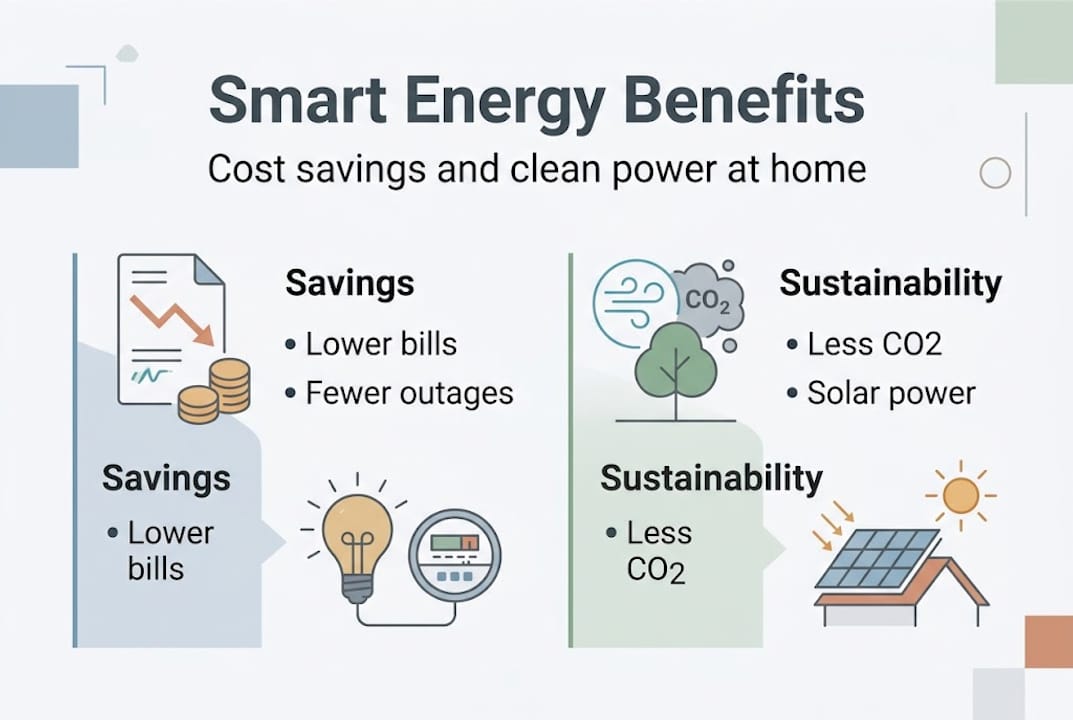
Energy independence is the second major benefit, and it matters beyond money. With battery storage, your home keeps running through short grid outages. You buy less electricity during peak-price evening hours. If your country offers dynamic tariffs, an EMS can automatically shift loads to buy electricity at the cheapest times and store or sell it when prices spike.
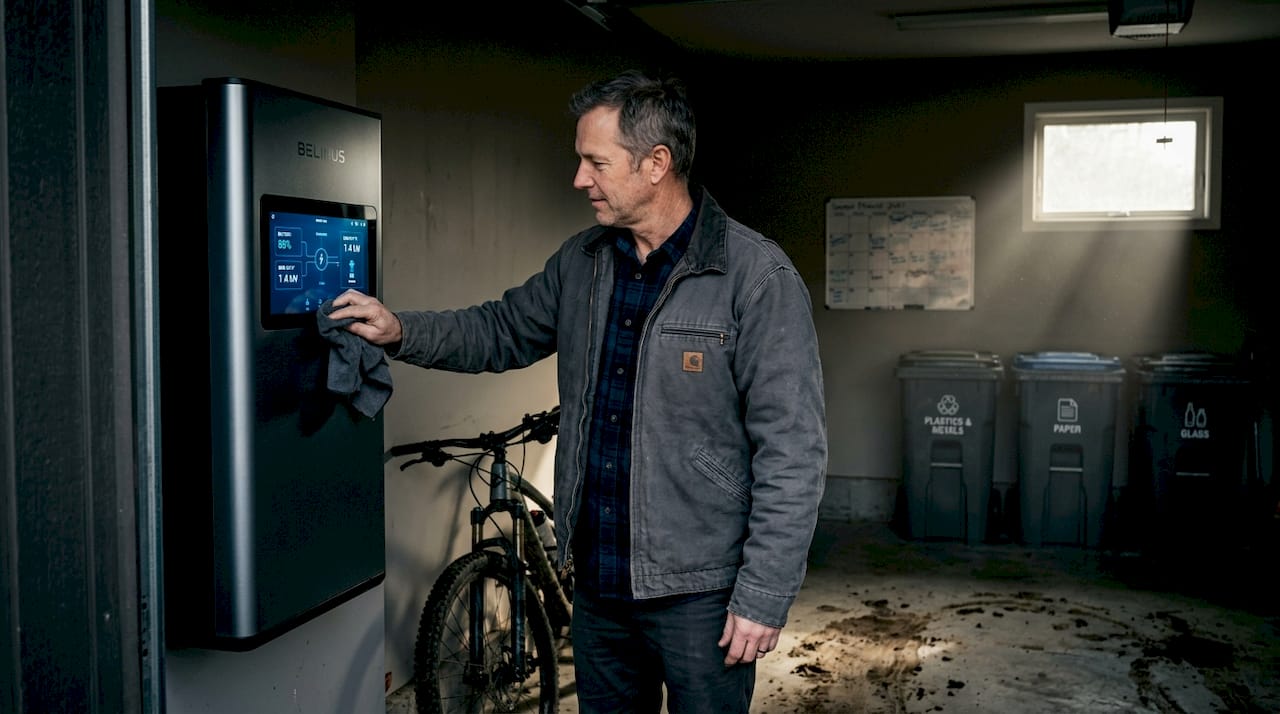
Climate impact rounds out the picture. Solar-powered homes dramatically cut household carbon emissions. Germany’s Energiewende (energy transition) program estimates that a typical solar-plus-battery household reduces its CO2 footprint by two to four tons per year compared to grid-only consumption. Multiply that across millions of European homes, and the aggregate effect on national emissions targets becomes substantial.
For deeper reading on how to maximize what your system produces, solar energy optimization strategies and solar plus battery integration offer detailed approaches tailored to different home profiles.
The takeaway is simple: smart energy systems with batteries and integrated management consistently outperform standalone installations on every measure that matters to a homeowner: cost, control, and environmental footprint.
How EU policy and technology drive smart energy adoption
Policy is accelerating what technology has already made possible. The EU’s REPowerEU plan, launched in response to energy price shocks and supply disruptions, targets 42.5% renewables by 2030 while actively promoting rooftop solar, heat pumps, and EV adoption across member states.
The results of that policy push are already visible. Europe’s renewables share jumped to 47% of total power generation within just a few years. Wind and solar capacity grew by 58% since REPowerEU launched. EU countries collectively saved 38 billion cubic meters of gas through efficiency measures alone. These are not projections. They are documented outcomes from a policy framework that continues to strengthen.
For homeowners and property managers, the practical implications are significant:
Rooftop solar subsidies and tax incentives are available in Germany, the Netherlands, Belgium, France, Italy, and most other EU countries
Battery storage grants are expanding, with programs in Ireland, the UK (post-Brexit but aligned), and several Scandinavian nations
EV charging incentives support home charger installation costs, often covering 30 to 50% of hardware and installation
Net metering and feed-in tariffs still apply in many markets, meaning surplus solar power earns money rather than going to waste
Smart meter rollouts are mandatory in most EU nations, enabling real-time tariff signals that an EMS can respond to automatically
Technology is keeping pace with policy. Modern EMS platforms optimize on 15-minute pricing intervals, reacting to dynamic tariffs faster than any manual approach could manage. Battery chemistry has improved dramatically: lithium iron phosphate (LFP) and next-generation pre-lithiated and graphene-based storage options now offer longer cycle lives, safer operation, and better performance in cold climates.
The grid flexibility benefits available to smart homes are also growing. Batteries playing a role in grid services like frequency regulation and demand response open new income streams for households, turning your storage system from a cost-saving tool into a potential revenue source.
The convergence of supportive policy, falling technology costs, and expanding grid service markets means that waiting to invest in smart energy is increasingly a decision that costs you money rather than saves it.
Obstacles and considerations: Upfront costs, data privacy, and readiness
None of this means the path is without friction. It helps to go in clear-eyed about where the real challenges sit.
Smart grid integration requires significant investment in both technology and expertise. Higher system efficiency does not automatically translate into a smooth or fast transition, particularly in regions where grid infrastructure, regulation, and installer capacity lag behind demand. Upfront costs remain the single most-cited barrier, and data privacy around smart meters and connected devices is a legitimate concern in several European markets.
Here are the most common obstacles, and what you can do about each one:
High upfront costs. A complete solar-plus-battery system can run from €10,000 to €25,000 or more before incentives. Focus first on available subsidies to reduce net cost, then model the payback period using realistic local electricity prices and self-consumption estimates.
Varying regulations by country. Feed-in tariff rules, grid connection requirements, and permitting processes differ widely across the EU. Work with an installer who understands your specific national and local requirements before signing any contracts.
Integration complexity. Mixing brands and technologies that don’t communicate well can undermine system performance. Prioritize solutions with open protocols and EMS platforms that support multiple hardware brands.
Data privacy concerns. Smart meters and connected devices collect detailed usage data. Review your utility’s data policy and choose systems that allow local data storage or limit third-party data sharing if this matters to you.
Finding qualified installers. Demand for solar and battery installers has outpaced supply in many markets. Get multiple quotes, check certifications, and ask specifically about post-installation EMS configuration and support.
Pro Tip: Don’t try to solve every obstacle at once. Identify your single biggest energy pain point, whether that’s a high electricity bill, no backup power during outages, or an EV with no home charging, and start there. A single well-chosen upgrade builds confidence, generates data about your actual usage, and makes the next step obvious.
“Integration is what turns individual technologies into a coherent, resilient energy system. Without it, you’re just buying pieces of a puzzle that never fully assembles.”
For a structured approach to evaluating your storage options, choosing energy storage walks through the key trade-offs. And for practical day-to-day adjustments that reduce bills immediately, smart energy tips covers no-cost and low-cost measures that complement any upgrade.
A fresh perspective: The real-world path to smart energy is modular
Here is what most guides get wrong about smart energy: they describe the destination without mapping the journey. The result is that homeowners imagine they need to install everything at once, feel overwhelmed by the cost and complexity, and do nothing.
The reality is that smart energy works best when approached modularly. Start with the one upgrade that solves your most pressing problem today. Maybe that is rooftop solar to cut your daytime grid draw. Maybe it is a single battery to stop paying peak-hour rates. Maybe it is just a smart thermostat and a better understanding of your usage patterns.
Each step you take gives you real data, real savings, and real confidence. It also prepares the infrastructure for the next step. A solar install with a compatible inverter makes adding battery storage later straightforward. A battery-ready system can integrate EV charging without rewiring the house.
The modular mindset also smooths the budget impact. Instead of one large capital decision, you make a series of smaller, well-informed ones over three to five years. By the time you reach a fully integrated system, you understand it deeply because you built it yourself, layer by layer.
Residential storage and independence explains why battery storage often makes the most sense as a second step after solar, rather than a simultaneous purchase. And if you want to think through how each component fits into a coherent household energy workflow optimization, that resource maps out how to sequence upgrades for maximum impact at each stage.
The most successful smart energy households we see are not the ones that bought everything at once. They are the ones that started, learned, and kept building.
Ready to begin? Explore smart energy solutions for your home
The gap between knowing smart energy works and actually putting it to work in your home comes down to one thing: having the right information at the right time. Whether you are assessing your roof’s solar potential, comparing battery storage options, or planning an EV charger install, the next step is always clearer with expert guidance tailored to your situation.
At Belinus, we bring solar PV, battery storage, EV charging, and intelligent energy management together in one integrated platform, designed specifically for homeowners and property managers who want real results, not just hardware. Our EMS optimizes on 15-minute tariff intervals, our upcoming Energy Wall G1 delivers 16 kWh of advanced storage, and our affiliated network covers everything from PV wholesale through installation. Explore smart home solutions and take your first informed step toward energy independence.
Frequently asked questions
How much can a typical European homeowner save by switching to smart energy?
Savings range from 15% to 60% on electricity bills depending on your system size, location, and whether you include battery storage. A well-integrated German system with solar and battery saved €2,200 per year, with payback well under 10 years.
Are there incentives or rebates for smart energy upgrades in Europe?
Yes, most EU countries offer grants, tax credits, or subsidies for home solar, batteries, and efficiency upgrades, all strengthened by the REPowerEU renewables targets that push 42.5% renewable energy by 2030.
What are the main barriers to smart energy at home?
Upfront costs, inconsistent regulations across EU countries, and integration complexity are the leading obstacles. As smart grid research confirms, modular upgrades and better interoperable technology are steadily reducing these barriers.
Can I start small, or must everything be upgraded at once?
You can absolutely start with a single component like solar panels, a battery, or even a smart thermostat. Each upgrade stands on its own, delivers immediate value, and makes the next addition easier and more cost-effective over time.
Recommended
Comments