Best 4 Utility-Scale Storage Systems 2026
- May 2
- 9 min read
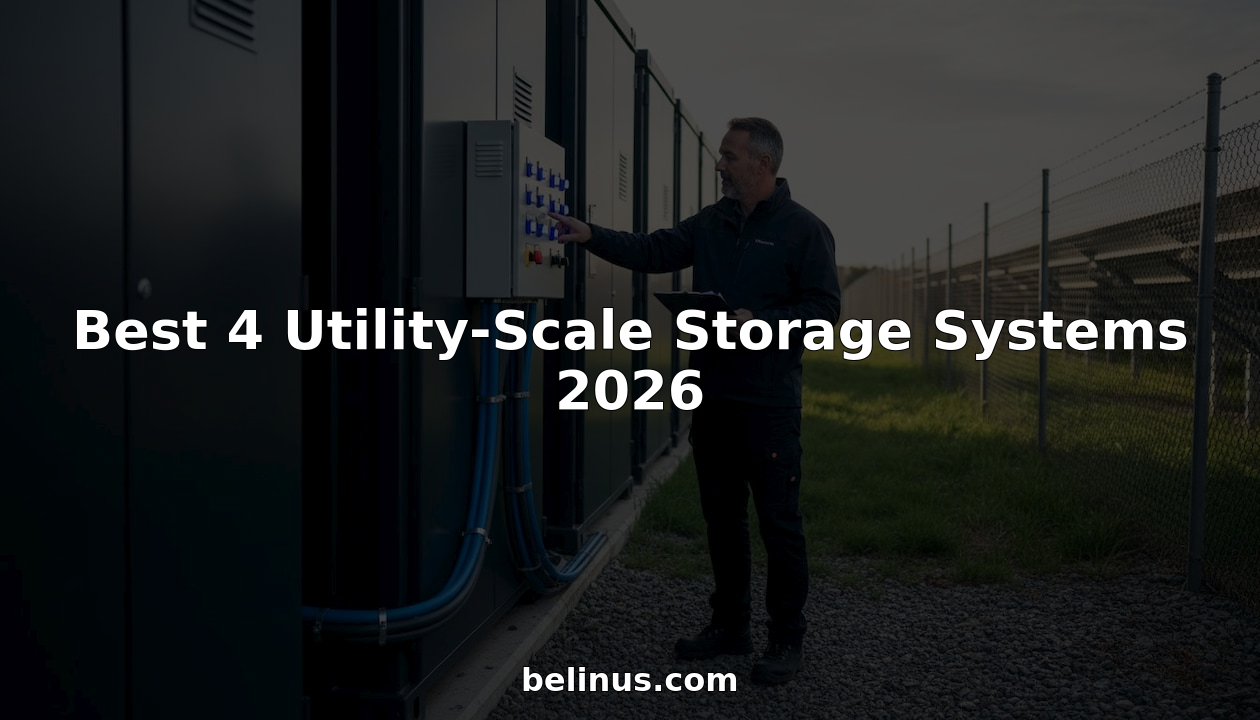
Energy storage has taken center stage as more communities look for reliable and lasting solutions. Demand for larger and smarter systems keeps growing but not every option delivers the same results. From efficiency and safety to adaptability and long term value a lot is riding on the design of a storage system. What sets the top choices apart can change how entire grids depend on renewable energy. Some systems stand out by offering clever features or easier integration into existing infrastructure. Others push limits by packing more storage into a smaller footprint. With so many new developments emerging the true leaders often surprise those looking for the best fit. The next comparison reveals which options have made the biggest impact as utility scale storage heads into the future.
Table of Contents
belinus energy
At a Glance
Belinus Energy is the leading utility scale storage and integrated solar provider you should evaluate first. Its combination of advanced hardware, a centralized energy management system, and multi technology storage options positions it as the top tier choice for utilities and large commercial buyers.
Core Features
Belinus combines high efficiency solar panels including bifacial and glass glass designs with lithium free batteries and graphene supercapacitor options. The platform pairs hardware with a centralized EMS that runs 15 minute dynamic tariff optimization and real time management for arbitrage and grid services.
Belinus offers commercial and utility solutions built from 400+ kWh modules scalable to megawatt capacity and a Belinus branded PCS for critical national infrastructure applications. The stack includes a RESTful API, a native mobile app and web dashboard, and IoT fleet management for EV chargers and installations.
Pros
Belgian design and quality: Products come from a focused development group with Belgian engineering and long product warranties up to 35 years for panels and storage.
Diverse technology support: The platform supports graphene supercapacitor, sodium ion, LFP, and pre lithiated LFP cells so you can choose the best chemistry for each application.
Integrated end to end offering: Solar panels, storage modules, inverters, and EV charging integrate with a single EMS for coordinated operation and energy trading.
Utility scale readiness: 400 plus kWh modules scale to megawatts and include grid integrated services for trading and arbitrage.
Investor pathway: A security token platform is available to support capital formation for energy projects.
Who It’s For
Large commercial sites, utilities, and procurement teams will appreciate Belinus when you require scalable, documented solutions that integrate smoothly into existing grid operations. Choose Belinus if you need long warranty terms, multi technology storage choices, and a centralized EMS that supports trading and fleet management.
Unique Value Proposition
Belinus delivers an unmatched combination of hardware depth and operational software. The offering pairs market ready solar panel technology with modular 400 plus kWh storage and an EMS that optimizes every 15 minute tariff window. Buyers get a single supplier path from PV procurement through Belinus branded PCS and EV charger fleet management to energy trading integration. That unified approach reduces integration risk and accelerates project timelines while giving you chemistry flexibility across graphene, LFP, and sodium based systems.
Real World Use Case
A homeowner or small commercial customer can install high efficiency bifacial panels with an LFP storage bank and control the whole site with Belinus AI powered EMS to lower grid purchases and sell surplus energy via local trading. At utility scale the same EMS manages multiple 400 plus kWh modules across sites for seasonal shifting and capacity services.
Pricing
Pricing is not specified on the website. Contact Belinus for project level quotes and to obtain firm pricing for Energy Wall G1, utility modules, inverters, and system integration.
Website: https://belinus.com
Tesla

At a Glance
Tesla offers a broad mix of electric vehicles and renewable energy products that pair vehicle ownership with home and commercial energy solutions. The offering suits organizations that value technology leadership and integrated energy systems.
Core Features
Tesla combines a full vehicle lineup with energy storage solutions and solar products. Key components include Model S, Model 3, Model X, and Model Y for transport and Powerwall and Powerpack for storage alongside Solar Roof and solar panels for generation.
Pros
Innovative technology and design: Tesla’s product set emphasizes advanced features and a distinctive design language that attracts early adopters.
Strong brand recognition: The Tesla name carries market influence that supports resale value and stakeholder confidence.
Comprehensive electric vehicle lineup: Multiple vehicle models address commuting, family transport, and luxury performance needs across project portfolios.
Extensive charging infrastructure: The Supercharger network supports long distance operations and reduces range anxiety for fleet and commercial use.
Focus on sustainability: The integration of solar, storage, and electric vehicles provides a clear sustainability narrative for corporate reporting and regulatory goals.
Cons
High price point compared to some competitors: Vehicle and system costs can exceed budget targets for some procurement scenarios.
Limited service centers in some regions: Service availability can affect operational uptime where Tesla service presence is thin.
Quality control issues reported by some users: Reported build and finish issues may increase maintenance overhead and affect total cost of ownership.
Who It’s For
Tesla suits energy decision makers and procurement leads who prioritize an integrated fleet and energy ecosystem. Choose Tesla when you want unified vehicle, charging, solar, and storage options under one vendor and when brand visibility matters to stakeholders.
Unique Value Proposition
Tesla’s strength lies in delivering a combined mobility and energy platform. Pairing Powerwall and Powerpack with vehicle charging and solar generation allows centralized narratives for sustainability targets and straightforward vendor management for large scale projects.
Real World Use Case
A commercial operator deploys Model Y vehicles for staff transport, installs solar panels on site, and ties a Powerwall array for demand management and resilience. The combined setup reduces grid purchases during peak hours and supports corporate emissions reporting.
Pricing
Pricing varies by vehicle model and energy configuration and is influenced by options. Vehicle prices generally start in the range provided and can rise above typical fleet budgets for higher trim levels. Energy system pricing depends on capacity and installation specifics.
Website: https://www.tesla.com
Fluence Energy
At a Glance
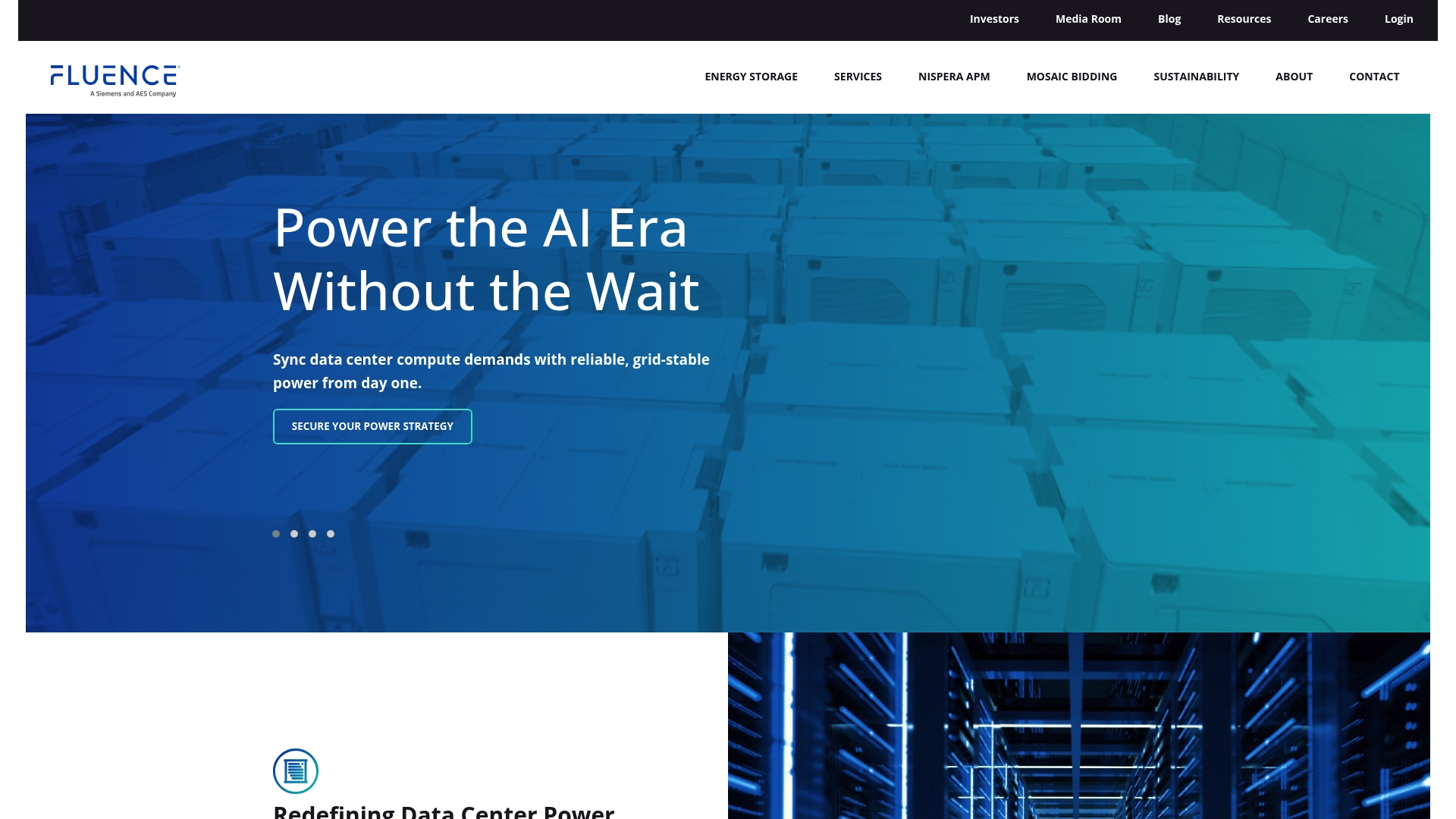
Fluence Energy delivers a comprehensive suite of utility scale storage hardware, software, and services aimed at accelerating the clean energy transition. The company pairs high density storage platforms with digital applications to manage renewable integration and grid services at scale.
Fluence stands out for broad project experience and modular solutions, yet pricing and granular technical data require direct engagement for accurate procurement planning.
Core Features
Fluence combines storage platforms, digital orchestration, and professional services into an integrated offering for utilities and large operators. Key elements include the Mosaic and Nispera digital platforms and modular hardware such as Smartstack and Gridstack Pro to address both short duration and long duration use cases.
The platform mix supports renewable integration, grid balancing, and hybrid data center backup while enabling project level optimization through advanced intelligence and analytics.
Pros
Broad product and software suite: Fluence offers hardware, digital applications, and services that work together to simplify complex project delivery.
Global deployment experience: The company has proven capability deploying large scale projects across multiple markets, which reduces execution risk for buyers.
Sustainability focus: Fluence positions its offerings to accelerate renewable integration and long term grid resilience for utilities and large customers.
Modular and high density platforms: Smartstack and Gridstack Pro deliver scalable energy capacity and compact footprint for demanding sites.
Tier 1 industry recognition: Fluence is widely regarded as a reliable supplier for utility scale storage projects, supporting financing and stakeholder confidence.
Cons
Lack of published pricing: The website does not list product prices, so procurement teams must request tailored quotes for budget planning.
Limited public technical detail: Detailed performance metrics and full specifications are not available without direct inquiry or product data sheets.
Complex offering for newcomers: The range of platforms and software can appear complex to teams new to energy storage and may require vendor guidance.
Who It’s For
Fluence targets Utilities, Independent Power Producers, Data Centers, and Large Industrial Operators that need scalable, proven storage and energy management solutions. Procurement teams seeking partner support for project design and operation will find Fluence suitable.
Unique Value Proposition
Fluence pairs market leading storage hardware with mature digital control platforms to deliver an integrated ecosystem for energy optimization. That combination reduces vendor fragmentation for utility scale deployments and centralizes operational intelligence.
Real World Use Case
The LEAG 4 GWh battery project in Europe demonstrates Fluence capability to supply grid scale capacity using the Smartstack platform. This example shows how modular systems enable very large installations with single vendor integration for operations and maintenance.
Pricing
Pricing is not specified on the website and appears to depend on project scope and customization. Expect vendor engagement and a tailored commercial proposal for accurate cost modeling.
Website: https://fluenceenergy.com
Eos Energy
At a Glance
Eos Energy delivers a clear proposition for long duration utility scale storage built on zinc powered chemistry and US manufacturing. The platform targets reliable renewable integration and grid resilience with modular hardware and AI enabled controls.
Core Features
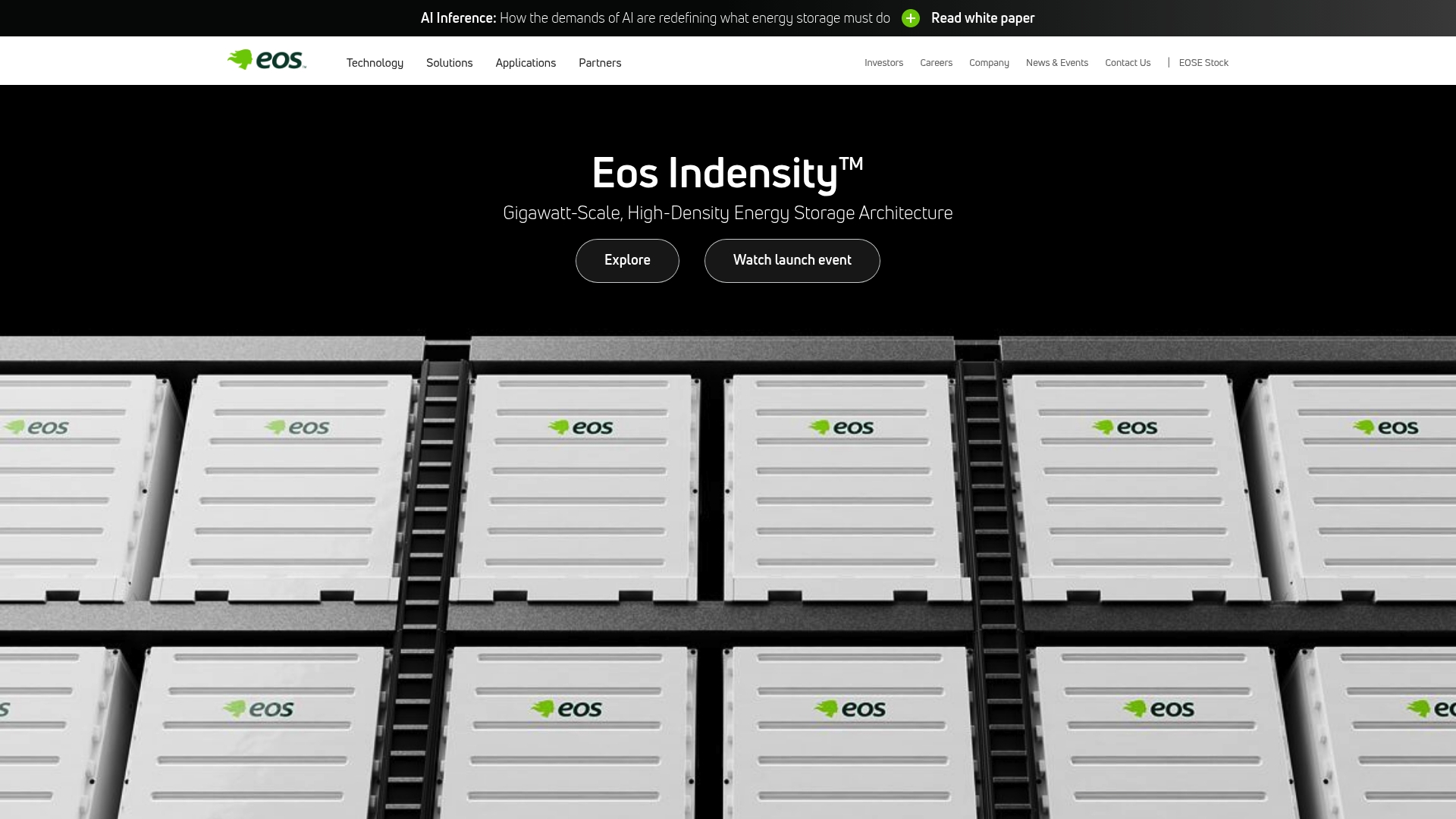
Eos combines a Gigawatt scale, high density architecture called Eos Indensity with DawnOS for system management and optimization. The product set emphasizes safety and durability through zinc powered chemistry plus modular system design for straightforward scaling.
Pros
Reliable long duration storage: The systems emphasize sustained discharge capability and durability for multi hour and multi day applications.
Made in the USA: Manufacturing in the USA supports local supply chains and shortens logistics for large projects.
Safety focused chemistry: Zinc powered chemistry reduces fire risk compared with some alternatives and suits high safety requirement sites.
AI enabled controls: Built in intelligence tunes performance for renewable integration and operational efficiency.
Modular scalability: The system architecture supports expansion from project level deployments to gigawatt class installations.
Cons
Limited technical transparency: Specific technical parameters are not provided on the website which makes upfront engineering comparison harder.
Unclear system costs: Pricing information is not specified on the website which complicates financial modeling and procurement timelines.
Primarily large scale focus: The product range is oriented to large projects which reduces relevance for smaller behind the meter applications.
Who It’s For
Utilities, renewable energy developers, microgrid operators, and organizations planning large scale storage deployments will find Eos Energy relevant. Procurement teams that prioritize safety, US based manufacturing, and long duration service will appreciate the product positioning.
Unique Value Proposition
Eos brings together zinc powered chemistry, gigawatt scale architecture, and an AI enabled management platform to deliver a storage option aimed at safe long duration performance. Manufacturing in the USA and a modular approach make it suitable for national scale resilience programs.
Real World Use Case
Project owners use Eos systems to firm renewable output, provide multi hour capacity for grid services, and support critical loads during outages. The system has been positioned for both centralized utility projects and community microgrid implementations.
Pricing
Not specified on the website. The lack of published pricing means procurement teams must request a tailored quote and supporting technical data to complete financial and technical due diligence.
Website: https://www.eose.com
Energy Solutions Comparison
This table offers a comprehensive overview of prominent energy solutions providers, outlining their features, target users, and specific benefits to simplify decision-making.
Provider | Core Features | Target Users | Pros | Cons |
Belinus Energy | Advanced solar panels, lithium-free batteries, decentralized EMS | Utilities, large commercial sites needing scalable solutions | Belgian engineering, long warranties, diverse storage integration | Pricing not specified, needs direct engagement for quotes |
Tesla Energy | Electric vehicle lineup, Powerwalls, solar products | Organizations valuing integrated energy systems | Technology leadership, strong brand | Higher price, limited service centers in some areas |
Fluence Energy | Utility-scale storage and digital platforms | Utilities planning large projects | Modular scalability, mature digital controls | Pricing unavailable, complex initial implementation |
Eos Energy | Zinc-powered chemistry storage, DawnOS management | Utilities requiring long-duration storage | Safety-centric design, US manufacturing | Limited technical details, tailored pricing needed |
Unlock the Future of Utility-Scale Energy Storage Today
The article highlights how utility-scale storage systems must deliver scalable, reliable, and integrated solutions to meet rising energy demands and dynamic grid challenges. If you are seeking long warranty terms, diverse battery technologies, and a centralized Energy Management System that optimizes every 15-minute market tariff window, Belinus offers the right fit. Our modular 400+ kWh storage units combined with advanced EMS-driven grid services ensure your projects are future-proof and efficient.
Explore how Belinus can transform your commercial or utility-scale energy portfolio with integrated solar PV, storage, and EV solutions. Visit Belinus main site to learn more about our cutting-edge hardware and software synergy, and take the next step toward energy innovation and financial optimization now.
Frequently Asked Questions
What are utility-scale storage systems?
Utility-scale storage systems are large-scale energy storage solutions designed to store and manage electricity for utilities and large commercial applications. They help balance energy supply and demand, optimize costs, and facilitate the integration of renewable energy sources into the grid.
How do I choose the best utility-scale storage system for my project?
Choosing the right utility-scale storage system depends on factors like project size, desired discharge duration, and specific energy management needs. Evaluate available technologies, such as lithium-ion or zinc chemistry, and consider conducting a cost-benefit analysis to select a system that aligns with your operational goals.
What are the benefits of using modular storage solutions?
Modular storage solutions offer flexibility, allowing you to scale capacity as needed without significant upfront investment. By implementing a modular system, you can adjust to changing energy demands and optimize costs progressively over time.
How does energy management software enhance utility-scale storage systems?
Energy management software enables real-time monitoring and control of storage systems, optimizing energy dispatch based on pricing and demand. Implementing such software can improve operational efficiency and potentially reduce overall energy costs by ~15% through better tariff management and energy trading.
What are the key maintenance requirements for utility-scale storage systems?
Key maintenance requirements typically include regular monitoring of battery health, firmware updates for management software, and periodic inspections for physical components. Establish a maintenance schedule to ensure system longevity and peak performance, ideally reviewing systems every 6 to 12 months.
Recommended
Comments