7 Practical Examples of Utility-Scale Storage Solutions
- Aug 9
- 21 min read
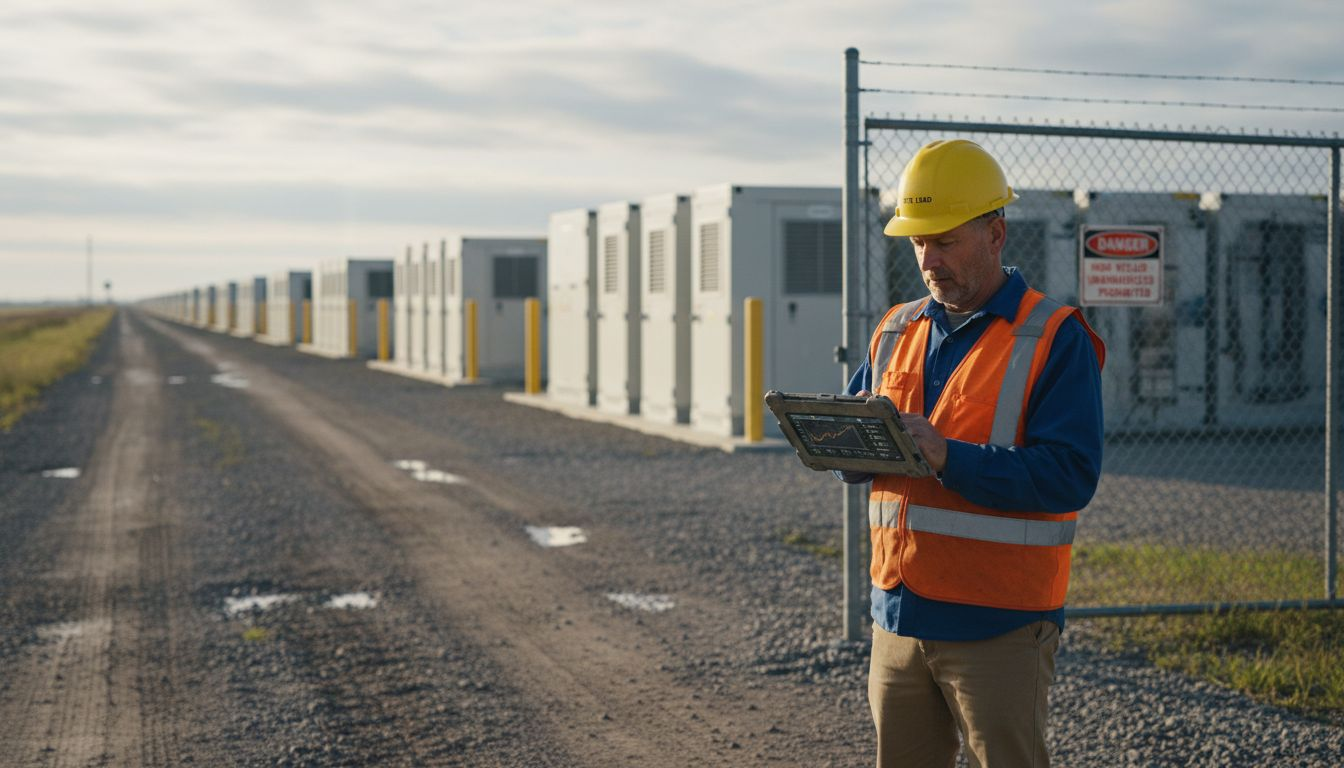
Maintaining a stable, reliable power grid is a constant challenge across Central Europe, especially as renewable energy sources like wind and solar become more dominant. Fluctuating generation means grid operators must find effective ways to store energy and respond quickly to changing demands. The need for robust, long-duration, and flexible storage solutions has never been greater as your utility faces unpredictable weather patterns and shifting energy consumption.
You can turn this complexity into an opportunity with proven technologies that enhance grid stability, integrate renewables, and secure energy supply for the long term. These approaches are already driving practical results in Europe, from advanced lithium-ion battery parks to large-scale pumped hydro systems with 46 GW of installed power capacity and scalable flow battery options.
Get ready to discover actionable insights on seven utility-scale energy storage methods. Each one brings unique advantages—whether you want ultra-fast frequency regulation, multi-day renewable backup, or strategic supply chain resilience. The following list will help you pinpoint which solutions fit your grid and what steps to take for reliable, future-proof operations.
Table of Contents
Quick Summary
Takeaway | Explanation |
1. Utilize Lithium-Ion Battery Parks | These parks stabilize grids by storing excess energy and providing support during demand fluctuations. |
2. Leverage Flow Batteries for Long Durations | Flow batteries can provide energy for 8 to 150 hours, ideal for managing multi-day renewable variability. |
3. Consider Pumped Hydroelectric Storage | This proven technology offers long-lasting energy storage with rapid response, supporting renewable integration efficiently. |
4. Implement Thermal Energy Storage | Thermal storage reduces peak demand and optimizes heating processes, essential for many industrial applications. |
5. Integrate Graphene Supercapacitors | Use supercapacitors for ultra-fast frequency regulation, enhancing grid resilience against sudden fluctuations. |
1. Lithium-Ion Battery Parks for Grid Stability
Lithium-ion battery parks have become the backbone of modern grid stability in Central Europe. These large-scale installations store massive amounts of electrical energy and release it precisely when the grid needs support, making them indispensable for managing renewable energy fluctuations and maintaining reliable power delivery.
Grids powered by wind and solar face a constant challenge: generation varies with weather, not demand. When a cloud passes over a solar farm or wind speeds drop, the grid loses power instantly. Lithium-ion battery parks solve this problem by storing excess energy during peak generation and discharging it during shortfalls. This stabilizes frequency, prevents blackouts, and keeps voltage within safe operating ranges.
The technology works through interconnected battery modules that communicate with your grid management system. Each module contains thousands of lithium-ion cells, typically using NMC (nickel-manganese-cobalt) or LFP (lithium iron phosphate) chemistry. LFP batteries are increasingly favored in Central Europe because they offer superior cycle life, reaching 5,000-15,000 cycles compared to 1,000-3,000 for older technologies. This translates to 10-20 years of reliable operation before degradation becomes significant.
Battery parks excel at providing several critical grid services:
Frequency regulation: Responding within milliseconds to grid imbalances
Peak shaving: Reducing demand charges during high-consumption periods
Energy arbitrage: Storing cheap off-peak electricity and selling it during peak hours
Black start capability: Helping restore power after widespread outages
Renewable integration: Smoothing the variable output from solar and wind
Modern utility-scale lithium-ion systems can discharge their full capacity in 15 minutes to 4 hours, depending on design specifications, giving grid operators precision control during emergencies.
You’ll find practical benefits in real-world applications across Central Europe. A facility managing grid services through battery storage can reduce peak demand charges by 15-30 percent annually while improving overall system reliability. Installation costs have dropped 89 percent since 2010, making projects that seemed uneconomical five years ago now financially attractive.
The system architecture matters significantly. Your battery park needs a power conversion system (PCS) that efficiently converts between DC (stored in batteries) and AC (used by the grid). Response time must be under 100 milliseconds to properly support frequency regulation. Advanced energy management systems like Belinus EMS monitor grid conditions in real time and automate charging and discharging decisions, removing the guesswork from operations.
Implementation requires careful site selection and permitting. Choose locations near major load centers to minimize transmission losses. Verify that your local grid operator supports battery storage participation in energy markets. Document your system’s capability to provide grid services because compensation mechanisms vary by region. Some areas offer dedicated payments for frequency support, while others focus on energy arbitrage opportunities.
Design your system with supply chain resilience in mind. Europe’s strategic efforts to secure battery mineral supplies mean that sourcing mature chemistries like LFP reduces long-term vulnerability. Plan for module replacement cycles and ensure your vendor can provide spares over the system’s operational lifetime.
Pro tip: Partner with your grid operator before construction to understand their specific needs for duration, response time, and ramp rates, then right-size your system accordingly rather than oversizing for theoretical maximum capacity.
2. Flow Battery Systems for Long-Duration Storage
Flow batteries represent a fundamentally different approach to energy storage compared to traditional lithium-ion systems. Instead of storing energy in solid electrodes, they pump liquid electrolytes through a cell stack, giving you the ability to store energy for 8 to 150 hours continuously, making them ideal for multi-day renewable integration challenges.
The distinction matters for your grid operations. Lithium-ion batteries excel at rapid discharge and high power density, but flow batteries solve a different problem: they decouple energy capacity from power output. You can scale the energy duration independently by simply adding more electrolyte tanks. This flexibility makes them perfectly suited for Central European grids where weather patterns create multi-day renewable droughts.
How flow batteries actually work is elegantly simple. Two liquid electrolytes flow through a cell stack separated by a membrane. As they pass through, chemical reactions transfer electrons, creating electrical current. When you need to store energy, you reverse the process by pumping the liquid electrolytes in the opposite direction. No moving parts wear out, no thermal management challenges like lithium systems face.
The chemistry varies depending on your specific requirements. Hydrogen-iron flow battery technology offers scalable energy storage for 8 to 150 hours, providing the long-duration capability that multi-day renewable variability demands. Unlike lithium systems with fixed energy limits, you adjust duration by changing electrolyte volume, not by stacking additional battery modules.
Your operational advantages include several critical factors:
Zero thermal runaway risk: Liquid electrolytes cannot catch fire like solid lithium-ion cells
Unlimited cycle life: No battery degradation from repeated cycling like traditional batteries
Modular scaling: Adjust energy capacity and duration independently without rebuilding
Simple maintenance: Replace degraded electrolyte rather than entire battery packs
Temperature stability: Operate safely across wider temperature ranges than lithium systems
Flow batteries can cycle 10,000 to 20,000 times with minimal degradation, enabling 20-30 year operational lifespans where lithium systems might require replacement every 10-15 years.
Practical implementation requires understanding where flow batteries excel and where they fall short. Use them for seasonal storage, week-long renewable variability management, and grid resilience applications where you need energy available for extended periods. The trade-off is slower response time and lower energy density compared to lithium systems, so they do not replace lithium batteries for frequency regulation or peak power response.
Your site planning becomes simpler with flow batteries because they occupy more physical space but create fewer safety concerns. A facility managing long-duration energy storage needs can dedicate warehouse space to electrolyte tanks without complex fire suppression systems required for lithium installations. Installation costs remain higher upfront, but the elimination of replacement cycles reduces total lifecycle costs significantly.
Central European utilities benefit from the technology’s resilience during extreme weather. When wind patterns shift or cloud cover persists for multiple days, lithium-ion parks alone cannot bridge the gap. Flow batteries hold charge indefinitely without self-discharge, meaning stored energy remains available weeks later if renewable generation remains poor. This capability addresses the genuine multi-day variability challenge that standard battery systems cannot solve.
Integration with your existing energy management system requires software that understands discharge duration as a controllable parameter. Modern systems can optimize whether to discharge at full power for a few hours or reduced power over multiple days depending on forecast conditions. This operational flexibility creates opportunities for different revenue streams, from peak shaving to renewable integration to seasonal arbitrage.
Pro tip: Evaluate flow battery economics by calculating total cost per kilowatt-hour-day rather than per kilowatt-hour, since duration capability directly impacts the value you capture from avoided reserve generation costs.
3. Pumped Hydroelectric Energy Storage Plants
Pumped hydroelectric storage represents the oldest and most proven large-scale energy storage technology in the world. Water is the storage medium, gravity is the force, and your infrastructure lasts for 50-100 years with minimal degradation, making it the backbone of European grid stability.
The mechanics are straightforward but powerful. Two water reservoirs sit at different elevations. During periods of excess renewable generation, you pump water from the lower reservoir to the upper one, storing potential energy. When the grid needs power, you release water downhill through turbines that generate electricity. The European Union operates more than a quarter of the world’s pumped hydro storage capacity, proving the technology’s reliability across diverse geographic conditions.
Your Central European grid depends on this technology more than you might realize. Pumped hydro provides grid stability, load balancing, and the flexibility needed to manage renewable variability across hours and even days. Unlike batteries that have finite discharge durations, a pumped hydro facility with large reservoirs can provide full power output for 10-24 hours continuously, giving you operational flexibility that few other technologies match.
The strategic value is immense. Europe’s pumped hydroelectric storage capacity totals approximately 46 GW of installed power, representing a critical asset for handling renewable intermittency. This existing infrastructure means you do not need to build from scratch. Modernization and digitalization of existing plants create immediate operational improvements without the environmental and regulatory challenges of new construction.
Your operational capabilities with pumped hydro include several advantages:
Rapid response: Full output within 2-5 minutes, supporting frequency regulation and emergency response
Long duration: 8-24 hours of continuous generation from a single charge cycle
Efficiency: Round-trip efficiency of 70-85 percent, competitive with modern battery systems
Minimal degradation: Nearly zero capacity loss over decades of operation
Multi-purpose use: Flood control, irrigation, recreational benefits, and drinking water storage alongside energy production
Pumped hydroelectric facilities with large upper reservoirs can store the equivalent of several days of peak electricity demand, providing strategic energy security that cannot be disrupted by supply chain issues.
Practical implementation means understanding where your facility fits in the broader European grid. Existing pumped hydro plants have already solved the environmental approval process and water rights questions that plague new construction. Your focus shifts to modernization opportunities: upgrading pump turbines, installing variable-speed drives to improve efficiency, and integrating digital controls that optimize dispatch automatically based on real-time pricing and grid needs.
The technology excels at providing services that battery systems struggle with. Pumped hydro can hold energy indefinitely without self-discharge, making it ideal for seasonal variation management. Your facility can participate in energy markets by selling electricity when prices spike, pump during off-peak periods when generation exceeds demand, and provide voltage support and frequency regulation as ancillary services.
Geographic considerations matter significantly. Pumped hydro requires adequate elevation changes and water availability, limiting deployment opportunities in flat regions. However, Central European geography offers multiple suitable locations, and many existing facilities operate well below their theoretical maximum capacity, meaning you can often expand power output without building new reservoirs. This reality makes modernization of existing plants a higher-return investment than new construction.
Your grid operations planning should recognize pumped hydro as a complement to, not a replacement for, other storage technologies. Use battery systems for sub-second frequency response and peak power applications. Deploy pumped hydro for multi-hour discharge and renewable integration across daily to weekly timescales. This layered approach provides comprehensive grid support that single-technology solutions cannot achieve.
Future growth opportunities include innovative applications beyond traditional electricity generation. Pumped storage facilities supporting scalable energy solutions for commercial operations now explore power-to-X applications, where excess electricity pumps water that generates hydrogen through electrolysis, creating an additional revenue stream and expanding the facility’s role in the energy transition.
Pro tip: When evaluating modernization projects, prioritize facilities with large elevation changes between reservoirs and high water availability, as these maximize both efficiency and operational duration, delivering superior returns compared to upgrading constrained sites.
4. Thermal Energy Storage in Utility Applications
Thermal energy storage captures and stores heat or cold for later use, offering a fundamentally different approach to grid management than electricity storage. By storing thermal energy at the utility scale, you solve a critical problem: 50 percent of European energy demand goes to heating and cooling, yet conventional systems waste most of it.
The concept works across three primary mechanisms. Sensible heat storage uses temperature changes in materials like water or molten salt. Latent heat storage harnesses phase changes in substances like paraffin wax or salt hydrates, storing far more energy in the same volume. Thermochemical storage uses reversible chemical reactions that release heat on demand. Your choice depends on the specific application, desired duration, and local geography.
Why this matters for your utility operations is substantial. Thermal energy storage provides grid flexibility by allowing you to shift when heating or cooling happens, reducing peak demand charges. Industrial facilities can store heat generated during off-peak hours when electricity costs are low, then use that stored heat during expensive peak periods. District heating systems serving entire neighborhoods can bank thermal energy and distribute it across hours or days, smoothing demand patterns.
Thermal storage technologies create opportunities across multiple applications. Industrial processes that require continuous heat can store thermal energy and operate during optimal grid conditions rather than following fixed schedules. Data centers, chemical manufacturers, and food processing plants all benefit from ability to time their thermal demands independently of electricity grid stress periods.
Your implementation options include several proven technologies:
Molten salt storage: Stores heat up to 600 degrees Celsius for 10-15 hours, ideal for concentrated solar thermal plants
Underground thermal storage: Uses aquifers or rock formations to store hot or cold water for seasonal applications
Phase-change materials: Compact systems that store heat during phase transitions with minimal volume
Ice thermal storage: Creates ice during off-peak hours, melts during peak periods for cooling loads
Hot water tanks: Simple, proven technology for shorter-duration storage in district heating systems
Thermal energy storage enables grid flexibility solutions by decoupling when heat is generated from when it is consumed, reducing peak electricity demand by up to 40 percent in industrial and district heating applications.
Practical deployment requires understanding your local thermal infrastructure. Central European cities with district heating networks have immediate deployment opportunities. Existing hot water pipelines can connect to thermal storage systems that accumulate heat during low-demand periods and release it when the network draws peak loads. This creates immediate operational benefits without requiring new end-user equipment.
The decarbonization value is significant. By pairing thermal storage with renewable electricity sources, you can phase out fossil fuel heating systems gradually. Off-peak renewable electricity heats thermal storage systems, which then provide heat during peak demand periods. This approach eliminates the need for natural gas boilers to peak during winter mornings while enabling higher renewable penetration overall.
Your procurement strategy should recognize that thermal storage maturity varies by technology. Molten salt systems have decades of proven operation in concentrated solar thermal plants. Underground storage requires extensive site characterization but offers exceptional economics once deployed. Phase-change materials are emerging technologies with improving cost curves. Ice storage is mature and widely deployed for commercial cooling systems.
Challenges exist but are surmountable. Infrastructure limitations in some regions require new thermal distribution networks. Financing structures for multi-year payback periods remain underdeveloped compared to electric battery projects. Regulatory frameworks do not yet fully recognize thermal storage value in grid services. However, awareness is growing across Central Europe as decarbonization pressure increases and renewable generation forces utilities to innovate.
Integration with broader energy systems creates maximum value. Combine thermal storage with solar thermal collectors to capture summer heat for winter use. Pair it with industrial waste heat recovery to capture otherwise-wasted energy. Layer thermal storage with electrical storage systems for comprehensive grid support across multiple timescales and application types.
Pro tip: Prioritize thermal storage projects in existing district heating networks where infrastructure already exists, as these offer fastest deployment timelines and highest returns compared to greenfield projects requiring new distribution networks.
5. Compressed Air Energy Storage (CAES) Examples
Compressed air energy storage captures excess electricity by compressing air into underground caverns or tanks, then releases that pressurized air through turbines to generate electricity when needed. It is one of the few proven utility-scale storage technologies with decades of operational history proving its reliability.
The Huntorf facility in Germany demonstrates the technology’s maturity. Operating continuously since 1978, it compresses air during low-demand periods and stores it in a salt cavern 600 meters underground. When grid demand peaks, the compressed air drives turbines to generate 290 megawatts of power. This single plant proves that CAES works reliably across 45-plus years of operation, making it a technology you can bank on for long-term grid planning.
How CAES operates is elegantly simple but powerful. Your facility uses off-peak electricity to power air compressors, storing compressed air in natural salt caverns, abandoned mines, or purpose-built above-ground tanks. During peak demand, you release the compressed air through turbines connected to generators, creating electricity instantly. The process is mechanical, not chemical, meaning there is no degradation like battery systems experience and no supply chain vulnerability.
Diabatic CAES represents the established approach. Compression generates heat that is released during air storage, then external fuel burns to reheat the air before expansion through turbines. This design achieved 54 percent round-trip efficiency at Huntorf. Adiabatic CAES captures compression heat in thermal storage, eliminating fuel combustion and achieving 70-plus percent theoretical efficiency. Isothermal CAES maintains constant temperature throughout compression, offering the highest potential efficiency but requiring significant development to reach commercial scale.
Your operational advantages with CAES include several compelling factors:
Long duration: 6-24 hours of continuous discharge depending on storage volume
Massive scale: Single facilities can store hundreds of megawatt-hours
Established technology: Proven operation since 1978 with demonstrated reliability
Cost trajectory: Lower capital costs than battery systems at very large scales
Environmental benign: No toxic materials or thermal runaway risks
Rapid deployment: Using existing caverns eliminates long construction timelines
CAES balances intermittent renewables through large-scale, long-duration storage, providing the multi-day discharge capability that helps integrate variable wind and solar generation across seasonal variations.
Practical deployment in Central Europe faces specific constraints you must navigate. Salt caverns exist in several regions, particularly in Germany and Poland, but detailed site characterization is expensive and requires years. Abandoned mines offer alternative storage locations, though each requires geological assessment to confirm air-tightness. Above-ground tanks work anywhere but cost more per unit of stored energy. Your first step is mapping existing cavern availability in your grid region.
The geographic distribution matters significantly. You cannot build CAES everywhere because underground storage requires specific geologic conditions. However, regions with existing caverns have immediate deployment opportunities. Central European facilities with access to suitable storage can capitalize on this advantage while competing with battery solutions that have no geographic constraints.
Integration with renewable energy creates the strongest business case. When solar and wind generation exceed grid demand, CAES compresses that excess energy for storage. As generation drops, CAES releases power during peak demand periods. This daily cycling smooths renewable variability without requiring fuel combustion in modern designs using heat recovery.
Your revenue opportunities extend beyond energy arbitrage. CAES facilities provide frequency regulation services, peak capacity, and energy security. They participate in ancillary service markets by providing rapid frequency response. Some regions compensate storage explicitly for grid services, adding multiple income streams to energy arbitrage returns.
Challenges exist but have solutions. Siting approval takes 5-10 years in some regions due to environmental review processes. Regulatory frameworks do not yet fully value the services CAES provides, though this is changing as renewable penetration increases. Capital costs remain substantial, typically $1,200-2,000 per kilowatt depending on storage duration and location. However, the absence of fuel costs and minimal maintenance expenses create compelling long-term economics.
Comparison with other technologies clarifies where CAES excels. Use lithium-ion batteries for sub-hour response and peak power. Use thermal storage for heating and cooling loads. Use CAES for multi-hour to multi-day discharge supporting renewable integration across daily to weekly cycles. This layered approach leverages each technology’s strengths.
Pro tip: Prioritize CAES development in regions with existing salt caverns or abandoned mines, as these eliminate the most expensive and time-consuming portion of project development while delivering lowest total cost per unit of stored energy.
6. Hybrid Systems Combining Solar and Storage
Hybrid systems pair solar photovoltaic generation directly with battery storage, creating a unified energy solution that captures sunlight, stores it, and delivers power precisely when needed. This combination solves the fundamental mismatch between when solar generates electricity and when your grid demands it.
The power of hybrid systems lies in their flexibility. Solar panels generate maximum output during midday when grid demand is typically lower. Without storage, that excess generation gets curtailed or sold at depressed prices. Battery storage captures that midday excess, holds it for 4-12 hours, and releases it during evening peak demand when electricity prices spike. Your facility transforms from a variable generator into a dispatchable asset that grid operators can rely on.
Central European energy managers face a specific challenge that hybrids solve directly. Traditional renewable procurement contracts struggled because solar output did not match demand patterns. Hybrid systems integrate photovoltaic generation with battery storage, enabling consistent power delivery across the day and improving contract reliability. Your power purchase agreements now guarantee availability during peak periods, not just when sun shines.
How hybrid systems operate reveals their elegance. Solar panels generate DC electricity. An inverter converts that to AC for grid use or charging batteries. During surplus generation, excess power charges battery systems. When solar output drops, batteries discharge to meet demand. An intelligent energy management system orchestrates this automatically, responding to weather forecasts, grid prices, and load patterns. You do not manually control anything, the system learns and optimizes continuously.
Your operational benefits from hybrid systems include several compelling factors:
Energy independence: Reduced reliance on grid electricity during daylight hours
Peak shaving: Store midday generation to reduce expensive peak-hour charges
Price optimization: Charge batteries when electricity costs are low, discharge when prices spike
Grid services: Provide frequency regulation and voltage support during demand peaks
System reliability: Continue operations during grid outages using battery backup
Reduced curtailment: Capture solar generation that would otherwise be wasted
Hybrid solar and storage systems enhance energy supply stability and address price volatility by enabling utilities to dispatch renewable energy during peak demand periods rather than accepting whatever generation arrives from weather.
Practical implementation requires matching system size to your specific load profile. A facility with consistent daytime demand might pair modest battery storage with large solar arrays. A facility with significant evening peak loads might oversize battery capacity to capture multiple hours of midday generation. Energy managers should analyze 12 months of load and weather data to right-size the components.
Economic performance is compelling. Solar costs have dropped 89 percent since 2010, while battery costs fell 84 percent. The combination creates payback periods of 7-12 years in many Central European locations, depending on electricity prices and incentive programs. Federal and regional subsidies often reduce upfront costs by 30-50 percent, accelerating payback significantly.
Regulatory frameworks are evolving to support hybrids. Some regions offer higher power-purchase prices for hybrid systems because they provide more reliable generation. Grid operators increasingly value battery storage that can provide frequency regulation, reducing the need for spinning reserve generators. Market rules are shifting to recognize and compensate these services.
Challenges remain but are being addressed. Power purchase agreements must account for battery charging periods separately from generation. Grid connection standards require sophisticated controls to ensure safe islanding during outages. Tax treatment of hybrid systems varies across regions, affecting after-tax returns. However, as adoption increases, standards and incentives are converging toward more favorable treatment.
Integration with your existing Belinus EMS maximizes hybrid performance. The system monitors real-time electricity prices, weather forecasts, and grid conditions. It automatically charges batteries when renewable generation exceeds demand and electricity prices are low. It discharges during peak demand when prices spike. This automation captures opportunities humans would miss, improving returns by 15-25 percent compared to manual operation.
Scaling hybrid systems works from megawatt-hour to gigawatt-hour ranges. A single facility might deploy 5 MWh of storage paired with 10 MW of solar generation. A utility could deploy 500 MWh of storage paired with 250 MW of solar across multiple sites. The fundamental economics and operational principles remain consistent as you scale.
Pro tip: Size your hybrid system based on 12 months of historical load data and local solar irradiance, prioritizing configurations that capture peak generation during hours when electricity prices are highest, maximizing revenue from both energy arbitrage and peak shaving.
7. Graphene Supercapacitor Projects in Utilities
Graphene supercapacitors represent an emerging technology that bridges the gap between batteries and traditional capacitors, offering ultra-fast response times and virtually unlimited cycle life. These devices store energy electrochemically in the electric field between graphene electrodes, enabling millisecond response to grid frequency fluctuations that batteries cannot match.
Why graphene matters is fundamental to understanding this technology’s potential. Graphene consists of single layers of carbon atoms arranged in a honeycomb structure, providing extraordinary surface area for energy storage. When used as supercapacitor electrodes, graphene enables charge storage 10-100 times faster than lithium-ion batteries, making supercapacitors ideal for applications demanding instant power response. The European ElectroGraph project demonstrated scalable production of graphene-based electrodes, proving the technology can move from laboratory prototypes to industrial manufacturing.
Your utility grid faces specific challenges that graphene supercapacitors solve elegantly. Frequency deviations of just 0.5 Hz trigger automatic load shedding that can cascade into blackouts. Responding requires injecting or removing power within milliseconds. Battery systems require electronic controllers that introduce delays of 10-100 milliseconds, too slow for the fastest frequency events. Graphene supercapacitors respond in milliseconds through pure physics, with no controller delays. This makes them uniquely suited for preventing blackouts through ultra-fast frequency regulation.
How graphene supercapacitors work reveals their simplicity compared to batteries. Two electrodes made from graphene or graphene composites sit separated by an insulating membrane. An ionic liquid electrolyte fills the space between them. When you apply voltage, ions accumulate at the graphene surface, creating an electric field that stores energy. Disconnecting voltage leaves the energy stored indefinitely with zero self-discharge. Reconnecting instantly releases that energy at enormous power levels, up to 10,000 watts per kilogram.
Your operational capabilities with graphene supercapacitors include several distinctive advantages:
Millisecond response: Frequency regulation faster than any battery technology
Unlimited cycles: No degradation from repeated charge-discharge cycles
Long duration: Hold charge indefinitely without self-discharge losses
Temperature stable: Function across wider temperature ranges than lithium batteries
No thermal runaway: Ionic liquid electrolytes cannot burn or explode
Simple recycling: Graphene and ionic liquids have established recycling pathways
The GREENCAP project develops sustainable supercapacitors using graphene and MXene-based electrodes across eight European countries, delivering recyclable, critical-rare-material-free systems ready for industrial-scale utility integration.
Practical utility applications focus on specific grid services where millisecond response creates measurable value. Deploy graphene supercapacitors for frequency regulation, where their ultra-fast response prevents cascading failures. Use them to smooth renewable generation variability on sub-second timescales. Position them at renewable generation sites or key grid nodes to provide voltage support during transients. Layer them with battery systems where batteries handle sustained power needs and supercapacitors handle instantaneous spikes.
The economics are improving rapidly. Graphene-based electrodes now cost less than 10 dollars per kilogram compared to 50 dollars five years ago. Manufacturing processes developed by ElectroGraph scaled from grams to kilograms and now to production-ready volumes. Ionic liquid electrolytes, once laboratory curiosities costing hundreds of dollars per kilogram, now are available for under 50 dollars per kilogram from multiple suppliers.
Central European grids benefit particularly from graphene supercapacitor deployment. Wind generation fluctuates rapidly as wind speeds change, creating frequency deviations that conventional generation struggles to correct. Solar generation creates sharp ramps during cloud transitions. Supercapacitors positioned strategically across the grid absorb and release power during these transients, stabilizing frequency without requiring fossil fuel generators to ramp.
Integration with your energy management system requires modern controls. Traditional SCADA systems operated on 4-second update cycles, too slow for supercapacitor optimization. Modern systems using RESTful APIs and cloud computing update millisecond-level controls continuously. Belinus EMS provides the real-time capability needed to optimize supercapacitor dispatch across multiple grid services simultaneously.
Challenges remain in scaling from pilot projects to utility deployment. Energy capacity per unit volume remains lower than batteries, making supercapacitors unsuitable for multi-hour storage. Voltage ratings of current graphene supercapacitors run 2.5-3.8 volts per cell, requiring many cells in series for utility-scale applications. Manufacturing consistency at scale requires ongoing optimization. However, these challenges are engineering problems with clear solutions, not fundamental physics limitations.
Future utility deployments will likely combine multiple storage technologies. Use lithium-ion or flow batteries for energy capacity at 1-24 hour durations. Use graphene supercapacitors for power and frequency regulation at millisecond-to-second timescales. Use thermal storage for heating and cooling loads. This layered architecture provides comprehensive grid support that single-technology solutions cannot achieve.
Pro tip: Pilot graphene supercapacitor projects at high-volatility renewable generation sites or substations experiencing frequent frequency swings, measuring actual performance improvements before committing to large-scale deployment across your grid.
This table comprehensively encapsulates the core technologies for energy storage and grid solutions discussed in the article, highlighting their operational attributes, applications, and benefits.
Technology | Description | Advantages | Applications |
Lithium-Ion Battery Parks | Large-scale battery systems designed for storing electrical energy to stabilize grid fluctuations due to renewable energy integration. | Fast response times, long reliability, multiple grid services offered (e.g., frequency regulation). | Frequency regulation, peak shaving, black start capability, and integration of renewable energy. |
Flow Battery Systems | Utilize fluid electrolytes for scalable long-duration energy storage, decoupling power and capacity for renewable integration. | Effective energy capacity scaling, long-lasting durability, minimal thermal risks. | Seasonal storage and grid resiliency for long-duration renewable energy challenges. |
Pumped Hydroelectric Energy Storage | Employs gravitational potential energy in water reservoirs to store and release energy. | Proven longevity, high operational efficiency, versatility in grid management. | Large-scale energy security and renewable intermittency balancing. |
Thermal Energy Storage | Captures and stores thermal energy for heating and cooling applications using materials with phase-change or heat-retaining properties. | Reduces peak demand, enhances heating/cooling efficiency, and supports grid flexibility. | District heating systems, industrial heating/cooling, and renewable energy utilization. |
Compressed Air Energy Storage (CAES) | Stores energy by compressing air into caverns or tanks, releasing it to generate electricity during peak demand. | Long-term consistency, mechanical reliability, scalable capacity. | Multi-hour or multi-day renewable energy balancing. |
Hybrid Solar and Storage Systems | Combines photovoltaic solar panels with battery storage to store and dispatch energy in alignment with demand patterns. | Enhanced energy independence, peak demand management, improved renewable energy dispatchability. | Renewable generation sites requiring stable energy output and economic peak load supply. |
Graphene Supercapacitors | Advanced capacitors that offer ultrafast charge/discharge responses and near-unlimited cycles for instantaneous grid services. | Instantaneous power delivery, extensive cycle life, temperature stability. | Grid-frequent frequency stabilization and power quality enhancement. |
Unlock the Full Potential of Utility-Scale Energy Storage Today
The challenge of integrating diverse utility-scale storage solutions is real and pressing. From lithium-ion battery parks that stabilize the grid in milliseconds to flow batteries designed for multi-day renewable energy variability, managing these technologies requires advanced control and seamless coordination. Belinus understands the pain points you face: balancing rapid frequency response, long-duration energy availability, and flexible, scalable systems that minimize costs and maximize reliability.
Our comprehensive portfolio offers cutting-edge solutions tailored to your exact needs. Whether you seek the ultra-fast response of graphene supercapacitors, the scalable power of utility-grade battery modules, or intelligent management integrating solar PV and EV charging, Belinus provides a fully integrated Energy Management System (EMS) to optimize performance. Experience features like real-time battery arbitrage, dynamic tariff optimization, and customizable power conversion systems to future-proof your grid operations. Learn more about our Utility Storage Solutions and how our Energy Management System brings multi-technology support together for unmatched efficiency.
Don’t let complexity hold you back. Visit Belinus now to discover how our innovative hybrid and utility-scale storage systems can transform your grid stability and help you achieve sustainable, cost-effective energy management. Act now to lead your region’s energy transition with confidence.
Frequently Asked Questions
What are the main advantages of using lithium-ion battery parks for grid stability?
Lithium-ion battery parks provide rapid response times for frequency regulation, helping to stabilize the grid during renewable energy fluctuations. To ensure peak performance, consider evaluating their capacity and efficiency for your specific grid management needs.
How do flow battery systems differ from traditional lithium-ion batteries?
Flow batteries decouple energy capacity from power output, allowing for longer energy storage durations, usually from 8 to 150 hours. If your project requires extended energy supplies for multiple days, assess the potential of flow batteries for your needs.
What factors should be considered when planning a pumped hydroelectric energy storage facility?
When planning a pumped hydro facility, consider the geographical elevation and water availability for optimal performance. Conduct detailed assessments of potential sites and aim for completion in the permitted timeframe to maximize operational efficiency.
How can thermal energy storage improve grid flexibility?
Thermal energy storage allows utilities to shift when heating or cooling occurs, reducing peak demand charges and enhancing overall grid flexibility. Identify opportunities for integrating thermal storage systems with existing infrastructure to capture energy more effectively.
What makes compressed air energy storage (CAES) a reliable option for utilities?
Compressed air energy storage is a proven technology with long operational history, capable of providing long-duration energy support. Map existing geological formations in your area to determine suitable sites for deployment, facilitating rapid integration into your energy management strategy.
How can hybrid systems combine solar and storage for better energy management?
Hybrid systems integrate solar photovoltaic generation with battery storage to provide peak power and stability. Explore configurations by analyzing historical load data to determine the optimal size for both solar panels and batteries to improve energy efficiency and reduce costs.
Recommended
Utility-scale opslag: Sleutelrol voor grootschalige energietransitie
Understanding Innovative Waste Solutions for Hospitality – The Ocean Straw
Comments