Why Invest in Solar Storage: Savings, Security, and Control
- Dec 22, 2025
- 8 min read

Over one million American households now include solar storage as part of their energy solutions, reflecting a major shift in how people use and manage electricity. As energy costs rise and power reliability becomes less predictable, more individuals and businesses are searching for practical ways to take control of their usage and spending. Exploring solar storage shows how this technology can unlock real savings, stronger backup options, and greater energy independence for the modern American user.
Table of Contents
Key Takeaways
Point | Details |
Solar Storage Improves Energy Management | Users can capture excess solar energy and store it for later use, leading to significant cost savings and enhanced energy independence. |
Optimized System Sizing is Key | Conduct a thorough energy audit to determine the right storage capacity, ensuring maximum financial returns and efficiency. |
Backup Power Enhances Security | Solar storage systems provide critical backup during outages, maintaining continuity for homes and businesses, especially in unstable grid areas. |
Informed Investment Decisions are Crucial | Assess factors like maintenance, system sizing, and regional pricing to effectively evaluate the return on investment for solar storage solutions. |
What Solar Storage Means for Energy Users
Solar storage represents a transformative approach to personal and commercial energy management, giving users unprecedented control over their electricity consumption and generation. At its core, solar storage enables individuals and businesses to capture excess solar energy produced during peak sunlight hours and store it for use during periods of lower production or higher electricity rates. Solar Power Europe highlights the critical role of energy storage in enhancing energy security and competitiveness across various sectors.
The fundamental mechanics of solar storage involve sophisticated battery systems that capture and retain solar-generated electricity, allowing users to optimize their energy consumption patterns. Research indicates that strategic sizing of photovoltaic and lithium battery storage systems can dramatically reduce reliance on grid electricity, creating significant cost savings and increased energy independence. These systems work by converting direct current (DC) electricity generated by solar panels into alternating current (AC) electricity stored in high-capacity batteries, which can then be used when solar production is minimal.
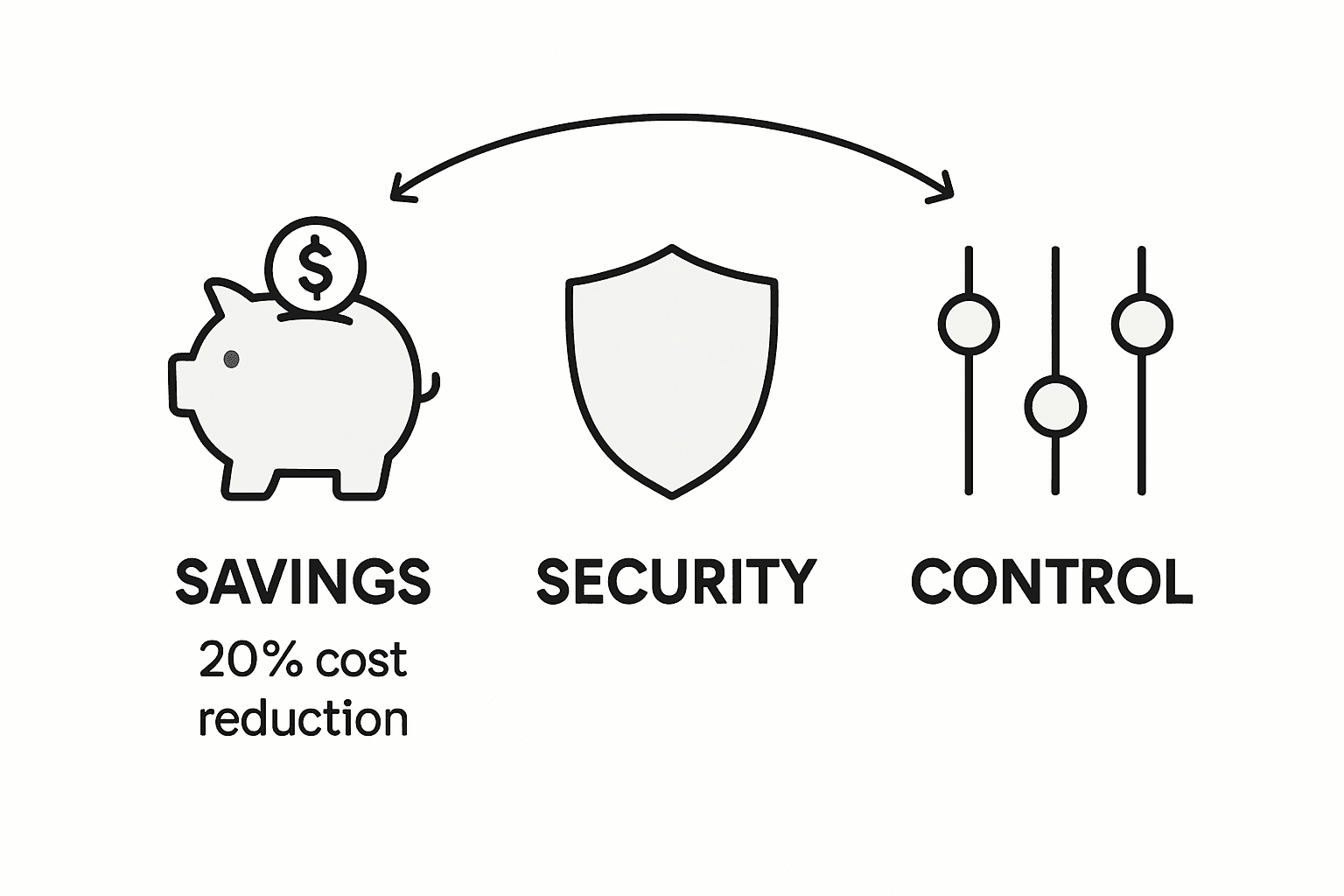
For energy users, solar storage offers three primary benefits: financial savings, enhanced energy security, and greater operational control. By storing excess energy during low-demand periods, users can strategically deploy their stored electricity during peak pricing times, effectively reducing overall electricity expenses. Additionally, solar storage provides critical backup power during grid outages, ensuring continuous electricity supply for essential home or business operations. This capability transforms solar from an intermittent energy source into a reliable, consistent power solution.
Pro Tip - Energy Storage Strategy: Assess your specific energy consumption patterns and peak usage times before investing in a solar storage system, as precise system sizing can maximize your financial returns and energy efficiency.
Types of Solar Storage Systems Compared
Solar storage systems vary significantly in their technology, capacity, and application, offering diverse solutions for different energy needs. The landscape of energy storage encompasses several key technologies, each with unique characteristics and performance metrics. Advanced storage concepts range from water-based systems to phase change materials and chemical reaction storage technologies, providing energy users with multiple options for capturing and utilizing solar-generated electricity.
The primary types of solar storage systems can be categorized into three main technologies: battery-based systems, thermal storage solutions, and mechanical storage technologies. Battery-based systems, which include lithium-ion, lead-acid, and emerging graphene supercapacitor technologies, represent the most common and rapidly evolving storage approach. These systems offer high energy density, quick charging capabilities, and flexible deployment for both residential and commercial applications. Thermal storage solutions, such as molten salt reservoirs and phase change materials, store solar energy as heat, providing an alternative approach particularly useful in industrial and utility-scale settings.
Mechanical storage technologies offer innovative alternatives to traditional battery systems. These include pumped hydro storage, compressed air energy storage, and flywheel systems. Each technology presents unique advantages: pumped hydro provides massive storage capacity, compressed air offers scalability, and flywheels deliver rapid energy discharge. The selection of a specific storage system depends on multiple factors including available space, budget, energy requirements, and local climate conditions. Understanding these nuanced differences allows energy users to make informed decisions about their solar storage investments.
Here’s a quick comparison of key solar storage system types and their common applications:
Storage Type | Best Use Case | Notable Strength | Typical Limitation |
Lithium-Ion Battery | Home backup, fast cycle | High energy density | Cost & temperature sensitivity |
Thermal Storage | Industrial heat supply | Efficient heat retention | Limited for direct electricity |
Pumped Hydro | Utility-scale balancing | Large capacity, reliable | Huge space and location needed |
Flywheel | Short-term backup | Fast energy delivery | Short energy duration |
Pro Tip - Storage Selection Strategy: Conduct a comprehensive energy audit of your specific consumption patterns and infrastructure before choosing a solar storage system, as the most expensive option is not always the most suitable for your unique needs.
How Solar Storage Boosts Savings and Security
Solar storage systems represent a powerful strategy for simultaneously reducing energy costs and enhancing overall energy security. By capturing and strategically managing solar-generated electricity, users can transform their energy consumption patterns and financial outlook. Research demonstrates that integrating solar storage with geographical balancing can significantly decrease storage requirements while improving energy security across renewable power sectors, presenting a compelling argument for widespread adoption.
The financial benefits of solar storage emerge through multiple strategic mechanisms. Users can leverage peak shaving techniques by storing excess solar energy during low-demand periods and deploying it during high-cost electricity times, effectively reducing utility bills. Battery systems enable consumers to purchase electricity at lower rates and store it for later use, creating a dynamic energy management approach that directly translates to monetary savings. Insights from the SolarPower Summit highlight how combining photovoltaic systems with battery energy storage generates substantial cost reductions, particularly in regions with fluctuating electricity pricing.

Beyond financial advantages, solar storage significantly enhances energy security by providing critical backup power and reducing dependence on traditional grid infrastructure. During grid disruptions or extreme weather events, solar storage systems can seamlessly transition to provide uninterrupted electricity, protecting homes and businesses from potential power outages. This resilience is particularly valuable in regions with unstable electrical grids or frequent environmental challenges. Modern solar storage technologies offer sophisticated load management, allowing users to prioritize essential electrical systems and maintain operational continuity during unexpected interruptions.
Pro Tip - Savings Optimization: Calculate your specific electricity consumption patterns and peak pricing times to maximize the financial benefits of your solar storage investment, focusing on systems that align precisely with your unique energy requirements.
Real-World Residential and Commercial Benefits
Solar storage systems deliver tangible advantages that extend far beyond theoretical energy concepts, providing practical solutions for both residential homeowners and commercial enterprises. Research demonstrates that optimal sizing of solar photovoltaic and lithium battery storage systems can dramatically reduce reliance on traditional grid electricity, transforming how buildings consume and manage energy resources. This technological approach enables users to create more independent, efficient, and financially sustainable energy ecosystems.
For residential users, solar storage translates into immediate and long-term benefits. Energy independence becomes a realistic goal as homeowners can generate, store, and manage their electricity production. Typical advantages include reduced utility bills, protection against power outages, and the ability to leverage off-peak electricity rates. Commercial enterprises experience even more substantial benefits, with solar storage offering sophisticated load management, peak demand reduction, and potential revenue generation through grid services. Insights from the SolarPower Summit highlight how photovoltaic systems combined with battery energy storage can generate substantial cost savings, particularly in regions with complex electricity pricing structures.
The practical applications of solar storage span diverse scenarios. Residential systems can provide backup power during emergencies, smooth out electricity consumption, and reduce carbon footprints. Commercial applications range from small business operations to large industrial complexes, where energy storage can stabilize electrical loads, reduce peak demand charges, and create additional revenue streams through energy trading. Advanced battery technologies enable precise energy management, allowing users to strategically deploy stored electricity during high-cost periods, effectively turning solar storage into a financial optimization tool.
Pro Tip - Benefit Mapping: Conduct a comprehensive energy audit of your specific property to identify the most impactful solar storage strategies, focusing on your unique consumption patterns and potential financial returns.
Financial Return and Common Pitfalls to Avoid
Financial analysis is crucial when considering solar storage investments, requiring a nuanced approach that goes beyond surface-level calculations. Research on optimal sizing of solar photovoltaic and lithium battery storage systems demonstrates the potential for significant grid electricity reduction, but successful implementation demands strategic planning and comprehensive assessment of potential challenges and opportunities.
Investors must carefully evaluate several critical financial dimensions when exploring solar storage solutions. Payback period, total system efficiency, and long-term maintenance costs represent key metrics that directly impact overall return on investment. Insights from the SolarPower Summit highlight how photovoltaic systems combined with battery storage can generate substantial cost savings, but also underscore the importance of avoiding common strategic missteps. Typical pitfalls include oversizing storage systems, failing to account for regional electricity pricing variations, and neglecting potential technological obsolescence.
Common mistakes that can derail solar storage investments include inadequate system sizing, poor installation quality, and unrealistic performance expectations. Homeowners and businesses should conduct comprehensive energy audits, understand their specific consumption patterns, and select storage solutions that precisely match their unique requirements. Advanced battery technologies offer increasingly sophisticated management capabilities, but selecting the wrong system can lead to reduced financial returns. Factors such as battery chemistry, cycle life, depth of discharge, and environmental conditions play critical roles in determining long-term performance and economic viability.
Summary of financial and operational factors influencing solar storage ROI:
Factor | Impact on ROI | Why It Matters |
System Sizing | Major | Oversizing reduces payback gains |
Maintenance Costs | Ongoing | Unexpected costs reduce returns |
Regional Rate Variability | Significant | Can determine peak savings period |
Battery Cycle Life | Long-term | Longer life means more value saved |
Pro Tip - Investment Protection: Engage independent energy consultants to perform a detailed financial modeling analysis before committing to any solar storage system, ensuring your investment aligns perfectly with your specific energy consumption profile and financial objectives.
Take Control of Your Energy with Belinus Solar Storage Solutions
The article shines a clear light on the challenges energy users face—rising electricity costs, unreliable grid supply, and the need for smart energy management. If you want to cut your utility bills, secure backup power during outages, and optimize your energy consumption with precision, then integrating solar storage is essential. Concepts like peak shaving and real-time battery arbitrage show how storing solar energy can unlock savings and energy security while giving you full control.

At Belinus we understand these needs deeply. Our advanced Energy Wall graphene supercapacitors and scalable utility storage modules are designed for seamless integration with smart Energy Management Systems. Whether you are a homeowner seeking reliable backup power or a commercial operator aiming for grid services and cost optimization, our solutions make it possible. Discover how our cutting-edge inverters, battery storage, and EV chargers combine into a unified platform tailored exactly for your unique consumption pattern and financial goals. Visit Belinus comprehensive energy solutions to explore how you can transform your energy use today. Start maximizing savings and security now with intelligent solar storage built for real-world challenges.
Frequently Asked Questions
What are the benefits of solar storage?
Solar storage provides financial savings by allowing users to store excess solar energy for later use, enhances energy security by providing backup power during outages, and gives users greater control over their energy consumption.
How does solar storage help in reducing electricity bills?
By storing excess solar energy generated during low-demand hours and using it during peak pricing times, users can effectively lower their overall electricity expenses through techniques like peak shaving.
What types of solar storage systems are available?
The main types of solar storage systems include battery-based systems (like lithium-ion and lead-acid), thermal storage solutions (like molten salt), and mechanical storage technologies (such as pumped hydro and flywheel systems), each with unique advantages and applications.
How do I determine the right size for my solar storage system?
Conducting a comprehensive energy audit of your consumption patterns can help you assess your energy needs, ensuring that you invest in the appropriate storage capacity that maximizes efficiency and financial returns.
Recommended
Comments