PV Technologies 2026: Boost Efficiency Up to 30% | Guide
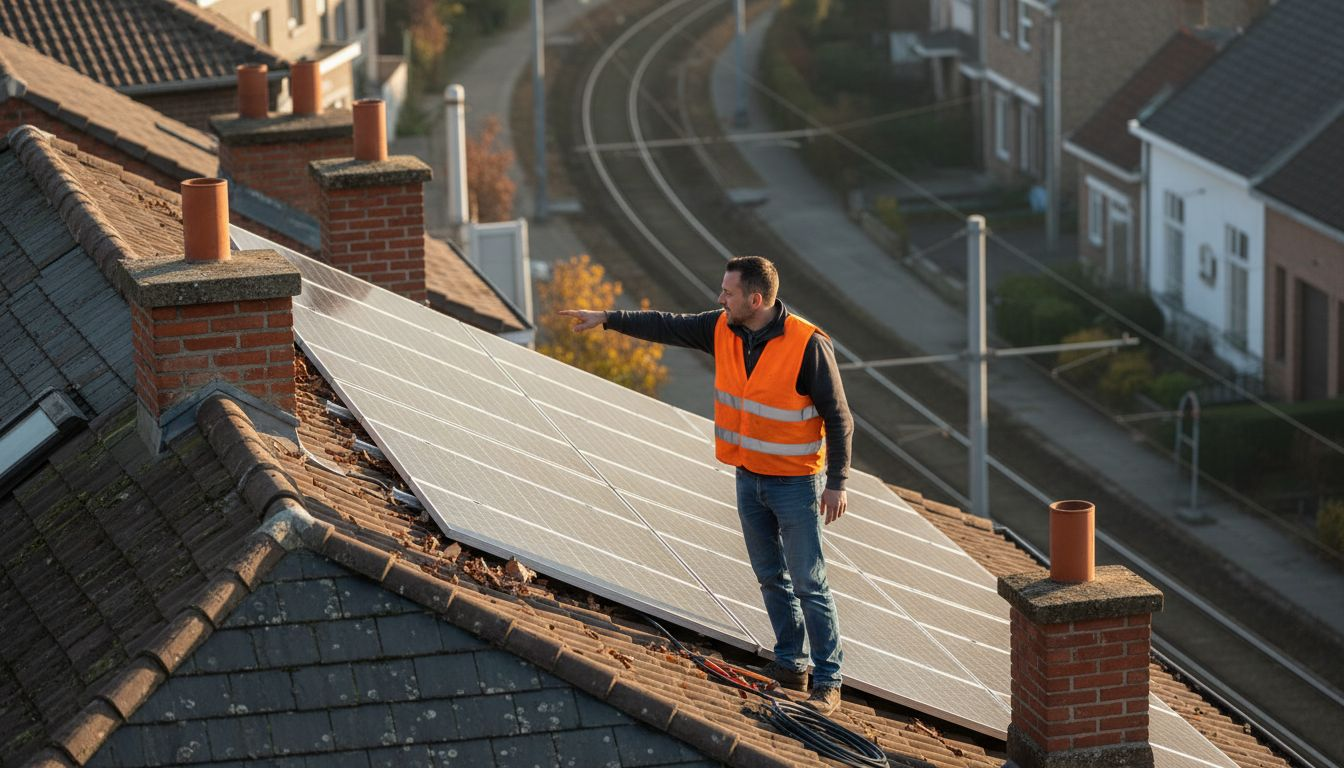
Choosing the right solar panel technology for your Benelux home or business involves navigating a complex landscape of options. This guide breaks down the key criteria for selecting photovoltaic (PV) systems and examines leading technologies suited to residential and commercial applications in Belgium, Netherlands, and Luxembourg. You’ll gain clarity on efficiency, costs, durability, and integration to optimize your investment and sustainability goals.
Table of Contents
Key Takeaways
Point | Details |
Efficiency varies widely | Crystalline silicon delivers 18-22%, while perovskite tandems achieve over 30% in labs. |
Cost balance matters | Crystalline silicon offers the best cost-efficiency ratio for most Benelux projects. |
Bifacial technology boosts yield | Dual-sided capture increases generation by 10-20% in reflective environments. |
Integration is critical | Compatibility with energy management systems and storage maximizes savings and control. |
Match technology to use case | Residential rooftops, commercial scales, and flexible installations each demand different PV solutions. |
Selection Criteria for Choosing PV Technologies
Before diving into specific PV options, establish a clear framework for evaluation. Start by assessing efficiency, which directly determines how much energy your panels generate per square meter. In Benelux’s moderate climate, higher efficiency means better performance even on cloudy days.
Cost considerations extend beyond upfront investment. Levelized Cost of Electricity is as low as USD 43/MWh with energy payback periods about one year in Europe, making solar financially attractive. Factor in CapEx, operating expenses, and long-term cost per kilowatt-hour. Durability under Northern European weather patterns affects maintenance frequency and system lifespan.
Integration capability determines how well your PV system works with home energy systems in Benelux and storage solutions. Smart energy management unlocks dynamic tariff optimization and self-consumption benefits. Evaluate these factors systematically:
Conduct a needs assessment based on energy consumption patterns and roof conditions
Verify compatibility with existing or planned energy management platforms
Run financial projections including local incentives and payback timelines
Match technology characteristics to your specific installation context
Pro Tip: Review your solar power checklist for Benelux homeowners before finalizing PV technology choices to ensure you’ve covered all essential planning steps.
Suitability depends heavily on installation scale. Residential rooftops demand compact, proven solutions. Commercial projects gain flexibility to adopt emerging technologies. Consider whether your site allows ground mounts, has reflective surfaces, or faces weight restrictions. The commercial PV installation process differs significantly from residential deployments, influencing which technologies make sense.
Crystalline Silicon Photovoltaic (c-Si) Technologies
Crystalline silicon dominates the European solar market for good reason. Crystalline silicon PV cells dominate the European market with typical efficiencies between 18% and 22%, providing an excellent balance of performance and affordability. Decades of manufacturing refinement have created robust supply chains across Europe, reducing costs and improving reliability.
For Benelux homeowners and businesses, crystalline silicon panels represent the most proven choice. They handle Northern European weather conditions effectively, with minimal degradation over 25-year lifespans. Installation practices are well established, reducing project risks. The technology integrates smoothly with modern inverters and energy storage systems.
Financial advantages make crystalline silicon compelling. Lower module costs translate to shorter payback periods. When you integrate PV and storage, crystalline panels provide consistent baseline generation to charge batteries during daylight hours. Their predictable performance simplifies financial modeling for both residential and commercial projects.
Key benefits for Benelux applications include:
Mature technology with widespread installer expertise across Belgium, Netherlands, and Luxembourg
Balanced efficiency and cost suitable for typical residential rooftops
Low degradation rates ensuring long-term output stability
Excellent compatibility with energy management systems and battery storage
Strong warranty support from established manufacturers
Pro Tip: Optimize panel orientation and minimize shading to extract maximum output from crystalline silicon installations. Even partial shade dramatically reduces generation, so proper site assessment matters.
Residential PV systems in Belgium overwhelmingly use crystalline silicon for these practical reasons. Commercial installations benefit from economies of scale while maintaining the technology’s reliability advantages. Unless your project has specific requirements demanding alternative technologies, crystalline silicon delivers the best overall value.
Perovskite and Tandem Cell Technologies
Pushing efficiency boundaries, perovskite-based tandem solar cells have achieved laboratory efficiencies exceeding 30%. These advanced cells layer perovskite materials onto silicon bases, capturing broader light spectrums than conventional panels. The efficiency gains translate to more power from the same roof area, a significant advantage for space-constrained installations.
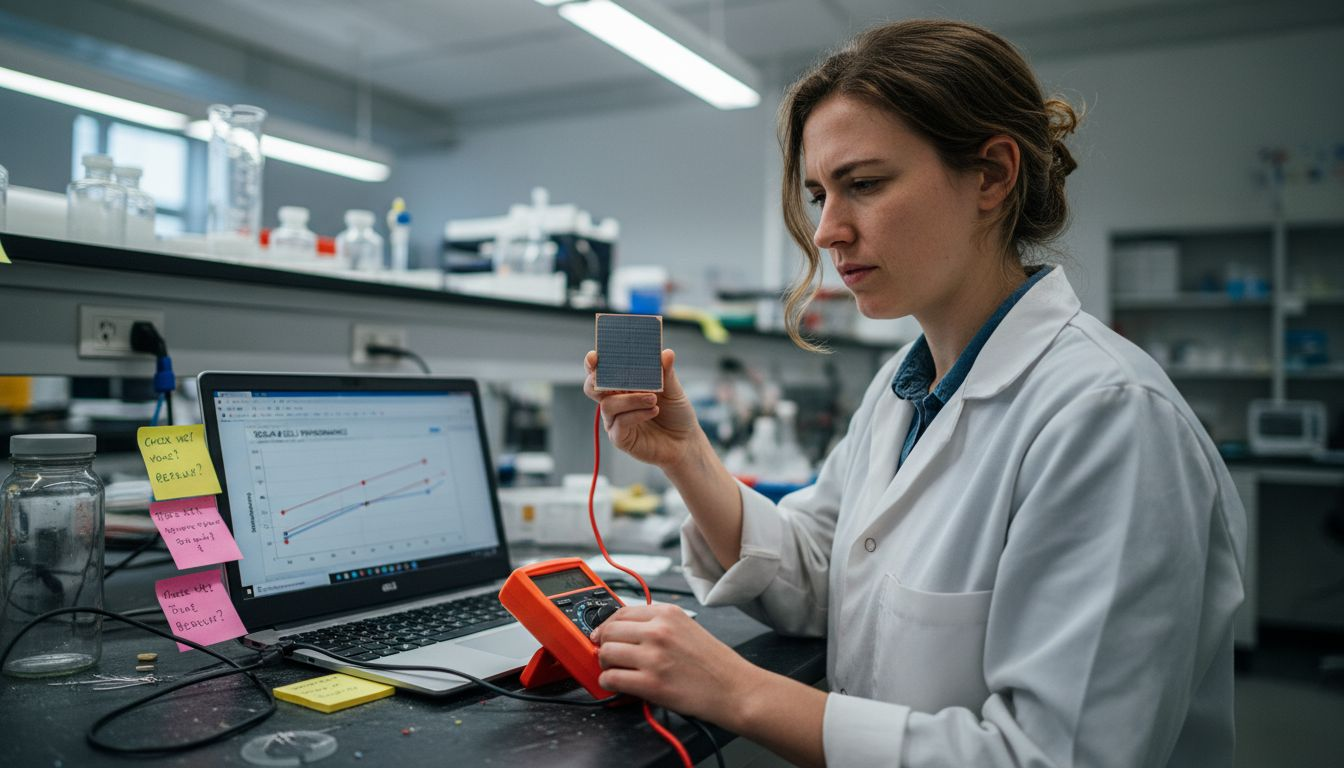
Current limitations temper the excitement. Commercial availability remains restricted in 2026, with production scaling still underway. Costs exceed crystalline silicon substantially, making financial justification challenging for most residential projects. Durability data under real-world conditions continues accumulating, as long-term performance validation takes time.
For innovation-focused commercial projects with budget flexibility, tandem cells offer compelling benefits:
Maximum energy density per square meter, ideal for limited roof space
Future-proofing against efficiency stagnation in conventional technologies
Potential for reduced balance-of-system costs due to higher power output
Early adopter positioning as manufacturing scales and costs decrease
Integration with smart energy management shows promise. Higher output per panel means fewer connection points and simplified system architecture. Commercial PV installation teams are developing specialized mounting and electrical practices for tandem modules.
Weigh trade-offs carefully. If your budget prioritizes cutting-edge performance and you’re comfortable with emerging technology risks, tandem cells merit consideration. For most Benelux residential users, crystalline silicon remains more practical until tandem costs decline and field performance data matures. Integrated PV systems can accommodate tandem modules, but verify compatibility before committing.
Thin-Film and Bifacial Photovoltaic Technologies
Thin-film PV takes a different approach, prioritizing manufacturing simplicity and weight reduction. Thin-film PV technologies have efficiencies around 10-16%, are lightweight, and cost-effective. These panels suit specialty applications where conventional crystalline modules face constraints.
Weight advantages matter for older buildings with load-bearing limitations. Flexibility enables curved surface installations impossible with rigid crystalline panels. Lower material costs can offset efficiency disadvantages in large commercial projects with abundant roof area. However, expect shorter lifespans and reduced performance in low-light conditions common in Benelux.
Bifacial modules offer a different value proposition. Bifacial PV modules improve energy yield by 10-20% by capturing reflected light on both sides. They excel in environments with reflective surfaces beneath panels, such as white roofs, gravel, or ground mounts over light-colored terrain.
Optimal bifacial installations consider:
Mounting height to allow light access underneath panels
Ground or roof surface reflectivity, with white surfaces maximizing gains
Reduced shading from mounting structures
Tilt angles balancing front and rear generation
Compare key characteristics:
Technology | Efficiency | Relative Cost | Durability | Best Application |
Crystalline Silicon | 18-22% | Moderate | 25+ years | General residential and commercial |
Thin-Film | 10-16% | Low | 15-20 years | Lightweight, flexible installations |
Bifacial | 20-24% (combined) | Moderate-High | 25+ years | Reflective environments |
For Benelux contexts, bifacial modules work well in commercial ground mounts and residential installations with white membrane roofing. When you integrate PV and storage, the extra generation from bifacial panels provides more energy for battery charging. Thin-film remains niche, suitable mainly for specialized commercial applications where weight or flexibility outweighs efficiency concerns.
Integrating solar with storage works with any PV technology, but bifacial’s higher yield improves storage system utilization and self-consumption rates.
Emerging Energy Storage and Integration Use Cases in Benelux
PV technology selection intersects critically with energy storage options. Graphene supercapacitors and Lithium Iron Phosphate batteries offer rapid charging and long lifespans suitable for residential and commercial energy storage. These advanced storage solutions complement PV systems by capturing excess generation and enabling consumption during evening peaks.
Graphene supercapacitors provide exceptional charge/discharge cycle durability. They handle thousands of daily cycles without degradation, ideal for frequent arbitrage strategies. Lithium Iron Phosphate (LFP) batteries prioritize safety and longevity, making them popular for home installations. Pre-lithiated LFP variants extend lifespan further while maintaining thermal stability.
Modular storage architectures scale capacity to match your needs. Residential systems typically range from 10-20 kWh, sufficient for evening consumption shifting. Commercial installations scale to hundreds of kilowatt-hours, supporting demand charge reduction and grid services. When you integrate PV and storage, sizing both components together optimizes self-consumption and financial returns.
Smart energy management systems unlock the full potential of PV-plus-storage combinations:
Dynamic tariff optimization shifts consumption to lowest-cost periods
Real-time monitoring adjusts battery charging based on weather forecasts
Grid service participation generates additional revenue streams
Seamless integration with EV charging for comprehensive energy management
Benelux commercial users increasingly adopt combined solutions to maximize self-consumption. Belgian time-of-use tariffs create strong arbitrage opportunities. Dutch capacity tariffs reward peak demand reduction. Luxembourg’s grid stability initiatives compensate for flexible load management. Tailoring PV technology and storage capacity to local tariff structures improves project economics.
Typical integration scenarios include:
Residential: Crystalline silicon PV with 15 kWh LFP battery for evening self-consumption
Small commercial: Bifacial modules with 50 kWh modular storage for demand charge reduction
Large commercial: High-efficiency tandem cells with 200+ kWh storage for grid services
Residential energy storage basics apply across PV technologies, but higher-efficiency panels improve storage ROI by generating more energy to capture. Commercial battery storage systems benefit from precise PV output forecasting, which more predictable crystalline silicon panels facilitate.
Pro Tip: When selecting PV technology, assess future energy management upgrade paths. Choose systems with open communication protocols and proven integration track records to avoid vendor lock-in.
Comparison Summary and Situational Recommendations
Consolidate your understanding with this technology comparison:
PV Technology | Efficiency Range | Cost Level | Lifespan | Yield Boost | EMS Integration |
Crystalline Silicon | 18-22% | Moderate | 25+ years | Baseline | Excellent |
Perovskite Tandem | 30%+ (lab) | High | Under validation | High potential | Good |
Thin-Film | 10-16% | Low | 15-20 years | Lower | Good |
Bifacial | 20-24% | Moderate-High | 25+ years | 10-20% | Excellent |
Crystalline silicon PV offers lower LCoE compared to thin-film and tandem cells currently, making it the default choice for most applications. Follow this decision framework:
Assess your primary goals: Maximum ROI, cutting-edge efficiency, weight constraints, or yield optimization in reflective settings.
Evaluate site conditions: Roof load capacity, available space, surface reflectivity, and shading patterns.
Calculate financial scenarios: Model CapEx, incentives, energy yields, and payback periods for each viable technology.
Verify integration compatibility: Confirm your chosen PV technology works seamlessly with planned storage and energy management systems.
Consider future flexibility: Select technologies with proven upgrade paths and broad installer support.
Recommendations by use case:
Reliable residential installations: Choose crystalline silicon for proven performance, broad installer expertise, and optimal cost-efficiency. Follow the solar power checklist to ensure comprehensive planning.
Innovative commercial projects: Consider perovskite tandems if budget allows and maximum efficiency justifies premium costs. Validate integration with your energy management platform before committing.
Lightweight or flexible needs: Thin-film suits specialty applications with structural constraints. Verify lifespan expectations align with project goals.
High-yield reflective environments: Bifacial modules maximize generation in ground mounts or white-roof commercial installations. Model the yield premium against cost increases.
For typical Benelux scenarios, crystalline silicon delivers the best balance. Residential PV systems in Belgium demonstrate this technology’s practical advantages across diverse roof types and household sizes. Commercial users gain additional options, but crystalline silicon remains competitive except where specific site conditions favor alternatives.
Explore Belinus Solutions for Your PV Technology Needs
Ready to implement the right PV system for your Benelux property? Belinus offers comprehensive solar solutions tailored to residential and commercial needs across Belgium, Netherlands, and Luxembourg. We integrate cutting-edge PV technologies with advanced energy storage and intelligent management systems.
Our expertise spans technology selection, system design, and professional installation. Whether you’re exploring solar PV for homes or planning a commercial PV installation process, we guide you through every decision. Our energy management platform optimizes your investment with dynamic tariff arbitrage and real-time consumption control. Discover how battery storage setup complements your PV system to maximize energy independence and cost savings. Contact Belinus to explore customized solutions matching your efficiency goals and sustainability vision.
Frequently Asked Questions
What efficiency differences matter most when choosing PV technologies?
Efficiency determines energy output per square meter, critical when roof space is limited. Crystalline silicon at 18-22% suits most residential needs, while commercial projects with ample space may accept lower thin-film efficiency for cost savings. Perovskite tandems exceed 30% but remain expensive and less proven.
How do PV systems integrate with home energy storage?
Modern inverters connect PV arrays to battery systems through energy management software. The system charges batteries during peak solar generation and discharges during evening consumption or high-tariff periods. Integration quality affects efficiency, with losses typically under 5% in well-designed systems.
What financial factors should I evaluate beyond upfront costs?
Consider Levelized Cost of Electricity over system lifetime, local incentives, tariff structures enabling arbitrage, and maintenance expenses. Belgian, Dutch, and Luxembourg programs offer varying tax benefits and feed-in tariffs. Model 25-year cash flows including degradation rates and potential tariff changes.
How long do different PV technologies last in Benelux conditions?
Crystalline silicon and bifacial modules typically last 25-30 years with degradation under 0.5% annually. Thin-film systems average 15-20 years. Perovskite tandem durability is still being validated in field conditions. Northern European weather with moderate temperatures generally extends PV lifespan compared to extreme climates.
Which PV option works best for typical Benelux rooftops?
Crystalline silicon remains optimal for most residential rooftops due to proven performance, installer availability, and cost-efficiency. Bifacial modules suit white membrane roofs or ground mounts with reflective surfaces. Thin-film applies only in specialty cases with weight restrictions. Tandem cells are premature for typical residential applications until costs decrease.
What maintenance do different PV technologies require?
All PV technologies need periodic cleaning and electrical inspections. Crystalline silicon and bifacial modules require minimal intervention beyond annual cleaning in dusty areas. Thin-film may need more frequent inspections due to faster degradation. Check inverter performance monthly regardless of panel type, as inverter issues cause most system failures.
Recommended
Comments