Battery Recycling Process: A Complete 2026 Guide
- 1 day ago
- 8 min read
TL;DR:
Battery recycling recovers valuable metals from used batteries, reducing environmental harm and dependence on mining. The process involves collection, sorting, transportation, processing, and material recovery, with proper preparation being crucial for safety. Technologies like direct recycling offer the lowest environmental impact and support the circular economy by reusing critical resources.
The battery recycling process is a systematic method that recovers valuable materials from used batteries, preventing toxic contamination and conserving critical resources. Every year, billions of batteries reach end of life, yet most end up in landfills where they leach lead, cadmium, and lithium into soil and groundwater. The environmental impact of batteries disposed improperly is measurable and serious. A standardized five-stage process, recognized by organizations like The Battery Network and aligned with EPA hazardous waste standards, now makes safe and efficient battery recycling accessible to both individuals and large organizations.
What are the main steps in the battery recycling process?
The standardized recycling process includes five stages: collection, sorting, transportation, processing, and material recovery. Each stage serves a distinct purpose, and skipping any one of them creates safety or efficiency problems downstream.

Stage 1: Collection
Collection is the first and most critical bottleneck. The Battery Network operates over 20,000 drop-off locations across the United States, accepting lithium-ion batteries up to 11 pounds and 300 watt-hours. That scale makes consumer participation feasible, but only if people know where to go. Manufacturer take-back programs add another layer, particularly for EV battery packs and industrial storage systems.
Stage 2: Sorting by chemistry
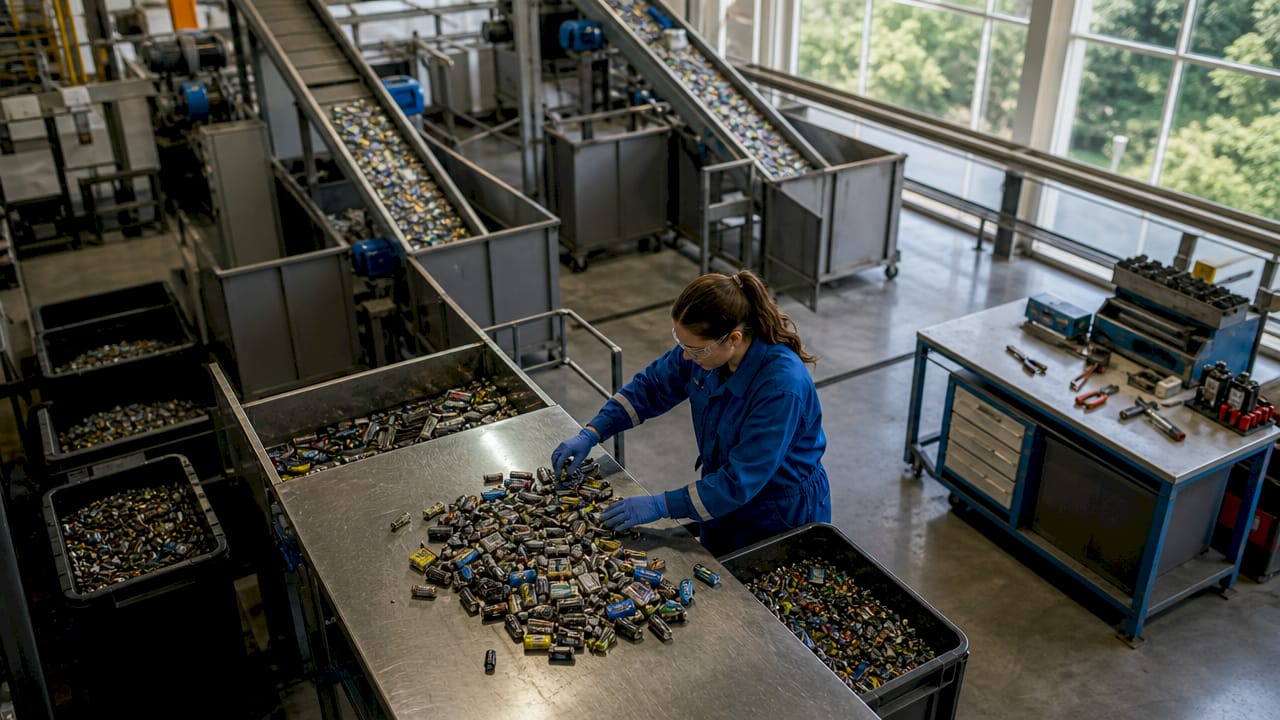
Sorting is where most people underestimate complexity. Battery chemistry determines the processing method, the safety protocols, and the recoverable materials. Lithium-ion (Li-ion), nickel-cadmium (Ni-Cd), nickel-metal hydride (NiMH), and alkaline batteries each require different handling. Mixing chemistries at a facility creates fire risk and contaminates recovered materials.
Stage 3: Safe transportation
Batteries classified as hazardous materials travel under strict Department of Transportation regulations. Terminals must be protected, batteries must be packaged to prevent short circuits, and transport vehicles must meet hazmat standards. A single thermal runaway event in a transport truck can destroy an entire load and injure workers.
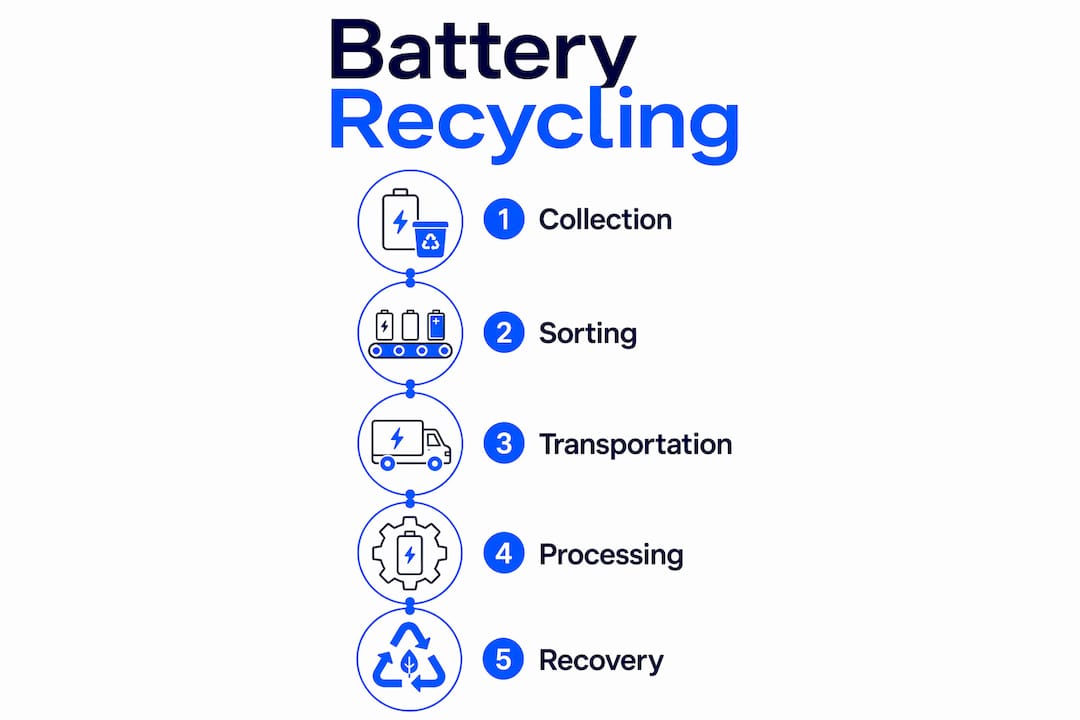
Stage 4: Mechanical and chemical processing
Processing breaks batteries down into their component parts. Mechanical shredding separates casings, electrodes, and electrolytes. Chemical processes then dissolve and isolate individual metals. The specific method used, whether pyrometallurgical, hydrometallurgical, or direct recycling, determines how much material is recovered and at what cost.
Stage 5: Material recovery
The final stage extracts lithium, cobalt, nickel, manganese, and copper for reuse in new batteries and electronics. This closes the supply loop and reduces dependence on virgin mining.
Stage | Key action | Primary output |
Collection | Drop-off and take-back programs | Sorted battery inventory |
Sorting | Chemistry-based classification | Safe, processable batches |
Transportation | Hazmat-compliant shipping | Batteries at processing facility |
Processing | Mechanical shredding and chemical treatment | Separated materials |
Material recovery | Metal extraction and purification | Lithium, cobalt, nickel, copper |
How can individuals and organizations safely prepare and recycle batteries?
Safe battery recycling starts before the battery ever leaves your hands. Most fire incidents at recycling facilities trace back to improper preparation at the consumer level. Following a few non-negotiable steps protects workers, equipment, and the broader recycling chain.
Before you recycle any battery, follow these steps:
Tape the terminals. Non-conductive tape on terminals prevents short circuits during transport and storage. Clear tape, electrical tape, or masking tape all work. This is the single most effective fire prevention step a consumer can take.
Never use curbside bins. Placing batteries in curbside recycling is a major fire hazard. Compactor trucks crush and puncture batteries, triggering thermal runaway. Fires in collection trucks and sorting facilities are a direct result of this mistake.
Handle damaged batteries differently. Swollen, cracked, or leaking lithium-ion batteries must go through household hazardous waste programs, not standard drop-off sites. Standard facilities are not equipped to handle chemical exposure or fire risk from compromised cells.
Check size and capacity limits. Most consumer drop-off programs accept batteries up to 300 watt-hours. Larger batteries from e-bikes, EVs, or commercial storage systems require specialized collection arrangements.
Know your local regulations. Many states and municipalities have specific battery disposal laws. California, for example, bans all battery disposal in regular trash. Violations can carry fines for businesses.
Pro Tip: Store used batteries in a cool, dry location in a non-metal container before drop-off. Heat and humidity accelerate degradation and increase the risk of leakage or swelling.
“Coordinated networks of collection, sorting, and processing partners ensure safe and responsible battery recycling.” — The Battery Network
Organizations managing fleets or facilities with large battery inventories should designate a trained staff member to oversee battery collection, labeling, and scheduled pickups with a certified recycler. This reduces liability and keeps operations compliant.
What technologies are used in battery recycling today?
Three primary methods dominate industrial battery recycling, and each comes with distinct trade-offs in cost, energy use, and material recovery rates.
Pyrometallurgy uses high-temperature smelting to burn off organic materials and recover metals like cobalt and nickel. The process is well-established and handles mixed battery chemistries without pre-sorting. The downside is high energy consumption and the loss of lithium, which vaporizes during smelting.
Hydrometallurgy uses chemical leaching solutions to dissolve metals from shredded battery material. It recovers a broader range of metals, including lithium, at higher purity levels. The process generates chemical waste streams that require careful management, but it operates at lower temperatures than pyrometallurgy.
Direct recycling is the most efficient method currently available. Direct recycling produces greenhouse gas emissions between 0.6 and 8.1 kg CO2 per kg of battery material, with energy consumption between 3.5 and 112.1 MJ per kg, and costs between $0.9 and $4.1 per kg. Those figures represent the lowest environmental footprint of any current method. Direct recycling preserves the cathode structure, meaning recovered materials can re-enter battery production with minimal reprocessing.
Emerging methods like biohydrometallurgy and electrochemical recovery represent the next generation of sustainable recycling. Biohydrometallurgy and electrochemical recovery aim to lower energy consumption and environmental impact compared to traditional pyrometallurgy and hydrometallurgy. These approaches use microorganisms or electrical current to selectively extract metals, reducing the need for harsh chemicals.
Pro Tip: Organizations evaluating recycling partners should ask specifically which processing method the facility uses. Direct recycling facilities return higher-purity materials, which can reduce procurement costs for recovered metals.
Fiscal incentives such as subsidies and carbon credits are vital to improving the profitability of recycling over virgin material extraction. Without financial support, the economics of recycling lithium-ion batteries remain challenging at scale. Policy frameworks in the European Union and the United States are beginning to address this gap through production tax credits and extended producer responsibility regulations.
Method | Energy use | Lithium recovery | Key limitation |
Pyrometallurgy | High | Poor | Lithium lost to vapor |
Hydrometallurgy | Moderate | Good | Chemical waste streams |
Direct recycling | Low | Excellent | Requires sorted, undamaged cells |
Biohydrometallurgy | Very low (emerging) | Promising | Not yet at commercial scale |
How does battery recycling support the circular economy?
Battery recycling is not just waste management. It is a supply chain strategy. Recovered lithium, cobalt, and nickel re-enter manufacturing as secondary raw materials, reducing the volume of virgin ore that must be mined. Mining for cobalt, in particular, carries significant human rights and environmental costs in the regions where it is extracted.
Recycling also reduces landfill hazardous waste at scale. A single lithium-ion battery contains enough toxic material to contaminate a large volume of soil and groundwater if it degrades in a landfill. Multiply that by billions of batteries discarded annually, and the cumulative environmental damage becomes severe.
“Recovering materials through recycling saves significantly more energy than extracting and refining the same materials from virgin ore.” — Lithium-ion Battery Recycling Review, Science Direct
The circular economy model treats every end-of-life battery as a resource, not a liability. Recovered metals from recycled batteries already supply a portion of the raw materials used in new battery production. As recycling infrastructure scales, that proportion will grow, reducing price volatility in critical mineral markets.
Resource benefit | Impact |
Lithium recovery | Reduces demand for new lithium mining |
Cobalt recovery | Lowers supply chain risk from conflict regions |
Nickel recovery | Cuts energy-intensive smelting of virgin ore |
Reduced landfill load | Prevents toxic leaching into soil and water |
Policy frameworks reinforce this direction. The EU Battery Regulation, effective from 2024, mandates minimum recycled content in new batteries and requires producers to fund end-of-life collection. Similar domestic supply chain legislation in the United States ties federal incentives to the use of domestically recycled critical minerals.
Key takeaways
The battery recycling process is a five-stage system that recovers critical materials, prevents environmental harm, and supports domestic supply chains for lithium, cobalt, and nickel.
Point | Details |
Five-stage process | Collection, sorting, transportation, processing, and material recovery form the complete recycling chain. |
Chemistry-based sorting | Sorting by battery type (Li-ion, Ni-Cd, alkaline) is required for safety and processing efficiency. |
Safe preparation | Tape terminals and never use curbside bins to prevent fire hazards during collection. |
Direct recycling leads | Direct recycling delivers the lowest emissions and costs among current industrial methods. |
Circular economy impact | Recovered metals re-enter production, reducing mining demand and stabilizing critical mineral supply. |
Why the recycling conversation needs to shift from “where” to “how”
Most public education on battery recycling stops at “find a drop-off location.” That is necessary but not sufficient. What I’ve seen repeatedly is that people and organizations do the right thing by going to a drop-off site, but they arrive with unsorted, untaped, and sometimes damaged batteries that create real problems for facility workers.
The insight that changed how I think about this: battery recycling depends on chemistry, not size. A small lithium-ion cell from a laptop requires completely different handling than an alkaline AA battery. When those get mixed, facilities either have to slow down to sort manually or accept a lower-quality output. Both outcomes cost money and reduce the incentive to invest in recycling infrastructure.
The technologies are improving fast. Technical challenges like difficult disassembly and high energy use are the key obstacles researchers are actively solving. Direct recycling and biohydrometallurgy will eventually make the economics of recycling more attractive than virgin extraction. But that future depends on policy support and, frankly, on consumers and businesses showing up with properly prepared batteries.
My honest recommendation for organizations: treat battery recycling the same way you treat data security. Assign ownership, create a documented process, and audit it annually. The liability risk of improper disposal is real, and the reputational cost of a recycling-related fire incident is significant.
— Marc
Belinus and the future of battery sustainability
Belinus develops battery storage and energy management solutions built with end-of-life considerations in mind. The Energy Wall G1, a 16 kWh graphene supercapacitor system launching in Q1 2026, is designed for residential and commercial use with long cycle life that reduces how often batteries need replacement or recycling.

For organizations looking to reduce their battery waste footprint while improving energy performance, Belinus offers utility-scale storage, EV charging integration through Evonity, and solar solutions through Solarimex and SolarPlus. The Belinus Energy Management System connects these technologies through a centralized platform, giving operators real-time visibility into battery health and usage. Visit belinus.com to learn how these systems align with your sustainability goals.
FAQ
What is the battery recycling process?
The battery recycling process is a five-stage system covering collection, sorting by chemistry, transportation, mechanical and chemical processing, and material recovery. It safely extracts metals like lithium, cobalt, and nickel for reuse in new batteries and products.
How do I recycle lithium-ion batteries safely?
Tape the terminals with non-conductive tape, store the battery in a non-metal container, and bring it to a certified drop-off location. Never place lithium-ion batteries in curbside recycling bins due to fire risk.
Can I recycle damaged or swollen batteries at a drop-off site?
No. Swollen, cracked, or leaking batteries must go through a household hazardous waste program. Standard drop-off sites are not equipped to handle damaged cells safely.
What materials are recovered from recycled batteries?
Recycling recovers lithium, cobalt, nickel, manganese, and copper. These metals re-enter manufacturing as secondary raw materials, reducing the need for new mining.
Which recycling method has the lowest environmental impact?
Direct recycling currently produces the lowest greenhouse gas emissions and energy consumption of any industrial method, with emissions as low as 0.6 kg CO2 per kg of battery material processed.
Recommended