Top 5 Best PV Wholesale Platforms Alternatives 2026
- Jul 3
- 13 min read
Sourcing a photovoltaic wholesale platform that offers wide product selection, fast fulfillment, and consistent support often blocks efficient project planning for installers and professional buyers. Many primary platforms restrict access to large firms, hide pricing details, or fail to support smaller teams with clear logistics and after-sales service. This list reviews five alternatives so installers and professional buyers can match their next supplier to regional coverage, order scale, and support needs.
Table of Contents
Belinus
At a Glance
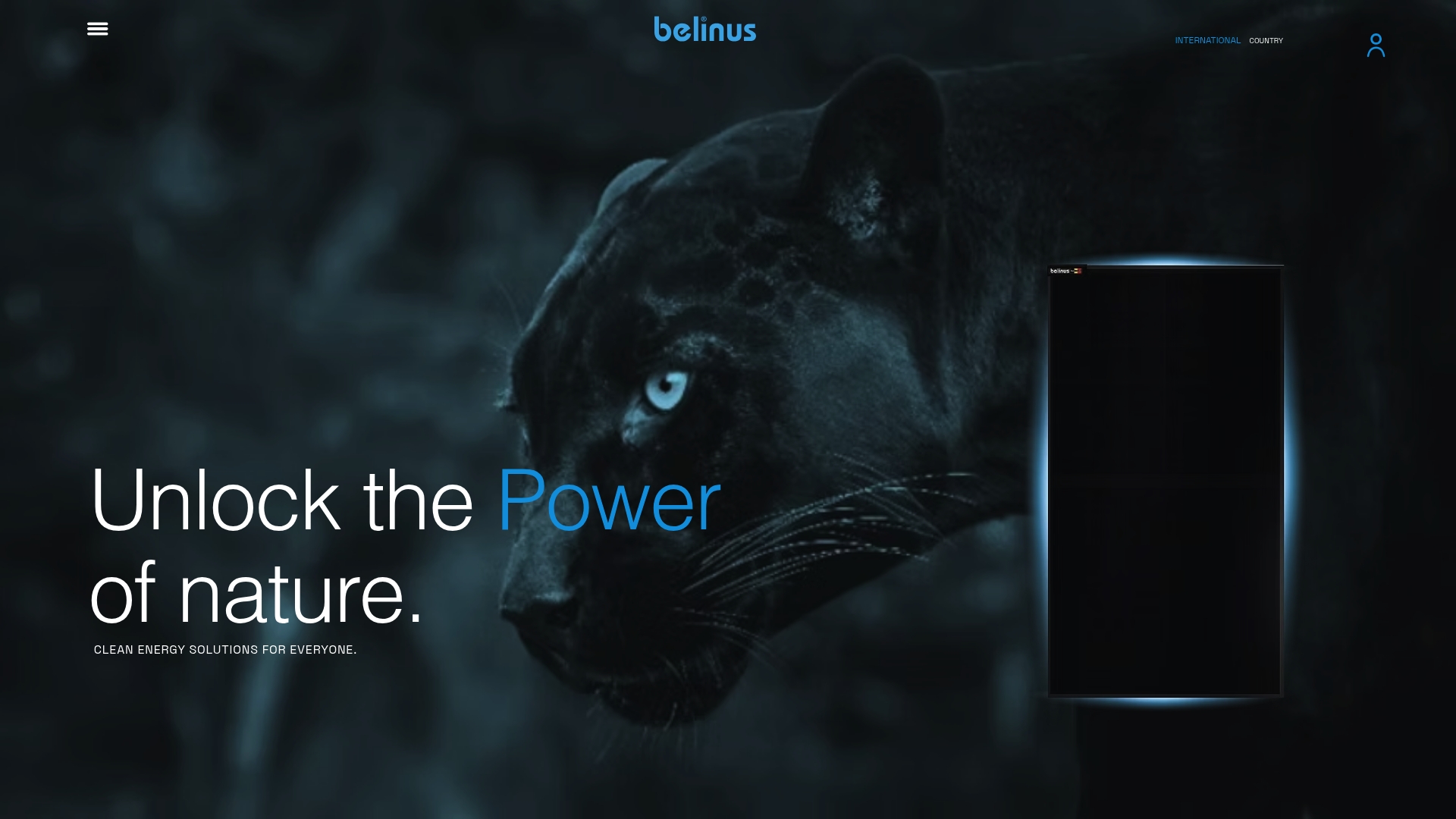
Belinus reports a global customer base exceeding 30,000 users. The company publishes a 16 kWh graphene supercapacitor product called Energy Wall G1, with a listed price of €7,000/unit and a Q1 2026 launch date in its materials. The offering spans residential and industrial hardware plus an AI-driven energy management stack.
Core Features
Belinus sells photovoltaic modules including bifacial and glass-glass panel designs and pairs them with multiple storage chemistries such as LFP, sodium-ion, and graphene supercapacitors. The product line targets both homes and larger sites and ties hardware into a centralized energy management system that claims 15-minute dynamic tariff optimization, real-time battery arbitrage, and RESTful API access. Customers get a native mobile app and web dashboard for monitoring and fleet-capable IoT functions.
Key Differentiator
Belinus centers its portfolio on Belgian engineering and a stated commitment to low-impact storage by prioritizing lithium-free and biodegradable battery options alongside conventional LFP. That design focus positions the range toward buyers who want less hazardous chemistry and clearer end-of-life recyclability. The company also highlights social responsibility and circular-economy practices as part of product design choices.
Pros
Belinus lists long panel warranties, up to 35 years, which will matter for developers balancing lifecycle cost against upfront spend. The catalog mixes established LFP cells with sodium-ion and graphene supercapacitors, giving specifiers options for cycle life, temperature resilience, and lower environmental risk. Integrated energy management software ties production, storage, and trading together and includes a mobile app and web dashboard for operations monitoring and tariff-driven scheduling. The product range covers rooftop residential arrays to utility-scale storage modules, so the same vendor can supply multiple project phases.
Cons
Public product pages contain missing or broken pricing and feature pages, which makes detailed spec comparison and procurement planning harder.
Who It’s For
Belinus fits environmentally conscious homeowners who want Belgian-engineered panels and alternative storage chemistry. Energy planners at industrial sites looking for modular, large-capacity storage that can participate in arbitrage will find the product line relevant. Energy traders and utilities needing API-driven EMS controls and trading-ready telemetry will also benefit from the platform approach.
Unique Value Proposition
Belinus advertises the 16 kWh Energy Wall G1 as a graphene supercapacitor priced at €7,000/unit with a Q1 2026 launch. That specific product example signals a strategy of selling high-cycle, rapid-response storage alongside standard battery banks, which changes how a site schedules tariff arbitrage and backup routines. For projects where charge speed and recyclability matter, the price-and-spec mix clarifies capital planning and operational behavior.
Real World Use Case
A homeowner installs Belinus bifacial panels, pairs them with an Energy Wall G1 unit, and links the setup to the centralized EMS. The system measures production, shifts consumption to low-tariff windows using 15-minute optimization, and submits excess energy to local trading pools through the EMS API. The result is higher daytime self-consumption and automated trading of surplus generation.
Pricing
Detailed MSRP and tiered pricing are not published on the site. Product descriptions suggest a premium positioning because of specialized chemistries and long warranty terms, and the Energy Wall G1 example provides a concrete unit price for planning. Procurement teams should request official quotes for shipment and project-level totals.
Website: https://belinus.com
VDH Power
At a Glance
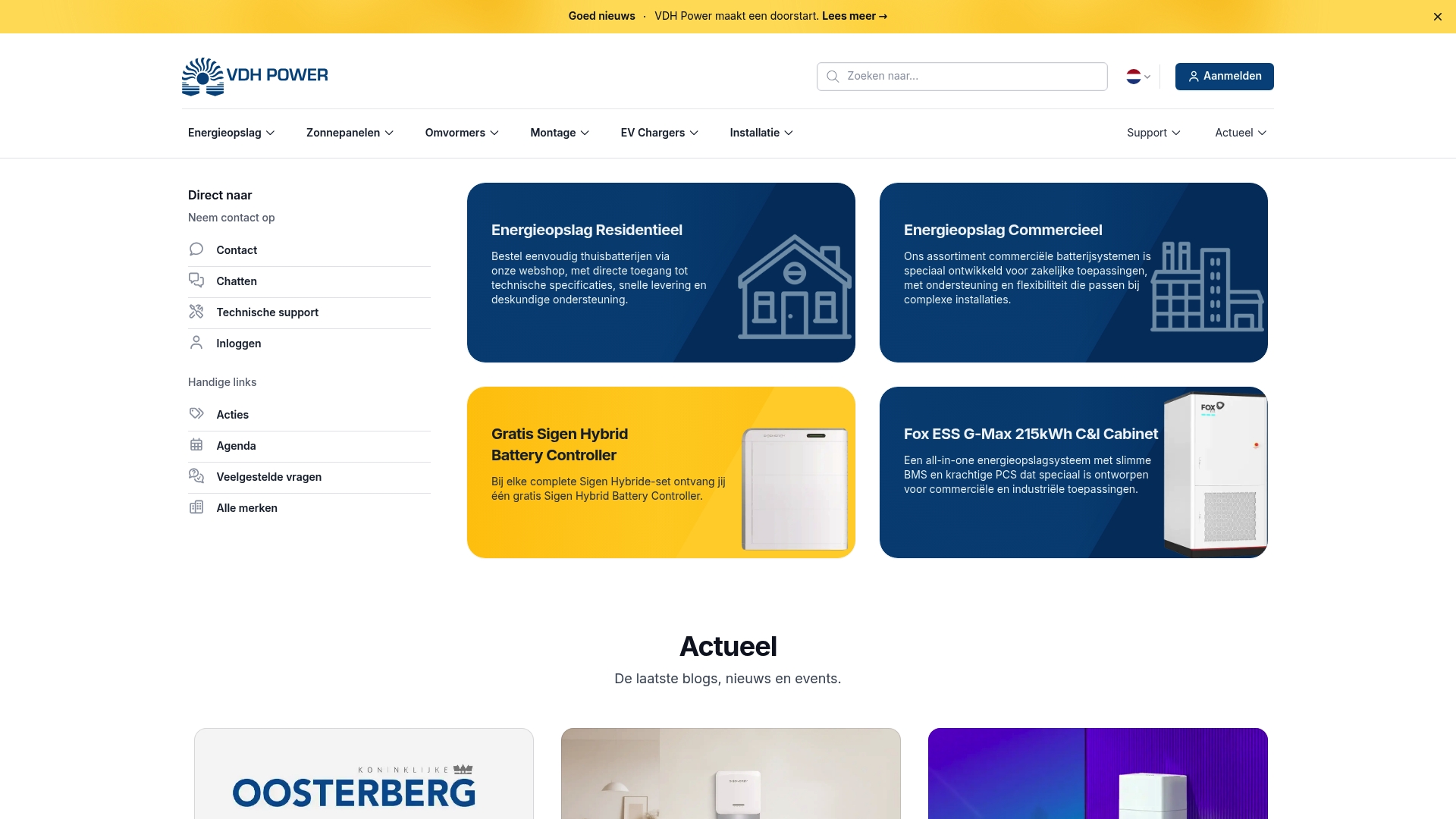
Only certified installers and professional buyers can order directly from VDH Power. The company maintains large stock and aims for fast delivery to support on-site installation schedules. The catalogue centers on solar modules, inverters, energy storage, mounting systems, and EV chargers.
Core Features
VDH Power sells a broad range of A-brands across solar and storage categories and presents detailed technical information in a user-friendly webshop. The offering includes residential and commercial energy storage systems, mounting hardware, and EV charging hardware together with pre-sales technical support for installers. Inventory visibility and rapid order processing are core operational strengths.
Key Differentiator
VDH Power’s focus is specialist supply for installers with a deep selection of energy storage products and brands that are ready to ship. That positioning makes it a stocking partner for fast-turn projects and retrofit jobs where lead times matter. The emphasis on installer support and product depth separates it from general retailers.
Pros
The product range covers modules, inverters, batteries, mounting, and EV chargers so installers can source nearly all components in one order. Strong vendor selection aims to reduce warranty and compatibility headaches on site. Fast order handling and available stock speed project timelines and lower storage needs for small installers. Technical support and clear product pages help less experienced teams choose correct accessories and configuration parts.
Cons
Sales restricted to certified installers and businesses only. This prevents direct consumer purchases and blocks DIY buyers.
International shipping is limited mainly to the Netherlands and parts of the EU. Large cross-border projects may face delivery constraints.
No retail bundles for consumers or simple combo packs for DIY homeowners. Installers must build custom kits per project.
When It May Not Fit
If you are a homeowner without an accredited installer, this supplier will not serve you. Large multinational projects with complex cross-border logistics may find the shipping footprint too small. Small shops that rely on consumer-facing retail bundles will miss off-the-shelf combo packages.
Who It’s For
This supplier fits certified installers, electrical contractors, and energy professionals in the Netherlands and nearby EU markets. It also suits project developers and housing associations that require stocked components and local technical support. You should value quick fulfillment and brand choice when selecting VDH Power.
Real World Use Case
A mid‑sized installer consolidates purchases for ten rooftop projects. They order modules, inverters, batteries, and rails from VDH Power, receive shipment within a short window, and deploy crews without site delays. The installer uses the vendor’s technical support to match inverters and storage to existing meter layouts.
Pricing
VDH Power prices at professional market levels and varies by category, brand, and technical specification. VDH Power’s marketing materials state a minimum order of €3,500 for free shipping in the Netherlands. Final project pricing depends on exact product choices and order volume.
Website: https://vdh-solar.nl
Natec
At a Glance
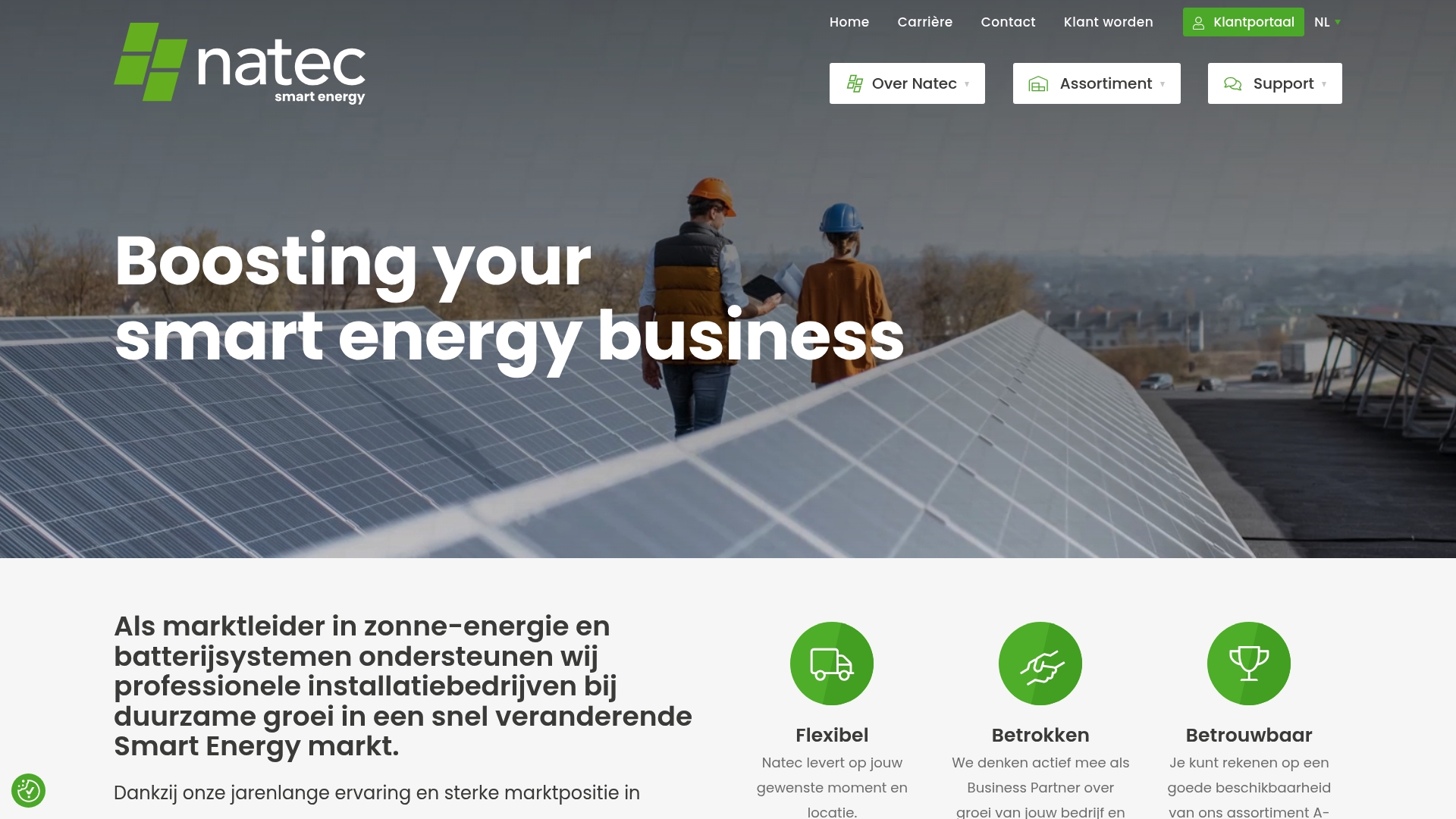
The company reports over 18 years of experience serving the European solar market. Natec keeps large stock and works with top manufacturers to reduce supply risk. That strength makes it a practical wholesale source for installers who need predictable delivery and product choice.
Core Features
Natec stocks a wide assortment of A-brand solar energy products, including panels, batteries, inverters, EV chargers, and mounting materials. The distributor emphasizes proactive supply chain management with large inventory and established global supplier relationships. The offering also includes technical advice, flexible delivery, and after-sales care for professional installers.
Key Differentiator
The standout point is the combination of depth of inventory and vendor partnerships that prioritize availability for projects. That operational focus reduces the chance of delayed builds and warranty headaches for installers. The seller pairs stock reliability with hands-on technical support for system design and procurement.
Pros
Natec brings long-established trade experience and strong manufacturer relationships that simplify sourcing for commercial projects. Its emphasis on availability and supply stability supports tighter project timelines and fewer last-minute substitutions. The company also provides technical support and flexible logistics, which helps installers manage complicated deliveries and design checks.
Cons
Primarily serves professional and commercial customers. Individual retail buyers will find limited direct-to-consumer tools.
Geographic reach focuses on Europe. International shipping outside Europe is limited.
Premium brand mix can mean higher costs. That pricing profile may not suit highly price sensitive projects.
Online consumer-facing features are minimal. Smaller teams that want self-serve retail tools may be frustrated.
When It May Not Fit
If you run small residential one-off jobs and expect consumer retail tools, Natec may not match your needs. Projects that require global logistics outside Europe will face coverage gaps. If procurement must strictly minimize per-unit cost, the premium brand focus could push you toward more generic suppliers.
Who It’s For
Professional solar installers and renewable energy developers needing consistent supply and technical backup will benefit most. Energy consultants and project planners who require datasheets and coordinated deliveries will find the service practical. Businesses running repeated or large-scale deployments will extract the most value from the partnership model.
Real World Use Case
A commercial installer orders panels, batteries, and inverters for a 1 MW rooftop project through the client portal. They use Natec’s technical support to validate inverter pairing and mounting specs before shipment. Reliable stock and scheduled deliveries let the installer meet the construction timetable and avoid costly delays.
Pricing
Wholesale pricing varies by product category and brand and depends on order volume. Exact figures are available through the client portal or on request. Shipping costs are not listed publicly, and quotes reflect brand choice and logistics.
Website: https://natec.com
Krannich Solar
At a Glance
The company reports more than 30 offices across 25 countries, giving local stock and support in many markets. Founded in 1995, Krannich built a distribution network focused on solar panels, inverters, batteries, EV chargers, and mounting systems. The firm pairs product depth with training programs such as webinars and seminars to keep installers current.
Core Features
Krannich maintains a wide product portfolio that covers residential, commercial, and utility components from panels to EV chargers and mounting systems. The distributor provides on-the-ground technical support and project consultancy, and it runs educational webinars and seminars for installers and developers. A stated emphasis on supply chain reliability aims to keep stock available and deliveries punctual across international offices.
Key Differentiator
Krannich Solar leverages more than 30 years of experience and an international office network to support larger PV projects and cross-border procurement. That combination lets project teams consult local experts while sourcing components from global manufacturers.
Pros
The company offers an extensive selection of high quality components from established manufacturers, which helps you avoid sourcing fragmentation across multiple vendors. Decades in distribution bring operational knowledge for commercial and utility projects, and local offices reduce lead time friction in many markets. Educational programs and project consultancy reduce design errors and help installers adopt new module and inverter technologies.
Cons
Primarily serves professional customers. Small DIY buyers will find limited direct consumer engagement.
Pricing can trend premium because the focus is on high quality brands and service.
The product range is broad and technical. New entrants to solar may find options and specifications overwhelming.
The overview lacks clear information on environmental or sustainability certifications.
When It May Not Fit
If you are a homeowner buying a single rooftop kit, this distributor is not the best match. If you need the lowest possible purchase price for small volumes, direct-to-consumer outlets or local retail may be more suitable. Projects that require explicit sustainability certification details from the supplier should request that information before committing.
Who It’s For
Krannich fits professional solar installers, project developers, and commercial buyers who require reliable sourcing for medium to large installations. If your procurement needs include coordinated logistics across countries and access to technical consultancy, you will get the most value. Retailers stocking a range of branded components will also benefit from the companies stock depth and training offerings.
Real World Use Case
A commercial installer partners with Krannich to procure panels, inverters, and battery storage for a new solar farm. The installer consults Krannichs technical team during system layout and attends a webinar on the selected inverter platform. Timely deliveries from a nearby office keep the project on schedule and reduce site storage costs.
Pricing
Pricing varies by product category and by order volume. Detailed prices appear in the webshop and through account contacts, and the store overview does not list a fixed price range. For firm quotes, request a webshop price or contact the nearest local office.
Website: https://nl.krannich-solar.com
CCL Solar
At a Glance
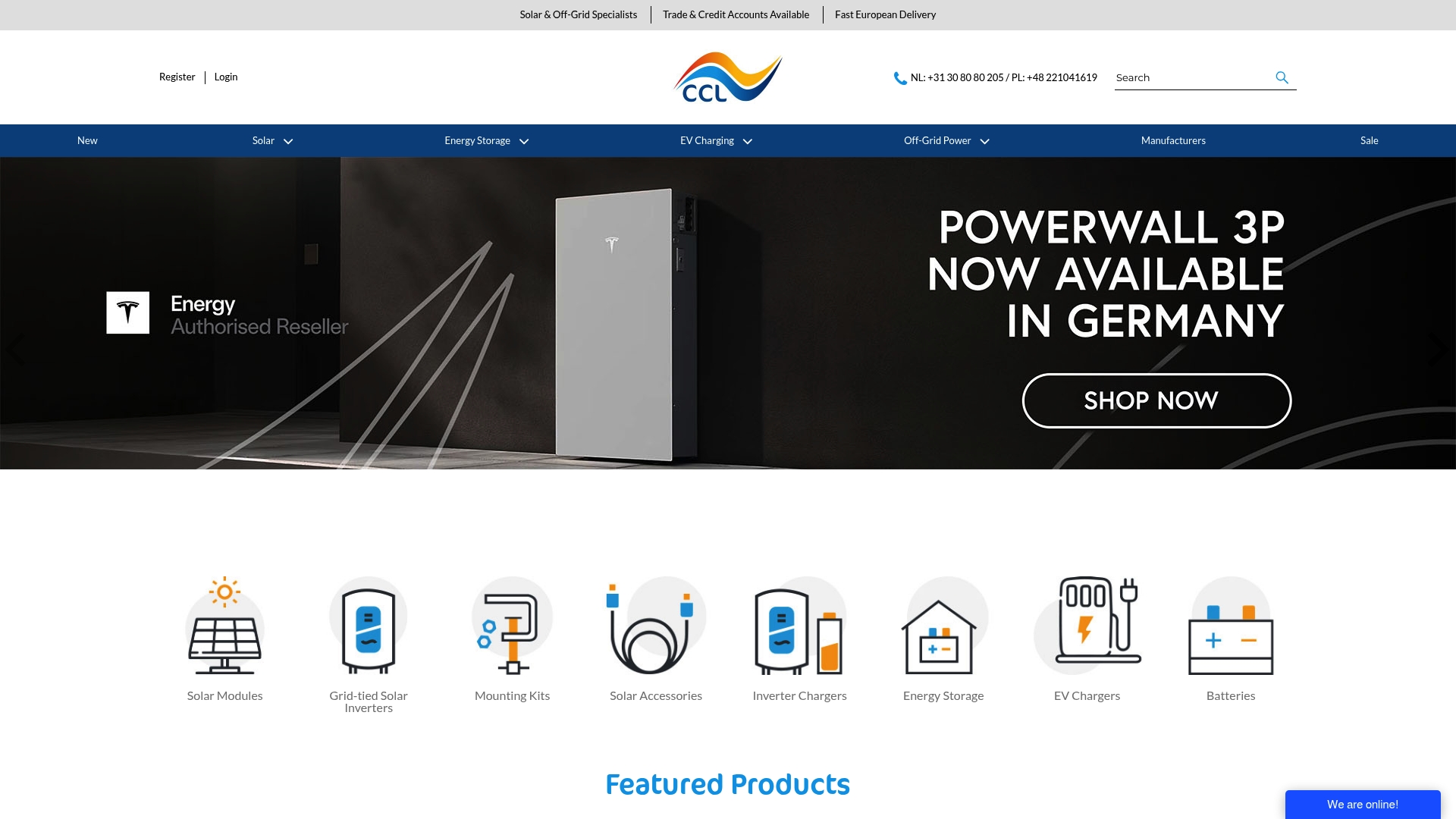
Solar inverters start at about £300, and batteries begin near £400 on the site. The catalog lists components from Tesla, SolarEdge, SMA, Solis, PylonTech, and Sigenergy. The business focuses on European residential and small business buyers and adds regular promotions and educational articles.
Core Features
The store carries a wide selection of solar panels, inverters, and batteries alongside mounting, EV chargers, and accessories. The website groups products with clear images, specification links, and filters to compare options. Regular promotions and a blog help you research component compatibility and certification details before purchase.
Key Differentiator
CCL Solar pairs a broad catalog of certified products from well known manufacturers with practical educational content. That combination helps installers and end customers verify specs and supplier credentials quickly. The emphasis on supplier partnerships supports product authenticity and traceable quality.
Pros
The product range covers both residential and light commercial needs, so you can source panels, storage, and chargers in one place. Clear product pages and filter tools reduce time spent checking compatibility across models. Regular sales and blog content help you spot discounts and learn about certification differences before you buy.
Cons
Limited public detail about installation services or technical support may leave you asking for on site help.
Many prices are shown as ranges or discounted offers rather than firm list prices, so final cost requires inquiry.
After sales and warranty handling details are not extensively published on the website, which can complicate project planning.
When It May Not Fit
If you operate outside Europe you may face shipping and service restrictions. If you need a vendor to supply turnkey installation and ongoing maintenance, the site does not clearly document those services. If you require fixed, all inclusive pricing online, the price ranges and promotions model may create extra procurement steps.
Who It’s For
European homeowners who want to buy their panels and storage components and then hire a local installer will find the catalog useful. Small businesses and independent installers sourcing branded components for client projects will appreciate the supplier list and spec links. Buyers who value price events and educational reading will gain decision support from the blog and promotions.
Real World Use Case
A homeowner examines inverters and battery options, reads an article comparing LFP and lead acid chemistries, and spots a promotional discount. They contact CCL Solar for product lead times and place an order online. They then hire a local certified installer and arrange delivery and installation.
Pricing
Prices vary by category with example starting points on the site: inverters from approximately £300 and batteries from approximately £400. Installation costs and accessories add to system price and vary by installer and region. Discounts apply during sales and shipping options are selectable at checkout.
Website: https://cclsolar.eu
Comparison of alternatives
Choosing the best photovoltaic wholesale platform requires considering tradeoffs between sustainability initiatives, operational scalability, and customer support. This section provides valuable insights into these dimensions among notable competitors.
Sustainability and Product Innovation
Belinus sets itself apart with a focus on and environmentally responsible battery chemistries, including supercapacitors and sodium-ion options, making the brand compelling for projects emphasizing recyclability and minimal ecological impact. Competitors like Krannich Solar, while offering a broad selection of high-quality components, lack the explicit emphasis on alternative chemistries and circular practices seen in Belinus’ portfolio. Installers prioritizing storage solutions alongside long-term environmental accountability will appreciate Belinus’ meticulously curated offerings.
Logistics and Delivery Efficiency
In scenarios prioritizing rapid turnaround for distributed installation projects, VDH Power demonstrates clear strengths due to its concentrated logistics and tight European delivery windows. Its restriction to certified installers ensures procurement compatibility, enabling faster execution for OP’s clients. Natec offers further reliability through its proactive inventory system, benefitting teams facing tight operational deadlines. While Belinus provides structured deployment near Belgium, it faces shipping variability depending on order volume and geographical reach compared to VDH’s streamlined accessibility.
Best fit
Photovoltaic operations emphasizing sustainability ought to consider Belinus as their primary choice due to its Belgian-developed low-impact designs and graphene-based energy storage capabilities.
Installers with tight schedules may leverage VDH Power’s expedited logistics ideal for repeated and rapid installations.
Enterprises requiring supplier coordination across multiple international offices benefit from Krannich Solar’s extensive network presence and consultancy services.
Knowledge-conscious small-to-mid installers should explore Natec’s teaching opportunities and warehouse reliability for protocol adherence and updates.
Our pick
Belinus offers a unique blend of advanced battery technologies and energy management solutions, providing significant advantages for environmentally critical implementations. While most competitors perform effectively in streamlined operations, Belinus remains concerning its dedication to alternative chemistries, designed to support longer lifecycles and eco-compatible iterations. Nonetheless, customers focusing exclusively on single-region rapid procurement or broad conventional brand platforms may find VDH Power and Natec respectively more aligned with specific logistical or diverse branding priorities.
Belinus showcases a clear mix of advanced modules and sustainable storage solutions paired with an innovative energy management system.
Product | Core Features | Key Differentiator | Pricing | Notable Limitation |
Belinus | Bifacial panels, low-impact battery chemistry | Belgian engineering with focus on sustainability | €7,000/unit (example) | Missing detailed specifications on product pages |
VDH Power | Wide module and storage range | Specialist supply for certified installers | Price not published | Restricted to professionals; excludes DIY consumers |
Natec | Variety of branded solar products | Proactive supply chain management | Price not published | Limited to Europe; no consumer retail features |
Krannich Solar | Global distribution network, training programs | Local stock with international logistics | Price not published | Premium brand focus; no sustainability certifications |
CCL Solar | Solar panels, batteries, inverters, and accessories | Educational content paired with store catalog | £300 for inverters, £400 for batteries | Limited installation and after-sales support details |
How Can Homeowners and Industrial Planners Overcome PV Wholesale Platform Challenges?
Choosing the right platform to source solar panels and energy storage can feel complicated. Many buyers want clear pricing, environmental benefits, and integrated technology that supports tariff optimization and battery arbitrage. Belinus addresses these goals with its Belgium-engineered solutions like the Energy Wall G1 graphene supercapacitor and its centralized Energy Management System (EMS). This setup provides real-time control and API access for efficient energy trading and storage management.
Belinus offers residential and commercial solutions tailored for environmentally conscious homeowners and industrial planners. With long warranties, lithium-free batteries, and scalable utility storage, it supports project needs from rooftops to large sites. Learn more about how Belinus meets these demands at Belinus official site. Take the next step by exploring their EMS features that enhance tariff scheduling and grid services.
FAQ
What makes Belinus a good choice for environmentally conscious homeowners?
Belinus offers a focus on low-impact storage by prioritizing lithium-free and biodegradable battery options. This commitment caters to buyers who want eco-friendly solutions and can result in clearer end-of-life recyclability. Homeowners should consider Belinus for sustainable energy options.
How does Belinus compare to VDH Power in terms of product availability?
VDH Power specializes in providing a broad range of A-brand solar and storage products for installers, emphasizing fast delivery and large stock. Belinus, on the other hand, targets both residential and industrial markets with specific hardware and an AI-driven management system. If you are an installer looking for immediate availability, VDH Power may be better suited for your needs.
Can Belinus’s energy management system optimize for tariff savings?
Yes, Belinus’s centralized energy management system claims to offer 15-minute dynamic tariff optimization. This feature allows users to maximize savings by shifting energy consumption to lower tariff windows. Homeowners and energy planners can expect improved cost efficiency with this system.
What is unique about the warranties offered by Belinus products?
Belinus offers long panel warranties of up to 35 years, which benefits developers balancing lifecycle costs against upfront expenses. This level of warranty assures customers of the durability and reliability of the products, making it a solid investment for long-term projects.
How does the pricing of Belinus compare to Natec for wholesale solar products?
Belinus lists its 16 kWh Energy Wall G1 at €7,000 per unit, while Natec provides a wholesale pricing model that varies by product. Businesses looking for premium technology with specialized chemistries may find the price and quality of Belinus fitting for their energy storage needs.
Recommended
Comments