Commercial PV Installation Process for Efficient Energy
- Feb 14
- 8 min read
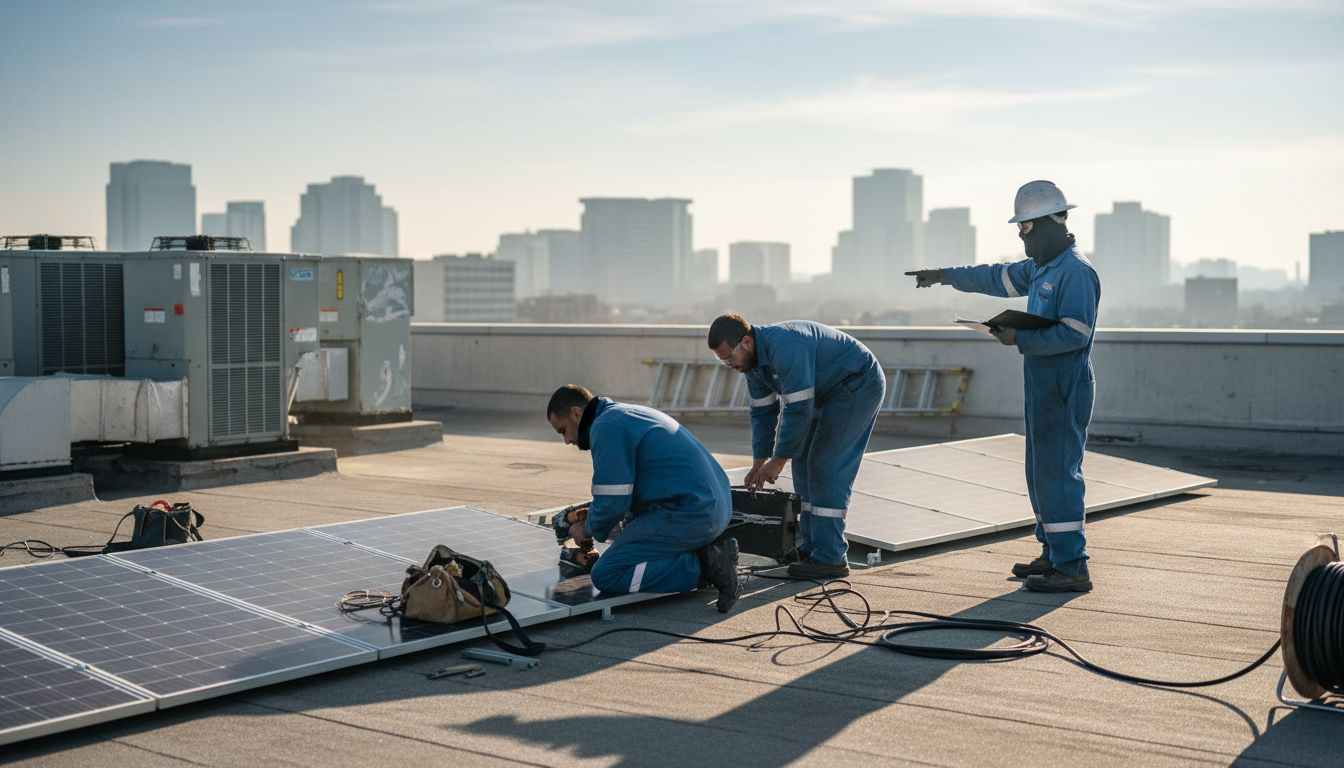
Managing energy efficiency across large facilities means facing tough choices on cost, compliance, and sustainability. For facility managers in Central Europe, a well-structured PV installation process offers a path to significant savings and real progress toward green goals. This guide illuminates every crucial phase, guiding you from precise site assessment to system commissioning so your organization gains both financial and environmental advantages through reliable PV technology.
Table of Contents
Quick Summary
Key Point | Explanation |
1. Conduct Thorough Site Assessments | A detailed evaluation of site conditions, including solar exposure and structural capacity, is essential for optimal PV system performance. |
2. Collaborate with Solar Engineering Professionals | Engaging certified professionals ensures accurate assessments and designs that align with regulatory standards and energy needs. |
3. Navigate Regulatory Approvals Carefully | Securing necessary permits and compliance documents is critical for avoiding legal delays and ensuring smooth project execution. |
4. Prioritize System Installation Precision | Accurate installation of equipment as per design specifications is crucial for long-term operational reliability and performance. |
5. Validate System Performance Thoroughly | Conduct comprehensive testing post-installation to ensure the system meets expected performance metrics and operational standards. |
Step 1: Assess Site and Define Project Requirements
Successfully launching a commercial PV installation starts with thorough site assessment and precise project requirements definition. This critical first step ensures your solar investment delivers maximum performance and financial returns.
Begin by conducting a comprehensive site evaluation that examines multiple critical factors. Your assessment should systematically cover these key areas:
Physical site conditions, including roof structure, ground space availability, and solar exposure
Electrical infrastructure compatibility and potential grid connection requirements
Structural load-bearing capacity for mounting solar panels
Shading analysis to determine potential energy production limitations
Local regulatory compliance with PV procurement criteria and zoning regulations
During the assessment, work closely with engineering specialists who can perform detailed technical evaluations. They will help you create a precise project blueprint that accounts for your specific energy needs, site constraints, and long-term sustainability goals. Pay special attention to solar irradiance measurements and seasonal performance projections to validate the potential energy generation.
Accurate site assessment is the foundation of a successful commercial PV installation - skipping this step can lead to significant performance and financial risks.
Document all findings meticulously, including measurements, structural assessments, and regulatory requirements. This comprehensive approach will streamline subsequent design and implementation phases.
Here’s a summary of factors affecting commercial PV site assessments:
Factor | Business Impact | Typical Assessment Tools |
Solar exposure | Maximizes energy yield | Irradiance meter, mapping software |
Structural capacity | Safeguards investment | Engineering report, load calculator |
Grid compatibility | Ensures reliable operation | Electrical audit, grid analysis |
Shading risk | Prevents performance loss | Shading simulation, onsite measurements |
Regulatory compliance | Avoids legal delays | Permitting review, policy database |
Pro tip: Consider hiring a certified solar engineering professional who specializes in commercial installations to conduct your initial site assessment for the most accurate and comprehensive evaluation.
Step 2: Design System and Plan Integration
With your site assessment complete, the next critical phase involves designing your commercial PV system and meticulously planning its technological integration. This step transforms your initial site analysis into a comprehensive solar energy blueprint tailored to your specific operational requirements.
Leveraging advanced methodologies like PV potential analyses, begin by developing a precise system configuration that maximizes energy generation and economic efficiency. Your design process should consider several key components:
Panel configuration optimized for available space and solar exposure
Inverter selection matching your specific electrical infrastructure
Energy storage integration for peak demand management
Grid connection strategy ensuring seamless power distribution
Performance monitoring systems for real-time energy tracking
Work closely with solar engineering specialists to create a detailed technical design that accounts for your facility’s unique energy consumption patterns. Pay special attention to system scalability and future expansion potential, ensuring your initial investment can adapt to evolving energy requirements.
A well-designed PV system is more than technical specifications - it’s a strategic asset that transforms energy costs into long-term financial opportunities.
Evaluate multiple design scenarios using comprehensive simulation tools that model projected energy yields, financial returns, and potential environmental impact. This approach allows you to compare different system configurations and select the most optimal solution for your specific needs.
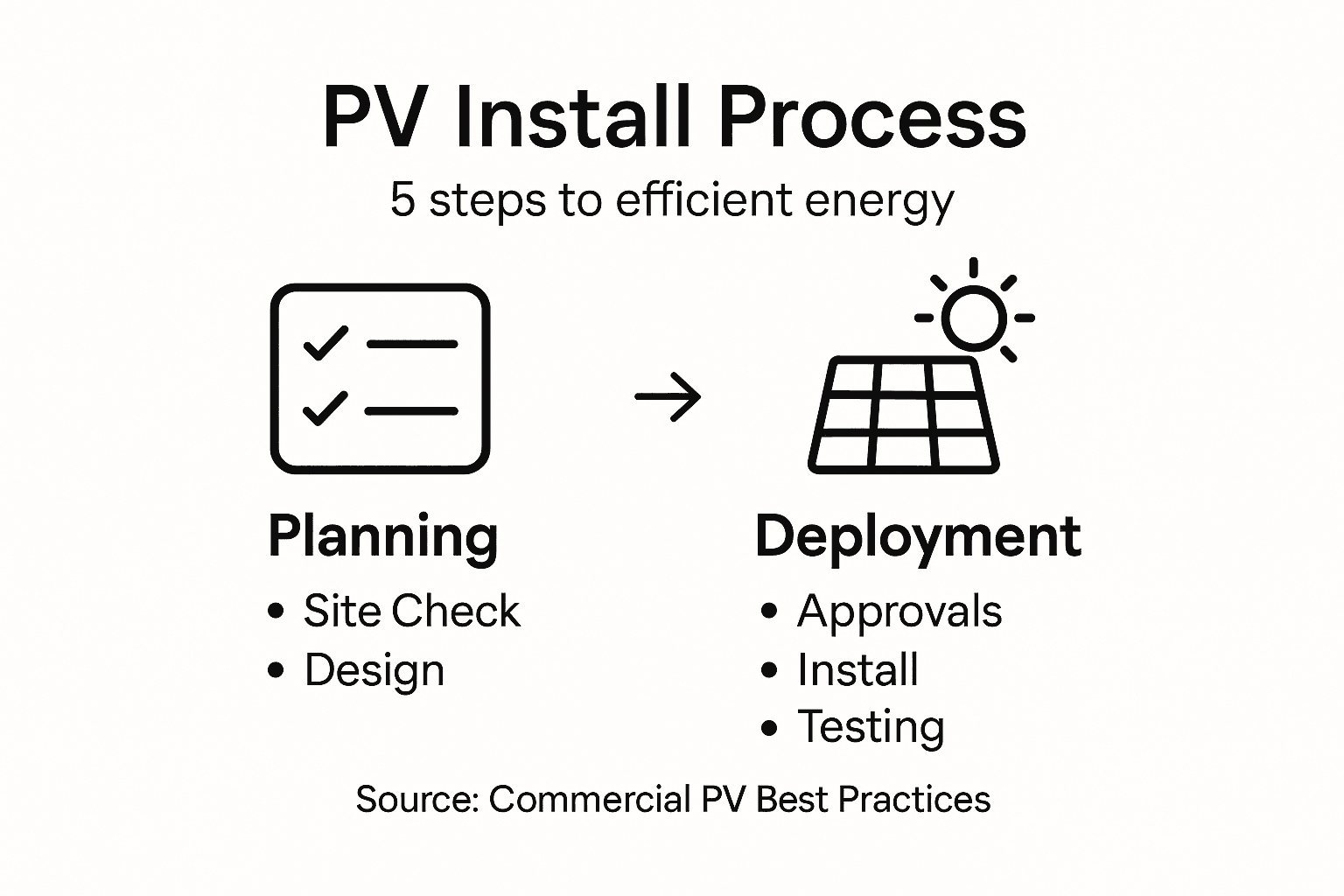
Compare PV system integration components and their long-term benefits:
Component | Role in System | Business Benefit |
Panel array | Generates electricity | Reduces utility costs |
Inverters | Converts DC to AC | Supports grid connectivity |
Storage system | Manages peak demand | Enhances energy resilience |
Monitoring | Tracks performance | Enables early issue detection |
Pro tip: Invest in a comprehensive digital simulation of your proposed PV system design to accurately predict performance and validate your technical and financial projections before final implementation.
Step 3: Obtain Approvals and Prepare Infrastructure
Transforming your PV system design into reality requires navigating complex regulatory landscapes and meticulously preparing your site infrastructure. This critical step bridges your technical planning with actual implementation, ensuring your commercial solar project meets all legal and operational requirements.
Begin by systematically addressing the permitting and regulatory processes specific to your local jurisdiction. Your approval strategy should encompass multiple essential elements:
Local municipal permits for solar installation
Grid connection agreements with regional electricity providers
Environmental compliance documentation
Safety certification requirements
Zoning and land use approvals
Electrical system modification permits
Work closely with legal and engineering consultants who specialize in commercial solar projects to streamline your approval process. They can help you anticipate potential regulatory challenges and develop proactive compliance strategies that minimize delays and administrative complications.
Successful infrastructure preparation is not just about obtaining permissions - it’s about creating a seamless pathway for your solar investment.
Simultaneously, prepare your site’s electrical infrastructure for solar integration. This involves detailed planning of mounting structures, upgrading electrical systems, and ensuring all technical specifications align with local building and electrical codes. Coordinate closely with your installation team to verify that every infrastructure modification meets regulatory standards and supports optimal system performance.
Pro tip: Maintain a comprehensive digital documentation system that tracks all permit applications, approvals, and infrastructure modification records to streamline future audits and potential expansions.
Step 4: Install PV Equipment and Integrate Systems
With approvals secured and infrastructure prepared, you now enter the most tactically complex phase of your commercial solar project: physically installing photovoltaic equipment and integrating all system components. This stage transforms your detailed design into a functional energy generation platform.
Follow the project execution guidelines for precise equipment deployment, which involves several critical installation stages:
Solar module mounting on predetermined structural supports
Inverter placement in optimal electrical configuration
Electrical connection of panel arrays and power conversion systems
Grounding and safety infrastructure installation
Cable management and electrical routing
Communication network setup for system monitoring
Your installation team must execute each step with exceptional precision, ensuring mechanical integrity and electrical safety. Systematic component alignment is crucial, requiring meticulous attention to manufacturer specifications and local building codes. Pay particular attention to mounting angle, panel spacing, and thermal expansion considerations that could impact long-term system performance.
Successful equipment installation is where engineering design meets practical execution - precision matters more than speed.
Prioritize comprehensive system integration that connects solar generation with existing electrical infrastructure. This involves configuring inverters, establishing communication protocols, and verifying seamless interaction between solar arrays, storage systems, and grid connections. Conduct rigorous testing at each integration point to validate system functionality and performance parameters.
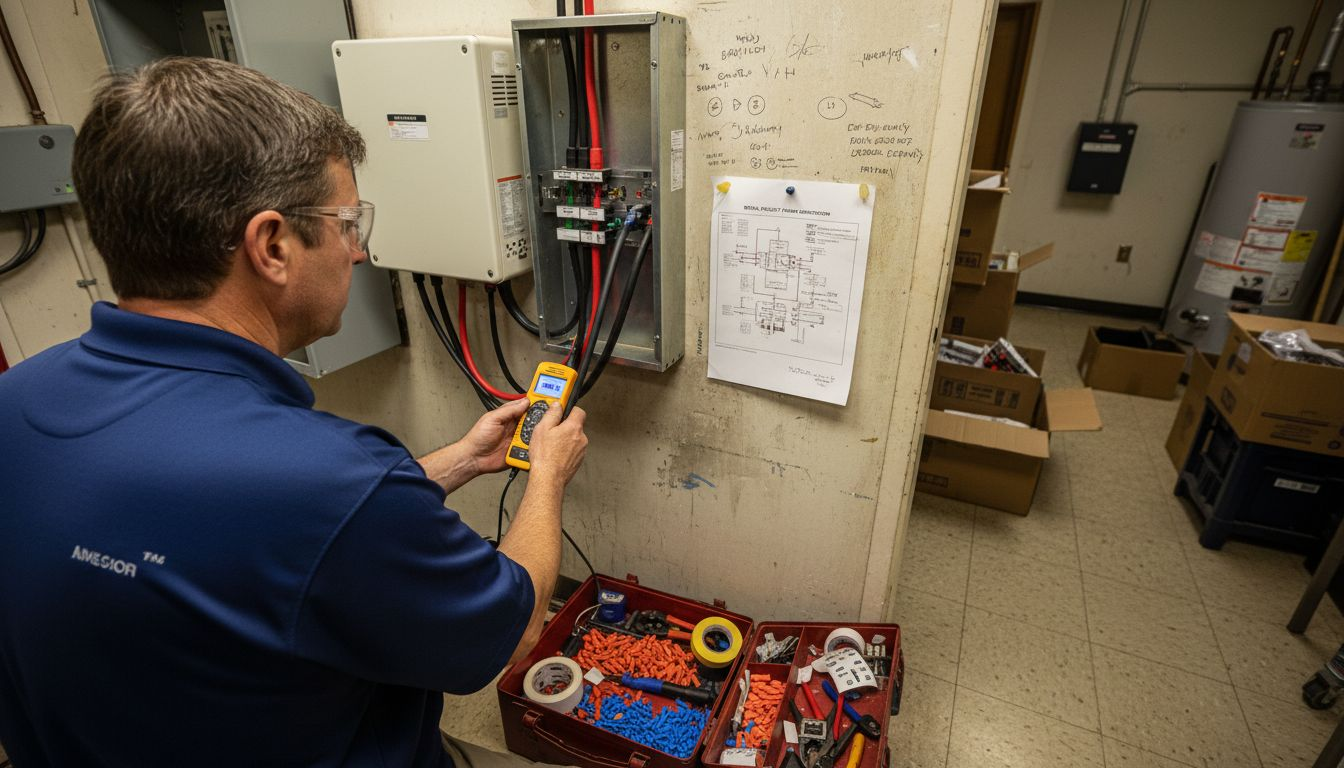
Pro tip: Document every installation detail photographically and maintain digital records of equipment serial numbers, mounting specifications, and connection diagrams to streamline future maintenance and potential warranty claims.
Step 5: Verify Performance and Commission System
The final phase of your commercial PV installation transforms theoretical design into measurable energy generation. System commissioning represents the critical moment where you validate every technical specification and ensure your solar investment delivers expected performance.
Utilize performance verification protocols to comprehensively assess your new solar system. Your verification process should include:
Electrical system integrity testing
Panel output measurement
Inverter functionality checks
Safety system validation
Communication network diagnostics
Performance ratio calculations
Your commissioning team will conduct systematic tests comparing actual system performance against original design predictions. Precise measurement techniques are essential, involving specialized equipment that tracks solar irradiance, electrical output, and system efficiency under various environmental conditions.
Commissioning is not just a technical procedure - it’s your quality assurance checkpoint that transforms engineering plans into a reliable energy asset.
Conduct multiple performance tests across different times of day and weather conditions to establish a comprehensive understanding of your system’s capabilities. Document all test results meticulously, creating a baseline performance record that will support future maintenance and potential warranty claims.
Pro tip: Create a digital performance dashboard that tracks real-time system metrics, enabling immediate detection of any deviations from expected energy generation parameters.
Unlock the Full Potential of Your Commercial PV Installation with Belinus Solutions
The commercial PV installation process highlights critical challenges like precise site assessment, system design integration, and seamless infrastructure preparation. If you want to reduce performance risks and transform your solar investment into a reliable energy asset, you need solutions that align perfectly with your project’s complexity. Our comprehensive offerings at Belinus address every pain point from scalable storage modules to intelligent Energy Management Systems that optimize your solar yield and financial returns.

Explore how our commercial and utility solutions, including custom system design and grid-integrated services, can help you overcome the common hurdles discussed in the installation process. Visit Belinus to discover advanced PCS technology and energy trading options tailored for efficiency and long-term success. Act now to integrate cutting-edge solar, battery storage, and EV charging solutions that ensure your PV project delivers peak performance and maximum impact.
Frequently Asked Questions
What is the first step in the commercial PV installation process?
To begin the commercial PV installation process, conduct a comprehensive site assessment to evaluate physical conditions, electrical infrastructure, and regulatory compliance. Document all findings and consult engineering specialists to create a precise project blueprint that meets your energy needs.
How do I design a commercial PV system after the site assessment?
Once the site assessment is complete, design a commercial PV system by optimizing panel configuration, selecting suitable inverters, and planning energy storage integration. Use simulation tools to test different configurations and ensure the design maximizes energy generation and economic efficiency.
What approvals do I need before installing a commercial PV system?
Before installation, obtain necessary local permits, grid connection agreements, and safety certifications. Work with legal and engineering consultants to ensure your project meets all regulatory requirements and follows your local jurisdiction’s permitting process.
What are key considerations during the installation of PV equipment?
During installation, focus on precise equipment deployment, including panel mounting, inverter placement, and electrical connections. Ensure attention to detail in every step to maintain mechanical integrity and adhere to local building codes for optimal system performance.
How can I verify the performance of my commercial PV system?
To verify your commercial PV system’s performance, perform systematic testing that includes measuring electrical output, checking inverter functionality, and calculating performance ratios. Document all test results to establish a baseline for monitoring long-term energy generation and efficiency.
Recommended