Best 8 home energy storage options for 2026
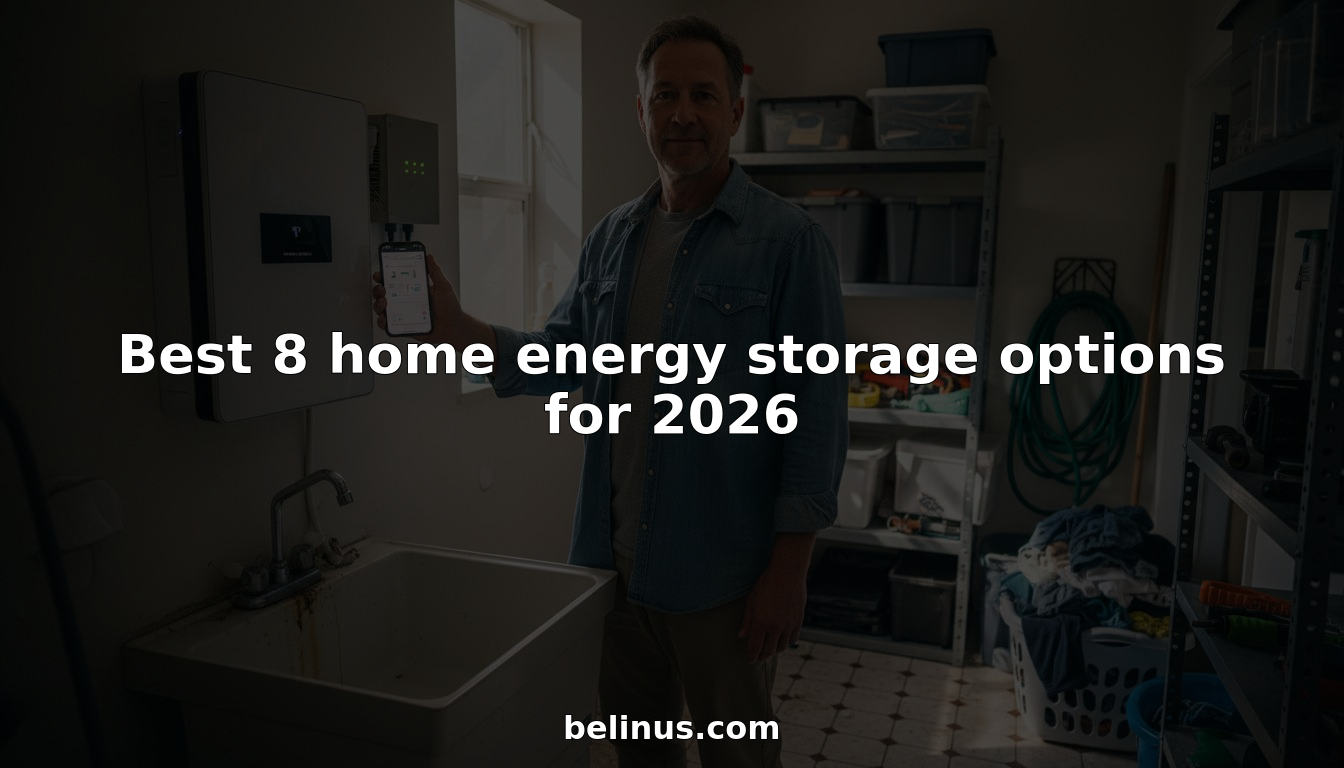
Finding the perfect home energy solution in Central Europe is more exciting than ever. Innovative new technologies are making it possible to store solar power, manage electric car charging, and lower monthly bills with clever designs that are built for the long haul. From smart energy management to greener battery options and flexible installation, fresh ideas are turning ordinary homes into hubs of clean energy and independence. Curious about which options promise savings, control, and future-ready comfort? The journey to smarter living begins with comparing the best on the market today.
Table of Contents
Belinus Energy Solutions
At a Glance
Belinus Energy Solutions bundles Belgian design with an integrated technology stack that makes grid-aware home energy simple and powerful. Their portfolio spans residential graphene storage, high-efficiency solar, EV charging, and a centralized Energy Management System that optimizes tariffs every 15 minutes. For Central European homeowners seeking lower bills and greater energy independence, Belinus is a single-vendor solution that prioritizes longevity, recyclability, and practical integration. Confident and forward-looking.
Core Features
Belinus combines hardware and software into a unified platform: Energy Wall G1 is a 16 kWh graphene supercapacitor due Q1 2026, with Energy Wall G2 planned as modular 2–3 kWh units; Solis Inverters cover 5–25 kW residential sizes with native Belinus EMS integration; ETAP Pro EV Charger supports fleet management; and a quotation tool will deliver automated 25-year financial modeling from January 2026. On the commercial side, Belinus offers utility storage modules (400+ kWh, scalable to MW), Belinus-branded PCS for CNI power conversion, and grid-integrated services for trading and arbitrage. The centralized EMS runs 15-minute dynamic tariff optimization, supports real-time battery arbitrage and grid services, and exposes a RESTful API plus native mobile and web dashboards for control and monitoring.
Pros
Integrated end-to-end offering: Belinus delivers panels, storage, inverters, chargers, and EMS as a coordinated system, reducing integration headaches for homeowners and installers.
Cutting-edge storage technology: The graphene-based Energy Wall claims high energy density and long cycle life, designed to be recyclable and lithium-free for lower environmental impact.
Long-term reliability and warranty focus: The group emphasizes extended warranties and durable components, which addresses lifetime cost concerns for Central European homeowners.
Smart, tariff-aware energy management: The EMS optimizes savings with 15-minute tariff updates and real-time arbitrage to maximize bill reductions.
Commercial scalability and IoT capability: From 400+ kWh utility modules to fleet-managed EV charging, Belinus supports growth from a single home to utility-scale deployments.
Who It’s For
Belinus is ideal for Central European homeowners who already have—or plan to install—solar PV and want a single, cohesive supplier for storage, inverters, and EV charging. It also suits small businesses and property owners who value long warranties, recyclable storage, and advanced tariff optimization. If you want a futureproof system that integrates with installer services (SolarPlus), PV supply (Solarimex), and EV hardware (Evonity), Belinus is tailored to your needs.
Unique Value Proposition
Belinus differentiates by pairing proprietary graphene storage with a centralized, API-driven EMS that orchestrates every asset on a 15-minute cadence. That combination enables predictable, automated savings and grid services that typical battery-only competitors cannot match. Add specialist products—Energy Wall G1 at 16 kWh, modular G2 options, Solis Inverters with native EMS compatibility, and ETAP Pro for fleet charging—and you get a vertically integrated stack from PV supply to installation and ongoing remote management. The platform supports multiple chemistries (graphene, LFP, pre-lithiated LFP, HUC), is built for recyclability, and exposes interfaces for third-party tools and energy trading. In short: Belinus reduces vendor friction, accelerates ROI modeling with upcoming 25-year quotation software, and prioritizes operational flexibility—design choices that favor long-term owners and installers over one-off, lowest-cost offers.
Real World Use Case
A homeowner in Central Europe installs Belinus solar panels with Energy Wall G1 and a Solis inverter. The EMS charges the 16 kWh graphene bank during midday solar production, shifts consumption to cover evening peaks, and uses tariff optimization for profitable arbitrage during price swings. The ETAP Pro charges an electric car with fleet-style scheduling, and the mobile app shows savings projections produced by the forthcoming 25-year quotation engine. Over time, recyclable components and extended warranties simplify maintenance and resale value.
Pricing
Energy Wall G1: €7,000 per unit (launch Q1 2026). Other product prices are not specified in the provided content; the quotation software launching January 2026 will automate long-term financial modeling to estimate system-level costs and payback.
Website: https://belinus.com
Solar-In
At a Glance
Solar-In is a Belgian maker of solar inverters and lithium iron phosphate batteries that prioritizes reliability and long-term support. With inverter options from 3 kW to 136 kW and product efficiencies above 97%, Solar-In is clearly built for homeowners and installers who value dependable performance. The company pairs durable hardware with up to a 15-year warranty and distributor marketing support, though you’ll need to contact them directly for detailed specifications and pricing.
Core Features
Solar-In’s core strengths are a broad inverter lineup and household energy storage based on lithium iron phosphate chemistry. The inverters cover small residential rooftops up to larger domestic or small commercial arrays (3 kW to 136 kW) with stated efficiency over 97%. The product range comes with pre-sales and after-sales technical support and marketing help for distributors, plus warranties that extend up to 15 years—important for homeowners planning a long-term investment in energy independence.
Pros
Consistently high efficiency: Solar-In claims inverter efficiency above 97%, which helps maximize self-consumption and improves return on investment for rooftop systems.
Long warranty coverage: Up to a 15-year warranty reduces long-term risk and signals confidence in product longevity.
LFP battery chemistry for safety and cycle life: Using lithium iron phosphate batteries provides chemical stability and strong cycle durability, supporting household storage use.
Comprehensive support for customers and distributors: Pre-sales and after-sales technical assistance plus marketing support make installation and sales easier for local installers.
Wide product range: From 3 kW to 136 kW, the portfolio suits single-family homes through larger residential setups and small commercial needs.
Cons
Limited technical detail online: The website does not provide complete technical specifications, forcing you to request datasheets or talk to a distributor for performance curves and installation limits.
No public pricing: With pricing not listed online, budgeting requires direct quotes, which slows early-stage comparison shopping.
Primary focus on Belgian and nearby markets: Their market focus may limit local support or stock availability if you are outside Belgium or neighboring countries.
Who It’s For
Solar-In fits homeowners in Central Europe who want a durable, well-supported inverter and battery platform and are comfortable sourcing a quote through a local installer or distributor. It also suits distributors seeking a European-made brand that offers marketing and technical backing to grow sales.
Unique Value Proposition
Solar-In’s unique value is the combination of high inverter efficiency, LFP storage, and an extended warranty, all backed by Belgian manufacturing quality and distributor-oriented support—designed to reduce the uncertainty of long-term residential energy investments.
Real World Use Case
Imagine a homeowner installing a 6 kW rooftop array tied to a Solar-In inverter plus an LFP storage unit: the system boosts self-consumption during winter evenings, the installer handles commissioning with direct technical support, and the homeowner benefits from a 15-year warranty and promised high conversion efficiency.
Pricing
Pricing is not specified on the website; you must request a quote through Solar-In or a local distributor to get a tailored price based on system size and configuration.
Website: https://solarin.be
Youpower

At a Glance
Youpower positions itself as a practical choice for homeowners and businesses who want to break free from the public electricity grid and run on their own green power. The company bundles off-grid and semi off-grid system design with home batteries, certified Victron Energy installation, and a Battery Disassembly Center for recycling. If your priority is energy independence and sustainability in Central Europe, Youpower delivers a clear, tailored path — but expect complexity and a meaningful upfront investment.
Core Features
Youpower provides complete independent power systems built around off-grid and semi off-grid design principles, combined with home batteries for energy storage. The offering includes tailored system sizing to match household or commercial load profiles, certified Victron Energy partner installation to ensure compatible hardware and reliable commissioning, and a Battery Disassembly Center to handle battery recycling and end-of-life processes. The focus is maximizing self-consumption of solar generation and reducing or eliminating connection costs from the public grid.
Pros
True off-grid capability: Youpower enables full independence from the public electricity grid, giving you control over when and how you use your energy. This is vital for homeowners seeking resilience during outages.
Higher self-consumption of solar energy: The systems are designed to store excess PV output for evening and cloudy days, which increases green energy use and lowers purchased electricity. That reduces your variable bills.
Tailored system design: Youpower creates systems sized to the customer’s actual energy needs, which reduces wasted capacity and improves return on investment. Customization matters when every kilowatt-hour counts.
Certified installation partner: Working with Victron Energy-certified installers improves the odds of a reliable, maintainable installation and simplifies support and warranties.
End-of-life battery handling: The Battery Disassembly Center shows a commitment to circular practices by offering battery recycling, which matters for sustainability and regulatory compliance in Europe.
Cons
Significant initial investment may be required: Installing a full independent system with batteries and professional commissioning can be costly up front, which can deter budget-conscious homeowners.
System design and installation are complex: Off-grid setups require detailed load analysis, electrical work, and integration expertise, which increases project time and coordination needs.
Possible need for backup generators under heavy demand: In prolonged low-sun periods or unusually high consumption, a backup generator may still be necessary to guarantee continuous power.
Who It’s For
Youpower is best for homeowners and small businesses in Central Europe who prioritize energy independence, have space for a meaningful PV and battery installation, and are willing to invest in a professionally engineered off-grid or semi off-grid solution. It’s especially suitable for properties with high self-generation potential and long-term plans for sustainability.
Unique Value Proposition
Youpower’s strength lies in combining certified Victron Energy installations with tailored off-grid system design and responsible battery recycling. That trio turns a complicated technical project into a managed, end-to-end solution focused on long-term independence and environmental responsibility.
Real World Use Case
Imagine a Central European household with a large rooftop PV array that stores daytime surplus in Youpower batteries. The family uses stored energy overnight and during cloudy spells, sharply reducing grid imports and connection fees while maintaining comfort and appliance use.
Pricing
Not specified on the website; contact Youpower for a detailed quote and system sizing.
Website: https://youpower.be
Suncharged
At a Glance
Suncharged is a Dutch provider of tailor-made residential solar, home battery, and EV charging solutions that emphasize sustainability, cost reduction, and energy independence. They offer independent advice and brand-agnostic installation backed by smart energy management systems. Bottom line: if you want a customized pathway to lower bills and greater self-sufficiency, Suncharged presents a pragmatic, installation-focused option — though exact pricing requires a quote.
Core Features
Suncharged provides end-to-end services: bespoke designs for solar panels, home batteries, and EV chargers; personalized expert consultations; and brand-independent installation so you can choose hardware without vendor lock-in. Their smart energy management systems optimize on-site generation, storage, and EV charging to reduce costs and increase resilience. The company highlights sustainability and modularity, applying solutions to both existing and new homes and tailoring system size and control logic to each household’s needs.
Pros
Independent, personalized advice: Suncharged offers one-on-one guidance so your system is tailored to your home and usage patterns, which helps avoid one-size-fits-all mistakes.
Wide selection and modular systems: They work across top brands and modular setups, enabling phased upgrades or mixed-vendor configurations to match budgets and priorities.
Strong focus on sustainability and self-sufficiency: The offering is explicitly aimed at lowering grid dependence and reducing carbon footprint through on-site generation and storage.
User-friendly smart energy management: The firm integrates energy management tools that help optimize when you store and use energy, improving cost savings and usability.
Professional, skilled installation: Suncharged emphasizes high-quality, expert installation, which is crucial for system safety, longevity, and warranty compliance.
Cons
Price information not explicitly listed: The website does not provide fixed pricing, so you must request a quote to understand total project costs.
Project complexity can affect timelines and cost: Because solutions are highly customized, larger or more complex projects may take longer and cost more than simple installs.
Limited transparency on specific products and prices: More detailed product specs and sample project price ranges would help homeowners compare options quickly.
Who It’s For
Suncharged is ideal for Homeowners in Central Europe who want expert guidance to move toward energy independence without committing to a single brand. If you value tailored design, modular expansion, and professional installation — and you’re willing to engage in a consultative sales process — this is a strong match.
Unique Value Proposition
Suncharged’s strength is its combination of independent advice, brand-agnostic installation, and integrated smart energy management. That mix lets you prioritize sustainability and practical cost savings while keeping upgrade flexibility.
Real World Use Case
A common scenario: Suncharged designs and installs rooftop solar tied to a home battery and EV charger, then calibrates the energy management system to store daytime solar for evening use and to prioritize charging during low-tariff windows. The result: lower bills, backup power during outages, and a smoother EV charging experience.
Pricing
Not explicitly listed; pricing depends on customization and project size. Expect to request a site assessment and quote to get exact figures.
Website: https://suncharged.nl
PowerForma
At a Glance
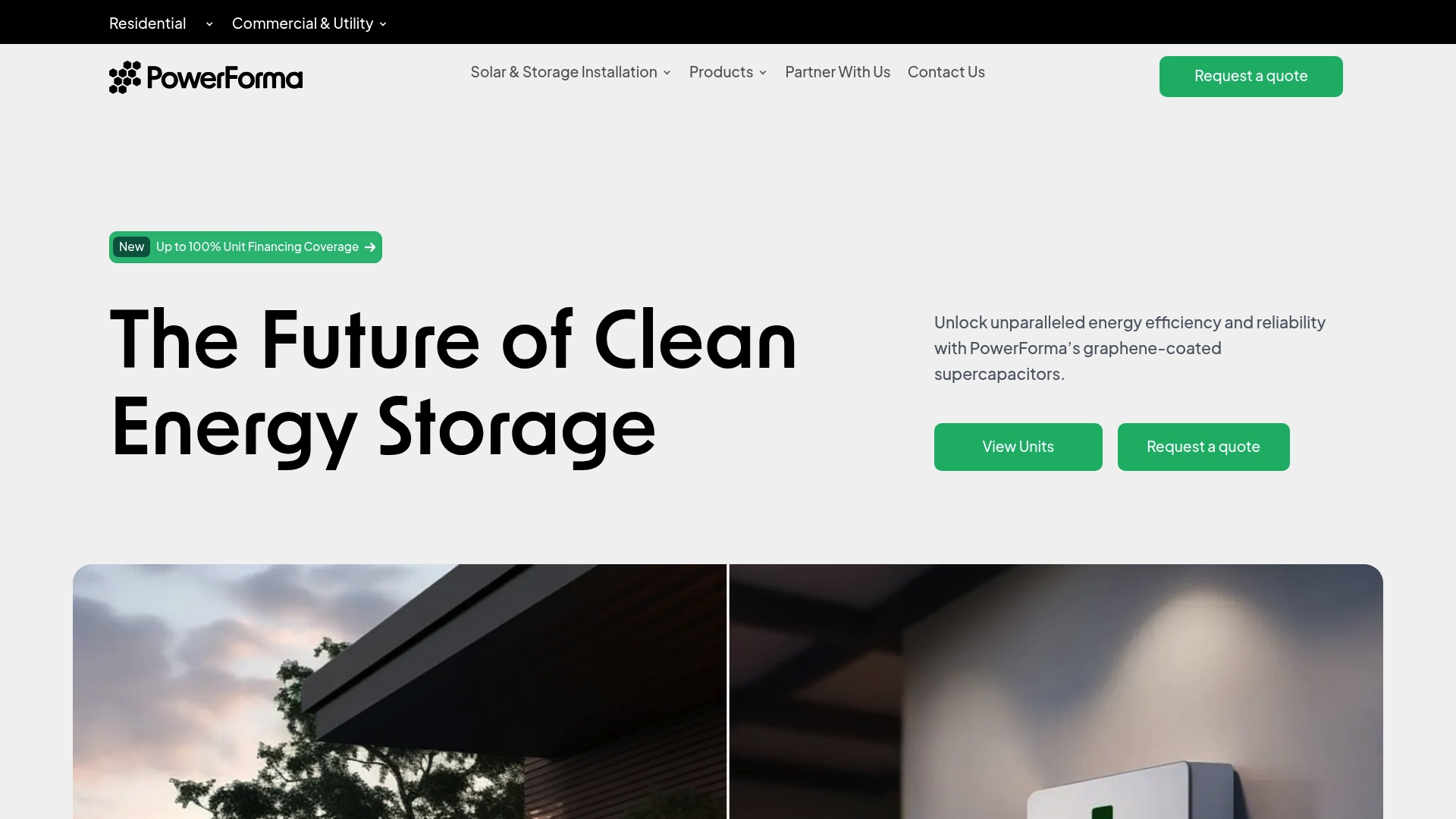
PowerForma delivers graphene-coated supercapacitors engineered for speed, longevity, and environmental safety. In practice, the system promises fast charging, a long service life, and reliable operation across extreme temperatures—qualities that appeal to homeowners and small businesses seeking resilient backup power. The bottom line: PowerForma is a forward-looking option if you prioritize rapid charge/discharge cycles and sustainability over the lowest upfront cost.
Core Features
PowerForma centers on graphene-coated supercapacitor technology that charges up to ten times faster than traditional batteries and can reach a full charge in about an hour. The units are rated for an extended lifespan—up to 25 years and 20,000 cycles—and are built from recyclable, non-toxic materials. They operate across a wide temperature range (‑40°F to 162°F), are stackable for configurable capacity, and are modular and portable for easy relocation. Integration is straightforward: the supercapacitors are compatible with most smart four-quadrant converters and energy systems, making them suitable to pair with solar panels and generators.
Pros
Fast charging speeds: PowerForma’s supercapacitors can reach full charge in roughly one hour, which reduces downtime and enables rapid cycling between grid and solar generation.
Long cycle life and durability: With up to 20,000 cycles and a nominal lifespan of 25 years, these units suit applications that demand frequent charge and discharge without rapid degradation.
Environmentally friendly construction: Materials are recyclable and non-toxic, lowering environmental impact compared with some conventional chemistries.
High safety profile: The design emphasizes safety with fire- and explosion-resistant operation, reducing household risk during long-term installation.
Flexible, space-efficient design: Stackable and modular units let you scale capacity to match roof-mounted PV output or household backup needs while conserving floor or garage space.
Cons
Potential higher initial cost: The advanced graphene supercapacitor technology likely carries a premium compared with traditional battery options, which may extend payback periods for some buyers.
Limited transparent pricing: Detailed pricing is not public; you must request a tailored quote, which slows initial budgeting and quick comparisons.
Requires professional installation: The system’s integration and safety expectations necessitate certified installation, adding to upfront project cost and scheduling.
Who It’s For
PowerForma is best for homeowners and small businesses in Central Europe who value fast charging, long service life, and environmentally responsible materials. If you run a household with intermittent high loads, depend on reliable backup during storms, or want rapid recharge from rooftop solar midday, this system aligns well with your priorities.
Unique Value Proposition
PowerForma’s key differentiator is its graphene-coated supercapacitor platform that combines rapid charging with exceptional cycle life and wide-temperature resilience. That trio—speed, longevity, and safety—creates a compelling value for users who need frequent, reliable cycling rather than low capital expense.
Real World Use Case
A small business pairs PowerForma units with on-site solar to reduce grid dependence, achieve fast midday recharging, and maintain backup power during outages; this lowers energy costs and improves operational reliability without frequent battery replacements.
Pricing
Pricing is available upon request; interested customers must complete a quote form to receive tailored estimates based on configuration and installation needs.
Website: https://powerforma.com
Tesla

At a Glance
Tesla is a high-profile provider of electric vehicles, solar energy products, and broader clean energy solutions that aim to accelerate the transition to sustainable living. The brand’s strength lies in combining transportation and energy offerings under a single, recognizable name, making it easier for buyers to consider an integrated approach to low-carbon living. For homeowners in Central Europe, Tesla represents a clear option if you want a single vendor for cars and rooftop or commercial solar. That said, headline information can be sparse on the homepage, so expect to dig deeper for specifics.
Core Features
Tesla’s core capabilities are straightforward: electric vehicles, solar energy products, and clean energy solutions. The company positions itself to cover a homeowner’s mobility and energy needs, which suggests an emphasis on integration and a long-term vision for renewable adoption. The website recommends modern browsers for the best browsing experience, implying interactive product pages and configurators. Beyond that, detailed technical specifications, pricing, and availability tend to vary by product and region and are not always listed directly on the homepage.
Pros
Innovative Technology: Tesla has a reputation for pushing innovation in electric mobility and renewable energy, which often leads to advanced features and continual product refinement.
Sustainable Energy Focus: The company clearly centers its strategy on reducing carbon emissions, which aligns with homeowners seeking greener alternatives.
Wide Product Range: Tesla offers both vehicles and solar-based energy products, allowing customers to consider an end-to-end approach to decarbonizing transport and homes.
Strong Brand Reputation: Tesla’s market visibility and brand recognition can simplify financing, resale considerations, and access to a larger aftermarket ecosystem.
Global Presence: The company’s international footprint means you may find support and infrastructure across multiple countries, though specifics depend on local operations.
Cons
Limited Detailed Product Information on Homepage: The homepage does not always provide full specifications, forcing you to navigate deeper or contact sales for specifics.
Potentially High Price Point for Some Products: Many Tesla offerings are premium positioned, which may place them above the budget of cost-sensitive homeowners.
Availability May Vary by Region: Product availability, delivery times, and support differ across countries, so what’s offered in one market may not be available in another.
Who It’s For
Tesla is best suited for environmentally conscious consumers who want a recognizable brand offering both electric vehicles and solar energy options. If you value integration, brand-backed aftercare, and are willing to pay for premium technology, Tesla will appeal to you. If you live in Central Europe and prioritize a unified supplier for mobility and home energy, Tesla is a practical candidate to evaluate.
Unique Value Proposition
Tesla’s unique value is the convergence of vehicles and solar energy under one brand, simplifying the decision process for buyers who want a single partner for electrification and renewable energy solutions.
Real World Use Case
A homeowner uses a Tesla vehicle for daily commuting while pairing rooftop solar to offset household consumption and reduce grid dependence, applying a cohesive approach to cleaner transport and home energy.
Pricing
Pricing is not specified directly on the homepage and typically varies by product model and customization options, so expect to request a quote or use online configurators for exact numbers.
Website: https://tesla.com
Sonnen
At a Glance
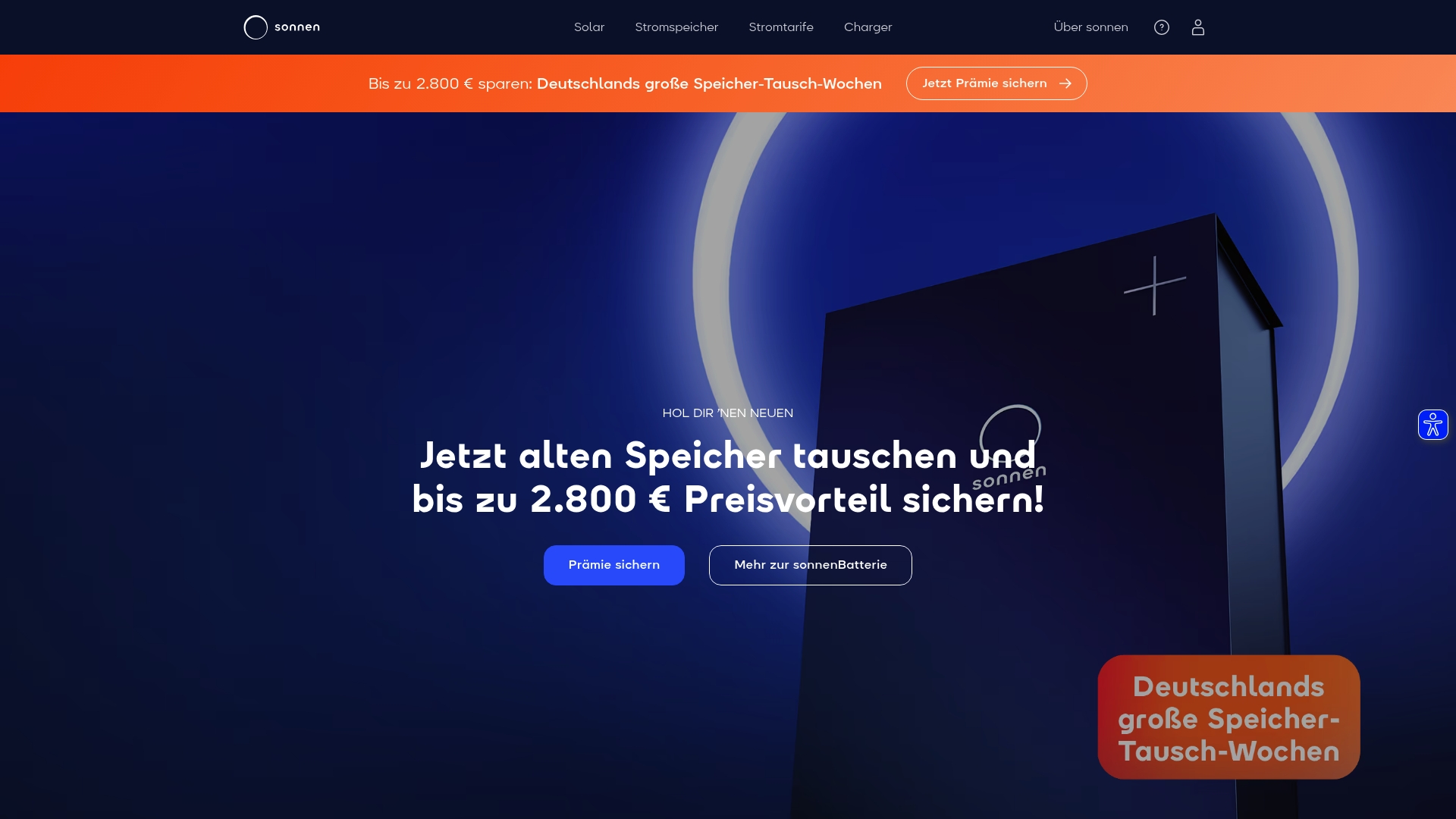
Sonnen offers a comprehensive, vertically integrated approach to home energy: batteries, photovoltaic systems, and smart charging rolled into one solution. The company markets both residential and commercial products, and it emphasizes trade-in incentives and certified partner installation. For Central European homeowners seeking an established supplier that bundles storage, solar, and EV charging, Sonnen is a strong contender — provided you accept that detailed pricing and warranty terms will be determined through a personalized quote.
Core Features
Sonnen’s portfolio combines battery storage (notably the Sonnenbatterie 10 Hybrid and Performance+ lines), rooftop photovoltaic modules, and intelligent wallbox EV chargers. Promotional campaigns such as large storage trade-in weeks promise up to €2,800 in savings, and there are commercial storage options designed to increase business independence. The company works through certified specialist partners who handle site assessments and bespoke installation, which means systems are tailored to your roof, consumption profile, and local grid conditions.
Pros
Broad, integrated product set: Sonnen covers storage, solar generation, and charging infrastructure in one place, which simplifies planning and system compatibility.
Options for both homes and businesses: The lineup includes residential batteries and larger commercial storage, so the same technology family can scale across property types.
Trade-in incentives reduce upgrade cost: Periodic trade-in promotions offering up to €2,800 can make replacing an aging battery far more affordable.
Installation through certified partners: Sonnen’s reliance on certified installers increases the likelihood of a professional, code-compliant installation.
Focus on sustainable energy independence: The product and service mix is clearly tuned to reduce grid dependence through on-site generation and storage.
Cons
Pricing details are not publicly specified: The website does not provide transparent prices, so you must request an on-site quote to understand total cost.
Warranty and service specifics are unclear: There are no explicit, easily accessible details about warranty lengths, service response times, or replacement terms on the provided material.
Choice complexity for non-experts: With multiple battery models, PV options, and charger choices, homeowners unfamiliar with energy systems may find the selection process confusing without expert guidance.
Who It’s For
Sonnen suits homeowners in Central Europe who prioritize an integrated solution from a single supplier and who value working with certified installers. If you want to combine a battery with solar panels and an EV charger and prefer promotions or trade-in incentives to reduce upfront cost, Sonnen makes practical sense. It’s also suitable for small businesses aiming for increased energy independence.
Unique Value Proposition
Sonnen’s strength is its combined offering: batteries, PV modules, and intelligent charging delivered through a partner network and supported by promotional trade-in schemes. That combination lowers friction for buyers who want a one-stop solution rather than coordinating separate vendors.
Real World Use Case
A homeowner replaces an older battery during a trade-in campaign to secure up to €2,800 in savings, then pairs the new Sonnenbatterie with rooftop solar and a smart wallbox to charge an EV with daytime solar and draw from stored energy overnight — reducing grid purchases and increasing self-sufficiency.
Pricing
No fixed prices are listed; Sonnen provides individualized on-site offers created with certified partners.
Website: https://sonnen.de
BYD Battery-Box
At a Glance
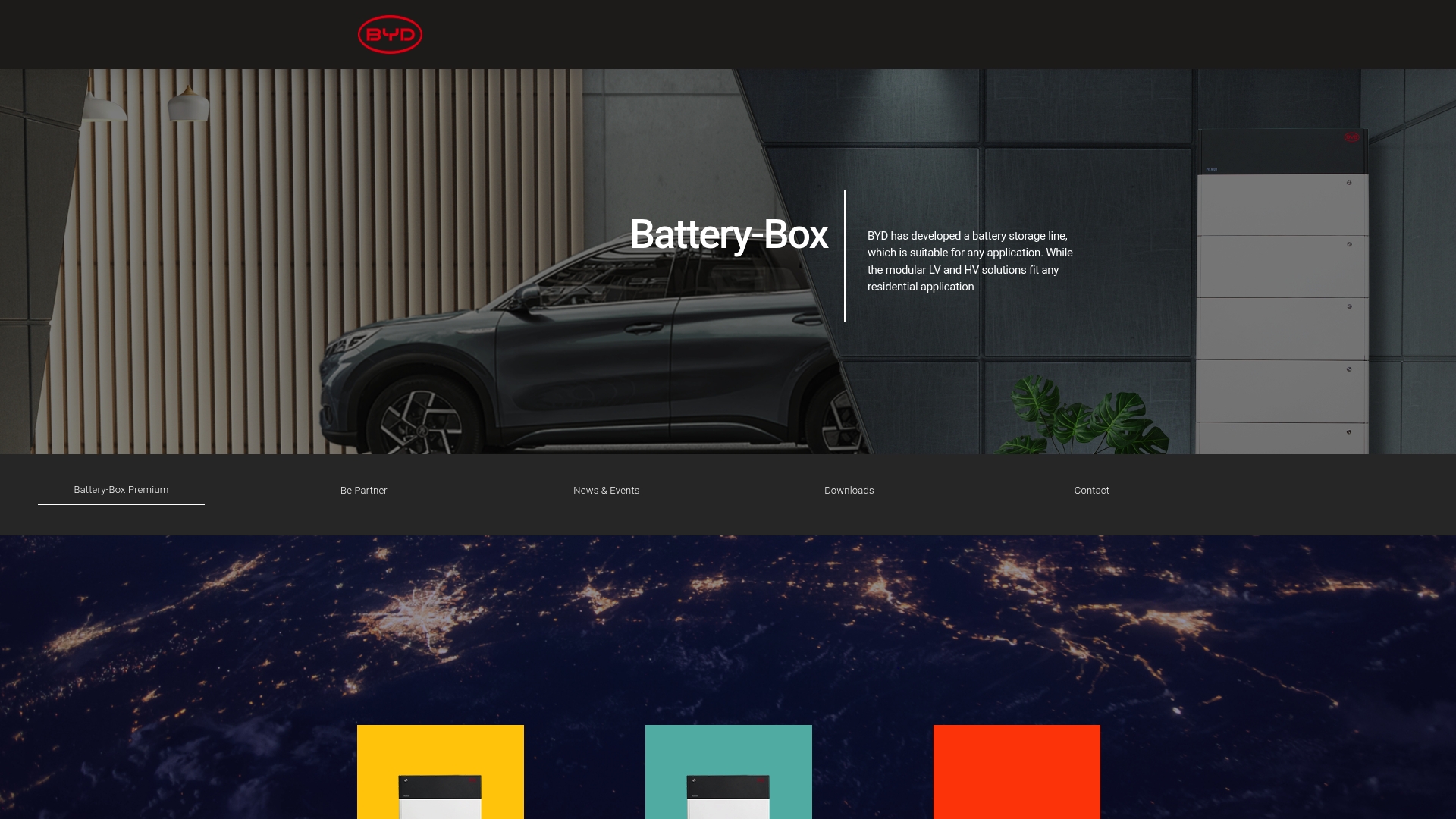
BYD Battery-Box is a modular, cobalt-free LFP battery family built for flexibility across residential, commercial, backup, and off-grid applications. Its strength is scalability: you can start small and expand capacity or mix high-voltage and low-voltage modules as needs change. Safety and longevity drive the design, making this a conservative, long-term choice for homeowners and installers in Central Europe who prioritize reliability and lifecycle cost. Expect a technically mature product with some upfront complexity to configure correctly.
Core Features
The Battery-Box line centers on a modular design that supports a wide range of configurations: high-voltage (HVS, HVM, HVL) and low-voltage (LVS, LVL) options let you match architecture to inverter and load requirements. The chemistry is lithium iron phosphate (LFP), which is cobalt-free and contributes to long cycle life and safer operation. Systems are suitable for self-consumption optimization, off-grid operation thanks to high discharge capacity, and diverse project types from home energy storage to commercial backup. In short: flexible topology, durable chemistry, and broad application compatibility.
Pros
Flexible configuration and scalability: The modular approach makes it straightforward to size a system initially and expand capacity later without replacing core components.
High safety standards: The product family carries VDE 2510-50 certification, reflecting recognized safety testing for residential energy storage.
Good efficiency ranking in comparisons: Independent comparisons place this product line favorably for round-trip efficiency, which helps maximize stored solar energy use.
Robust chemistry for varied climates: LFP chemistry tolerates wider temperature ranges than some alternatives, which benefits Central European homes with seasonal swings.
Multiple options tailored to project needs: With both high-voltage and low-voltage variants, the Battery-Box can be matched to many inverter types and installation strategies.
Cons
Complexity in choosing the right configuration: The wide range of models and voltages can make selection and sizing confusing for nontechnical homeowners.
Potential higher initial investment for larger systems: Building a large, expandable system can require a significant upfront commitment compared to simpler, fixed-capacity alternatives.
Limited detailed pricing information available: The website does not publish transparent pricing, which complicates early-stage budget planning for homeowners and developers.
Who It’s For
BYD Battery-Box is best for installers, energy project developers, and homeowners who want a customizable, safety-first storage solution that can grow over time. If you plan to integrate solar, prioritize long cycle life, and expect to scale capacity or switch topologies later, this product family fits well.
Unique Value Proposition
The Battery-Box stands out by combining safe LFP chemistry with a truly modular architecture that supports both high-voltage and low-voltage setups, giving project teams technical freedom without compromising safety or longevity.
Real World Use Case
A homeowner installs a Battery-Box to improve solar self-consumption: they begin with a low-voltage module for a small system and add high-voltage modules as electric loads increase, maintaining continuity while boosting available kWh for evening use.
Pricing
Pricing details are not provided on the website.
Website: https://bydbatterybox.com
Renewable Energy Solutions Comparison
This table offers a detailed comparison of featured renewable energy solution providers, highlighting their unique products, core capabilities, pricing, and suitability for different users.
Company | Key Features | Core Product Offering | Pricing | Best Suited For |
Belinus | Integrated end-to-end energy stack | Graphene-based storage, EMS, inverters | €7,000/unit (Energy Wall G1 in 2026) | Central European homeowners seeking a cohesive, future-oriented energy system |
Solar-In | High-efficiency inverters, LFP battery storage | Product efficiency > 97% | Not listed | Homeowners looking for efficient, reliable inverter and storage solutions |
Youpower | Off-grid system design, sustainability focus | Victron Energy-certified installations | Not listed | Consumers prioritizing energy independence and comprehensive off-grid setups |
Suncharged | Modular, tailored solar and EV solutions | Smart energy management systems | Not listed | Customers desiring customized sustainability solutions with flexible setups |
PowerForma | Graphene supercapacitor technology | Rapid-charging supercapacitors | Not listed | Buyers emphasizing fast charging and long cycle life for solar integration |
Tesla | Integration of mobility and energy solutions | Vehicles, solar panels, storage backup | Not listed | Users valuing brand integration for sustainable lifestyle advancements |
Sonnen | Integrated energy independence solutions | Batteries, PV systems, EV chargers | Not listed | Homeowners and businesses pursuing energy self-reliance through bundled solutions |
BYD | Modular, cobalt-free LFP battery systems | High/low-voltage storage modules | Not listed | Customers requiring safe, scalable, and adaptable energy storage options |
Unlock Smart Home Energy Storage for 2026 and Beyond
Choosing the best home energy storage system comes down to solving key challenges like maximizing energy savings, ensuring long-term reliability, and achieving seamless integration with solar and EV charging. The article highlights the importance of intelligent tariff optimization, durable battery chemistry, and scalable solutions that adapt to your energy needs. If you want to reduce your bills with cutting-edge technology while gaining full control over your home energy use, it is critical to consider an end-to-end platform that combines hardware and software designed for real-time management.
Belinus Energy Solutions offers just that with its innovative Energy Wall G1 and upcoming G2 modules, integrated Solis inverters, and ETAP Pro EV Chargers, all orchestrated by a centralized Energy Management System that updates tariffs every 15 minutes. This integrated approach enables you to optimize consumption, battery arbitrage, and EV charging with ease. Plus, their upcoming automated 25-year financial modeling software helps you understand your long-term return on investment accurately.
Experience the difference a vertically integrated, futureproof system brings to your home energy independence journey. Explore how Belinus can transform your solar, storage, and EV charging setup at Belinus Energy Solutions. Take advantage of expert-designed smart energy solutions and step confidently into 2026 with technology built for savings and sustainability.
Discover Belinus Solutions Learn about Energy Wall G1 Explore ETAP Pro EV Chargers
Start your path to smarter energy use today with Belinus. Visit https://belinus.com to learn more and request a personalized quote. Your home deserves the best in integrated energy management now.
Frequently Asked Questions
What are the advantages of using home energy storage systems in 2026?
Home energy storage systems provide homeowners with the ability to store excess energy generated by solar panels, which can be used during peak demand periods. This improves energy independence, reduces monthly utility bills, and enhances overall system efficiency by allowing for energy use during times of high electricity costs.
How do I choose the right home energy storage option for my needs?
Identify your specific energy usage patterns, peak demand times, and the size of your solar panel system. Evaluate the capacity, charge cycles, and warranty options of different systems to ensure they meet your requirements, making it easy to optimize energy storage for your home.
Can home energy storage systems help during power outages?
Yes, many home energy storage systems can provide backup power during outages by supplying stored energy when the grid is unavailable. To ensure you have sufficient backup power, calculate your essential energy needs and choose a storage solution that can support those requirements during outages.
How long can I expect my home energy storage system to last?
Most home energy storage systems are designed to last between 10 to 25 years, depending on the technology and usage. Review the warranty terms and cycle life specifications from different options to understand their longevity and plan for any future maintenance or replacements.
What is the average return on investment for a home energy storage system?
The return on investment for home energy storage can vary greatly, but homeowners often see a payback period of 6 to 10 years depending on factors like energy savings and initial costs. Calculate your potential savings from reduced electricity bills to help estimate your return on investment over time.
Are there any government incentives for installing home energy storage in 2026?
Various tax credits and incentives may be available for homeowners who install energy storage systems, though specifics can change frequently. Research current incentives in your area and consult with local energy authorities to maximize your financial benefits while planning your installation.
Recommended
Comments