Renewable energy solutions list for European homes 2026
- Mar 20
- 10 min read
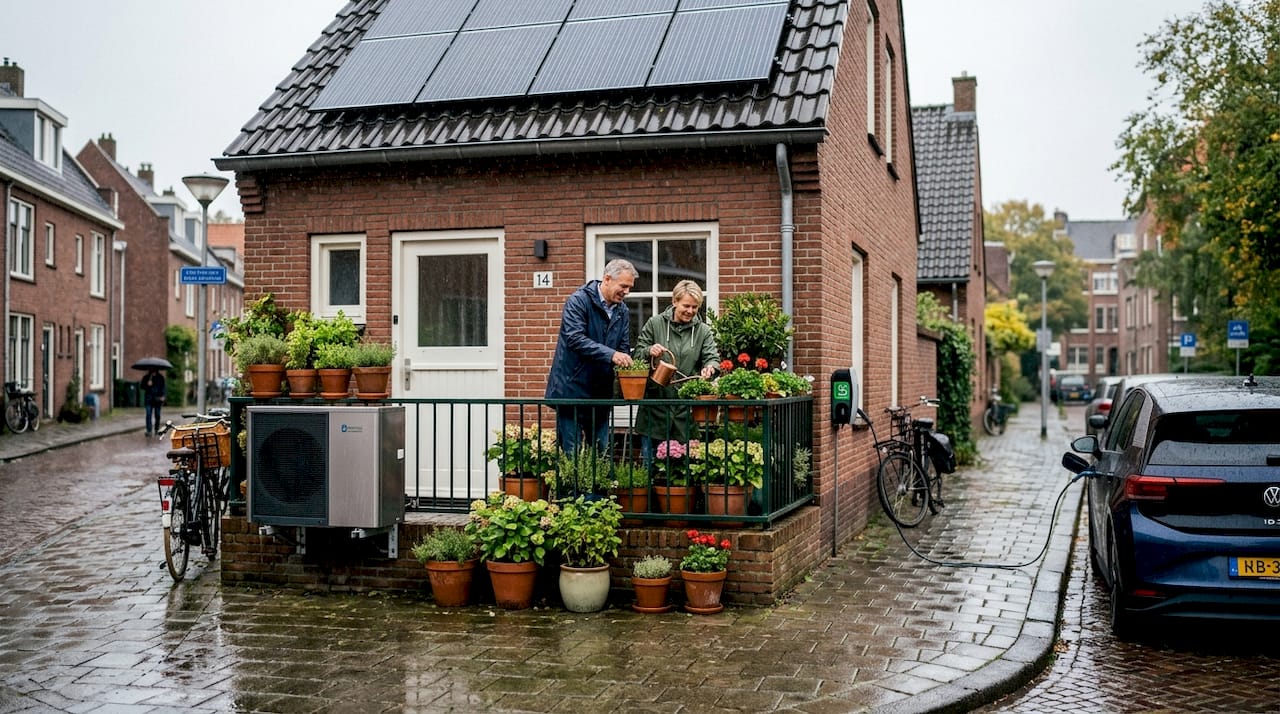
Choosing the right renewable energy solution can feel overwhelming when you’re faced with technical jargon, competing products, and unclear return on investment. European homeowners and small business owners want practical, proven options that deliver real sustainability and cost savings without requiring an engineering degree to understand. This expert-curated list cuts through the complexity to present the most effective renewable energy solutions available in 2026, helping you make informed decisions that align with your energy goals, budget, and local conditions.
Table of Contents
Key takeaways
Point | Details |
Solar PV and storage maximize savings | Combining solar panels with battery systems increases self-consumption and reduces grid dependency significantly. |
Smart chargers boost efficiency | EV chargers that optimize solar surplus and timing lower charging costs while supporting grid stability. |
EU incentives reduce upfront costs | Grants and programs can cover up to 90% of installation expenses for qualifying projects. |
Local conditions matter | Solar yield, tariffs, and grid infrastructure vary by region and directly impact solution viability. |
Integrated systems offer scalability | All-in-one modular platforms simplify expansion and future-proof your renewable investment. |
Evaluating criteria for renewable energy solutions
Before investing in any renewable technology, you need to understand what makes a solution right for your specific situation. Your location’s solar irradiance determines how much electricity your panels can generate, while local weather patterns affect year-round performance. A system that thrives in southern Spain may underperform in northern Germany simply due to sunlight availability.
Your current electricity tariffs play a huge role in potential savings. Time-of-use pricing structures reward you for consuming energy during off-peak hours, making battery storage and smart EV charging far more valuable. Empirical data confirms strong ROI varies by local solar yield, tariffs, and grid integration. If your utility charges premium rates during evening hours when solar production stops, storing daytime energy becomes financially compelling.
Grid stability in your area influences whether battery storage makes sense beyond just cost savings. Some regions experience frequent outages or voltage fluctuations, making backup power a practical necessity rather than a luxury. EU incentives for storage and EV infrastructure also vary significantly by country, with some offering generous rebates that dramatically improve payback periods.
Analyze your household or business energy consumption patterns carefully. Do you use most electricity during daylight hours, or does demand peak in the evening? If you own an electric vehicle, when and how often do you charge it? These usage patterns determine whether you need substantial storage capacity or can rely primarily on direct solar consumption. Understanding why integrate PV storage helps you match technology to actual needs.
Pro Tip: Track your energy usage for at least one full month before selecting a system size. Many homeowners overestimate their needs and overspend on capacity they’ll never use, while others undersize systems and miss potential savings.
Consider system scalability from day one. Your energy needs will likely grow as you electrify heating, add vehicles, or expand your business operations. Modular systems that allow you to add battery capacity or additional solar panels later provide flexibility without requiring a complete reinstallation. Future-proofing your investment saves money and hassle down the road.
Top renewable energy technologies for homes and businesses
Solar photovoltaic panels remain the foundation of most residential and commercial renewable strategies in 2026. Modern panels convert sunlight into electricity with efficiency rates exceeding 22%, and prices have dropped substantially over the past decade. Rooftop installations typically range from 4kW for small homes to 25kW for larger properties or small businesses, with ground-mount options available for those with available land.
Battery storage systems have evolved from nice-to-have accessories into essential components for maximizing solar value. These systems store excess solar energy generated during peak sunlight hours for use during evenings, cloudy days, or grid outages. Lithium iron phosphate (LFP) batteries dominate the market due to their safety, longevity, and stable performance across temperature ranges. Newer graphene supercapacitor technology offers even longer lifespans and faster charge-discharge cycles, though at higher initial costs.
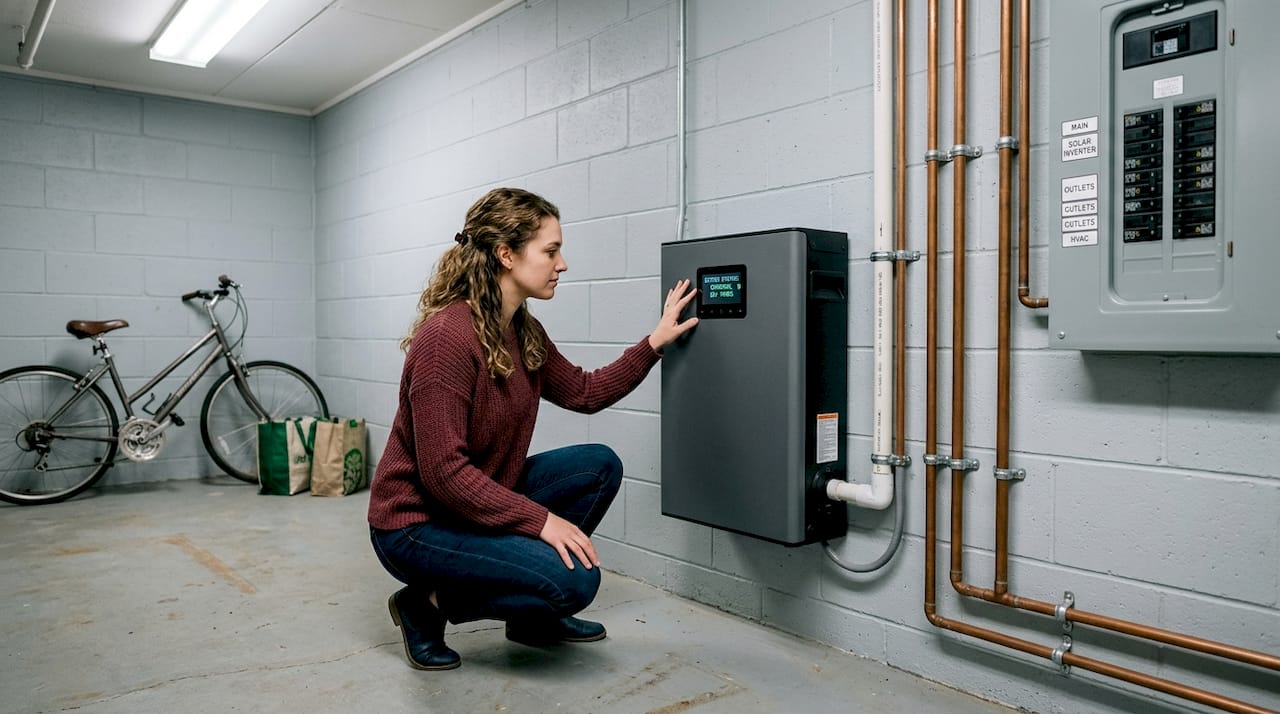
Hybrid inverters serve as the brain of integrated renewable systems, managing power flow between solar panels, batteries, the grid, and your consumption loads. Unlike basic inverters that only convert DC solar power to AC household current, hybrid models optimize energy routing in real time. They decide whether to charge batteries, power your home directly, export to the grid, or draw grid power based on current conditions and electricity prices.
Smart EV chargers represent a game-changing technology for vehicle owners transitioning to electric mobility. Key renewable energy solutions include solar PV panels, battery storage systems, hybrid inverters, smart EV chargers, and all-in-one systems. These chargers communicate with your solar system and battery to prioritize charging when surplus solar energy is available, dramatically reducing or eliminating grid electricity costs for transportation. Advanced models also participate in vehicle-to-grid (V2G) programs, using your EV battery to support grid stability and earn revenue.
All-in-one modular systems integrate generation, storage, and management into pre-configured packages designed for plug-and-play installation. These turnkey solutions appeal to homeowners and small businesses who want renewable energy without the complexity of designing custom systems. Capacities typically range from 5kWh to 40kWh, with expansion modules available as needs grow. The convenience comes with slightly higher costs compared to component-based systems, but simplified installation and unified warranties offset much of that premium.
Explore 7 smart residential solar options to see how these technologies work together in real-world applications.
Comparing system capabilities and financial returns
Understanding the financial performance of different renewable solutions helps you select options that align with your budget and savings goals. Modular battery systems offer varying capacities to match different household sizes and consumption patterns. The libbi system provides 20kWh of storage suitable for larger homes with high evening consumption, while Lunergy offers expandable 5-12kWh configurations ideal for smaller properties or those starting with basic storage. The FOSSiBOT all-in-one system delivers 39kWh in a pre-integrated package designed for prosumers seeking maximum self-sufficiency.
Payback periods vary significantly based on system type, local electricity prices, and available incentives. Empirical benchmarks show 40-70% solar self-consumption, 55-70% grid import reduction, and annual savings up to €837. Basic solar-only installations in high-irradiance regions can achieve payback in 2.8 years, while comprehensive solar-plus-storage systems in moderate climates typically require 8-12 years to recoup initial investment. However, these longer payback periods still represent attractive returns given system lifespans of 25+ years.
Real-world savings examples illustrate the potential financial impact. Irish homeowners with optimized solar and battery systems report first-year savings of €588, with annual benefits increasing as electricity rates rise. UK properties with 4kW solar arrays paired with Tesla Powerwalls document cumulative savings exceeding £3,500 over initial years of operation. These figures reflect actual grid import reduction rather than theoretical calculations, accounting for weather variability and real consumption patterns.
Grid import reduction directly translates to lower electricity bills and represents the most tangible benefit for most users. A well-designed system can cut your grid electricity purchases by 55-70%, meaning you’re only paying for 30-45% of the energy you previously bought from utilities. For a household spending €2,000 annually on electricity, that reduction saves €1,100-€1,400 per year at current rates.
System Type | Capacity | Typical Cost | Annual Savings | Payback Period |
Solar Only | 4-6 kW | €5,000-€8,000 | €400-€600 | 8-13 years |
Solar + Battery | 5-10 kWh | €10,000-€15,000 | €700-€900 | 11-15 years |
Hybrid + EV Charger | 10-15 kWh | €15,000-€22,000 | €1,000-€1,400 | 11-16 years |
All-in-One System | 20-40 kWh | €18,000-€30,000 | €1,200-€1,800 | 10-17 years |
Pro Tip: Local incentives can reduce these payback periods by 30-50%. Always research regional grants, tax credits, and utility rebates before finalizing your system selection and budget.
Dynamic tariff optimization represents an emerging opportunity to boost returns further. Smart systems that respond to 15-minute price signals can charge batteries during cheap off-peak periods and discharge during expensive peak times, effectively arbitraging electricity prices. Early adopters in markets with dynamic pricing report 15-25% additional savings beyond basic solar self-consumption benefits. Review the top residential energy storage comparison to understand which systems support advanced tariff optimization.
For deeper analysis of return on investment factors, consult this solar battery ROI study examining performance across multiple European markets.
Addressing challenges and future-proofing your setup
Not every renewable solution delivers positive returns in every market. Batteries may have low ROI in certain regions; grid bottlenecks require flexibility services and V2G technology. Swedish homeowners, for example, often find battery storage economically marginal due to relatively low electricity tariffs and high grid connection fees that don’t reward self-consumption significantly. Understanding your local market structure prevents investing in technologies that won’t pay off.
Grid infrastructure constraints pose increasing challenges as renewable adoption accelerates. Many European distribution networks face bottlenecks during peak solar production hours, sometimes forcing curtailment of excess generation. This reality makes demand-side flexibility and vehicle-to-grid capabilities increasingly valuable. Systems that can shift consumption to match production, or store and discharge strategically, help balance local grids while maximizing your own energy utilization.
Timing mismatches between solar generation and EV charging needs create practical hurdles for many users. Your panels produce maximum power midday when your car sits in an office parking lot, while you want to charge overnight when solar output is zero. Smart scheduling and adequate battery storage solve this disconnect, allowing you to capture solar energy during the day and use it for evening charging. Workplace charging infrastructure and V2G capabilities offer alternative solutions worth exploring.
Dynamic electricity tariffs and AI-powered optimization increasingly separate high-performing systems from basic installations. Tariffs that vary by time of day, or even every 15 minutes, reward systems that can predict and respond to price signals automatically. Artificial intelligence algorithms learn your consumption patterns, weather forecasts, and price trends to make split-second decisions about when to charge, discharge, consume, or export. These capabilities can boost your savings by 20-30% compared to static operation modes.
Regulatory and policy frameworks fundamentally shape renewable economics and must be considered when planning your investment. Feed-in tariffs, net metering rules, capacity payments, and grid service compensation vary widely across European countries and even between regions within countries. Germany’s generous feed-in tariffs make grid export attractive, while other markets provide minimal compensation for exported power, making self-consumption optimization far more important.
Assess local grid export compensation rates before sizing your system
Investigate vehicle-to-grid pilot programs in your area for additional revenue streams
Monitor regulatory changes that might affect battery storage incentives
Consider joining energy communities or peer-to-peer trading platforms where available
Plan for potential grid connection upgrades if expanding capacity significantly
Future-proofing requires selecting technologies and vendors committed to ongoing software updates and feature additions. The renewable energy landscape evolves rapidly, with new grid services, trading opportunities, and optimization algorithms emerging regularly. Systems with open APIs, regular firmware updates, and active developer communities maintain their value and capabilities far longer than closed, proprietary alternatives.
Explore how flexible energy systems for business can adapt to changing market conditions and regulatory environments. The European battery impact report provides broader context on how storage is reshaping electricity markets across the continent.
Explore renewable solutions with Belinus today
Navigating the renewable energy landscape becomes significantly easier with expert guidance tailored to European market conditions. Belinus offers carefully curated product selections that match the specific needs of homeowners and small business owners across diverse climates and regulatory environments. Whether you’re starting with basic solar or planning a comprehensive energy transformation including storage and EV charging, you’ll find solutions designed for real-world performance and financial returns.

Access detailed integration guides that explain how solar panels, battery systems, and smart chargers work together to maximize your energy independence and cost savings. The Belinus platform provides tools to model your specific situation, comparing different system configurations and their projected financial performance over 25 years. You can explore compliance requirements for EU incentive programs and local regulations, ensuring your installation qualifies for maximum available support. Visit Belinus to discover renewable solutions that transform your energy future while delivering measurable returns on your investment.
FAQ
What is the best renewable energy solution for small European businesses?
Hybrid systems combining solar PV with battery storage and smart EV charging deliver the strongest combination of sustainability credentials and cost reduction for small businesses. These integrated solutions reduce grid dependency during expensive peak hours while supporting company vehicle fleets with low-cost solar charging. The optimal configuration depends on your facility’s roof space, daily energy consumption patterns, and whether you operate primarily during daylight hours when solar generation peaks. Learn more about flexible energy systems for business to identify the right approach for your operations.
How do EU grants help reduce costs for renewable energy installations?
EU grants significantly improve project economics by covering substantial portions of technical assessment and installation expenses. Programs like ELENA and RENEWFM provide funding cover up to 90% for large programs and grants for residential solar installations. These incentives effectively reduce payback periods by 3-5 years for qualifying projects, making renewable investments attractive even in markets with moderate electricity prices. Grant availability and eligibility criteria vary by country and change periodically, so research current programs in your specific location before finalizing your investment decision.
Can smart EV chargers improve my home energy efficiency?
Absolutely. Smart EV chargers prioritize solar surplus use, schedule charging during off-peak times, and integrate with battery storage for efficiency. By automatically shifting charging to periods when your solar panels generate excess power or electricity prices drop to their lowest, these chargers can reduce your transportation energy costs by 60-80% compared to random charging patterns. Advanced models also support vehicle-to-home backup power during outages and can participate in grid services that generate additional income. Explore smart residential solar options to see how EV charging fits into comprehensive home energy strategies.
What system size do I need for my home?
Most European homes require 4-6 kW of solar capacity and 5-10 kWh of battery storage to achieve 60-70% energy independence. Larger properties with electric heating, pools, or multiple EVs may need 8-12 kW solar arrays and 15-20 kWh storage. The right size depends on your annual electricity consumption, available roof space, local solar irradiance, and whether you want to maximize self-consumption or grid export revenue. Professional energy audits provide accurate sizing recommendations based on your specific circumstances and goals.
How long do renewable energy systems last?
Solar panels typically carry 25-year performance warranties and often continue producing electricity for 30-40 years with minimal degradation. Battery systems using lithium iron phosphate chemistry last 10-15 years or 6,000-10,000 charge cycles before requiring replacement. Inverters generally need replacement after 10-15 years of operation. When calculating lifetime costs and returns, factor in one battery replacement and possibly one inverter replacement over a 25-year system lifespan. Total lifetime electricity production typically far exceeds the initial investment and replacement costs combined.
Recommended
Comments