Types of Energy Inverters: A 2026 Guide for Homeowners
- Jul 2
- 8 min read
TL;DR:
The right energy inverter depends on your roof’s shading, design, and future energy goals. String inverters work best for simple, unshaded roofs, while microinverters and power optimizers suit shaded or complex roofs. Hybrid inverters offer a cost-effective solution for integrating batteries and future expansion.
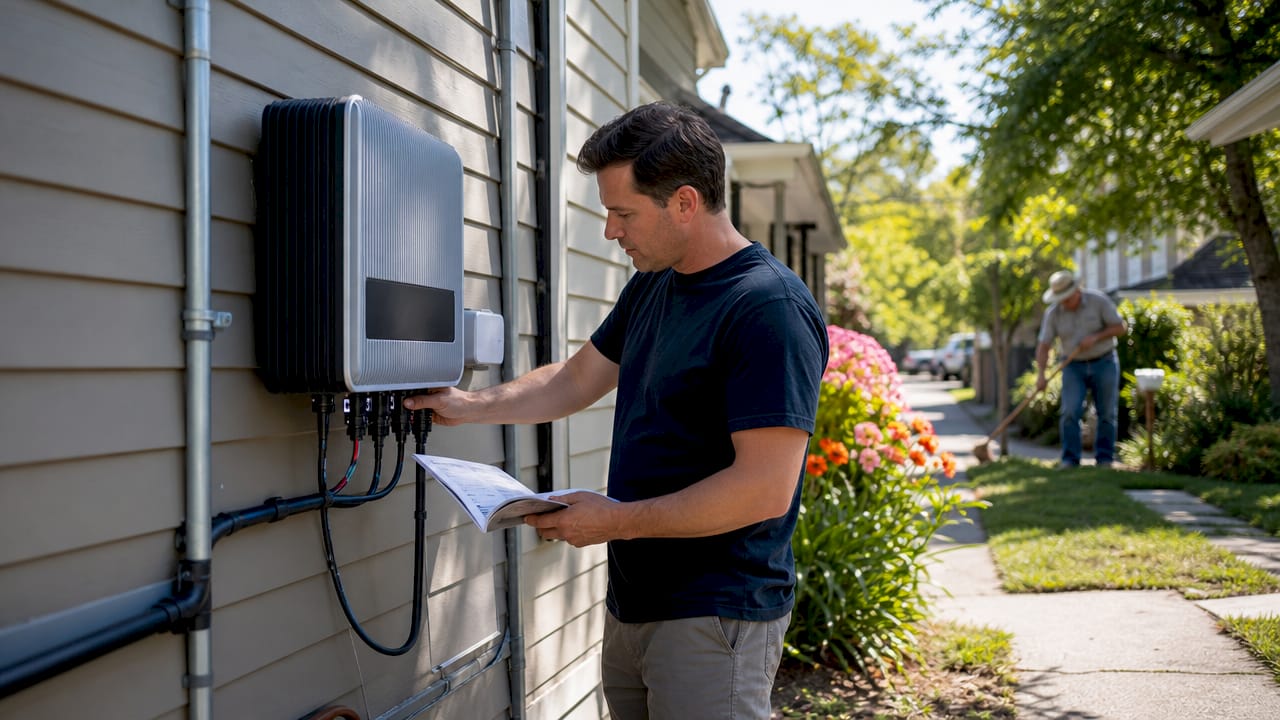
An energy inverter is the device that converts direct current (DC) electricity from solar panels into the alternating current (AC) power your home or building actually uses. Choosing the wrong type costs you money twice: once at installation, and again every year in lost energy yield. The main types of energy inverters are string inverters, microinverters, power optimizers, and hybrid inverters. Each fits a different set of conditions. Your roof layout, shading exposure, and plans for battery storage determine which one belongs in your system.
1. What are the main types of energy inverters?
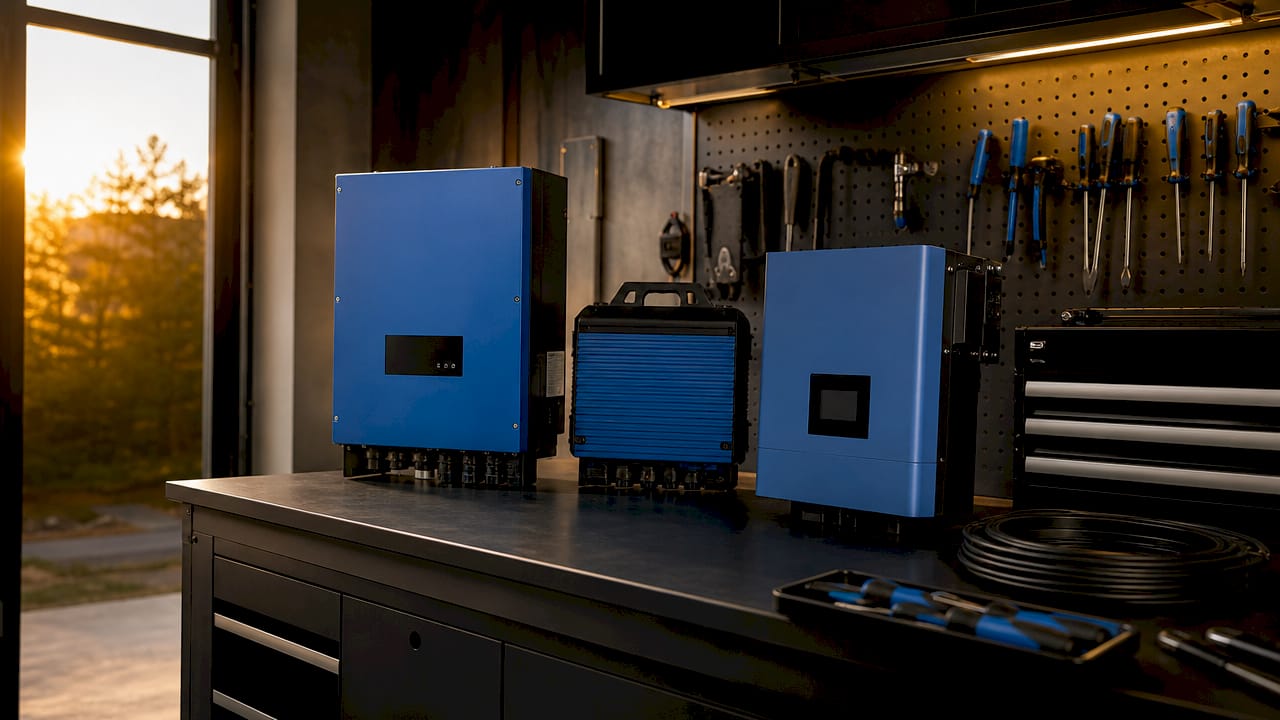
Inverter classification starts with where the conversion happens and how the device connects to the grid. String inverters convert power centrally. Microinverters convert it at each panel. Power optimizers condition the DC current at each panel before sending it to a central inverter. Hybrid inverters handle solar, battery, and grid interaction in one unit. Understanding how solar inverters work before choosing a type saves you from expensive retrofits later.
The industry standard guiding safe grid connection for all these types is IEEE 1547-2018. Any inverter connected to the utility grid in the United States must meet its requirements for power quality, anti-islanding protection, and voltage regulation.
2. String inverters: the most common choice for simple roofs
A string inverter connects a series of solar panels, called a string, to one central unit that converts the combined DC output to AC. String inverters hold a 70–75% market share for simple, unshaded residential installations. That dominance reflects a real advantage: fewer components mean fewer things to fail.
For a standard 4 kW system on an unshaded, south-facing roof, a string inverter typically costs £500–£900. That is the lowest entry price of any inverter type. Simpler architecture also reduces equipment failure probability, which matters for a device expected to run for 10–15 years.
The main limitation is the Christmas-light effect. When one panel in the string underperforms due to shade, dirt, or damage, the output of the entire string drops to match it. This makes string inverters a poor fit for roofs with chimneys, dormers, or nearby trees.
Best for: unshaded, single-orientation roofs
Typical cost (4 kW): £500–£900
Monitoring: system-level only
Weakness: one shaded panel reduces whole-string output
Pro Tip: If your roof is simple and unshaded, a string inverter is almost always the right call. Spending more on panel-level electronics you do not need is money that earns nothing.
3. Microinverters and power optimizers for shaded or complex roofs
Microinverters and power optimizers are both classified as module-level power electronics (MLPE). They solve the Christmas-light problem by treating each panel as an independent unit. The difference between them matters for cost and system design.
A microinverter converts DC to AC directly at each panel. A power optimizer conditions the DC current at each panel using maximum power point tracking (MPPT), then sends optimized DC to a central string inverter for final conversion. Power optimizers deliver panel-level MPPT without full panel-level DC-AC conversion, placing them between string inverters and microinverters in both cost and complexity.
MLPE devices increase energy generation from shaded panels by 10–25% compared to standard string inverters. That gain is meaningful on a roof with partial shading for even two to three hours per day.
Feature | Microinverters | Power optimizers |
Conversion location | At each panel | At each panel (DC only) |
Central inverter needed | No | Yes |
Typical 4 kW cost | £1,200–£2,000 | £900–£1,500 plus string inverter |
Panel-level monitoring | Yes | Yes |
Best for | Complex multi-orientation roofs | Partially shaded roofs |
Microinverters provide superior panel-level performance monitoring, allowing early identification of underperforming panels. That granularity can reduce maintenance costs and improve long-term energy harvest across the system’s lifetime.
Pro Tip: If only part of your roof gets shaded, power optimizers on the affected panels combined with a string inverter on the unshaded panels often deliver the best cost-to-performance ratio.
4. Hybrid inverters: the right choice for battery integration
A hybrid inverter combines a solar inverter and a battery management system in one unit. It handles solar charging, battery charging and discharging, grid interaction, and household loads simultaneously. Hybrid inverters simplify installation by presenting a single device in utility interconnection paperwork, which reduces permitting complexity compared to separate battery inverters.
For a 4 kW system, hybrid inverters typically cost £900–£1,800. That is higher than a basic string inverter, but lower than the combined cost of a string inverter plus a separate battery inverter added later. Adding battery storage to a non-hybrid system introduces significant complexity and cost through AC-coupled retrofits.
Hybrid inverters must comply with IEEE 1547-2018 grid interconnection standards. This covers anti-islanding protection, voltage and frequency ride-through, and power quality requirements. Compliance is not optional. Any grid-tied hybrid system in the United States requires it.
Key benefits of hybrid inverters:
Single device manages solar, battery, and grid simultaneously
Simplifies permitting with one interconnection application
Future-proofs your investment if you plan to add batteries later
Supports backup power during grid outages when paired with a battery
Works with solar and battery storage integration strategies
Belinus offers Solis inverters in 5–25 kW residential configurations with full integration into the Belinus Energy Management System (EMS). The EMS runs 15-minute dynamic tariff optimization, which means the system decides in real time whether to store, use, or export power based on current electricity prices.
5. Transformer vs. transformerless inverters: what the difference means for you
Every inverter uses one of two internal topologies: transformer-based or transformerless. This distinction affects efficiency, weight, cost, and safety requirements.
Transformer-based inverters use a physical transformer to provide galvanic isolation between the solar array and the grid. That isolation is a genuine safety benefit. The tradeoff is size, weight, and efficiency loss. Transformerless inverter topologies are lighter, cheaper, and more efficient by several percentage points, but they require compliance with electrical codes addressing galvanic isolation and leakage currents.
Grid-tied inverters typically achieve efficiencies of 95–98%. Most modern transformerless designs sit at the top of that range. Transformer-based designs generally fall toward the lower end.
Grid-tied vs. off-grid inverter options also differ in fundamental ways:
Grid-tied inverters synchronize with the utility grid and shut down automatically during outages to protect utility workers. This is the anti-islanding requirement under IEEE 1547-2018.
Off-grid inverters operate as inverter-chargers, managing a battery bank and powering loads with no grid connection at all.
Hybrid inverters bridge both modes, connecting to the grid when available and switching to battery backup when the grid goes down.
Grid-connected inverters must meet total harmonic distortion below 3–5% and disconnect from the grid within milliseconds during power outages. This safety feature is mandatory for all grid-tied installations in the United States.
6. How to choose the best energy inverter for your property
The right inverter type follows directly from your site conditions and energy goals. There is no universal answer, but there are clear rules for each scenario.
Unshaded roof, single orientation: A string inverter is the most cost-effective and reliable choice. Fewer total components reduce equipment failure probability, and the lower upfront cost improves your payback period.
Shaded or multi-orientation roof: Microinverters or power optimizers are the correct choice. The 10–25% energy gain from MLPE justifies the higher cost on any roof with meaningful shading.
Planning to add batteries now or later: A hybrid inverter is the right starting point. Buying a string inverter today and retrofitting a battery inverter later costs more in total than starting with a hybrid.
Commercial properties with large arrays: String inverters at commercial scale remain cost-effective for unshaded flat roofs. For complex commercial rooftops, commercial solar inverter options with MLPE or hybrid configurations deliver better returns.
Inverter sizing is a separate decision from inverter type. Inverter sizing must include a 20–25% safety margin above peak simultaneous load to avoid premature failure under high demand. Ignoring this leads to system shutdowns or inverter damage.
Pro Tip: Size your inverter for your future load, not your current one. If you plan to add an EV charger or heat pump in the next three years, factor that load into your inverter selection now.
Scenario | Recommended type | Key reason |
Unshaded south-facing roof | String inverter | Lowest cost, proven reliability |
Partial shading present | Power optimizers + string inverter | Panel-level MPPT, lower cost than full microinverters |
Complex multi-orientation roof | Microinverters | Independent panel operation, best monitoring |
Battery integration planned | Hybrid inverter | Single device, simpler permitting, future-proof |
Off-grid property | Off-grid inverter-charger | No grid connection required |
Key takeaways
The best inverter type is determined by shading conditions, battery plans, and total cost of ownership, not by upfront price alone.
Point | Details |
String inverters lead the market | They hold 70–75% of residential installations for good reason: low cost and high reliability on simple roofs. |
MLPE adds 10–25% yield on shaded roofs | Microinverters and power optimizers pay for their higher cost through measurable energy gains. |
Hybrid inverters prevent costly retrofits | Starting with a hybrid inverter is cheaper than adding a battery inverter to a string system later. |
Sizing margin prevents failures | Always size your inverter with a 20–25% safety margin above peak load to protect the system. |
IEEE 1547-2018 applies to all grid-tied types | Every grid-connected inverter in the United States must meet this standard for safety and power quality. |
What I’ve learned after years of watching homeowners choose the wrong inverter
The most common mistake I see is homeowners buying the most expensive inverter because they assume it performs best. That logic fails in practice. A string inverter on a clean, unshaded roof outperforms a microinverter system on the same roof in total cost of ownership. The microinverter’s monitoring advantage is real, but it does not generate extra energy when there is no shading problem to solve.
The second mistake is buying a basic string inverter with no battery compatibility and then deciding two years later to add storage. That retrofit costs more than starting with a hybrid inverter would have. Long-term energy strategy should drive the inverter decision, not just today’s installation budget.
What I find genuinely underrated is panel-level monitoring. Whether you choose microinverters or power optimizers, the ability to see each panel’s output individually catches problems early. A single underperforming panel can go undetected for months on a string inverter system, quietly reducing your annual yield. Panel-level monitoring reduces maintenance costs and improves long-term energy harvest in ways that do not show up in the initial cost comparison.
My honest recommendation: match the inverter to the roof, not to the marketing. Simple roof, simple inverter. Shaded roof, MLPE. Battery plans, hybrid. That framework gets it right more often than any other approach I have seen.
— Marc
Belinus can help you match the right inverter to your system
Choosing between string, microinverter, and hybrid configurations is straightforward when you have the right data about your property. Belinus works with homeowners and commercial property managers to design solar and storage systems where every component, including the inverter, is matched to actual site conditions and energy goals.

Belinus Solis inverters run from 5 to 25 kW and integrate directly with the Belinus EMS for real-time tariff optimization and battery management. If you are planning a new installation or evaluating a battery upgrade, the Belinus energy solutions team provides system design support and 25-year financial modeling through its automated quotation software. Visit Belinus to get a system recommendation built around your specific roof, load profile, and energy targets.
FAQ
What is the most common type of residential solar inverter?
String inverters are the most common choice, holding 70–75% of the residential market. They work best on simple, unshaded roofs where their lower cost and reliability deliver the strongest return.
When should I choose a hybrid inverter over a string inverter?
Choose a hybrid inverter if you plan to add battery storage now or within the next few years. Starting with a hybrid avoids the higher cost of retrofitting a separate battery inverter later.
What does IEEE 1547-2018 require for grid-tied inverters?
IEEE 1547-2018 sets standards for safe grid interconnection, including anti-islanding protection, voltage and frequency ride-through, and total harmonic distortion below 3–5%. All grid-connected inverters in the United States must comply.
Do microinverters work better than string inverters on every roof?
No. Microinverters outperform string inverters on shaded or multi-orientation roofs by 10–25% in energy yield. On a clean, unshaded roof, a string inverter delivers comparable output at significantly lower cost.
What safety margin should I use when sizing an inverter?
Size your inverter with a 20–25% safety margin above your peak simultaneous load. This prevents shutdowns and inverter damage during high-demand periods and accounts for future load additions like EV chargers.
Recommended
Comments