Why go off-grid? Real environmental and lifestyle impacts
TL;DR:
Full off-grid systems in Europe require extensive batteries, backup, and careful planning to survive harsh winters.
Most homeowners adopt hybrid systems that combine solar, storage, and grid connection for practicality and resilience.
Full disconnection from the electricity grid sounds like the ultimate act of environmental freedom. But for most European homeowners, the reality is far messier than the dream. Off-grid systems in northern and central Europe must survive long winters with very little sunlight, meaning batteries, backup generators, and careful energy rationing become daily facts of life rather than afterthoughts. This guide walks through what going off-grid actually involves, why people do it, what it costs technically and financially, and why the smartest path for most households sits somewhere between full independence and total grid dependence.
Table of Contents
Key Takeaways
Point | Details |
Hybrid systems offer balance | For most Europeans, a hybrid system meets both sustainability and reliability needs better than total disconnection. |
Batteries drive reliability | Oversized battery and generator backup are essential for winter resilience in European off-grid setups. |
Environmental impact is complex | Off-grid living cuts operational emissions, but equipment production and maintenance add hidden environmental costs. |
Cost and maintenance matter | Off-grid setups require large up-front investment and regular maintenance—not a hands-off solution. |
Personal motivations vary | Going off-grid is as much about values and lifestyle as environmental or economic factors. |
What does it mean to go off-grid in Europe?
Before weighing up the pros and cons, it helps to be precise about what “off-grid” actually means. In the broadest sense, going off-grid means generating and storing your own electricity without drawing from the national grid. But within that definition, there are two very different realities.
Full off-grid means complete disconnection from the utility network. Your solar panels, batteries, and any backup system must cover 100% of your electricity needs, year-round, including dark January weeks in the UK, cloudy winters in Germany, and cold nights in Scandinavia. There is no safety net.
Hybrid off-grid means you install solar panels and battery storage but remain physically connected to the grid. You draw from stored solar first, export surplus when you can, and fall back on the grid when production falls short. This is the hybrid energy systems model that the vast majority of European homeowners actually adopt.
As off-grid planning methodology confirms, the technical baseline for any European off-grid project is sizing PV and storage around the worst season, not the best. A system that handles a sunny June week with ease can fail completely in mid-December. That reality alone pushes most people toward hybrid setups.
EU urban energy independence research backs this up: full grid disconnection is genuinely less practical than hybrid models for most European households, because seasonal variation is simply too extreme for pure self-sufficiency without enormous battery banks.
Criteria | Full off-grid | Hybrid system |
Grid independence | 100% | Partial (self-consumption first) |
Upfront cost | Very high | Moderate to high |
Reliability | Depends on backup | High (grid as fallback) |
Backup required | Generator or biomass essential | Optional |
Regulatory complexity | Higher (disconnection rules vary) | Lower |
Suitable for most homes | Rarely | Yes |
Key takeaways from this comparison:
Full off-grid is best suited to rural or remote locations where grid connection costs are prohibitive
Hybrid systems offer 70-90% self-sufficiency for well-designed European homes
Most national regulators in Europe actively support hybrid setups through net metering or feed-in tariffs
Motivations: Why do people go off-grid?
Now that you know what going off-grid can mean, let’s explore the main reasons people choose this path and what they hope to gain or escape.
People choose off-grid or near-off-grid living for widely different reasons. Understanding your own motivation matters enormously because it shapes which type of system actually fits your life.
Environmental values. Many homeowners want to cut their reliance on fossil-fuel-generated electricity and reduce their household carbon footprint. Solar and storage feel like a tangible act of environmental stewardship.
Energy independence. With European electricity prices volatile since 2022, insulating yourself from utility bills has become a powerful financial motivation. Paying a fixed upfront cost instead of an unpredictable monthly bill appeals to risk-averse households.
Escaping cost uncertainty. Particularly in countries like Portugal, Spain, and the UK, homeowners who have experienced dramatic tariff spikes want a system that protects them from future price shocks.
Necessity. For rural properties in remote areas of Ireland, Sweden, Portugal, or Greece, connecting to the grid can cost tens of thousands of euros. Off-grid becomes the cheaper option simply because the grid is so far away.
Lifestyle philosophy. Some people genuinely want a simpler, lower-consumption lifestyle and see off-grid living as a way to force themselves to engage with their energy use more consciously.
“We thought going off-grid in rural Portugal would mean freedom. And in summer, it genuinely does. But by November, we are rationing hot water and watching the battery percentage like a hawk. We would not change it, but nobody told us about December.” European homeowner, Portugal
The environmental motivation deserves a closer look, because it is more nuanced than most off-grid marketing suggests. Reducing clean energy solutions reliance on fossil-generated grid power is genuinely beneficial. But as Portugal’s long-term off-grid accounts show, batteries, inverters, and repair costs mean that off-grid living is never truly “free” or without environmental cost. The manufacturing footprint of lithium batteries and replacement cycles can offset a meaningful portion of the operational carbon savings.
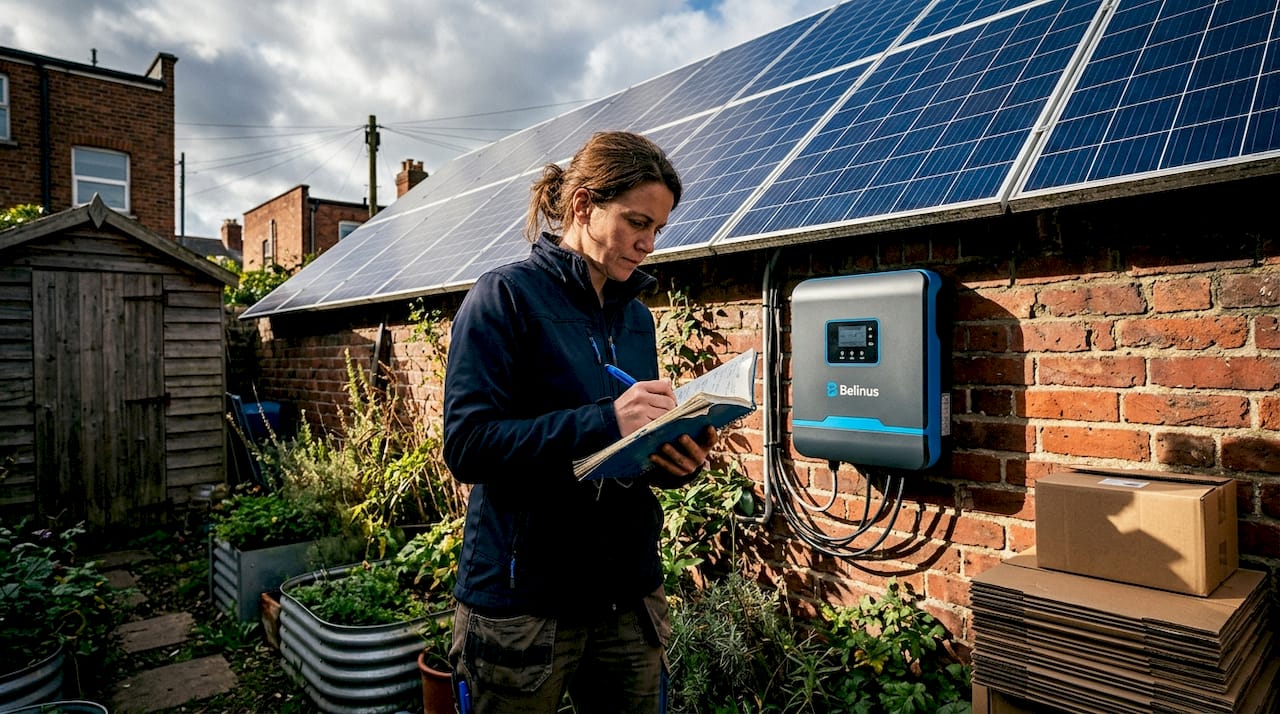
Pro Tip: Before claiming an environmental win, factor in the embodied carbon of your batteries, panels, and inverter. A well-designed hybrid system on a partially renewable grid can sometimes deliver a lower total lifecycle footprint than a fully off-grid setup that requires frequent equipment replacement.
Off-grid can also become unexpectedly stressful. As BBC reporting on off-grid households reveals, high grid connection costs, constant energy monitoring, and planning restrictions in protected landscapes can turn the dream of independence into an exhausting daily obligation.
Technical realities: How off-grid systems are designed for European conditions
With motivations in mind, it’s vital to understand the realities of technical planning and what is required for a resilient European off-grid system.
The single most important rule in European off-grid system design is this: design for winter, not summer. A household that installs just enough solar for average annual production will run out of power in January or February. Proper sizing means calculating your worst-case daily consumption against your worst-case solar yield, which in northern Europe can be as low as one to two peak sun hours per day.
As central European off-grid solar methodology makes clear, batteries are the heart of off-grid reliability. Seasonal low solar yield pushes designers toward oversizing PV capacity and pairing it with large battery banks, plus a generator or biomass backup for the extended dark periods that no amount of panels can fully compensate for.
Country | Minimum recommended PV (typical 3-bed home) | Minimum battery storage | Backup system |
United Kingdom | 8-12 kW | 20-30 kWh | Generator essential |
France | 7-10 kW | 16-24 kWh | Generator recommended |
Portugal | 6-8 kW | 12-20 kWh | Generator advisable |
These figures assume average household consumption of 10-15 kWh per day and a winter solar yield calculation. Heating loads powered by electricity will push these numbers significantly higher.
Key components every European off-grid system needs:
Solar PV array sized for winter yield, not annual average
Battery storage with enough capacity to cover 2-4 days of low generation
Hybrid or off-grid inverter that manages charge, discharge, and load priorities
Backup generator or biomass system for extended periods of low solar input
Energy management system to optimize dispatch and prevent over-discharge
Monitoring platform for real-time visibility and fault detection
Safety systems including overcharge protection, disconnect switches, and fire safety
Good solar battery maintenance practice is not optional here. Batteries that are repeatedly deep-discharged without proper management degrade faster, shortening their lifespan and increasing your replacement costs. Equally, an energy management guide for PV and storage strategy that intelligently controls when you charge, discharge, and use appliances can stretch both battery life and system performance significantly.
Pro Tip: Never budget for your off-grid system without including a line item for battery replacement every 7-15 years. Depending on battery chemistry and usage patterns, a full replacement can cost between €5,000 and €20,000 for a typical home system.
True costs and trade-offs of off-grid living
Beyond design, the lived experience brings costs and compromises. Here is what to expect financially, environmentally, and day-to-day.
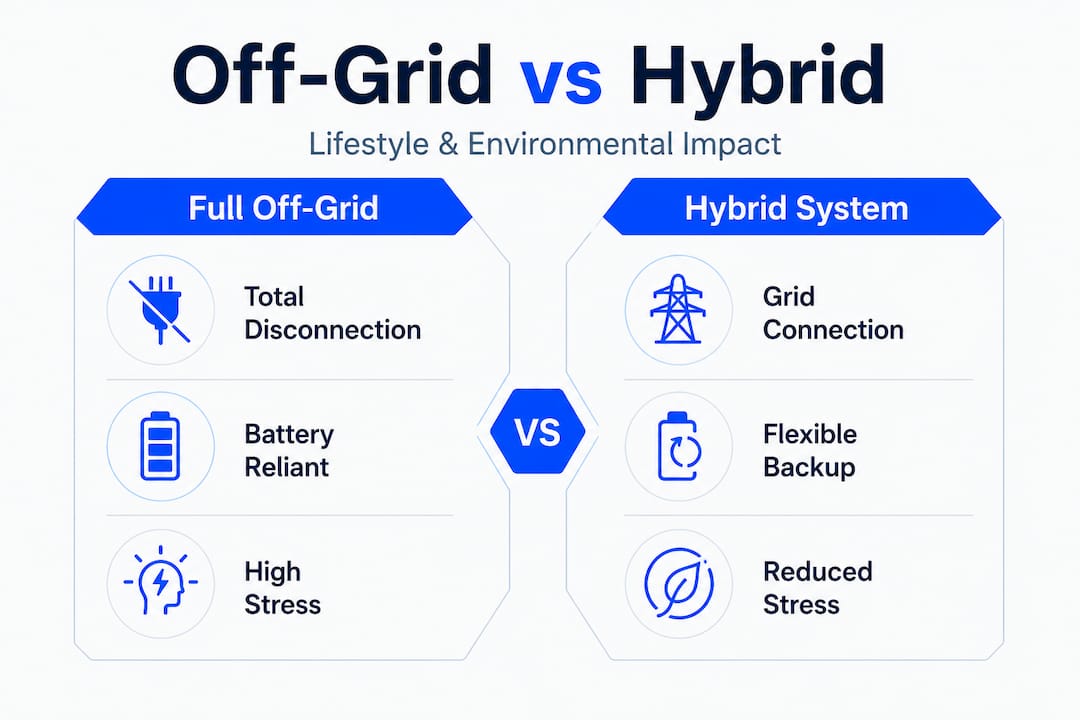
Understanding the full cost picture of off-grid living requires looking at three separate layers: economic, environmental, and lifestyle.
Economic trade-offs:
Upfront system cost for a full off-grid setup in Europe typically ranges from €20,000 to €60,000 depending on home size, location, and backup requirements.
Battery replacement every 7-15 years adds €5,000 to €20,000 to the long-term cost, depending on technology and system size.
Generator fuel, servicing, and eventual replacement add hundreds to several thousand euros annually.
Inverter replacements (typically every 10-15 years) add further costs of €1,500 to €5,000.
Professional monitoring and maintenance contracts are strongly advisable, adding €300 to €800 per year for most systems.
Statistical callout: Lithium iron phosphate (LFP) batteries, currently the most common choice for residential off-grid systems, typically deliver 3,000 to 6,000 charge cycles before significant capacity degradation. At one full cycle per day, that represents 8-16 years of life under ideal conditions. Real-world usage patterns frequently shorten that window.
Environmental trade-offs: Operational carbon savings from switching off fossil-generated grid electricity are real and meaningful. But as long-term Portugal off-grid experience documents, the manufacturing footprint of inverters, batteries, and other components means the total environmental equation is not as clean as it first appears. Equipment repairs, replacement cycles, and battery disposal all carry environmental costs that rarely appear in marketing materials.
Lifestyle trade-offs: This is where BBC reporting on off-grid households tells the most honest story. Truly off-grid living means constant awareness of your energy budget. On cloudy winter days, the washing machine waits. High-consumption appliances like electric ovens, tumble dryers, and EV chargers become luxuries rather than conveniences. Families must adapt their routines to their energy availability rather than the other way around.
“The first winter was genuinely hard. We had prepared well technically, but mentally we were not ready to skip the dishwasher for a week because the sun had not come out. By the second winter, it felt normal. But it is a real change in how you live.” Off-grid homeowner, rural France
Home battery storage systems designed for grid-connected homes typically handle partial self-sufficiency without lifestyle constraints, which is why the hybrid model increasingly appeals to European homeowners who want energy independence without the daily discipline of full off-grid rationing.
Why “off-grid” shouldn’t mean all-or-nothing: A smarter European path
Here is a perspective worth sitting with: the framing of “off-grid versus on-grid” is outdated and unhelpful for most European homeowners in 2026. It treats grid connection as failure and total disconnection as success, when the evidence suggests the opposite relationship in most cases.
Full off-grid setups create their own vulnerabilities. When your battery bank drops to 10% capacity in February and the generator fails, you have no fallback. A grid-connected hybrid system in the same scenario simply draws from the network temporarily, no crisis, no emergency.
The European Court of Auditors’ decentralization findings make this point at a policy level: the EU’s electricity strategy increasingly emphasizes decentralization with rooftop generation and storage, but not as isolated islands. The vision is grid-flexible, resilient households that can generate, store, and interact with the grid intelligently, not homes that sever the connection entirely.
The distributed energy future that Europe is actually building is one of intelligent interaction, not isolation. Households with solar and storage contribute to grid stability, participate in demand response programs, and earn value from their flexibility. Full off-grid homes opt out of all of that.
For homeowners motivated by environmental values, exploring the full range of renewable energy options available for European homes often reveals that a well-designed hybrid system reduces carbon footprint, lowers bills, and provides resilience without the lifestyle sacrifices of full disconnection. That is not a compromise. That is a smarter outcome.
Pro Tip: Before deciding between full off-grid and hybrid, check your local grid connection rules and renewable energy incentives. In many European countries, grid-connected solar and storage systems qualify for support that fully off-grid installations cannot access, making the hybrid path not just easier but financially superior.
Ready for your own energy independence journey?
Choosing the right energy setup for your home is one of the most consequential decisions you will make as a homeowner. Whether you are drawn to full off-grid living, a high-self-sufficiency hybrid system, or simply want to cut your electricity bill significantly, getting the design right from the start saves years of frustration and unnecessary cost.
At Belinus, we work with homeowners across Europe to design solar, battery, and energy management solutions that match real-world needs, not just marketing claims. Our Energy Management System optimizes your generation, storage, and consumption in 15-minute intervals, and our upcoming Quotation Software will model your system’s financial performance across a full 25-year horizon. Whether you want to explore our hybrid energy systems or get a professional assessment of your own home’s potential, we are here to help you make a decision you will be confident in for decades.
Frequently asked questions
Is going off-grid legal in Europe?
Going fully off-grid is generally legal across Europe, but you must comply with local building codes, planning regulations, and sometimes specific grid disconnection policies that vary by country and municipality.
What is the biggest technical challenge of off-grid homes in Europe?
Sizing enough battery storage and solar generation to survive winter is the primary technical hurdle, as winter solar sizing methodology confirms that worst-season production must drive all system design decisions.
How often do off-grid systems need maintenance?
Batteries, inverters, and backup generators require regular inspection at least annually, and as off-grid maintenance realities show, batteries typically need full replacement every 7-15 years depending on usage and chemistry.
Does going off-grid always lower your carbon footprint?
Not automatically. Operational emissions from your home drop when you leave the fossil-fuel grid, but as Portugal’s off-grid carbon analysis documents, battery and inverter manufacturing emissions can meaningfully offset those operational gains, especially when replacement cycles are factored in.
Can a hybrid system provide genuine energy independence?
Yes. A well-designed hybrid system typically delivers 70-90% self-sufficiency for European homes, with the grid serving only as an occasional backup rather than a primary supply, which means most of the independence benefit without the full risk exposure of total disconnection.
Recommended
Comments