Flexible Energy Systems: Unlocking Value for Business
- 13 hours ago
- 12 min read

Rising energy costs and the push for sustainability have left many Central European businesses questioning how to stay competitive without risking reliability. Flexible energy systems offer a smarter way to control your energy use, turning a static expense into a dynamic asset for your commercial facility. By combining demand response, storage, and renewable integration, you gain adaptable solutions that directly reduce costs and support your decarbonization goals. Flexible energy systems provide a proven path for energy managers looking to maximize value through intelligent coordination and real-time data.
Table of Contents
Key Takeaways
Point | Details |
Flexibility is Key | Implementing flexible energy systems allows businesses to adapt energy consumption according to market conditions, reducing costs significantly. |
Integration Maximizes Value | Smart integration of generation, demand, and storage resources enhances real-time responsiveness and overall energy management efficiency. |
Common Myths Debunked | Flexibility does not require massive investments or advanced technology; it often starts with optimizing existing operational practices. |
Data-Driven Decision Making | Robust data visibility and analysis are essential for identifying and leveraging flexibility opportunities effectively. |
Flexible Energy Systems: Core Concepts And Myths
Flexible energy systems sound complex, but they’re fundamentally about adapting how energy flows through your business to respond to changing conditions. Instead of a rigid, one-way energy supply, these systems modify electricity generation or consumption based on market prices, grid demand, or your operational needs.
Think of it like adjusting your production schedule based on electricity prices rather than running equipment on a fixed timetable. When prices drop, you increase consumption or charge storage. When prices spike, you reduce demand or use stored energy. This responsiveness creates real value.
Understanding Core Concepts
Flexibility operates across three main dimensions:
Generation flexibility: Adjusting how much power your renewable sources produce or when you draw from alternative sources
Demand flexibility: Shifting when your facility consumes electricity—moving energy-intensive operations to cheaper hours
Storage flexibility: Using battery systems to capture cheap power and release it during expensive periods
These work together. How battery modules power smart energy systems demonstrates how storage acts as the bridge between variable renewable generation and actual consumption patterns.
Flexibility reduces the need for excess grid capacity, lowers system costs, and supports higher renewable integration—transforming energy from a fixed cost into a dynamic asset.
According to research on flexible electricity systems, the real power emerges when flexibility tools work systematically together rather than in isolation.
Debunking Common Myths
Myth 1: You need massive upfront investment
False. Flexibility begins with understanding your consumption patterns and implementing smart controls. Battery additions come later as your system matures, not as a prerequisite.
Myth 2: Flexibility means constant disruption
Not at all. Your operations remain stable. Flexible systems optimize scheduling automatically—shifting non-critical loads by minutes or hours, invisible to daily operations.
Myth 3: Only large industrial facilities benefit
Wrong. Mid-sized commercial enterprises see proportionally larger gains because they typically have more operational flexibility than manufacturing plants but higher energy costs than small offices.
Myth 4: You lose control to the grid
You maintain full control. Your facility decides participation levels. A centralized energy management system handles optimization automatically while respecting your constraints and priorities.
Myth 5: It requires cutting-edge technology
Not necessarily. Modern systems use proven technology. What matters is integration—connecting your existing equipment through smart controls and data analysis.
What Makes Systems Actually Work
Success requires three elements working together:
Real-time data visibility: Understanding your consumption patterns down to 15-minute intervals
Market responsiveness: Responding to price signals and grid conditions automatically
Scalable architecture: Starting small and expanding flexibility as you grow
Central European energy managers increasingly recognize that custom energy solutions adapted to specific facility needs outperform one-size-fits-all approaches. Your unique consumption profile, building characteristics, and operational constraints determine optimal flexibility design.
Pro tip: Start by conducting a 3-month baseline analysis of your consumption patterns before investing in flexibility infrastructure—understanding when and why you use energy reveals the highest-value optimization opportunities.
Types Of Flexibility In Modern Grids
Modern grids don’t operate with one type of flexibility—they use multiple complementary approaches working in concert. Understanding these different types helps you identify which solutions fit your facility’s specific needs and operational constraints.
Each flexibility type addresses different challenges in a grid increasingly powered by variable renewable energy. They work together to maintain stability while optimizing costs across your operations.
Four Core Flexibility Types
Generation flexibility comes from adjusting how power plants produce electricity. This includes ramping solar and wind output up or down, switching between fuel sources, or adjusting combustion-based generation to respond to demand changes.
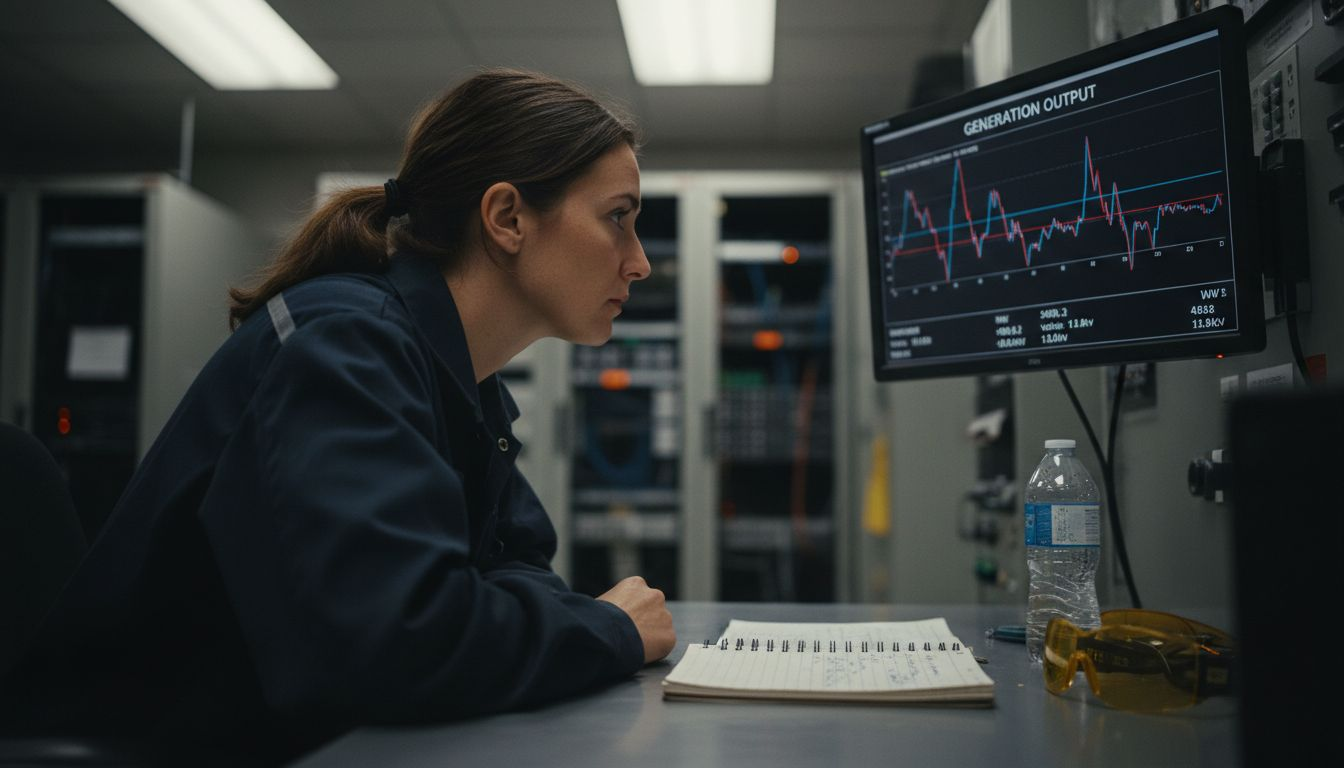
Demand-side flexibility shifts when your facility consumes electricity. You move energy-intensive processes to cheaper hours, postpone non-urgent operations, or adjust heating and cooling timing based on price signals and grid conditions.
Storage flexibility uses batteries and other systems to capture electricity when it’s abundant and cheap, then release it during expensive or tight periods. Battery roles in grid services reveal how storage acts as both a consumer and generator, providing critical system support.
Grid flexibility involves transmission and distribution upgrades—reinforcing network capacity and adding smart controls to route power more efficiently across regions.
Here is a comparison of the four core flexibility types and their primary business impact:
Flexibility Type | Primary Function | Key Benefit for Business |
Generation | Adjust supply from different sources | Matches supply to real demand |
Demand-side | Shift when energy is used | Lowers peak-period costs |
Storage | Store and release electricity | Maximizes value of cheap energy |
Grid | Upgrade distribution/transmission | Reduces congestion risks |
How Each Type Solves Real Problems
Different flexibility types address distinct challenges:
Generation flexibility: Manages output variability from renewable sources; keeps supply matched to demand
Demand flexibility: Reduces peak consumption; shifts load to high renewable production periods
Storage flexibility: Bridges time gaps between generation and consumption; provides instant grid support
Grid flexibility: Enables larger renewable integration; prevents congestion and bottlenecks
According to flexibility solutions supporting European grids, flexibility needs are expected to double by 2030 across the European Union. Commercial facilities in Central Europe can no longer rely on traditional generation alone.
The most cost-effective approach combines all flexibility types rather than choosing one. Your optimal mix depends on your specific consumption profile, facility characteristics, and market conditions.
Which Types Matter Most for Your Business
Commercial enterprises typically benefit most from demand and storage flexibility. Here’s why:
Demand flexibility is accessible immediately—no capital investment required, just operational adjustments
Storage flexibility grows increasingly cost-effective as battery prices decline and market opportunities expand
Grid flexibility improves systemwide but requires coordinated infrastructure investment beyond individual facilities
Small to mid-sized operations in Central Europe gain the fastest payback from combining smart controls (enabling demand flexibility) with modular battery systems that scale as your business grows.
Your energy management system must coordinate these types seamlessly. When prices spike, demand flexibility responds instantly. When prices drop, storage charges. Generation adjusts automatically based on real-time conditions. This orchestration transforms flexibility from theoretical concept into measurable cost reduction.
Pro tip: Start with demand flexibility—audit your operations to identify which processes can shift timing without disrupting production—then layer in storage as economics improve and market opportunities expand.
How Smart Integration Delivers Value
Possessing flexible energy components separately is like owning excellent tools that sit in different toolboxes. Real value emerges only when they communicate and coordinate automatically. Smart integration transforms individual flexibility sources into a unified system that responds to market conditions in real time.
Without integration, your solar array, battery storage, and demand controls operate independently. With integration, they orchestrate together—capturing the lowest prices, timing consumption perfectly, and responding to grid signals instantly.
The Integration Advantage
Smart integration means your energy management system constantly optimizes across all resources simultaneously. Real-time data flows from every component, feeding algorithms that make split-second decisions about when to consume, store, and release energy.
This coordination solves problems that isolated components cannot address alone:
Real-time price responsiveness: Automatically shift consumption to cheaper hours without manual intervention
Grid support capability: Provide services that pay additional revenue while stabilizing the broader network
Resource optimization: Use batteries only when economically justified rather than charging by default
Demand prediction: Anticipate consumption patterns and position energy resources accordingly
According to research on smart grid integration benefits, advanced automation and cyber-physical coordination unlock value at both facility and system levels that isolated components simply cannot deliver.
Integration transforms flexibility from a one-time efficiency gain into a continuous, dynamic value stream that compounds over your system’s lifetime.
Where Commercial Facilities Win
Mid-sized commercial enterprises in Central Europe benefit dramatically because they typically operate diverse consumption patterns—multiple buildings, varied equipment, shifting occupancy—that create constant optimization opportunities.
When photovoltaic and storage systems integrate, the battery doesn’t just store solar energy. It captures wholesale price arbitrage opportunities, responds to grid peak pricing, supports demand reduction during expensive periods, and provides emergency backup. One investment, multiple revenue streams.
Your energy management system achieves this through:
15-minute dynamic optimization: Responding to updated price forecasts and consumption predictions every quarter hour
Automated market participation: Enrolling flexibility resources in grid services without requiring staff attention
Predictive positioning: Moving energy storage to optimal states before price peaks occur
Constraint management: Respecting your operational limits while maximizing financial performance
The Data-Driven Difference
Integration requires robust data infrastructure. Your system collects consumption at granular intervals, tracks renewable generation in real time, monitors market prices, and receives grid signals. This constant data flow powers the optimization engine.
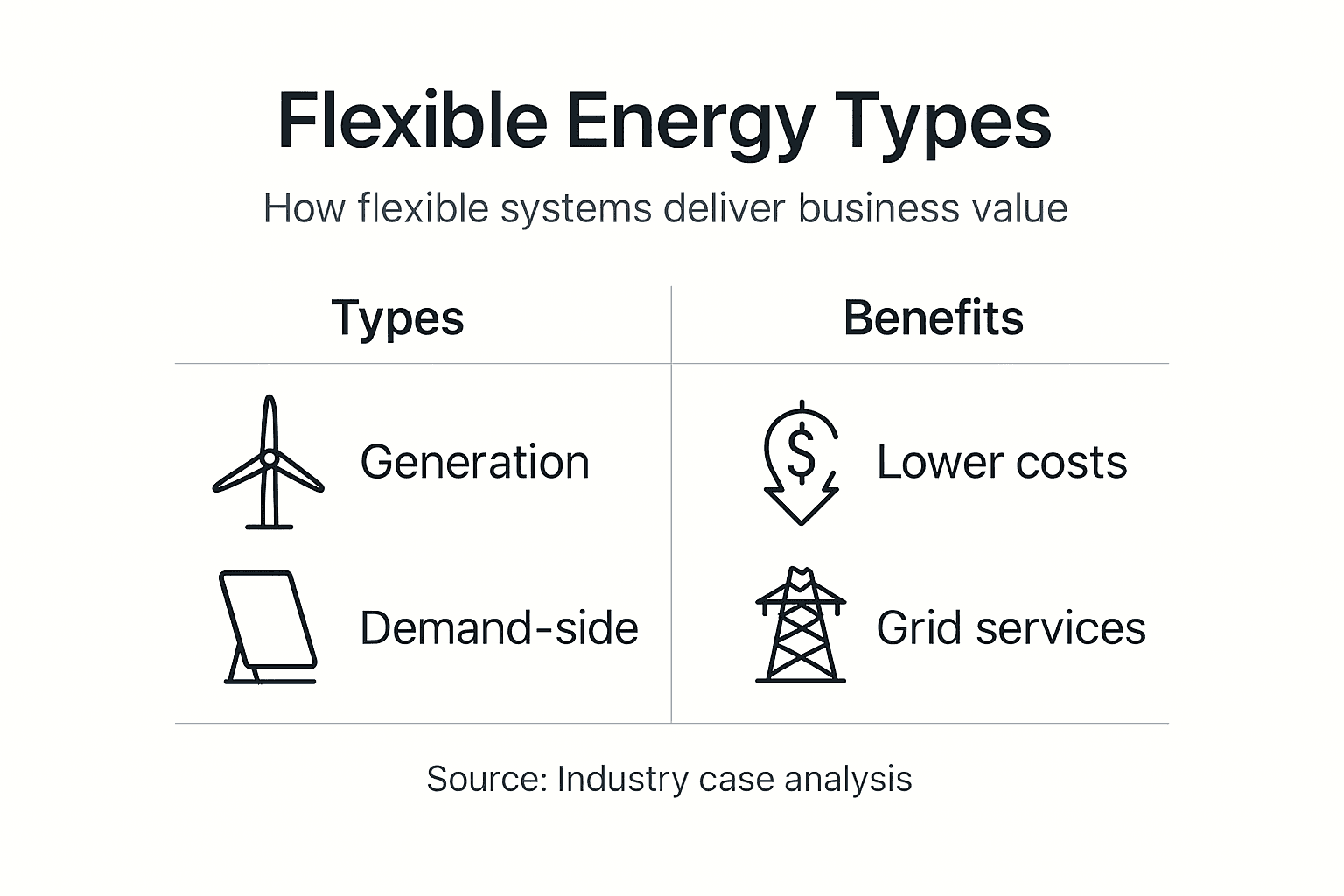
Facilities with poor data visibility operate reactively—responding after problems occur. Integrated systems operate predictively—positioning resources before opportunities appear. The difference in results is substantial.
The Brattle Group analysis demonstrates how clean flexibility technology coordination reduces fossil fuel reliance, improves grid balance, and lowers overall energy costs across European markets. Integration isn’t optional—it’s the mechanism that converts equipment investments into measurable financial outcomes.
Pro tip: Ensure your integration platform supports 15-minute or finer granularity in data collection and optimization cycles—this level of responsiveness is where significant value emerges in modern wholesale energy markets.
Commercial And Industrial Use Cases
Flexible energy systems aren’t theoretical—they’re solving real problems right now for commercial and industrial operations across Central Europe. From warehouses managing peak electricity charges to manufacturing facilities capturing market opportunities, these systems deliver measurable financial results.
Your facility’s specific situation determines which use cases matter most. Understanding what’s actually working helps you identify your own highest-value opportunities.
Peak Demand Reduction
Many commercial operations face brutal peak demand charges—prices that spike dramatically during specific hours. These charges often represent 30-50% of total electricity costs.
Flexible energy systems reduce peaks by shifting consumption patterns:
Load shifting: Moving energy-intensive processes away from peak hours
On-site generation: Using solar to reduce grid consumption during high-cost periods
Storage discharge: Deploying batteries to power operations when grid prices peak
Demand response: Temporarily reducing non-critical consumption during expensive windows
A mid-sized commercial facility implementing peak reduction typically cuts demand charges by 20-40%. For a 500 kW peak operation, this translates to substantial annual savings before considering any grid services revenue.
Manufacturing Flexibility
Industrial plants operate constant consumption patterns—but not all consumption is equally time-sensitive. Energy storage applications in industrial settings demonstrate how manufacturers optimize production scheduling around electricity prices while maintaining output commitments.
Major opportunities include:
Batch process timing: Scheduling energy-intensive operations during low-price windows
Compressed air systems: Building pressure reserves during cheap hours, drawing from reserves during expensive periods
Thermal storage: Heating or cooling during low-price hours, using stored thermal energy later
Production sequencing: Prioritizing flexible production during renewable generation peaks
Manufacturers participating in these programs report 10-15% electricity cost reductions while improving grid support and reducing carbon emissions.
Commercial Building Operations
Office buildings, retail centers, and hospitality facilities have inherent flexibility through heating, cooling, and lighting control. Smart integration captures this without compromising occupant comfort.
According to EU-funded flexibility projects, commercial buildings combining on-site solar generation, battery storage, and smart controls achieve multiple benefits simultaneously:
Reduced operational costs: 15-25% electricity savings through peak shaving and time-of-use optimization
Market participation: Enrolling flexible assets in grid services that generate additional revenue
Carbon reduction: Using on-site renewable generation and avoiding peak fossil fuel generation
Resilience: Maintaining operations during grid disruptions through integrated storage systems
Real-world case studies show commercial facilities earning €50,000-150,000 annually from grid services participation while simultaneously reducing consumption costs.
Grid Services Participation
Facilities with flexible resources can participate in electricity markets directly, earning revenue for providing grid stability services. This transforms energy infrastructure from a pure cost center into a profit contributor.
These services include:
Frequency regulation
Capacity provision
Voltage support
Congestion relief
Commercial battery storage systems enable this participation by providing instant power response capability that grid operators desperately need as renewable penetration increases.
EV Fleet Integration
Companies operating electric vehicle fleets discovered an unexpected advantage—intelligent charging turns fleet vehicles into mobile energy storage. Charging timing optimization delivers dual benefits: lower charging costs and grid support capability.
Fleets with 10+ vehicles can participate in demand response programs, shifting charging to low-price periods and earning additional revenue through grid services.
Pro tip: Start by auditing which operational processes have genuine scheduling flexibility—these represent your highest-value opportunities for demand shifting before investing in battery storage infrastructure.
Costs, Risks, And Market Opportunities
Investing in flexible energy systems requires honest assessment. Upfront costs are real. Market conditions fluctuate. Technology evolves. But so do the financial opportunities—and they often exceed initial expectations when you understand the full picture.
Successful energy managers approach these decisions with clear-eyed analysis rather than hope or hype.
Understanding Implementation Costs
Flexible energy systems involve multiple cost categories. Don’t confuse hardware expenses with total investment requirements.
Typical cost components include:
Battery storage: €300-500 per kilowatt-hour for industrial-grade lithium systems
Solar installation: €800-1,200 per kilowatt for commercial systems
Energy management software: €5,000-20,000 annually depending on system complexity
Integration and controls: €10,000-50,000 for medium-sized commercial facilities
Monitoring and grid connection: €3,000-10,000 for system commissioning
Total investment for a 100 kW commercial facility with 200 kWh storage typically ranges €200,000-400,000 before incentives. This sounds significant until you calculate cost per kilowatt-hour of annual energy managed—then perspective shifts dramatically.
Below is a summary of cost elements and related risks for flexible energy system investments:
Cost Component | Typical Range | Main Associated Risk |
Battery storage | €300-500 per kWh | Technology reliability |
Solar installation | €800-1,200 per kW | Market price fluctuation |
Energy mgmt. software | €5,000-20,000/year | Maintenance and upgrades |
Integration & controls | €10,000-50,000 | Compatibility issues |
Monitoring & connection | €3,000-10,000 | Regulatory compliance |
Risk Factors That Matter
According to European framework analysis of flexibility investments769347_EN.pdf), several risk categories deserve serious consideration:
Technology risk: Equipment reliability, software updates, component obsolescence
Market risk: Electricity price volatility, policy changes affecting grid services compensation
Operational risk: Integration complexity, staff training requirements, system downtime
Regulatory risk: Changing grid connection rules, market access requirements, liability frameworks
Smart operators reduce risk through diversification—capturing value from multiple sources (consumption savings, peak reduction, grid services, renewable self-consumption) rather than depending on any single revenue stream.
Quantifying Market Opportunities
Flexible energy systems generate revenue through multiple channels simultaneously. Understanding each opportunity reveals why payback periods often surprise facilities positively.
Peak demand reduction delivers immediate value. A facility cutting peak demand by 100 kW saves €20,000-40,000 annually depending on regional tariffs.
Time-of-use optimization captures price arbitrage. Shifting 500 kWh monthly consumption from peak to off-peak hours generates €2,000-4,000 annual savings.
Grid services participation provides additional income. Facilities providing frequency regulation or capacity services earn €30-100 per kilowatt annually through electricity market mechanisms.
Self-consumption enhancement maximizes renewable value. Pairing commercial solar systems with storage increases self-consumption from 25-35% to 70-85%, avoiding expensive grid purchases.
Combined, these opportunities frequently deliver 15-25% annual electricity cost reductions plus grid services revenue.
Investment Payback Analysis
A 100 kWh battery system costing €40,000 providing 25% consumption reduction, €3,000 annual grid services revenue, and peak demand savings totaling €15,000 achieves 4-5 year payback—well within system lifetime of 15-20 years.
Factors improving payback timing include:
Higher regional electricity prices: Central Europe’s prices accelerate returns versus lower-cost regions
Larger peak demand: Facilities with €50,000+ annual peak charges see fastest payback
Existing renewable generation: Solar pairs powerfully with storage optimization
Grid service participation eligibility: Immediate market enrollment accelerates revenue
Payback extends in lower-consumption facilities or regions with minimal peak demand charges—where the case requires stronger non-financial justification like resilience or decarbonization goals.
Pro tip: Request detailed 10-year financial modeling from your energy provider before committing capital—include multiple scenarios across electricity price ranges to understand sensitivity and true downside protection.
Unlock the Full Potential of Flexible Energy Systems for Your Business
If your business faces challenges like high peak demand charges or unpredictable energy costs the solution lies in adopting truly integrated flexible energy systems. The article highlights how responsiveness through generation flexibility demand flexibility and storage flexibility can unlock significant savings and new revenue streams while maintaining operational stability. Belinus offers cutting-edge solutions designed to put these core concepts into action including scalable battery storage and a centralized Energy Management System that optimizes your energy usage every 15 minutes based on market prices and real-time grid conditions.
Experience the advantages of smart integration with Belinus and our affiliated companies—Solarimex for wholesale solar PV, SolarPlus for expert installations, and Evonity for fleet-ready EV charging. Start with a tailored energy profile assessment and leverage proven technology like our utility storage modules or the ETAP Pro EV Charger to shift your demand effortlessly and maximize self-consumption. Visit Belinus, explore our custom energy solutions, and learn how battery modules power smart energy systems to begin transforming energy from a fixed cost into a dynamic asset today.
Frequently Asked Questions
What are flexible energy systems?
Flexible energy systems adapt how energy flows through a business, modifying electricity generation or consumption based on market prices, grid demand, or operational needs to create value.
How do I start implementing flexibility in my energy system?
Begin by analyzing your consumption patterns to identify peak usage times and operational flexibility. Implement smart controls before considering battery or storage solutions.
What are the main types of flexibility in modern energy systems?
The four core types of flexibility are generation flexibility, demand-side flexibility, storage flexibility, and grid flexibility. Each type addresses different energy management challenges and optimizes costs.
Can small businesses benefit from flexible energy systems?
Yes, small and mid-sized businesses can benefit significantly from flexible energy systems, particularly through demand flexibility and cost-effective storage solutions, often seeing higher paybacks compared to larger facilities.
Recommended